• Home
  • Latest
  • Fortune 500
  • Finance
  • Tech
  • Leadership
  • Lifestyle
  • Rankings
  • Multimedia
Commentary

Sam Shepard Died of ALS. Here’s Why It’s so Difficult to Treat.

By
Jeffrey D. Rothstein
and
Bethany Cianciolo
Bethany Cianciolo
Down Arrow Button Icon
By
Jeffrey D. Rothstein
and
Bethany Cianciolo
Bethany Cianciolo
Down Arrow Button Icon
August 2, 2017, 12:36 PM ET

We lost an American icon Thursday with the death of actor and playwright Sam Shepard. He had ALS (amyotrophic lateral sclerosis), more commonly known in the U.S. as Lou Gehrig’s disease. It’s an invariably fatal neurological disease that robs individuals of their ability to move muscles, their ability to swallow, and eventually, their ability to breathe.

ALS often starts in a fairly nonspecific way, with weakness in a person’s hand or foot. Although I never examined the late Mr. Shepard, even in public photos from 2016, the atrophy of his hand muscle was evident—a hallmark of the loss of muscle that occurs in ALS.

In about 90% of cases diagnosed by neurologists, ALS happens out of the blue—it’s “sporadic,” and the cause isn’t known. About 10% of the time, ALS is inherited through a defective gene; that is, a patient has a family member who also had the disease. We can readily diagnose inherited ALS with a relatively simple blood test.

Five years ago, we learned that even in some patients who have no family history of ALS, a defect in a gene known as C9orf72 underlies the disease. In some patients, the disease may be initially diagnosed incorrectly as a nerve problem in the hands or wrist (carpel tunnel syndrome), or a pinched nerve in the neck or back. But those conditions are commonly associated with pain—ALS is not generally a painful disease.

The weakness typically progresses—slowly over many years in some patients, or rapidly over a few months in others—progressing from one hand to the other, from hand to foot, or foot to hand. Eventually it affects one’s ability to chew, swallow, and breathe. The weakness of the breathing muscles is what makes ALS fatal. Unlike cancer, with its rare but real remissions, ALS is always fatal. Patients might choose to have a ventilator artificially breathe for them; that intervention delays death, but not the progressive weakening and paralysis of all muscles.

As treating physicians, we have a paucity of options to slow down the disease and have no real effective drug to halt its relentless progression or to recover function—no cure. ALS is not really one disease, but a combination of different genetic, even environmental, insults, that culminate in this horribly disabling and life-ending malady. Not unlike what we have learned about cancers, there may be many different causes—genetic, molecular, biochemical—that underlie the disease. In cancers, sampling the actual diseased tissue, commonly through tissue biopsies, has provided a trove of clues about what underlies the basis of the different cancers and how to approach the different forms, sometimes quite successfully. But with ALS, we cannot readily take a “chunk “ of someone’s brain or spinal cord, so we are often left guessing as to what may underlie the cause of the disease and how to best treat it. That antiquated approach may soon end.

Advances in the generation of stems cells from individual patients provide the most powerful way to generate their own brain cells. We are now able to take a small tube of blood or skin and turn those cells into stem cells (by a procedure that won the Nobel prize several years ago), and then, by adding a few more chemicals and special genes, turn those cells into motor neurons—brain and spinal cord cells that die in ALS.


This procedure, which in essence creates a biopsy of the brain/spinal cord of ALS patients, will allow us to achieve what has been so successful in cancer—to truly understand the different kinds of ALS, to use our patients’ “brain” cells to discover their individual disease causes, and to develop a more individualized pathway for drug therapy. We aim to personalize ALS therapy—what we call Answer ALS. That is the hope on the horizon for ALS, along with drugs now already under development or in clinical trials that are specifically targeted to patients with known genetic mutations. How far that horizon is in the distance, we don’t know, but we can see it. We only wish Mr. Shepard and all our past patients could have reached that hopeful horizon.

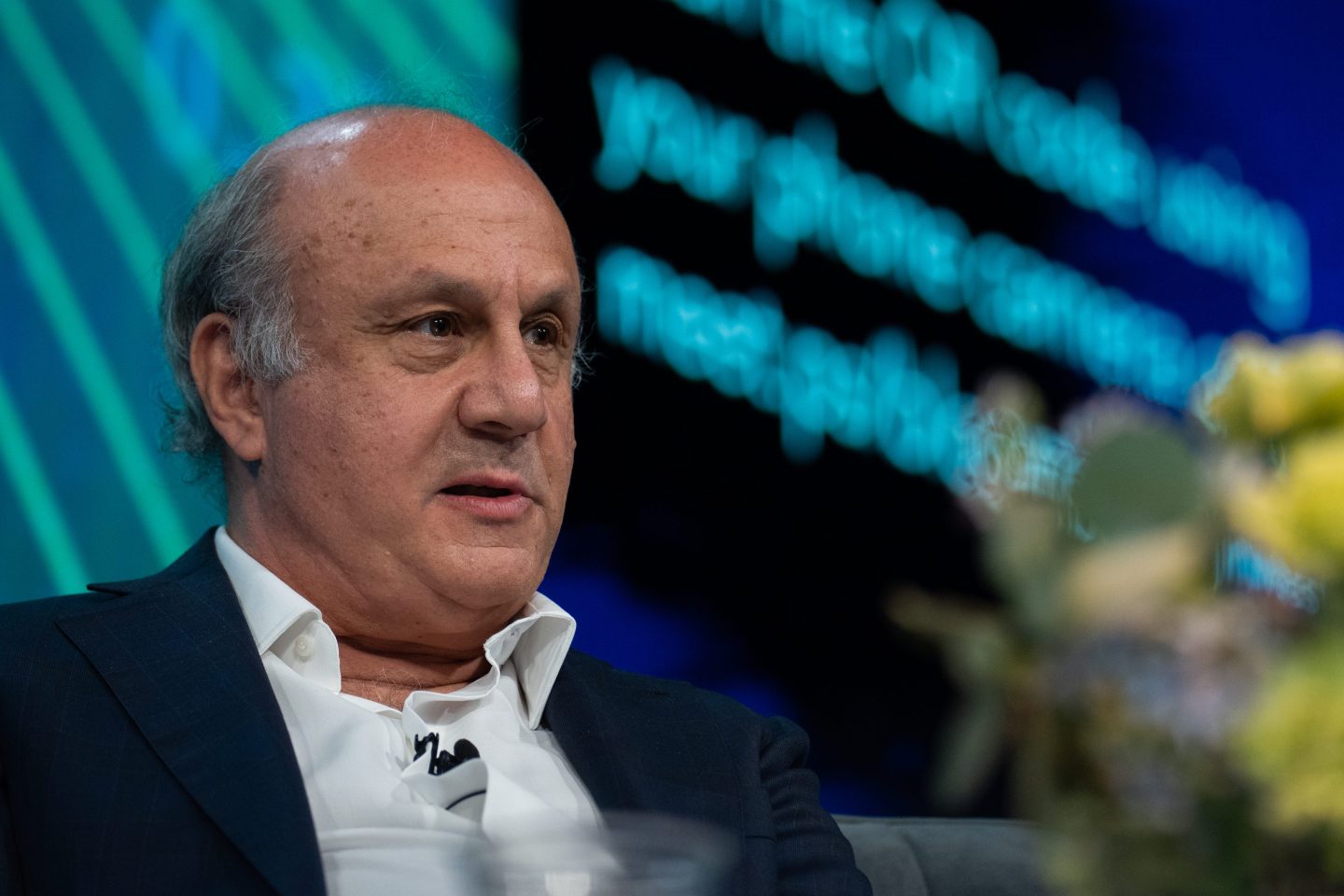
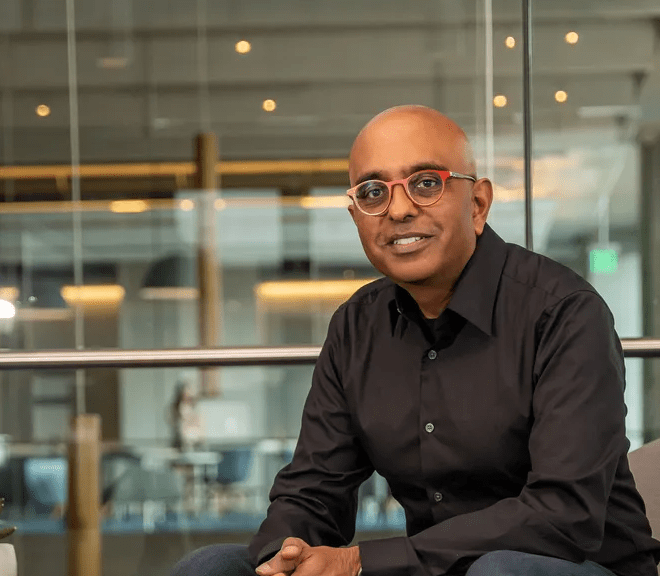
Jeffrey D. Rothstein MD, PhD, a neurologist and professor at Johns Hopkins University, is the director of the university’s Brain Science Institute, ALS clinic and Robert Packard Center for ALS Research.
About the Authors
By Jeffrey D. Rothstein
See full bioRight Arrow Button Icon
By Bethany Cianciolo
See full bioRight Arrow Button Icon

Latest in Commentary

Finance
Lorem ipsum dolor sit amet, consectetur adipiscing elit, sed do eiusmod tempor incididunt ut labore et dolore magna aliqua. Ut enim ad minim veniam
By Fortune Editors
October 20, 2025
Finance
Lorem ipsum dolor sit amet, consectetur adipiscing elit, sed do eiusmod tempor incididunt ut labore et dolore magna aliqua. Ut enim ad minim veniam
By Fortune Editors
October 20, 2025
Finance
Lorem ipsum dolor sit amet, consectetur adipiscing elit, sed do eiusmod tempor incididunt ut labore et dolore magna aliqua. Ut enim ad minim veniam
By Fortune Editors
October 20, 2025
Finance
Lorem ipsum dolor sit amet, consectetur adipiscing elit, sed do eiusmod tempor incididunt ut labore et dolore magna aliqua. Ut enim ad minim veniam
By Fortune Editors
October 20, 2025
Finance
Lorem ipsum dolor sit amet, consectetur adipiscing elit, sed do eiusmod tempor incididunt ut labore et dolore magna aliqua. Ut enim ad minim veniam
By Fortune Editors
October 20, 2025
Finance
Lorem ipsum dolor sit amet, consectetur adipiscing elit, sed do eiusmod tempor incididunt ut labore et dolore magna aliqua. Ut enim ad minim veniam
By Fortune Editors
October 20, 2025

Most Popular

Finance
Lorem ipsum dolor sit amet, consectetur adipiscing elit, sed do eiusmod tempor incididunt ut labore et dolore magna aliqua. Ut enim ad minim veniam
By Fortune Editors
October 20, 2025
Finance
Lorem ipsum dolor sit amet, consectetur adipiscing elit, sed do eiusmod tempor incididunt ut labore et dolore magna aliqua. Ut enim ad minim veniam
By Fortune Editors
October 20, 2025
Finance
Lorem ipsum dolor sit amet, consectetur adipiscing elit, sed do eiusmod tempor incididunt ut labore et dolore magna aliqua. Ut enim ad minim veniam
By Fortune Editors
October 20, 2025
Finance
Lorem ipsum dolor sit amet, consectetur adipiscing elit, sed do eiusmod tempor incididunt ut labore et dolore magna aliqua. Ut enim ad minim veniam
By Fortune Editors
October 20, 2025
Finance
Lorem ipsum dolor sit amet, consectetur adipiscing elit, sed do eiusmod tempor incididunt ut labore et dolore magna aliqua. Ut enim ad minim veniam
By Fortune Editors
October 20, 2025
Finance
Lorem ipsum dolor sit amet, consectetur adipiscing elit, sed do eiusmod tempor incididunt ut labore et dolore magna aliqua. Ut enim ad minim veniam
By Fortune Editors
October 20, 2025
Fortune Secondary Logo
Rankings
  • 100 Best Companies
  • Fortune 500
  • Global 500
  • Fortune 500 Europe
  • Most Powerful Women
  • World's Most Admired Companies
  • See All Rankings
  • Lists Calendar
Sections
  • Finance
  • Fortune Crypto
  • Features
  • Leadership
  • Health
  • Commentary
  • Success
  • Retail
  • Mpw
  • Tech
  • Lifestyle
  • CEO Initiative
  • Asia
  • Politics
  • Conferences
  • Europe
  • Newsletters
  • Personal Finance
  • Environment
  • Magazine
  • Education
Customer Support
  • Frequently Asked Questions
  • Customer Service Portal
  • Privacy Policy
  • Terms Of Use
  • Single Issues For Purchase
  • International Print
Commercial Services
  • Advertising
  • Fortune Brand Studio
  • Fortune Analytics
  • Fortune Conferences
  • Business Development
  • Group Subscriptions
About Us
  • About Us
  • Press Center
  • Work At Fortune
  • Terms And Conditions
  • Site Map
  • About Us
  • Press Center
  • Work At Fortune
  • Terms And Conditions
  • Site Map
  • Facebook icon
  • Twitter icon
  • LinkedIn icon
  • Instagram icon
  • Pinterest icon

Latest in Commentary

valerie
CommentaryLayoffs
Tesla’s former HR chief: the AI layoff panic Is built on a false premise—here’s what most workers need to know
By Valerie Capers WorkmanMay 1, 2026
12 minutes ago
tamas
CommentaryPolymarket
SEON CEO: Prediction markets can forecast the future. Can they survive their own manipulation problem?
By Tamas KadarMay 1, 2026
3 hours ago
sundar
Commentary250 Years of Innovation
America at 250: immigration and the making of an innovative nation
By Nasser KazeminyMay 1, 2026
5 hours ago
Derek Kilmer
CommentaryEconomics
The U.S. economy is booming — just not where 50 million Americans live
By Derek KilmerMay 1, 2026
5 hours ago
hegseth
CommentaryMilitary
America shot its arsenal empty in 2 wars. Now it needs Beijing’s permission to reload
By Steve H. Hanke and Jeffrey WengApril 30, 2026
20 hours ago
Duncan Tait, CEO of Inchcape
Europecar manufacturing
“Competition is good for the industry”. Inchcape CEO’s case for optimism in automotive’s next chapter
By Duncan TaitApril 30, 2026
23 hours ago

Most Popular

China dominates the world's lithium supply. The U.S. just found 328 years' worth in its own backyard
North America
China dominates the world's lithium supply. The U.S. just found 328 years' worth in its own backyard
By Jake AngeloApril 30, 2026
19 hours ago
Apple cofounder Ronald Wayne—whose stake would be worth up to $400 billion had he not sold it in 1976—says that at 91, he has no regrets
Success
Apple cofounder Ronald Wayne—whose stake would be worth up to $400 billion had he not sold it in 1976—says that at 91, he has no regrets
By Preston ForeApril 27, 2026
4 days ago
Accenture's Julie Sweet blew up 50 years of company history. She says the hardest part is still ahead
Conferences
Accenture's Julie Sweet blew up 50 years of company history. She says the hardest part is still ahead
By Nick LichtenbergApril 29, 2026
2 days ago
America shot its arsenal empty in 2 wars. Now it needs Beijing's permission to reload
Commentary
America shot its arsenal empty in 2 wars. Now it needs Beijing's permission to reload
By Steve H. Hanke and Jeffrey WengApril 30, 2026
20 hours ago
Google Cloud revenue is now 18% of Alphabet's business. Is this the beginning of the end of Google's search identity?
Big Tech
Google Cloud revenue is now 18% of Alphabet's business. Is this the beginning of the end of Google's search identity?
By Alexei OreskovicApril 29, 2026
1 day ago
Exclusive: America's largest Black-owned bank launches podcast with mission to unlock hidden shame holding back generational wealth
Banking
Exclusive: America's largest Black-owned bank launches podcast with mission to unlock hidden shame holding back generational wealth
By Nick LichtenbergApril 29, 2026
2 days ago

© 2026 Fortune Media IP Limited. All Rights Reserved. Use of this site constitutes acceptance of our Terms of Use and Privacy Policy | CA Notice at Collection and Privacy Notice | Do Not Sell/Share My Personal Information
FORTUNE is a trademark of Fortune Media IP Limited, registered in the U.S. and other countries. FORTUNE may receive compensation for some links to products and services on this website. Offers may be subject to change without notice.