• Home
  • Latest
  • Fortune 500
  • Finance
  • Tech
  • Leadership
  • Lifestyle
  • Rankings
  • Multimedia

Trendingnow

1

After forcing workers back to the office, Goldman Sachs and JPMorgan Chase are now letting their staff work remotely—but only for the World Cup

2

Markets tumble worldwide as Fed resets expectations: $400 billion wiped off SpaceX stock

3

Current price of oil as of June 23, 2026

1

After forcing workers back to the office, Goldman Sachs and JPMorgan Chase are now letting their staff work remotely—but only for the World Cup

2

Markets tumble worldwide as Fed resets expectations: $400 billion wiped off SpaceX stock

3

Current price of oil as of June 23, 2026

The Pros and Cons of Trump’s Plan to Privatize Air Traffic Control

By
The Associated Press
Down Arrow Button Icon
By
The Associated Press
Down Arrow Button Icon
June 6, 2017, 8:59 AM ET
Add Fortune on Google for similar content.

The U.S. air traffic control system, the world’s largest and most complex, is in the midst of an era of unsurpassed safety. There has not been a fatal crash of a domestic passenger airliner in the U.S. in eight years.

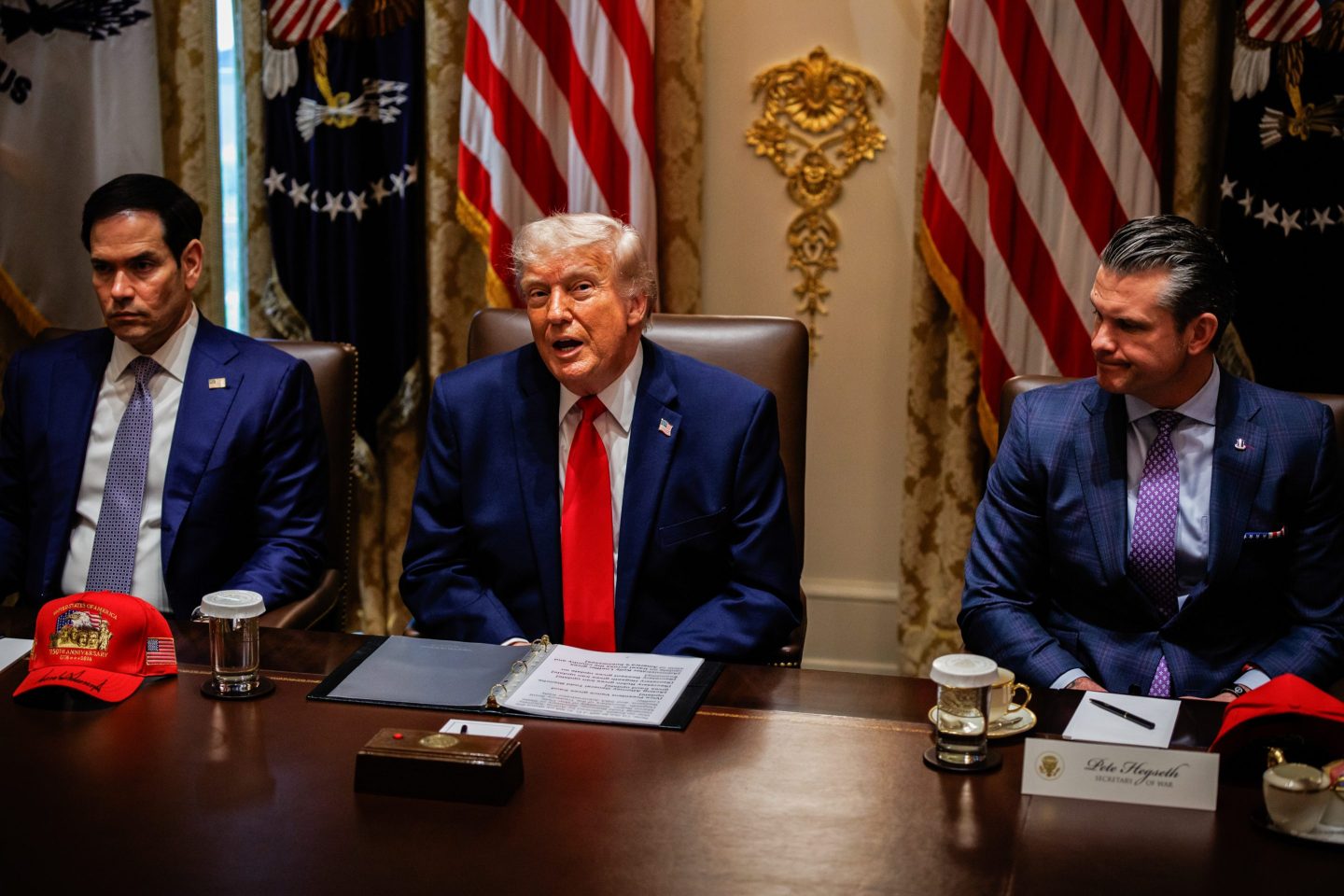
Now President Donald Trump is looking to shift responsibility for the system from the government to a private, nonprofit corporation run by airlines and other aviation interests. The handover of about 300 airport towers and other flight tracking centers would be one of the largest transfers of U.S. government assets. About 35,000 workers, including 14,000 controllers and 6,000 technicians, would be affected.

Privatization supporters, including some Republican lawmakers, say it would improve efficiency and modernize the air-traffic system. But congressional approval isn’t certain. Some lawmakers in both parties are reluctant to give up oversight. Some politically influential business aircraft operators, private pilots, small aircraft manufacturers and medium- and small-sized airports fear airlines will dominate the corporation’s board, resulting in higher fees for them and less service.

There are also concerns about whether the air traffic system would suffer during the transition.

Some questions and answers about what’s at stake:

Why Mess With a Good Thing?

The idea is to remove air traffic control from the vagaries of the government budget process, which has limited the Federal Aviation Administration’s ability to commit to long-term contracts and raise money for major expenditures.

That’s hampered the agency’s “NextGen” program to modernize the air traffic system by switching from radar and radio communications to GPS surveillance and digital voice and text communications. Recent controller furloughs and government shutdowns have worsened the problem.


What Is the Situation in Other Countries?

Many countries have created government-owned corporations, independent government agencies or quasi-governmental entities. Canada is the only country to create what is clearly a private nonprofit air-traffic corporation. NavCanada can raise private capital, make long-term financial commitments, and it recently lowered the fees it charges airlines.

But the nonpartisan Congressional Research Service reported last month that there appears to be no conclusive evidence that any of those approaches is better or worse than government-run services, including the FAA’s, in terms of productivity, cost-effectiveness, service quality, and safety and security.


Who Wants to Do This?

The U.S. airline industry has been campaigning since the 1980s to privatize air traffic control to try to gain greater control over the system, reduce their costs and replace airline passenger ticket taxes with user fees based on takeoffs, landings and other operations. The Clinton administration proposed spinning off air traffic operations into a government corporation but ran into congressional opposition.

House Transportation and Infrastructure Committee Chairman Bill Shuster, R-Pa., has proposed using NavCanada as a model. But he couldn’t win enough support to bring legislation to the House floor last year, and he faced even greater opposition in the Senate. Trump administration officials have cited Shuster’s bill as a starting point for their efforts.

Shuster received $148,499 in airline industry campaign contributions last year, making him the industry’s top recipient in the House, according to the political money tracking site Opensecrets.org.


Is NextGen in Trouble?

The FAA has been working for more than a decade on NextGen. Early on, it predicted the program would be completed by 2025, but officials now describe NextGen as an evolving effort with no end date.

The National Academy of Sciences reported in 2015 that the original vision for NextGen of transforming the air traffic system has devolved into a series of incremental changes that primarily emphasize replacing aging equipment and systems.

But FAA Administrator Michael Huerta said recently the agency has made “tremendous progress” revamping the system with the latest technology, and is poised to switch from ground-based radar to GPS surveillance. The switch is expected to save time and fuel and lower greenhouse gas emissions. Huerta has predicted $13 billion in benefits to the government and aircraft operators by 2020, with greater gains after that.

Calvin Scovel, the Transportation Department’s inspector general and a frequent NextGen critic, recently told the House transportation committee that even though the program hasn’t met expectations, it’s not broken.


Would Privatization Help?

Privatization supporters complain that the FAA’s procurement process is so cumbersome that new equipment is no longer the latest technology by the time it’s acquired. Also, delays in updating landing and takeoff procedures to incorporate technological advances make the system less efficient. Airlines say that costs them billions of dollars in flight delays each year.

A corporation would be free of such government regulations and could act faster and with more flexibility, supporters say. The FAA would still provide safety oversight.

Opponents say there’s no evidence a corporation run by airlines would do a better job. Major U.S. airlines have suffered massive computer outages in recent years that have roiled air travel.


Where Do Air Traffic Controllers Stand?

Their union, the National Air Traffic Controllers Association, endorsed Shuster’s bill after winning assurances that controller wages, benefits and collective bargaining rights would be protected. Union leaders say controllers are tired of working with outdated equipment and are concerned about government shutdowns and furloughs.


About the Author
By The Associated Press
See full bioRight Arrow Button Icon
Add Fortune on Google for similar content.

Latest in

Finance
Lorem ipsum dolor sit amet, consectetur adipiscing elit, sed do eiusmod tempor incididunt ut labore et dolore magna aliqua. Ut enim ad minim veniam
By Fortune Editors
October 20, 2025
Finance
Lorem ipsum dolor sit amet, consectetur adipiscing elit, sed do eiusmod tempor incididunt ut labore et dolore magna aliqua. Ut enim ad minim veniam
By Fortune Editors
October 20, 2025
Finance
Lorem ipsum dolor sit amet, consectetur adipiscing elit, sed do eiusmod tempor incididunt ut labore et dolore magna aliqua. Ut enim ad minim veniam
By Fortune Editors
October 20, 2025
Finance
Lorem ipsum dolor sit amet, consectetur adipiscing elit, sed do eiusmod tempor incididunt ut labore et dolore magna aliqua. Ut enim ad minim veniam
By Fortune Editors
October 20, 2025
Finance
Lorem ipsum dolor sit amet, consectetur adipiscing elit, sed do eiusmod tempor incididunt ut labore et dolore magna aliqua. Ut enim ad minim veniam
By Fortune Editors
October 20, 2025
Finance
Lorem ipsum dolor sit amet, consectetur adipiscing elit, sed do eiusmod tempor incididunt ut labore et dolore magna aliqua. Ut enim ad minim veniam
By Fortune Editors
October 20, 2025

Most Popular

Finance
Lorem ipsum dolor sit amet, consectetur adipiscing elit, sed do eiusmod tempor incididunt ut labore et dolore magna aliqua. Ut enim ad minim veniam
By Fortune Editors
October 20, 2025
Finance
Lorem ipsum dolor sit amet, consectetur adipiscing elit, sed do eiusmod tempor incididunt ut labore et dolore magna aliqua. Ut enim ad minim veniam
By Fortune Editors
October 20, 2025
Finance
Lorem ipsum dolor sit amet, consectetur adipiscing elit, sed do eiusmod tempor incididunt ut labore et dolore magna aliqua. Ut enim ad minim veniam
By Fortune Editors
October 20, 2025
Finance
Lorem ipsum dolor sit amet, consectetur adipiscing elit, sed do eiusmod tempor incididunt ut labore et dolore magna aliqua. Ut enim ad minim veniam
By Fortune Editors
October 20, 2025
Finance
Lorem ipsum dolor sit amet, consectetur adipiscing elit, sed do eiusmod tempor incididunt ut labore et dolore magna aliqua. Ut enim ad minim veniam
By Fortune Editors
October 20, 2025
Finance
Lorem ipsum dolor sit amet, consectetur adipiscing elit, sed do eiusmod tempor incididunt ut labore et dolore magna aliqua. Ut enim ad minim veniam
By Fortune Editors
October 20, 2025
Fortune Secondary Logo
Rankings
  • 100 Best Companies
  • Fortune 500
  • Global 500
  • Fortune 500 Europe
  • Most Powerful Women
  • World's Most Admired Companies
  • See All Rankings
  • Lists Calendar
Sections
  • Finance
  • Fortune Crypto
  • Features
  • Leadership
  • Health
  • Commentary
  • Success
  • Retail
  • Mpw
  • Tech
  • Lifestyle
  • CEO Initiative
  • Asia
  • Politics
  • Conferences
  • Europe
  • Newsletters
  • Personal Finance
  • Environment
  • Magazine
  • Education
Customer Support
  • Frequently Asked Questions
  • Customer Service Portal
  • Privacy Policy
  • Terms Of Use
  • Single Issues For Purchase
  • International Print
Commercial Services
  • Advertising
  • Fortune Brand Studio
  • Fortune Analytics
  • Fortune Conferences
  • Business Development
  • Group Subscriptions
About Us
  • About Us
  • Press Center
  • Work At Fortune
  • Terms And Conditions
  • Site Map
  • About Us
  • Press Center
  • Work At Fortune
  • Terms And Conditions
  • Site Map
  • Facebook icon
  • Twitter icon
  • LinkedIn icon
  • Instagram icon
  • Pinterest icon

Latest in

Taktile cofounders Maik Taro Wehmeyer (left) and Maximilian Eber (right) stand side by side, smiling at the camera.
Startups & VentureVenture Capital
Exclusive: Taktile raises $110 million from Goldman Sachs, Tiger Global to automate high-stakes financial decisions 
By Camila Grigera NaónJune 24, 2026
11 minutes ago
price-of-oil-06-23-2026
Personal FinanceOil
Current price of oil as of June 24, 2026
By Joseph HostetlerJune 24, 2026
23 minutes ago
Sarah Youngwood, EVP and CFO at Nasdaq.
AICFO Daily
Nasdaq’s CFO says leaders must learn AI—not just their teams
By Sheryl EstradaJune 24, 2026
25 minutes ago
Current price of silver as of Wednesday, June 24, 2026
Personal Financesilver
Current price of silver as of Wednesday, June 24, 2026
By Joseph HostetlerJune 24, 2026
29 minutes ago
steve
Commentary250 Years of Innovation
Steve Case: America was built by entrepreneurs. Here’s how we keep that edge for the next 250 years
By Steve CaseJune 24, 2026
41 minutes ago
(left to right) Andrew Berman, Tal Peretz, and Vitor Balocco
AIVenture Capital
Exclusive: Vinod Khosla wanted ‘every available dollar’ of Runlayer’s funding round. It just raised $30 million to govern the agent workforce
By Lily Mae LazarusJune 24, 2026
1 hour ago

Most Popular

After forcing workers back to the office, Goldman Sachs and JPMorgan Chase are now letting their staff work remotely—but only for the World Cup
Success
After forcing workers back to the office, Goldman Sachs and JPMorgan Chase are now letting their staff work remotely—but only for the World Cup
By Orianna Rosa RoyleJune 23, 2026
1 day ago
Markets tumble worldwide as Fed resets expectations: $400 billion wiped off SpaceX stock
Banking
Markets tumble worldwide as Fed resets expectations: $400 billion wiped off SpaceX stock
By Jim EdwardsJune 23, 2026
1 day ago
Current price of oil as of June 23, 2026
Personal Finance
Current price of oil as of June 23, 2026
By Joseph HostetlerJune 23, 2026
1 day ago
The Pentagon said Iran War costs $29 billion,but the real cost is closer to $200 billion—and counting
Economy
The Pentagon said Iran War costs $29 billion,but the real cost is closer to $200 billion—and counting
By Jacqueline MunisJune 24, 2026
6 hours ago
Texas and Charlotte used to build huge McMansions—now they're copying the California design tricks they once mocked
Real Estate
Texas and Charlotte used to build huge McMansions—now they're copying the California design tricks they once mocked
By Sydney LakeJune 22, 2026
2 days ago
Meet the 2 men putting New York's $300 billion pension fund in play for the first time in 20 years
Investing
Meet the 2 men putting New York's $300 billion pension fund in play for the first time in 20 years
By Nick LichtenbergJune 22, 2026
2 days ago

© 2026 Fortune Media IP Limited. All Rights Reserved. Use of this site constitutes acceptance of our Terms of Use and Privacy Policy | CA Notice at Collection and Privacy Notice | Do Not Sell/Share My Personal Information
FORTUNE is a trademark of Fortune Media IP Limited, registered in the U.S. and other countries. FORTUNE may receive compensation for some links to products and services on this website. Offers may be subject to change without notice.