• Home
  • Latest
  • Fortune 500
  • Finance
  • Tech
  • Leadership
  • Lifestyle
  • Rankings
  • Multimedia

Trendingnow

1

The pig in the python: Baby Boomers are strangling the economy they built by refusing to move or retire

2

Jeff Bezos wants the bottom half of earners to pay zero income tax—he says nurses making just $75K should save $12K a year

3

The U.S. campaigned to host the World Cup. Now soccer fans will trade their countries' train system for the U.S.'s 'D' rated infrastructure

1

The pig in the python: Baby Boomers are strangling the economy they built by refusing to move or retire

2

Jeff Bezos wants the bottom half of earners to pay zero income tax—he says nurses making just $75K should save $12K a year

3

The U.S. campaigned to host the World Cup. Now soccer fans will trade their countries' train system for the U.S.'s 'D' rated infrastructure
HealthDonald Trump

The Danger of Not Reading a Face

By
Clifton Leaf
Clifton Leaf
Down Arrow Button Icon
By
Clifton Leaf
Clifton Leaf
Down Arrow Button Icon
June 3, 2017, 7:30 AM ET
Belgium Trump
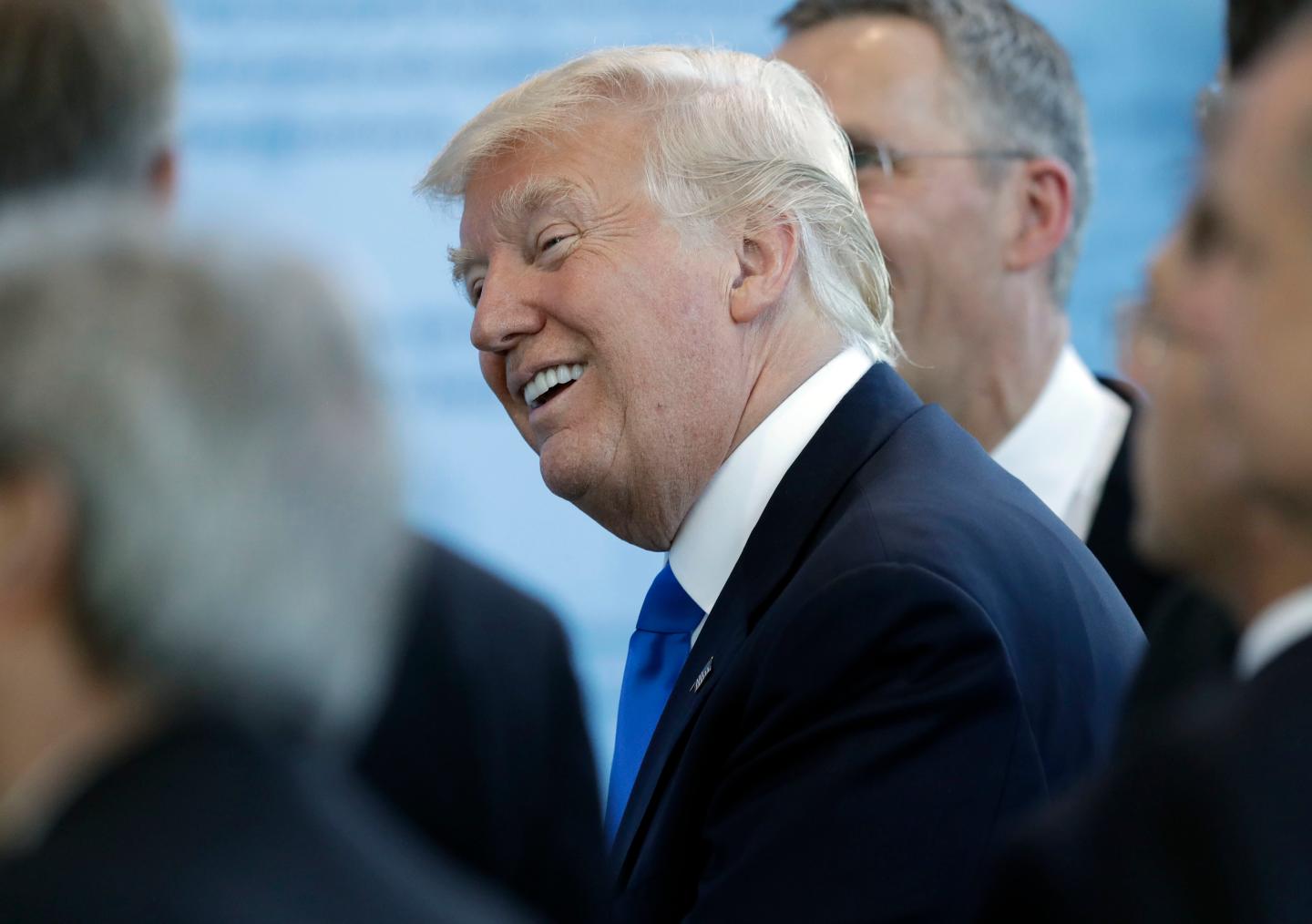
US President Donald Trump smiles during a tour of the new NATO headquarters during a NATO summit of heads of state and government in Brussels on Thursday, May 25, 2017. Matt Dunham AP

This week I found myself drawn to a research study entitled, “Experience-based human perception of facial expressions in Barbary macaques (Macaca sylvanus).” How, you wonder? Well truth be told, I spied a summary of the paper on the science news site Phys.org, which offered a much juicier title: “Tourists risk animal bites by misreading wild monkey facial expressions as ‘kisses.’” (As a rule, I’ll read anything with “wild monkey” in the headline.)

But the original research paper—and my follow-up conversation with the lead author, Laëtitia Maréchal​—turned out to be more fascinating than even the phrase “wild monkey” might suggest.

The gist is that we humans are not so good at reading the facial expressions of Barbary macaques—and hint: this is important—even though we think we are.

In the study, Marechal, a behavioral ecologist/primatologist/conservation biologist at the UK’s University of Lincoln (it’s hard to know what to call a scientist with two Master’s degrees and a Ph.D.), and her colleagues showed volunteers photos of Barbary macaques displaying various “facial expressions related to aggressive, distressed, friendly or neutral states” and then tested their ability to identify them.

The humans really missed the mark when it came to matching a particularly toothy macaque expression—one in which “the corners of the lips are fully retracted and the upper and lower teeth are shown”—with the correct emotion. What looked to many like a smile was, in fact, a reflection of “a distressed emotional state…usually displayed as a submissive behavior during aggressive or dominant interactions.” Similarly, an expression that looked like “blowing kisses” was actually a sign of aggression. Oh well.

Marechal and her teammates conclude that this instinctive misreading may be getting both tourists and monkeys injured in places like South Africa’s Cape peninsula, Gibraltar, and various temples in Southeast Asia, where macaques and Ray-Ban-toting bipeds often get too close to one another.

But what makes the study truly compelling is that the research flies in the face of a very old theory, proposed by none other than Charles Darwin—that human beings and their close evolutionary cousins (in the words of Rachael E. Jack and colleagues) “communicate six basic internal emotional states (happy, surprise, fear, disgust, anger, and sad) using the same facial movements.” Indeed, that theory, called the universality hypothesis, has been getting beaten up over the last decade or so, with one research study after another taking an evidentiary swipe.

You say, “Okay, fine—I may not know my macaques, but I sure know what my beloved Labrador is thinking.” (Ahem.) You don’t. Or at least not as definitively as you think you do. (One of Marechal’s university colleagues, Kerstin Meints, has helped to develop an interactive CD, called “the Blue Dog,” to teach children how to interact with puppies and not get bit.)

Tellingly, a bevy of experimental evidence now demonstrates that even among humans, the meanings of facial expressions are often not intuitive across cultures, national origins, ethnicities, or the ages of individuals.

Which brings me to the question of whether mortals with wholly different political orientations can readily understand one other—not just one another’s words, but also their facial expressions, physical behavior, inflections of voice, and so on.

Yesterday, for instance, Jennifer Jacobs, a White House reporter for Bloomberg News tweeted an analysis of President Trump’s own interpersonal relations by one of his former aides, Corey Lewandowski. Trump is “so good at communicating,” Lewandowski reportedly said, that it takes staff with a “preexisting relationship to understand how the president functions.”

Earlier in the week, Mr. Trump himself tweeted out a “Thank you for your support” message, highlighting a Rasmussen opinion poll that concluded that 52% of voters disapproved of his performance as president.

While that tweet and others have raised eyebrows, they may be telling us something important about human perception and how sharply partisan orientations can shape it.

The President, in recent days and weeks, has withdrawn from the Paris Agreement on climate, lobbied hard for a bill that slashes funding for Medicaid by more than $830 billion even as it puts coverage of pre-existing conditions in the cross-hairs, and released a budget that eliminates or sharply cuts funding for health programs, research, and environmental protections—in each case, taking a position that is opposite to what large majorities of Americans, rich and poor, red state and blue, say they support. And, for that matter, opposite to what business leaders say they want, too.

The policies, on their face, as I’ve written in this space, don’t make sense. When examined through the lens of electoral politics, they make even less sense.

But maybe the issue isn’t policy or politics at all. Maybe it’s a question of perception. It may be that when the President is confronted with a nation in distress, he simply sees a smile.

This essay appears in today’s edition of the Fortune Brainstorm Health Daily. Get it delivered straight to your inbox.

About the Author
By Clifton Leaf
See full bioRight Arrow Button Icon

Latest in Health

Finance
Lorem ipsum dolor sit amet, consectetur adipiscing elit, sed do eiusmod tempor incididunt ut labore et dolore magna aliqua. Ut enim ad minim veniam
By Fortune Editors
October 20, 2025
Finance
Lorem ipsum dolor sit amet, consectetur adipiscing elit, sed do eiusmod tempor incididunt ut labore et dolore magna aliqua. Ut enim ad minim veniam
By Fortune Editors
October 20, 2025
Finance
Lorem ipsum dolor sit amet, consectetur adipiscing elit, sed do eiusmod tempor incididunt ut labore et dolore magna aliqua. Ut enim ad minim veniam
By Fortune Editors
October 20, 2025
Finance
Lorem ipsum dolor sit amet, consectetur adipiscing elit, sed do eiusmod tempor incididunt ut labore et dolore magna aliqua. Ut enim ad minim veniam
By Fortune Editors
October 20, 2025
Finance
Lorem ipsum dolor sit amet, consectetur adipiscing elit, sed do eiusmod tempor incididunt ut labore et dolore magna aliqua. Ut enim ad minim veniam
By Fortune Editors
October 20, 2025
Finance
Lorem ipsum dolor sit amet, consectetur adipiscing elit, sed do eiusmod tempor incididunt ut labore et dolore magna aliqua. Ut enim ad minim veniam
By Fortune Editors
October 20, 2025

Most Popular

Finance
Lorem ipsum dolor sit amet, consectetur adipiscing elit, sed do eiusmod tempor incididunt ut labore et dolore magna aliqua. Ut enim ad minim veniam
By Fortune Editors
October 20, 2025
Finance
Lorem ipsum dolor sit amet, consectetur adipiscing elit, sed do eiusmod tempor incididunt ut labore et dolore magna aliqua. Ut enim ad minim veniam
By Fortune Editors
October 20, 2025
Finance
Lorem ipsum dolor sit amet, consectetur adipiscing elit, sed do eiusmod tempor incididunt ut labore et dolore magna aliqua. Ut enim ad minim veniam
By Fortune Editors
October 20, 2025
Finance
Lorem ipsum dolor sit amet, consectetur adipiscing elit, sed do eiusmod tempor incididunt ut labore et dolore magna aliqua. Ut enim ad minim veniam
By Fortune Editors
October 20, 2025
Finance
Lorem ipsum dolor sit amet, consectetur adipiscing elit, sed do eiusmod tempor incididunt ut labore et dolore magna aliqua. Ut enim ad minim veniam
By Fortune Editors
October 20, 2025
Finance
Lorem ipsum dolor sit amet, consectetur adipiscing elit, sed do eiusmod tempor incididunt ut labore et dolore magna aliqua. Ut enim ad minim veniam
By Fortune Editors
October 20, 2025
Fortune Secondary Logo
Rankings
  • 100 Best Companies
  • Fortune 500
  • Global 500
  • Fortune 500 Europe
  • Most Powerful Women
  • World's Most Admired Companies
  • See All Rankings
  • Lists Calendar
Sections
  • Finance
  • Fortune Crypto
  • Features
  • Leadership
  • Health
  • Commentary
  • Success
  • Retail
  • Mpw
  • Tech
  • Lifestyle
  • CEO Initiative
  • Asia
  • Politics
  • Conferences
  • Europe
  • Newsletters
  • Personal Finance
  • Environment
  • Magazine
  • Education
Customer Support
  • Frequently Asked Questions
  • Customer Service Portal
  • Privacy Policy
  • Terms Of Use
  • Single Issues For Purchase
  • International Print
Commercial Services
  • Advertising
  • Fortune Brand Studio
  • Fortune Analytics
  • Fortune Conferences
  • Business Development
  • Group Subscriptions
About Us
  • About Us
  • Press Center
  • Work At Fortune
  • Terms And Conditions
  • Site Map
  • About Us
  • Press Center
  • Work At Fortune
  • Terms And Conditions
  • Site Map
  • Facebook icon
  • Twitter icon
  • LinkedIn icon
  • Instagram icon
  • Pinterest icon

Latest in Health

Forget quiet quitting—4 in 10 millennials are taking ‘quiet vacations’ and checking out of work (and the country) on company dime instead
SuccessMillennials
Forget quiet quitting—4 in 10 millennials are taking ‘quiet vacations’ and checking out of work (and the country) on company dime instead
By Orianna Rosa RoyleMay 25, 2026
12 hours ago
r
HealthHealth
The quiet $8 billion crisis: long COVID costs keep rising as Washington looks away
By Bruce Y. Lee, Hannah Dimmick and The ConversationMay 24, 2026
1 day ago
mental
Healthmental health
500,000 people were locked in state psychiatric hospitals. Their descendants can’t find out why
By Mike Stobbe, Nick Lichtenberg and The Associated PressMay 24, 2026
1 day ago
Someone leafs through titles stacked in a library
AIResearch
AI hallucinations are infiltrating expert work—and entering the permanent body of knowledge
By Tristan BoveMay 24, 2026
2 days ago
d
HealthHospitals
Meet the hospital dogs ‘making a real difference’ by getting sick kids to smile
By Laura Ungar and The Associated PressMay 23, 2026
2 days ago
Ashley Yetman
Commentarydisruption
Everyone is blaming AI for the death of ‘craft.’ Take a good look in the mirror
By Ashley YetmanMay 23, 2026
2 days ago

Most Popular

The pig in the python: Baby Boomers are strangling the economy they built by refusing to move or retire
Economy
The pig in the python: Baby Boomers are strangling the economy they built by refusing to move or retire
By Nick LichtenbergMay 25, 2026
15 hours ago
Jeff Bezos wants the bottom half of earners to pay zero income tax—he says nurses making just $75K should save $12K a year
Success
Jeff Bezos wants the bottom half of earners to pay zero income tax—he says nurses making just $75K should save $12K a year
By Preston ForeMay 21, 2026
4 days ago
The U.S. campaigned to host the World Cup. Now soccer fans will trade their countries' train system for the U.S.'s 'D' rated infrastructure
Travel & Leisure
The U.S. campaigned to host the World Cup. Now soccer fans will trade their countries' train system for the U.S.'s 'D' rated infrastructure
By Catherina GioinoMay 25, 2026
12 hours ago
Elon Musk's best friend could make more than $100 billion from SpaceX's IPO. His firm is also owed billions by SpaceX
Investing
Elon Musk's best friend could make more than $100 billion from SpaceX's IPO. His firm is also owed billions by SpaceX
By Eva RoytburgMay 25, 2026
11 hours ago
Uber CEO says rideshare 'freed up' his son from having to get a driver’s license—and he's one of many Gen Zers who aren’t willing to drive
Lifestyle
Uber CEO says rideshare 'freed up' his son from having to get a driver’s license—and he's one of many Gen Zers who aren’t willing to drive
By Sasha RogelbergMay 24, 2026
1 day ago
A billionaire and an A-list actor found refuge in a 37-home Florida neighborhood with armed guards—proof that privacy is now the ultimate luxury
Real Estate
A billionaire and an A-list actor found refuge in a 37-home Florida neighborhood with armed guards—proof that privacy is now the ultimate luxury
By Marco Quiroz-GutierrezMay 25, 2026
12 hours ago

© 2026 Fortune Media IP Limited. All Rights Reserved. Use of this site constitutes acceptance of our Terms of Use and Privacy Policy | CA Notice at Collection and Privacy Notice | Do Not Sell/Share My Personal Information
FORTUNE is a trademark of Fortune Media IP Limited, registered in the U.S. and other countries. FORTUNE may receive compensation for some links to products and services on this website. Offers may be subject to change without notice.