• Home
  • News
  • Fortune 500
  • Tech
  • Finance
  • Leadership
  • Lifestyle
  • Rankings
  • Multimedia
Commentaryglass-steagall

What Trump’s Idea to Break Up Big Banks Could Mean for Average Americans

By
Dean Baker
Dean Baker
Down Arrow Button Icon
By
Dean Baker
Dean Baker
Down Arrow Button Icon
May 3, 2017, 4:48 PM ET
TIMOTHY A. CLARY/AFP/Getty Images

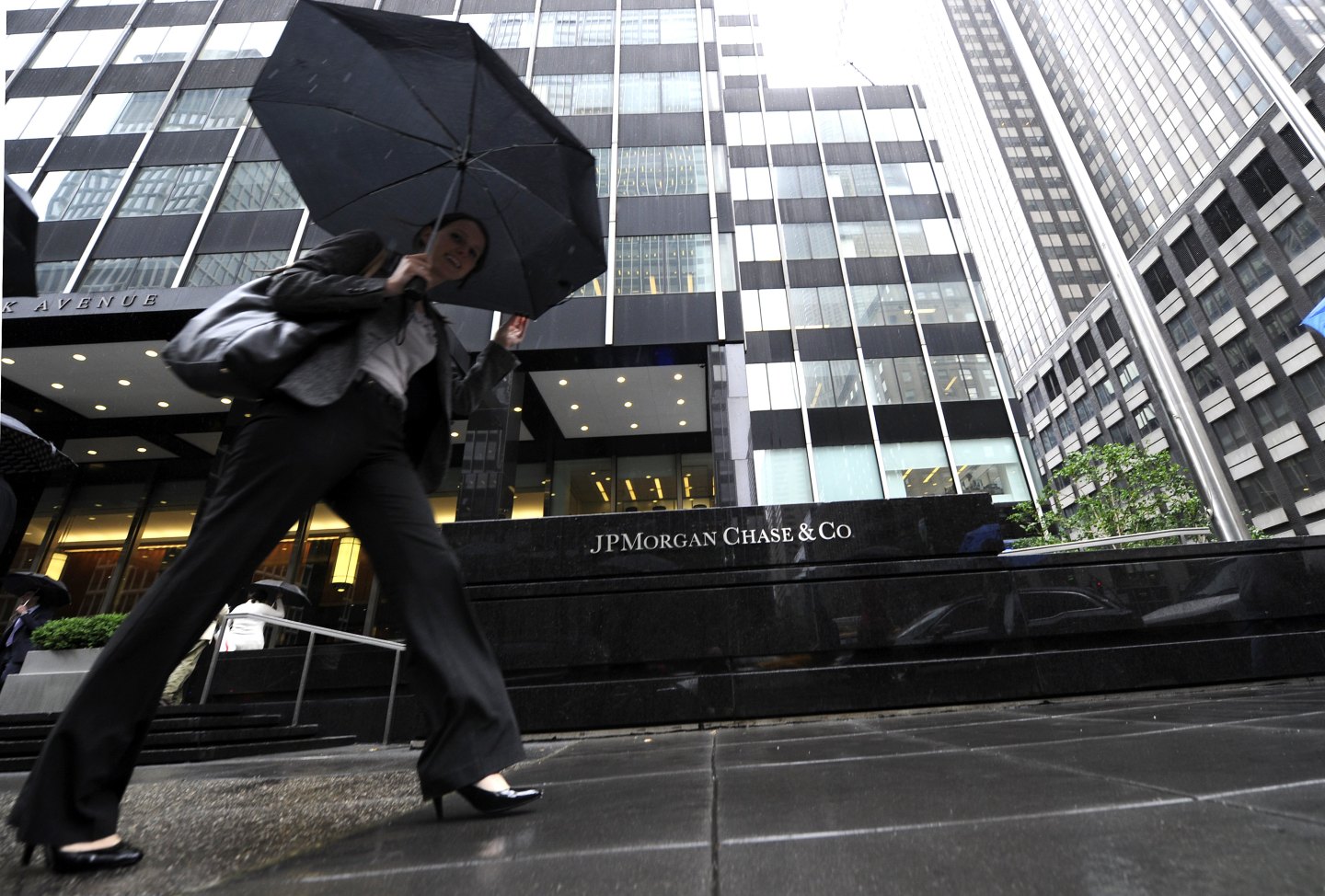
President Donald Trump and his top advisors have raised the possibility of breaking up the big banks and reinstating the Depression-era Glass-Steagall legislation that separated commercial banking from investment banking. Such a break up would, in principle, prevent Americans from being held hostage in a financial crisis, when they are told that the economy’s health depends on bailing out large banks.

While it is unclear whether Trump’s plans are serious, it’s worth considering what breaking up the banks could mean for typical bank customers. The short answer is: almost nothing. While Americans can count on the bankers and their lobbyists to come up with dire horror stories of how everyone will be forced to carry around bags of gold to make daily purchases, the reality is that today’s megabanks are a recent development. There was a massive merger wave in the 1990s, which allowed already large banks like J.P. Morgan to merge with Chase Manhattan and other major banks. This is what allowed the massive banks to eventually dominate the financial industry. The 2007–08 financial crisis led to further concentration, as huge banks in crisis, like Bear Stearns and Merrill Lynch, were bought up by other banks.

In prior decades, such mergers would not have been allowed. In fact, the U.S. didn’t even have interstate banking until the 1980s. It wasn’t until 1998 that the Glass-Steagall Act was repealed, allowing insurers, investment banks, and commercial banks to all be owned by a single company. This means that if the Trump administration downsizes the large banks, America will go back to a period well within most people’s lifetimes—not the 19th century as some would have Americans believe.

There is no reason to believe that smaller banks post-breakup would be any less suited to meet the needs of ordinary bank customers. (Have you noticed banking services getting better over the last two decades?) Most Americans have checking accounts that they now access largely through ATMs. It is possible that a bank would have somewhat fewer branches as a result of this policy change, but that wouldn’t necessarily reduce Americans’ ability to access an ATM. As far back as the early 1980s, banks had networks that allowed their customers to use each other’s ATMs at no charge. There is no reason that banks would not go back in this direction, if they were worried that they had an inadequate ATM network.

Similarly, it is hard to see why smaller banks would have any difficulty providing the same savings and money market accounts that they do today. These accounts have existed for decades and there are no obvious economies of scale for which America needs today’s megabanks.

When it comes to issuing car loans, mortgages, or small business loans, the megabanks offer no obvious advantages over the smaller banks of prior decades. Since at least the 1980s, both megabanks and smaller banks have generally sold off these loans as quickly as possible. Presumably this would still be the case if the big banks were downsized. There is no reason to believe that the banks formed from the breakup of Citigroup or JPMorgan would be any less capable of issuing and then selling off mortgage or car loans than they are now. If anything, by having more competition in the sector, Americans might expect to see a drop in fees as more banks compete for their business.

When it comes to small business loans, the pre-consolidation banks were plenty large enough to meet the needs of small businesses. And when it comes to underwriting large bond issues for major companies, even today these are typically done by consortiums of banks. Even a megabank doesn’t want tens of billions of dollars in exposure to a single borrower.

The U.S. had a well-developed financial system prior to the massive consolidation of the last two decades. Americans have nothing to fear if Trump brings them back to that era.

Dean Baker is an economist, co-director of the Center for Economic and Policy Research, and author of Rigged: How Globalization and the Rules of the Modern Economy Were Structured to Make the Rich Richer.


About the Author
By Dean Baker
See full bioRight Arrow Button Icon

Latest in Commentary

Rakesh Kumar
CommentarySemiconductors
China does not need Nvidia chips in the AI war — export controls only pushed it to build its own AI machine
By Rakesh KumarDecember 3, 2025
13 hours ago
Rochelle Witharana is Chief Financial and Investment Officer for The California Wellness Foundation
Commentarydiversity and inclusion
Fund managers from diverse backgrounds are delivering standout returns and the smart money is slowly starting to pay attention
By Rochelle WitharanaDecember 3, 2025
13 hours ago
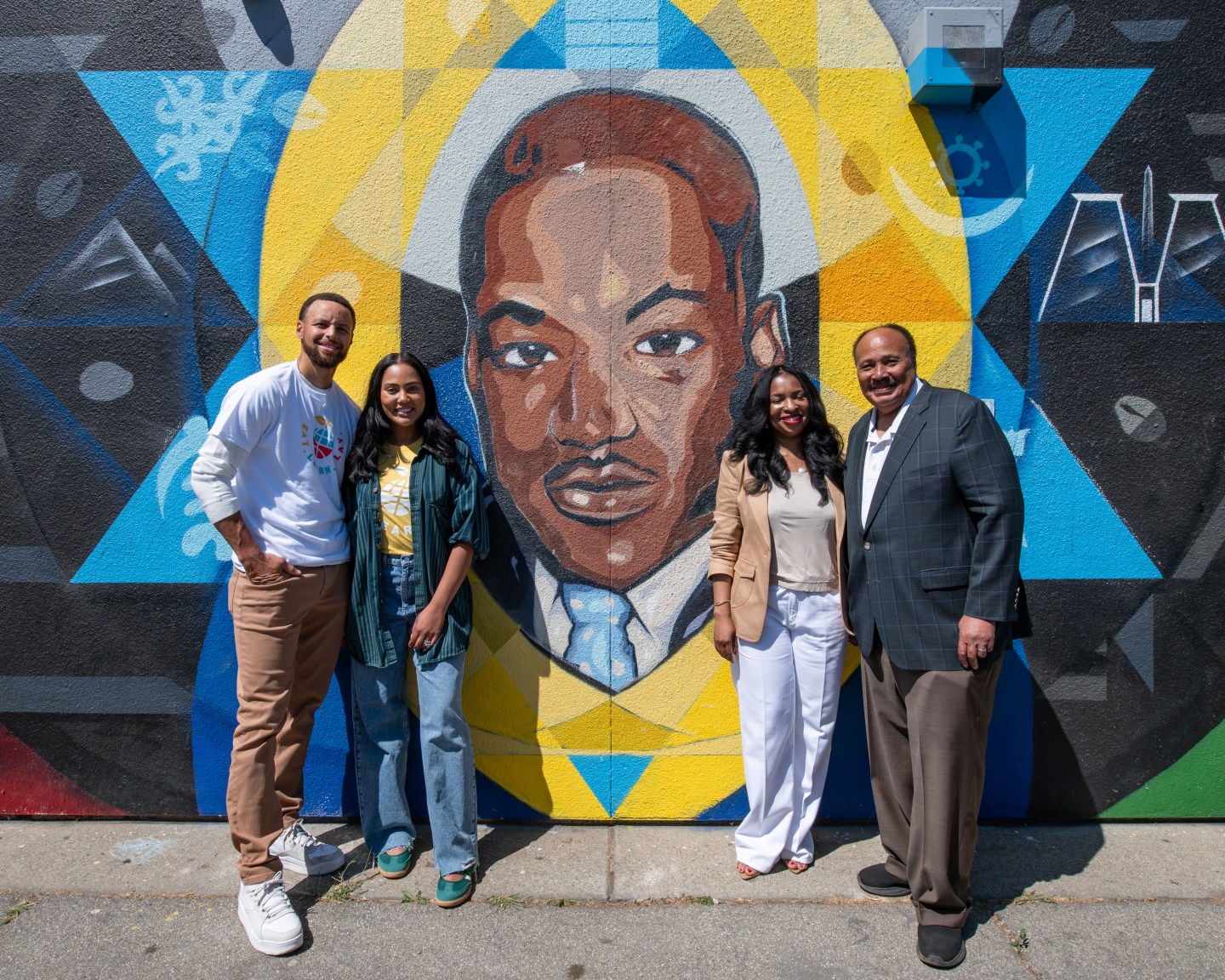
Ayesha and Stephen Curry (L) and Arndrea Waters King and Martin Luther King III (R), who are behind Eat.Play.Learn and Realize the Dream, respectively.
Commentaryphilanthropy
Why time is becoming the new currency of giving
By Arndrea Waters King and Ayesha CurryDecember 2, 2025
1 day ago
Trump
CommentaryTariffs and trade
The trade war was never going to fix our deficit
By Daniel BunnDecember 2, 2025
2 days ago
Elizabeth Kelly
CommentaryNon-Profit
At Anthropic, we believe that AI can increase nonprofit capacity. And we’ve worked with over 100 organizations so far on getting it right
By Elizabeth KellyDecember 2, 2025
2 days ago
Decapitation
CommentaryLeadership
Decapitated by activists: the collapse of CEO tenure and how to fight back
By Mark ThompsonDecember 2, 2025
2 days ago

Most Popular

placeholder alt text
North America
Jeff Bezos and Lauren Sánchez Bezos commit $102.5 million to organizations combating homelessness across the U.S.: ‘This is just the beginning’
By Sydney LakeDecember 2, 2025
1 day ago
placeholder alt text
Economy
Ford workers told their CEO 'none of the young people want to work here.' So Jim Farley took a page out of the founder's playbook
By Sasha RogelbergNovember 28, 2025
5 days ago
placeholder alt text
North America
Anonymous $50 million donation helps cover the next 50 years of tuition for medical lab science students at University of Washington
By The Associated PressDecember 2, 2025
2 days ago
placeholder alt text
C-Suite
MacKenzie Scott's $19 billion donations have turned philanthropy on its head—why her style of giving actually works
By Sydney LakeDecember 2, 2025
2 days ago
placeholder alt text
Innovation
Google CEO Sundar Pichai says we’re just a decade away from a new normal of extraterrestrial data centers
By Sasha RogelbergDecember 1, 2025
2 days ago
placeholder alt text
Law
Netflix gave him $11 million to make his dream show. Instead, prosecutors say he spent it on Rolls-Royces, a Ferrari, and wildly expensive mattresses
By Dave SmithDecember 2, 2025
1 day ago
Rankings
  • 100 Best Companies
  • Fortune 500
  • Global 500
  • Fortune 500 Europe
  • Most Powerful Women
  • Future 50
  • World’s Most Admired Companies
  • See All Rankings
Sections
  • Finance
  • Leadership
  • Success
  • Tech
  • Asia
  • Europe
  • Environment
  • Fortune Crypto
  • Health
  • Retail
  • Lifestyle
  • Politics
  • Newsletters
  • Magazine
  • Features
  • Commentary
  • Mpw
  • CEO Initiative
  • Conferences
  • Personal Finance
  • Education
Customer Support
  • Frequently Asked Questions
  • Customer Service Portal
  • Privacy Policy
  • Terms Of Use
  • Single Issues For Purchase
  • International Print
Commercial Services
  • Advertising
  • Fortune Brand Studio
  • Fortune Analytics
  • Fortune Conferences
  • Business Development
About Us
  • About Us
  • Editorial Calendar
  • Press Center
  • Work At Fortune
  • Diversity And Inclusion
  • Terms And Conditions
  • Site Map

© 2025 Fortune Media IP Limited. All Rights Reserved. Use of this site constitutes acceptance of our Terms of Use and Privacy Policy | CA Notice at Collection and Privacy Notice | Do Not Sell/Share My Personal Information
FORTUNE is a trademark of Fortune Media IP Limited, registered in the U.S. and other countries. FORTUNE may receive compensation for some links to products and services on this website. Offers may be subject to change without notice.