• Home
  • Latest
  • Fortune 500
  • Finance
  • Tech
  • Leadership
  • Lifestyle
  • Rankings
  • Multimedia
CommentaryLabor

America’s Part-Timers Deserve Sick Days Off, Too

By
Eileen Appelbaum 
Eileen Appelbaum 
Down Arrow Button Icon
By
Eileen Appelbaum 
Eileen Appelbaum 
Down Arrow Button Icon
May 2, 2017, 12:35 PM ET
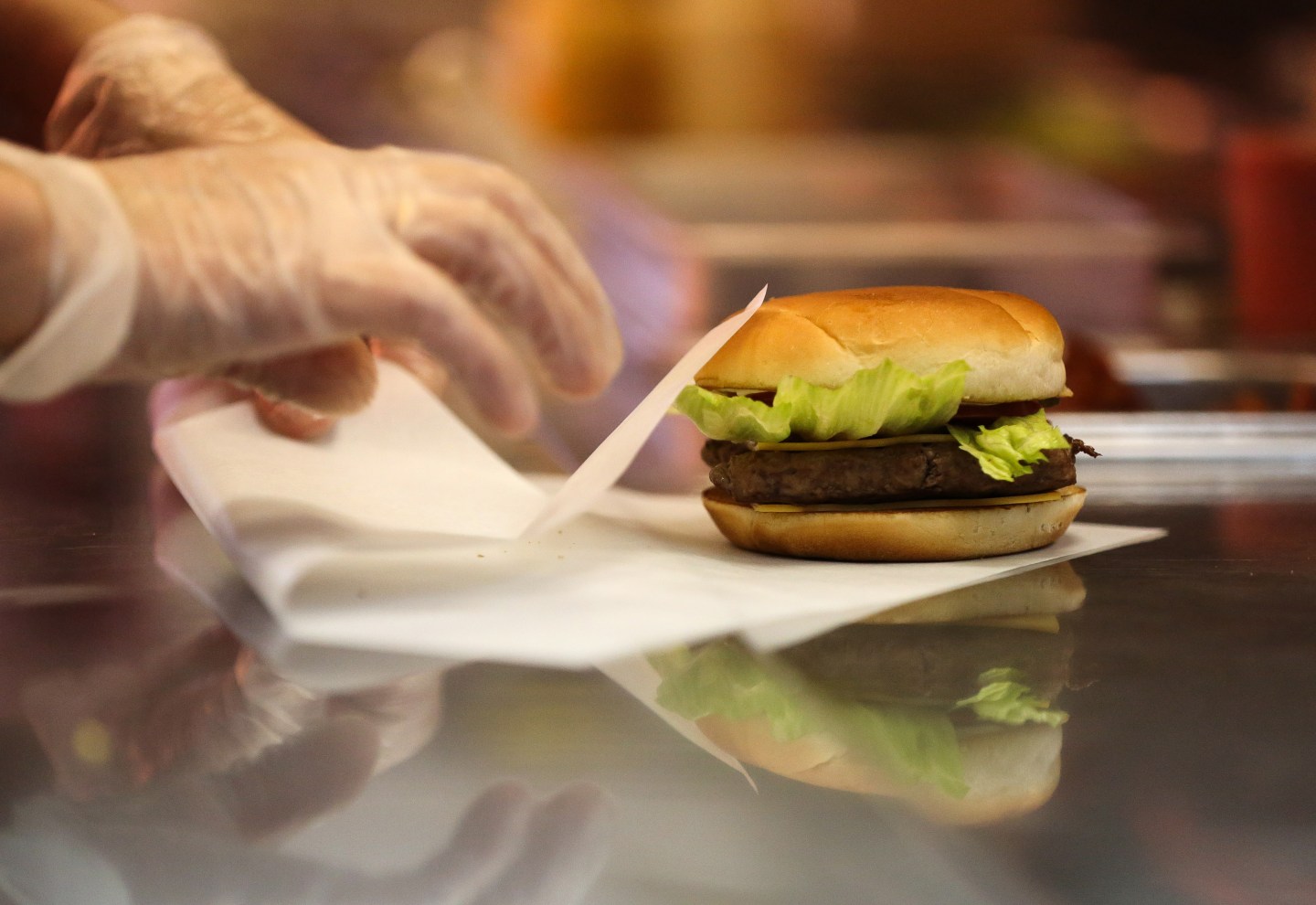
An employee prepares to wrap a freshly made hamburger.
Photograph by Andrey Rudakov—Bloomberg via Getty Images

By the end of this year, workers in seven states and the District of Columbia as well as those in more than two dozen cities will have guaranteed access to paid sick days. They join a handful of cities, including San Francisco and Connecticut, that have made it the law to provide millions of workers with the security of knowing their pay or job is not at risk if they or their child fall ill. Such policies gained traction during the past three years, but recently an unlikely source is moving to stop that progress. The HR Policy Association – a trade group of chief human resource officers from multinational companies – asked Congress to shield employers from paid sick day laws.

While the majority of large US corporations offer paid sick leave, data from the US Bureau of Labor Statistics show that 36% of workers don’t have such protections. Employers may provide paid sick days to workers they care about retaining, but that leaves many behind.

Who exactly? More than half, 70%, of part-time employees go without paid sick leave. What’s more, 61% of low-wage workers aren’t paid if they take a sick day off, while 42% of those who work in retail lack access to paid sick days. It’s even worse in the hotel and food services industry, as a whopping 69% don’t have even one day they can use when sick without losing pay.

So just as more cities and states create laws to protect employees who fall ill from work, some companies are asking Congress to exempt them from these laws, saying that their firms already provide generous leave benefits and so they “should have safe harbor” from state and local mandates. As the data show, this means leaving millions of employees that do not meet their company’s definition of ‘talent’ with no paid leave benefits at all.

And just because a company says they offer paid sick leave, not all employees are treated equal. Research that I conducted with Professor Ruth Milkman at the City University of New York found that while 87% of employers in New York City provided paid sick days to workers, only 58% provided these leaves to all of their employees. The 42% that denied paid sick days to some categories of employees tended to exclude workers employed less than full time. If Congress passes a national safe harbor law, employers would receive immunity from prosecution under the city’s paid sick days law.

What’s interesting is that this and other research we conducted with employers shows that it is relatively easy for companies extend paid sick leave to part-time employees. Workers typically view these paid days as a form of ‘insurance’ and tended to save them for when they might really need them, according to employers we surveyed. Abuse, they reported, was rare, as a large share of workers used no paid sick days at all in the previous year. And among those that did use them, most used less than the five paid days they had available, suggesting that the one-time cost increases associated with paid sick days mandates were relatively small.

The Trump administration must make it clear that there can be no safe harbor for employers. Access to paid sick days must be available to all workers, not left to employers’ determination of who deserves paid time to care for themselves or a loved one.

Eileen Appelbaum is a senior economist at the Center for Economic and Policy Research.

About the Author
By Eileen Appelbaum 
See full bioRight Arrow Button Icon

Latest in Commentary

Julian Braithwaite is the Director General of the International Alliance for Responsible Drinking
CommentaryProductivity
Gen Z is drinking 20% less than Millennials. Productivity is rising. Coincidence? Not quite
By Julian BraithwaiteDecember 13, 2025
48 minutes ago
carbon
Commentaryclimate change
Banking on carbon markets 2.0: why financial institutions should engage with carbon credits
By Usha Rao-MonariDecember 13, 2025
2 hours ago
Dr. Javier Cárdenas is the director of the Rockefeller Neuroscience Institute NeuroPerformance Innovation Center.
Commentaryconcussions
Fists, not football: There is no concussion protocol for domestic violence survivors
By Javier CárdenasDecember 12, 2025
1 day ago
Gary Locke is the former U.S. ambassador to China, U.S. secretary of commerce, and governor of Washington.
CommentaryChina
China is winning the biotech race. Patent reform is how we catch up
By Gary LockeDecember 12, 2025
1 day ago
millennial
CommentaryConsumer Spending
Meet the 2025 holiday white whale: the millennial dad spending $500+ per kid
By Phillip GoerickeDecember 12, 2025
1 day ago
Sarandos
CommentaryAntitrust
Netflix, Warner, Paramount and antitrust: Entertainment megadeal’s outcome must follow the evidence, not politics or fear of integration
By Satya MararDecember 12, 2025
1 day ago

Most Popular

placeholder alt text
Economy
Tariffs are taxes and they were used to finance the federal government until the 1913 income tax. A top economist breaks it down
By Kent JonesDecember 12, 2025
1 day ago
placeholder alt text
Success
Apple cofounder Ronald Wayne sold his 10% stake for $800 in 1976—today it’d be worth up to $400 billion
By Preston ForeDecember 12, 2025
24 hours ago
placeholder alt text
Success
40% of Stanford undergrads receive disability accommodations—but it’s become a college-wide phenomenon as Gen Z try to succeed in the current climate
By Preston ForeDecember 12, 2025
23 hours ago
placeholder alt text
Economy
For the first time since Trump’s tariff rollout, import tax revenue has fallen, threatening his lofty plans to slash the $38 trillion national debt
By Sasha RogelbergDecember 12, 2025
19 hours ago
placeholder alt text
Economy
The Fed just ‘Trump-proofed’ itself with a unanimous move to preempt a potential leadership shake-up
By Jason MaDecember 12, 2025
17 hours ago
placeholder alt text
Success
At 18, doctors gave him three hours to live. He played video games from his hospital bed—and now, he’s built a $10 million-a-year video game studio
By Preston ForeDecember 10, 2025
3 days ago
Rankings
  • 100 Best Companies
  • Fortune 500
  • Global 500
  • Fortune 500 Europe
  • Most Powerful Women
  • Future 50
  • World’s Most Admired Companies
  • See All Rankings
Sections
  • Finance
  • Leadership
  • Success
  • Tech
  • Asia
  • Europe
  • Environment
  • Fortune Crypto
  • Health
  • Retail
  • Lifestyle
  • Politics
  • Newsletters
  • Magazine
  • Features
  • Commentary
  • Mpw
  • CEO Initiative
  • Conferences
  • Personal Finance
  • Education
Customer Support
  • Frequently Asked Questions
  • Customer Service Portal
  • Privacy Policy
  • Terms Of Use
  • Single Issues For Purchase
  • International Print
Commercial Services
  • Advertising
  • Fortune Brand Studio
  • Fortune Analytics
  • Fortune Conferences
  • Business Development
About Us
  • About Us
  • Editorial Calendar
  • Press Center
  • Work At Fortune
  • Diversity And Inclusion
  • Terms And Conditions
  • Site Map

© 2025 Fortune Media IP Limited. All Rights Reserved. Use of this site constitutes acceptance of our Terms of Use and Privacy Policy | CA Notice at Collection and Privacy Notice | Do Not Sell/Share My Personal Information
FORTUNE is a trademark of Fortune Media IP Limited, registered in the U.S. and other countries. FORTUNE may receive compensation for some links to products and services on this website. Offers may be subject to change without notice.