• Home
  • Latest
  • Fortune 500
  • Finance
  • Tech
  • Leadership
  • Lifestyle
  • Rankings
  • Multimedia
Finance

Forget U.S. Stocks. Emerging Markets Are the Place to Be

Shawn Tully
By
Shawn Tully
Shawn Tully
Senior Editor-at-Large
Down Arrow Button Icon
Shawn Tully
By
Shawn Tully
Shawn Tully
Senior Editor-at-Large
Down Arrow Button Icon
March 31, 2017, 2:21 PM ET

Want to know where you can genuinely, realistically expect to pocket double-digit gains on your equity portfolio in the years ahead? Forget the outrageously overpriced U.S. Stateside, the fun is over, but the ride is just beginning in long beaten-down emerging markets, where the odds and the math signal a screaming buy. Let’s turn the spotlight where it should be, on the most underrated, overlooked story in the investment world.

Today, emerging markets are benefiting from a rare confluence of metrics that are all pointing upwards. Those same metrics all auger dark days ahead for the U.S. Emerging market stocks offer remarkably cheap valuations, relatively strong growth rates for earnings, and momentum that’s likely to add extra oomph for a few more quarters. By contrast, the aging U.S. bull market features towering P/Es, peak profits, and an ascent that’s so long in the tooth that euphoria from notching ever-higher highs could soon turn to pessimism.

“It’s a unique spectacle, comparable to a ‘hat trick’ where a hockey player scores three goals in a single game,” says Rob Arnott, chairman of Research Affiliates, a firm that oversees investment strategies for over $170 billion in mutual funds and ETFs. “Fans would throw their hats onto the ice in praise. Now, investors should throw their hats into the rink for emerging markets.”

The main reason emerging-market shares are a great deal is because they’re so cheap. For five years, the asset class suffered brutally from a multitude of hardships, among them a fall in oil and other commodity prices, the slowdown in China, political turmoil in nations such as Brazil and Turkey, and sanctions imposed on Russia. From early 2011 to early 2016, the iShares MSCI Emerging Market Index (incorporating hundreds of large-cap stocks) dropped over 40%, from 50 to 28. Valuations fell to levels not witnessed since the Asian currency crisis of the late 1990s.

But starting in mid-January of last year, buoyed in part by a resurgence in mining and petroleum, emerging markets rebounded, sending the MSCI to 39. Despite the jump, EM shares remain a bargain—keep in mind that they’re still 22% cheaper than in 2011. The asset class still rates a strong “buy” on the best valuation measure, the Shiller Cyclically Adjusted Price-to-Earnings multiple, or CAPE. The CAPE eliminates sharp, temporary swings in earnings that can make shares look artificially inexpensive or pricey by using a 10-year average of inflation-adjusted profits as the ratio’s denominator.

Today, the CAPE for the MSCI is 12. That’s up from around 10 at the trough in early 2016. But it’s still 60% below the reading of 29 for the S&P 500, its highest level since the tech bubble in 2001.

According to Chris Brightman of Research Affiliates, investors can reasonably expect returns of 9% a year from the MSCI over the next decade. Those gains should arise from four building blocks. First, the dividend yield on emerging market shares is 2.6%, significantly above the S&P’s 1.9%. Second, emerging market earnings-per-share should rise at 1.5%, excluding inflation. Although 1.5% sounds modest, it easily waxes the 1% rate that Brightman foresees for the U.S.

The third factor is projected strong appreciation in emerging maraket currencies. Research Affiliates reckons that a basket containing Mexican pesos, Chinese yuan, Indian rupees, and the like are still more than 15% undervalued vs. the dollar, based on relative purchasing power. So Brightman forecasts an annual tailwind of 1.7% a year from currency appreciation through 2026.

Those three components amount to 5.8%. Adding anticipated 2% inflation lifts that number to 7.8%. But here’s the big wedge between likely U.S. and emerging market gains: Brightman projects that “mean reversion,” which is the tendency of markets to return to normal or historic ratios, will lift the P/E on emerging market stocks back to historic averages. That trend will lift emerging market shares another 1.1 points a year, the final building block that lifts the expected return to around 9%.

That last factor, the change in valuation or P/E, illustrates the power of buying markets that are cheap vs. dear. Brightman predicts that the S&P will return only 3% annually over the next decade, far less than the sum of the dividend yield and growth in earnings. The reason: the heavy drag from P/Es tumbling from today’s mountainous levels, a fall that should cut yearly gains by 2.5 points.

It gets better. Research Affiliates is a pioneer in “fundamental indexing.” Its fundamental funds choose stocks in an index such as the MSCI not based on their market cap, but their size in the economy, as determined by a combination of book value, cash flow, dividends, and sales. “So instead of buying more and more of what just rose in price and became expensive, we rebalance into shares that have underperformed and are newly cheap,” says Brightman.

Traditionally, the most coveted and expensive emerging market stocks have been those of local companies that are publicly traded but sell renowned international consumer brands, or tech stocks such as China’s Alibaba and Tencent. Those shares are still relatively expensive.

Because it deploys the “fundamental” methodology, Research Affiliates is underweight in those coveted companies and holds a much bigger concentration of hammered-down value stocks than market-cap based indexes. Its FTSE RAFI Emerging Markets Index is heavily tilted toward severely depressed energy and natural resource stocks that are a gigantic part of the economies of China, Indonesia, or Mexico—but because their prices are so low, a much smaller part of market value of emerging market shares. Brightman and Arnott reckon that they’ll deliver far better returns than the glamor stocks as their valuations rebound to reflect their central importance to their economies.

Arnott acknowledges that a major reason that emerging market stocks are so cheap is the significant risk of an economic slowdown. But he thinks that the chances of a major shock peaked in early 2016 and are now waning, leading to the resurgence since then. “Sometimes good news isn’t needed to ignite a bull market,” he says, “simply less bad news is required.”

Because of the “hat trick” of great factors, emerging markets are providing plenty of cushion for investors that the U.S, despite comparable risks, sorely lacks. We’re witnessing a market whose time has come. As Arnott says, it’s time to toss in your hat.


About the Author
Shawn Tully
By Shawn TullySenior Editor-at-Large

Shawn Tully is a senior editor-at-large at Fortune, covering the biggest trends in business, aviation, politics, and leadership.

See full bioRight Arrow Button Icon

Latest in Finance

Finance
Lorem ipsum dolor sit amet, consectetur adipiscing elit, sed do eiusmod tempor incididunt ut labore et dolore magna aliqua. Ut enim ad minim veniam
By Fortune Editors
October 20, 2025
Finance
Lorem ipsum dolor sit amet, consectetur adipiscing elit, sed do eiusmod tempor incididunt ut labore et dolore magna aliqua. Ut enim ad minim veniam
By Fortune Editors
October 20, 2025
Finance
Lorem ipsum dolor sit amet, consectetur adipiscing elit, sed do eiusmod tempor incididunt ut labore et dolore magna aliqua. Ut enim ad minim veniam
By Fortune Editors
October 20, 2025
Finance
Lorem ipsum dolor sit amet, consectetur adipiscing elit, sed do eiusmod tempor incididunt ut labore et dolore magna aliqua. Ut enim ad minim veniam
By Fortune Editors
October 20, 2025
Finance
Lorem ipsum dolor sit amet, consectetur adipiscing elit, sed do eiusmod tempor incididunt ut labore et dolore magna aliqua. Ut enim ad minim veniam
By Fortune Editors
October 20, 2025
Finance
Lorem ipsum dolor sit amet, consectetur adipiscing elit, sed do eiusmod tempor incididunt ut labore et dolore magna aliqua. Ut enim ad minim veniam
By Fortune Editors
October 20, 2025

Most Popular

Finance
Lorem ipsum dolor sit amet, consectetur adipiscing elit, sed do eiusmod tempor incididunt ut labore et dolore magna aliqua. Ut enim ad minim veniam
By Fortune Editors
October 20, 2025
Finance
Lorem ipsum dolor sit amet, consectetur adipiscing elit, sed do eiusmod tempor incididunt ut labore et dolore magna aliqua. Ut enim ad minim veniam
By Fortune Editors
October 20, 2025
Finance
Lorem ipsum dolor sit amet, consectetur adipiscing elit, sed do eiusmod tempor incididunt ut labore et dolore magna aliqua. Ut enim ad minim veniam
By Fortune Editors
October 20, 2025
Finance
Lorem ipsum dolor sit amet, consectetur adipiscing elit, sed do eiusmod tempor incididunt ut labore et dolore magna aliqua. Ut enim ad minim veniam
By Fortune Editors
October 20, 2025
Finance
Lorem ipsum dolor sit amet, consectetur adipiscing elit, sed do eiusmod tempor incididunt ut labore et dolore magna aliqua. Ut enim ad minim veniam
By Fortune Editors
October 20, 2025
Finance
Lorem ipsum dolor sit amet, consectetur adipiscing elit, sed do eiusmod tempor incididunt ut labore et dolore magna aliqua. Ut enim ad minim veniam
By Fortune Editors
October 20, 2025
Fortune Secondary Logo
Rankings
  • 100 Best Companies
  • Fortune 500
  • Global 500
  • Fortune 500 Europe
  • Most Powerful Women
  • Future 50
  • World’s Most Admired Companies
  • See All Rankings
Sections
  • Finance
  • Fortune Crypto
  • Features
  • Leadership
  • Health
  • Commentary
  • Success
  • Retail
  • Mpw
  • Tech
  • Lifestyle
  • CEO Initiative
  • Asia
  • Politics
  • Conferences
  • Europe
  • Newsletters
  • Personal Finance
  • Environment
  • Magazine
  • Education
Customer Support
  • Frequently Asked Questions
  • Customer Service Portal
  • Privacy Policy
  • Terms Of Use
  • Single Issues For Purchase
  • International Print
Commercial Services
  • Advertising
  • Fortune Brand Studio
  • Fortune Analytics
  • Fortune Conferences
  • Business Development
  • Group Subscriptions
About Us
  • About Us
  • Editorial Calendar
  • Press Center
  • Work At Fortune
  • Diversity And Inclusion
  • Terms And Conditions
  • Site Map
Fortune Secondary Logo
  • About Us
  • Editorial Calendar
  • Press Center
  • Work At Fortune
  • Diversity And Inclusion
  • Terms And Conditions
  • Site Map
  • Facebook icon
  • Twitter icon
  • LinkedIn icon
  • Instagram icon
  • Pinterest icon

Latest in Finance

Middle EastIran
Iran sends conflicting signals on war, highlighting split between leaders looking to de-escalate vs. hard-liners bent on fighting the U.S. and Israel
By Jon Gambrell, Sam Mednick, Samy Magdy and The Associated PressMarch 7, 2026
2 hours ago
EnergyOil
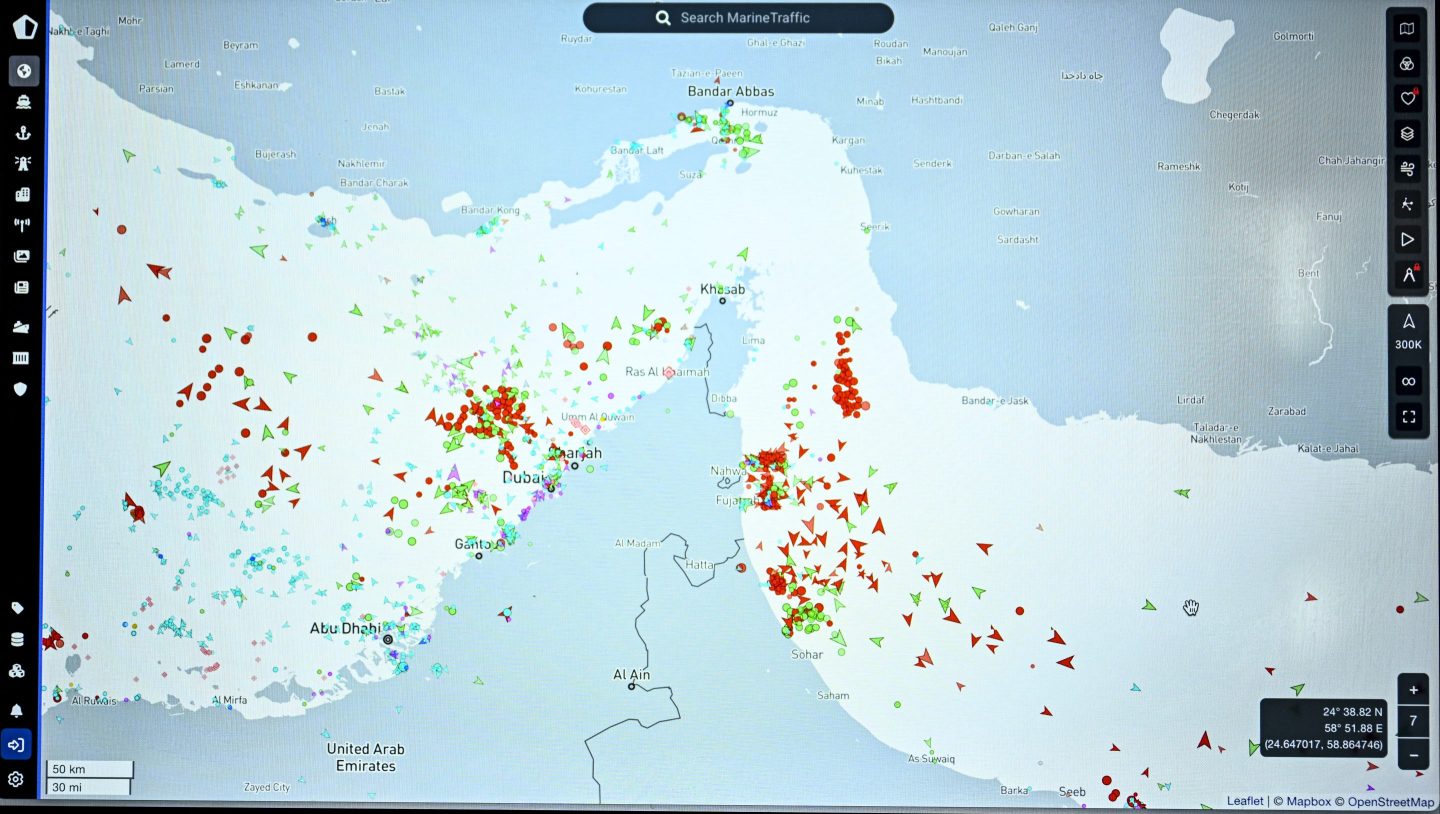
UAE and Kuwait start oil output cuts after Hormuz blockage
By Fiona MacDonald, Anthony Di Paola and BloombergMarch 7, 2026
3 hours ago
EnergyIran
Forget the U.S. Navy, the best protection for ships traveling through the Strait of Hormuz may be claiming to be a ‘Chinese’ or ‘Muslim’ vessel
By Jason MaMarch 7, 2026
5 hours ago
Middle EastIran
The U.S. is sending an AI-powered anti-drone system to the Mideast as response to countering Iran’s Shahed has been ‘disappointing’
By Emma Burrows and The Associated PressMarch 7, 2026
6 hours ago
BankingBanks
Peter Thiel warned AI is coming for ‘math people before word people.’ Banks have already said smaller headcounts are possible
By Jason MaMarch 7, 2026
9 hours ago
Middle EastIran
Saudi Arabia intensifies engagement with Iran to defuse war
By Donato Paolo Mancini, Fiona MacDonald, Samy Adghirni, Sam Dagher and BloombergMarch 7, 2026
11 hours ago

Most Popular

placeholder alt text
AI
Shark Tank's Kevin O'Leary says if he were 25 today, he'd chase these two booming opportunities in the world of AI
By Marco Quiroz-GutierrezMarch 6, 2026
1 day ago
placeholder alt text
Success
Gen Z graduates who majored in ‘AI-proof’ careers like pharmacy, biology, and education are making less than $50,000 after graduation
By Emma BurleighMarch 6, 2026
1 day ago
placeholder alt text
Economy
The Treasury may need to borrow an extra $1.6 trillion to cover the hole left by tariff ruling and pay a further $400 billion in debt interest
By Eleanor PringleMarch 6, 2026
2 days ago
placeholder alt text
AI
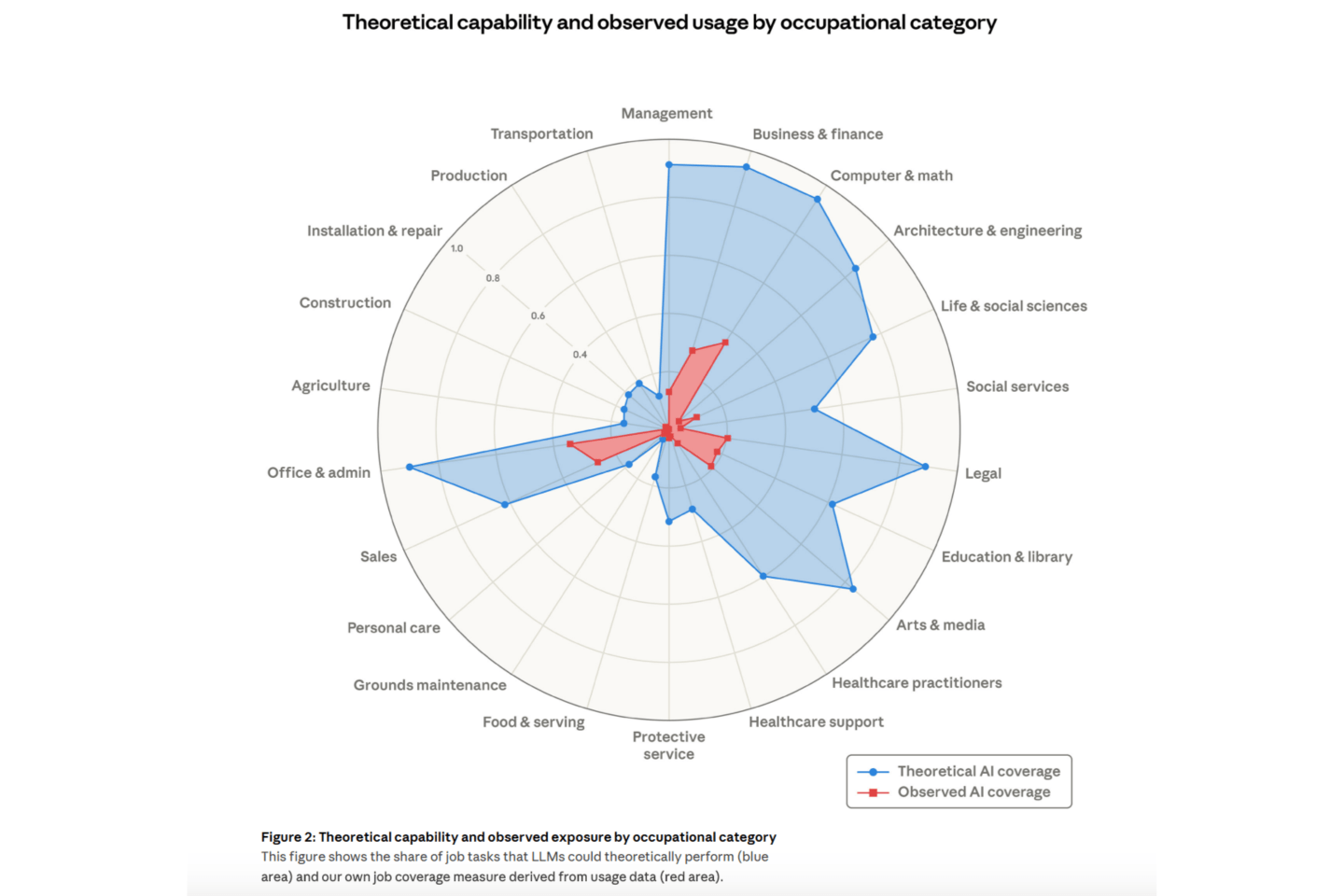
Anthropic just mapped out which jobs AI could potentially replace. A 'Great Recession for white-collar workers' is absolutely possible
By Jake AngeloMarch 6, 2026
1 day ago
placeholder alt text
AI
Nobel laureate Joe Stiglitz says not only can AI take your job, it’ll make the ‘tech bro’ class richer while doing so
By Catherina GioinoMarch 6, 2026
1 day ago
placeholder alt text
Economy
Trump's loss of $1.7 trillion in tariff revenue will send the national debt to $58 trillion by 2036, think tank projects
By Nick LichtenbergMarch 5, 2026
2 days ago

© 2026 Fortune Media IP Limited. All Rights Reserved. Use of this site constitutes acceptance of our Terms of Use and Privacy Policy | CA Notice at Collection and Privacy Notice | Do Not Sell/Share My Personal Information
FORTUNE is a trademark of Fortune Media IP Limited, registered in the U.S. and other countries. FORTUNE may receive compensation for some links to products and services on this website. Offers may be subject to change without notice.