• Home
  • Latest
  • Fortune 500
  • Finance
  • Tech
  • Leadership
  • Lifestyle
  • Rankings
  • Multimedia
CommentaryWikiLeaks

How the CIA-WikiLeaks Drama Could Reignite the DC-Silicon Valley Feud

By
James Andrew Lewis
James Andrew Lewis
Down Arrow Button Icon
By
James Andrew Lewis
James Andrew Lewis
Down Arrow Button Icon
March 13, 2017, 1:03 PM ET
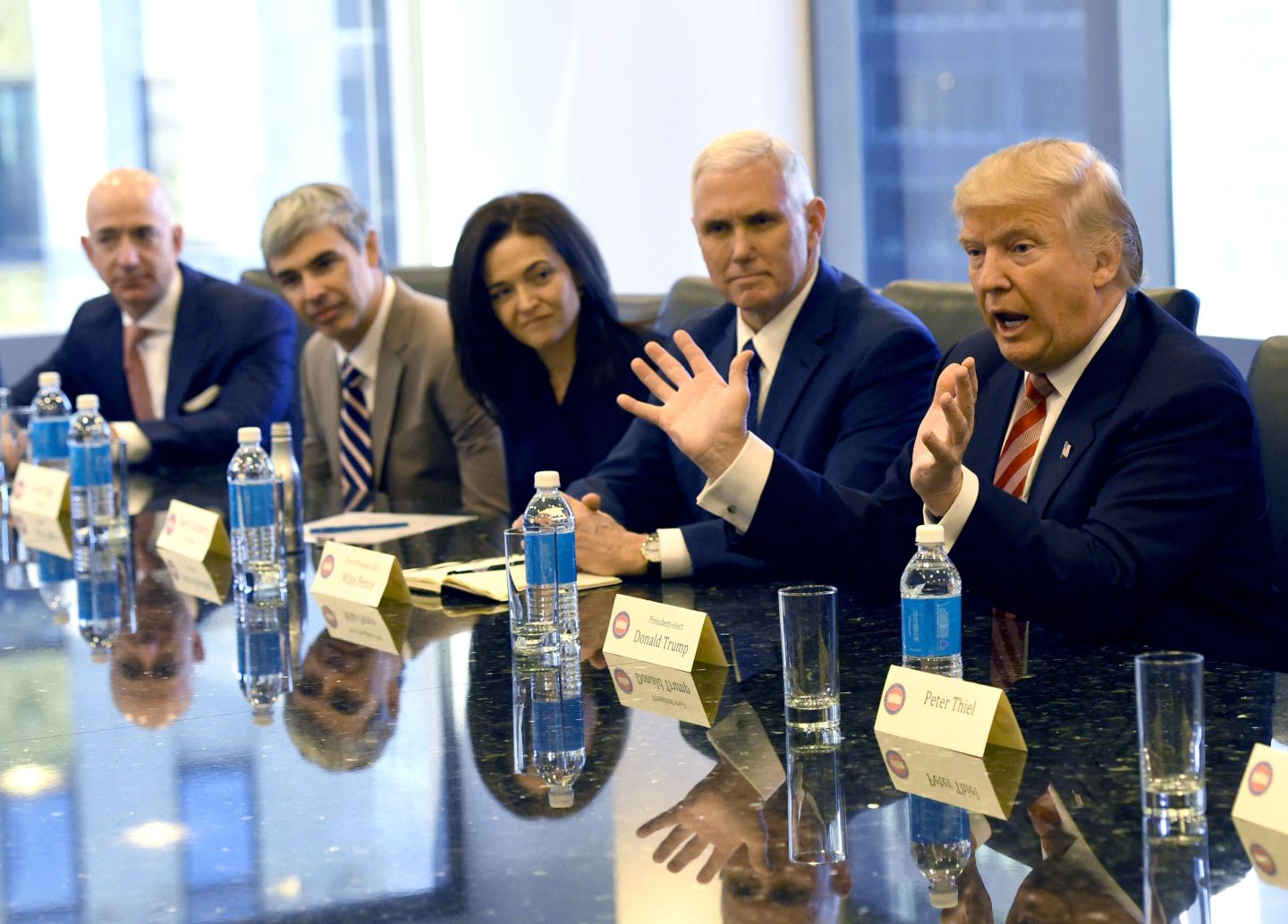
President Donald Trump meeting Silicon Valley leaders
Amazon's chief Jeff Bezos, Larry Page of Alphabet, Facebook COO Sheryl Sandberg, Vice President-elect Mike Pence and President-elect Donald Trump at Trump Tower December 14, 2016.TIMOTHY A. CLARY/AFP/Getty Images

The WikiLeaks revelation this week that the Central Intelligence Agency (CIA) has the ability to spy on people by hacking their Internet-connected devices should not have been a surprise. Nor, frankly, should it be a surprise that the commercial technology we all use is inherently hackable.

Technology’s omnipresent vulnerability was the one of the great revelations of Edward Snowden’s National Security Agency (NSA) disclosures. In 2013, Snowden, a former NSA contractor, copied documents revealing that the agency was running a then-undisclosed global surveillance program.

When the Snowden leaks occurred, big technology companies (which are largely American) rushed to show the global market they are not puppets of the U.S. government. Facebook, Microsoft, Google, and Apple all fought to restore trust, adding encryption to their products and refusing to cooperate in investigations. Facebook, for example, strengthened encryption on its messaging app, WhatsApp. In the most well-known case, Apple refused to cooperate with the FBI in gaining access to an encrypted iPhone used by one of the shooters in the 2015 terrorist attack in San Bernardino, Calif. The FBI eventually found a workaround to access the iPhone without Apple’s help.

In standing up to the government, these companies made the case to their customers that American products can be trusted and that American companies would protect their data. This made perfect sense from a commercial perspective, but it’s naive for companies to refuse to cooperate and expect U.S. agencies to just give up. The CIA tools disclosed by WikiLeaks appear designed to work around the defenses tech companies erected after the Snowden revelations. These agencies are well-resourced, determined entities with immense technical skills. When confronted with encryption on a phone or programs designed to make it difficult for governments to access information, intelligence agencies designed tools to get around the new obstacles. And when these tools are compromised, new ones will be built.

The problem now for Silicon Valley is how to reassure their customers again after these new disclosures. If the documents are indeed true, it means that most tech consumers’ devices are open to being hacked by either the government or a malicious actor. The battle between the tech community and the federal government, which came into sharp relief after San Bernardino, may be about to restart. This would serve no one’s interest.

Some in the tech world would like government agencies to immediately reveal any bug or vulnerability they find, at least to the company that made it. We first heard these calls after the Snowden revelations. In response, the Obama administration created something called the Vulnerabilities Equities Process, an interagency review to decide when the U.S. should reveal a vulnerability it had found and when it should keep it secret for use by intelligence or law enforcement agencies. Companies now also call for a Cyber Geneva Convention where all governments would pledge to reveal immediately any vulnerability they have found.

This is a worthy goal, but it faces two serious problems. First, intelligence agencies have little incentive to give this information up. They can justifiably claim that if they find a vulnerability and are not currently using it, they’ll never know when it might come in handy. Second, and perhaps more importantly, the vulnerabilities we know of (even those the CIA knows) are only a fraction of the universe of total vulnerabilities in information technology.


Hackers, whether government or criminal, are quick to take advantage of these vulnerabilities. And what’s worse, the universe of exploitable vulnerability is growing as we transition to Internet of Things devices, ranging from toasters to cars that for reasons of cost and design are often not very secure. The problem is not that government isn’t telling Silicon Valley about what it finds, the problem is that Silicon Valley—in addition to some car, television, and appliance companies—writes buggy software.

A replay of the San Bernardino debate won’t help anyone. The tech world may have to accept that vulnerability disclosure is not a panacea. Intelligence agencies could do more harm than good if they promise to never exploit a found vulnerability and tell a company immediately when they find one. At the same time, government finger-pointing at Silicon Valley’s imperfect software or new love of encryption is similarly unhelpful. Societies gain more from using buggy technology than they lose. This is why consumers continue to accept the tradeoff of less privacy for more services.

Washington and Silicon Valley would do better—for national security and business purposes—to avoid mutual blame and look for ways to rebuild the discrete partnership they once had in order to share information and fix problems before hackers can exploit them. The relationship was never perfect, but it was better than the status quo.

The goal should not be to fight over disclosing vulnerabilities or blaming people for finding them, but to reduce their number. This will take time, but if America’s East and West Coasts recognize their mutual interests, they might be able to make progress on information security.

James Andrew Lewis is a senior vice president at the Center for Strategic and International Studies.


About the Author
By James Andrew Lewis
See full bioRight Arrow Button Icon

Latest in Commentary

Finance
Lorem ipsum dolor sit amet, consectetur adipiscing elit, sed do eiusmod tempor incididunt ut labore et dolore magna aliqua. Ut enim ad minim veniam
By Fortune Editors
October 20, 2025
Finance
Lorem ipsum dolor sit amet, consectetur adipiscing elit, sed do eiusmod tempor incididunt ut labore et dolore magna aliqua. Ut enim ad minim veniam
By Fortune Editors
October 20, 2025
Finance
Lorem ipsum dolor sit amet, consectetur adipiscing elit, sed do eiusmod tempor incididunt ut labore et dolore magna aliqua. Ut enim ad minim veniam
By Fortune Editors
October 20, 2025
Finance
Lorem ipsum dolor sit amet, consectetur adipiscing elit, sed do eiusmod tempor incididunt ut labore et dolore magna aliqua. Ut enim ad minim veniam
By Fortune Editors
October 20, 2025
Finance
Lorem ipsum dolor sit amet, consectetur adipiscing elit, sed do eiusmod tempor incididunt ut labore et dolore magna aliqua. Ut enim ad minim veniam
By Fortune Editors
October 20, 2025
Finance
Lorem ipsum dolor sit amet, consectetur adipiscing elit, sed do eiusmod tempor incididunt ut labore et dolore magna aliqua. Ut enim ad minim veniam
By Fortune Editors
October 20, 2025

Most Popular

Finance
Lorem ipsum dolor sit amet, consectetur adipiscing elit, sed do eiusmod tempor incididunt ut labore et dolore magna aliqua. Ut enim ad minim veniam
By Fortune Editors
October 20, 2025
Finance
Lorem ipsum dolor sit amet, consectetur adipiscing elit, sed do eiusmod tempor incididunt ut labore et dolore magna aliqua. Ut enim ad minim veniam
By Fortune Editors
October 20, 2025
Finance
Lorem ipsum dolor sit amet, consectetur adipiscing elit, sed do eiusmod tempor incididunt ut labore et dolore magna aliqua. Ut enim ad minim veniam
By Fortune Editors
October 20, 2025
Finance
Lorem ipsum dolor sit amet, consectetur adipiscing elit, sed do eiusmod tempor incididunt ut labore et dolore magna aliqua. Ut enim ad minim veniam
By Fortune Editors
October 20, 2025
Finance
Lorem ipsum dolor sit amet, consectetur adipiscing elit, sed do eiusmod tempor incididunt ut labore et dolore magna aliqua. Ut enim ad minim veniam
By Fortune Editors
October 20, 2025
Finance
Lorem ipsum dolor sit amet, consectetur adipiscing elit, sed do eiusmod tempor incididunt ut labore et dolore magna aliqua. Ut enim ad minim veniam
By Fortune Editors
October 20, 2025
Rankings
  • 100 Best Companies
  • Fortune 500
  • Global 500
  • Fortune 500 Europe
  • Most Powerful Women
  • Future 50
  • World’s Most Admired Companies
  • See All Rankings
Sections
  • Finance
  • Leadership
  • Success
  • Tech
  • Asia
  • Europe
  • Environment
  • Fortune Crypto
  • Health
  • Retail
  • Lifestyle
  • Politics
  • Newsletters
  • Magazine
  • Features
  • Commentary
  • Mpw
  • CEO Initiative
  • Conferences
  • Personal Finance
  • Education
Customer Support
  • Frequently Asked Questions
  • Customer Service Portal
  • Privacy Policy
  • Terms Of Use
  • Single Issues For Purchase
  • International Print
Commercial Services
  • Advertising
  • Fortune Brand Studio
  • Fortune Analytics
  • Fortune Conferences
  • Business Development
About Us
  • About Us
  • Editorial Calendar
  • Press Center
  • Work At Fortune
  • Diversity And Inclusion
  • Terms And Conditions
  • Site Map

© 2025 Fortune Media IP Limited. All Rights Reserved. Use of this site constitutes acceptance of our Terms of Use and Privacy Policy | CA Notice at Collection and Privacy Notice | Do Not Sell/Share My Personal Information
FORTUNE is a trademark of Fortune Media IP Limited, registered in the U.S. and other countries. FORTUNE may receive compensation for some links to products and services on this website. Offers may be subject to change without notice.


Latest in Commentary

Federal Reserve Gov. Chris Waller engages 200 top CEOs at the Yale CEO Summit in December, 2025. (Photo courtesy of the Yale Chief Executive Leadership Institute/Photographer Donovan Marks)
CommentaryFederal Reserve
Why over 80% of America’s top CEOs think Trump would be wrong not to pick Chris Waller for Fed chair
By Jeffrey Sonnenfeld and Steven TianDecember 27, 2025
43 minutes ago
Kence Anderson is the founder and CEO of AMESA 
CommentarySoftware
I pioneered machine teaching at Microsoft. Building AI agents is like building a basketball team, not drafting a player 
By Kence AndersonDecember 27, 2025
2 hours ago
Butch Meily
Commentaryempathy
The global empathy crisis that confronts us this Christmas
By Butch MeilyDecember 25, 2025
2 days ago
economy
CommentaryGDP
Why 4.3% GDP growth proves the ‘vibecession’ theory is historically wrong
By Brian HamiltonDecember 24, 2025
3 days ago
students
CommentaryEducation
Why restricting graduate loans will bankrupt America’s talent supply chain
By Katica RoyDecember 23, 2025
4 days ago
Arnault
CommentaryLuxury
The secrets of what Arnault knows: How Bernard Arnault built the impossible, and his timeless, transferable lessons of leadership 
By Jeffrey Sonnenfeld and Steven TianDecember 23, 2025
4 days ago

Most Popular

placeholder alt text
Retail
Trump just declared December 26th a national holiday. What's open and closed?
By Dave SmithDecember 26, 2025
1 day ago
placeholder alt text
Success
As millions of Gen Zers face unemployment, CEOs of Amazon, Walmart, and McDonald's say opportunity is still there—if you have the right mindset
By Preston ForeDecember 26, 2025
1 day ago
placeholder alt text
Investing
Logan Paul auctions off $5.3 million Pokémon card, urging young people to invest more in nontraditional assets: 'Don't be afraid to take a risk'
By Sydney LakeDecember 25, 2025
2 days ago
placeholder alt text
Real Estate
Mark Zuckerberg gifted noise-canceling headphones to his Palo Alto neighbors because of the nonstop construction around his 11 homes
By Dave SmithDecember 25, 2025
2 days ago
placeholder alt text
Success
Billionaire philanthropy's growing divide: Mark Zuckerberg stops funding immigration reform as MacKenzie Scott doubles down on DEI
By Ashley LutzDecember 22, 2025
5 days ago
placeholder alt text
Economy
Trump's tariffs actually slashed the deficit from a record $136.4 billion to less than half that. Here's what else they did
By Wyatte Grantham-Philips, Paul Wiseman and The Associated PressDecember 26, 2025
22 hours ago