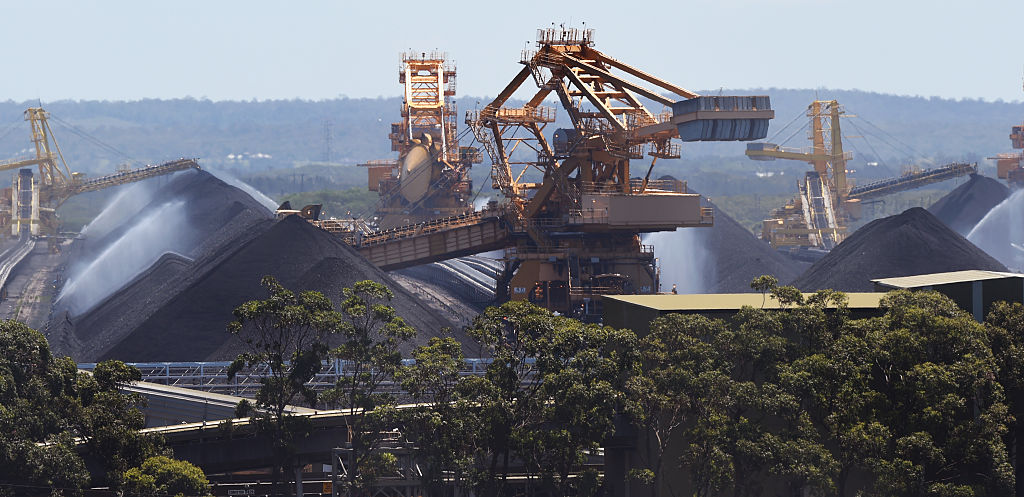
The rise of wind and solar power in Australia was supposed to be the death knell for coal use in the world’s biggest exporter of the fossil fuel, but the shunned fuel is finding a new lease of life and may yet attract subsidies to keep the lights on.
Growth in electricity demand and a drop in supply since 2014 have strained the Australian grid, triggering outages amid heatwaves and storms. The worst—an eight-hour blackout in South Australia last year—crippled industry for up to two weeks and provoked public outrage.
Supplies are set to tighten with France’s Engie SA closing Australia’s dirtiest power station, Hazelwood, this month. That means the national electricity market will need to replace about 10,350 gigawatt hours of “baseload power” that can be called upon when the wind isn’t blowing and the sun isn’t shining.
“That’s our concern: this could get worse before it gets better,” said Matthew Warren, chief executive of the Australian Energy Council, which represents generators.
More than half the shortfall will be needed from remaining coal-fired plants and the rest from restarting mothballed gas-fired power plants, the Australian Energy Market Operator says.
The pressure is now on the government to make it happen.
“The blackout in South Australia was a real wake-up call when 1.7 million people went into the black,” Energy and Environment Minister Josh Frydenberg told Reuters in an email, adding that security and affordability were the government’s top energy priorities.
In the short term, the government and market operator will have to change the way the market prices electricity to put a premium on baseload power, generators and industrial users say.
Financial incentives are needed for one or more generators to supply baseload power when needed, companies including Origin Energy and BHP Billiton have said in recommendations to a federal review into the security of the national power market, due to be completed by mid-year.
“It needs to be enough to enable those (baseload plants) to run. They may run more frequently or they need to be running on reserves so they can start quickly,” Origin Chief Executive Frank Calabria said recently.
The upshot for consumers? Power bills will have to rise further, in a country where household electricity prices have roughly tripled since 2000.
Manufacturers, like steel maker BlueScope Steel, (BLSFY) already complain that Australian power prices are five to 10 times more than they are in the United States.
Subsidies For Coal?
The clamor for baseload power follows the rise of wind and solar to make up 7% of Australia’s generation mix as of 2015, backed by government subsidies.
Coal-fired power has fallen to around 63% of Australia’s total generation as of 2015, government data show, down from around 80% in 2000.
None of the country’s major generators—AGL Energy (AGLNY), Engie, Origin (OGFGY) or Hong Kong’s CLP Holdings unit EnergyAustralia—wants to build new coal-fired plants, as their customers and shareholders push for cleaner energy.
So beyond new market mechanisms, the government is now considering helping fund construction of new high efficiency-low emissions (HELE) power plants.
The Queensland Resources Council has called for a new HELE coal-fired plant in north Queensland to help keep a lid on electricity prices, which are hurting two alumina refineries and have already led mining giant Rio Tinto to cut output at an aluminum smelter.
“We’ve got to have baseload capacity. And at the moment the only answer to that is coal,” said QRC chief executive Ian Macfarlane, highlighting the lack of major hydro opportunities, opposition to nuclear power and a shortage of available gas.
While many see battery storage as the ideal solution to stabilizing wind and solar power supplies, affordable utility-scale storage is not expected to be available anytime soon.
For more about energy, watch Fortune’s video:
To bridge the gap, Frydenberg says the government could revise the mandate for its Clean Energy Finance Corp to allow funding for carbon capture and storage (CCS) technology. The technology is costly and controversial, consuming a lot of power to inject carbon dioxide deep underground.
Waratah Coal, owned by former mining magnate Clive Palmer, has since sought funding from the agency for a $1.8 billion, 900 megawatt power plant with CCS, a project that has been stuck on the drawing board for years.
“HELE should definitely be considered as part of the Australian energy mix. Coal is cheaper than gas and is in abundant supply,” New Hope Coal Chief Executive Shane Stephan told Reuters.
Japanese and Korean firms that build HELE plants stand to benefit if the government promotes ultra super critical boilers, which run at very high temperatures, so need less coal for each megawatt hour of power and emit less carbon dioxide.
But CCS would also need subsidies, as generators currently do not see it as affordable.
“At this stage we don’t believe CCS is an economically viable option for the Yallourn power station,” said a spokeswoman for EnergyAustralia, referring to what will be Australia’s dirtiest power station after Hazelwood shuts.