• Home
  • Latest
  • Fortune 500
  • Finance
  • Tech
  • Leadership
  • Lifestyle
  • Rankings
  • Multimedia
Tech

Mark Zuckerberg Is Starting to Take Some Responsibility for Facebook’s Influence

By
Mathew Ingram
Mathew Ingram
Down Arrow Button Icon
By
Mathew Ingram
Mathew Ingram
Down Arrow Button Icon
February 17, 2017, 4:18 PM ET
Facebook To Detail Updates To News Feed At Press Event
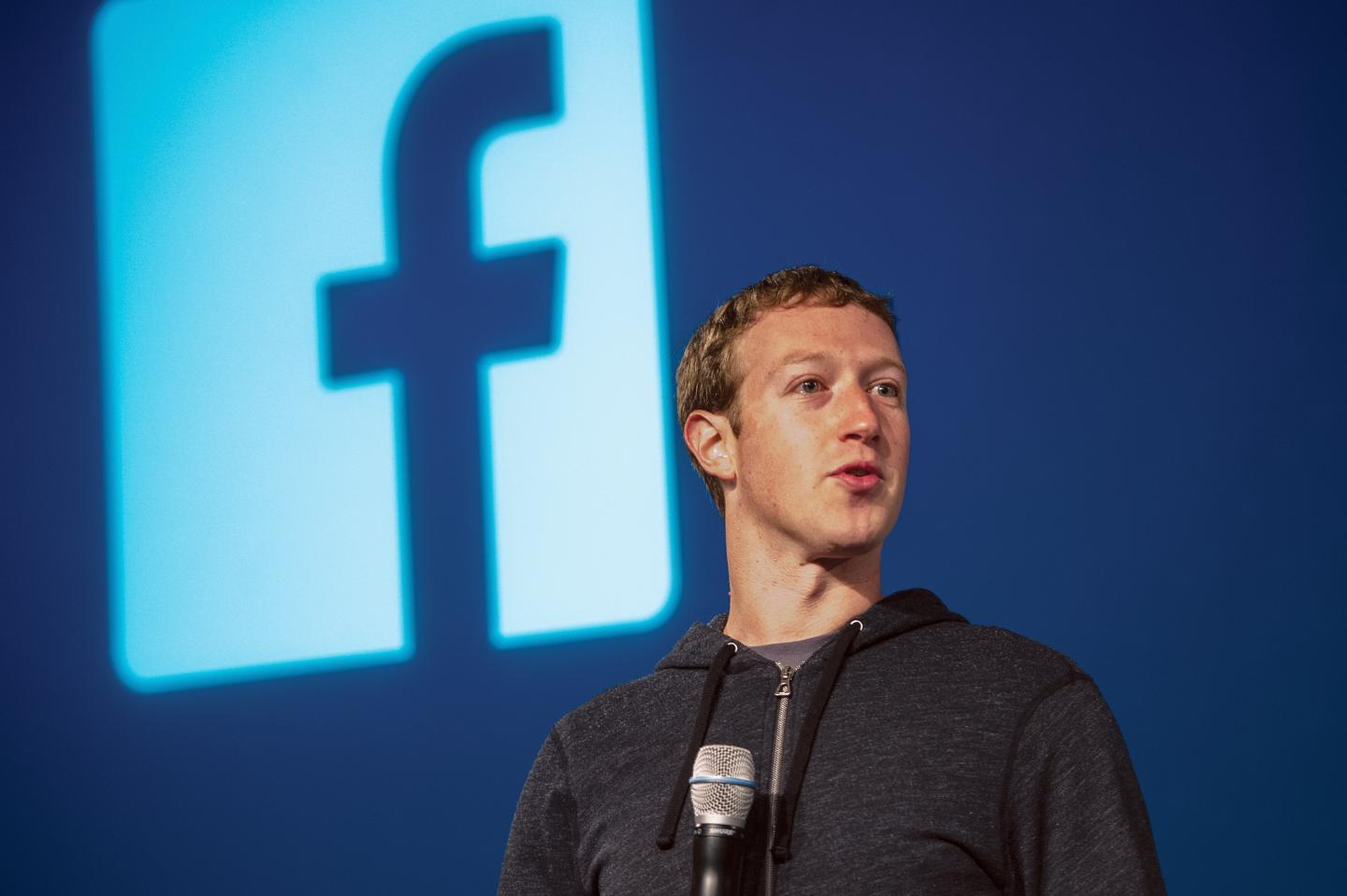
Mark Zuckerberg, chief executive officer and founder of Facebook Inc., speaks during an event at the company's headquarters in Menlo Park, California, U.S., on Thursday, March 7, 2013. Zuckerberg discussed the social-network site's upgraded News Feed which includes bigger photos, information sorted into topics and a more consistent design across devices. Photographer: David Paul Morris/Bloomberg via Getty ImagesBloomberg Bloomberg via Getty Images

Facebook co-founder and CEO Mark Zuckerberg likes to write open letters during times of great import. He wrote one when the company went public, he wrote one to his infant daughter when he became a father, and he has written a new one that was published on Thursday.

So why is now a time that requires an almost 6,000-word essay touching on world affairs, U.S. politics, the value of high-quality journalism, and the crumbling social fabric of America? Because it seems that Zuckerberg has become “woke,” as the kids like to say.

In other words, the Facebook co-founder seems to have awakened to some of the unintended consequences of the mega-platform that he has built. On a lot of issues, he tells Recode’s Kara Swisher that his “views have become more nuanced.”

In the case of the media, for example, Zuckerberg has undergone a significant evolution from his original position just after the election, when he scoffed at the idea that “fake news” distributed on the social network was a problem, and reiterated his position that Facebook is not a media company—and therefore is more or less blameless when it comes to such things.

Since then, Zuckerberg has admitted that disinformation spread via social media is a problem, and that Facebook (FB) needs to help. He has instituted a series of moves to help fact-check news stories on the network. Facebook also started a journalism project, and reached out to local media outlets.

Get Data Sheet, Fortune’s technology newsletter.

Some of this might just be a public relations exercise, designed to simulate interest in the problem in order to get critics off his back. But in his letter at least, the Facebook CEO confronted the problem head on, saying: “Giving everyone a voice has historically been a very positive force for public discourse because it increases the diversity of ideas shared. But the past year has also shown it may fragment our shared sense of reality.”

He goes on to say:

We know there is misinformation and even outright hoax content on Facebook, and we take this very seriously. We’ve made progress fighting hoaxes the way we fight spam, but we have more work to do. We are proceeding carefully because there is not always a clear line between hoaxes, satire and opinion.

Zuckerberg has clearly been listening to critics of the attempt to get Facebook to arbitrate what is true and what isn’t, who argue that putting this power in the hands of a single company is unwise. As the Facebook CEO says: “In a free society, it’s important that people have the power to share their opinion, even if others think they’re wrong. Our approach will focus less on banning misinformation, and more on surfacing additional perspectives and information.”

In a larger sense, Zuckerberg seems to be admitting in his essay that Facebook’s original, somewhat simplistic goal—to bring the world together and connect everyone to everyone else—was a little flawed, or at least didn’t take into account some realities of the world in which we live.

If you are trying to create a single, unified global platform with homogeneous standards and practices for billions of people—which Facebook has arguably been trying to do—then you are doomed to fail. This has happened in both large and small ways, whether it’s Facebook removing breast-feeding photos because they might offend someone, or taking down historic Vietnam war pictures.

As Zuckerberg puts it in his letter, “there are questions about whether we can make a global community that works for everyone, and whether the path ahead is to connect more or reverse course.” Needless to say, the Facebook co-founder’s default is to connect more, but he admits that “our community spans many countries and cultures, and the norms are different in each region.”

The solution, he says, is to allow for more personal customization, so that each user can decide what they wish to see or not see. And for those who argue that this perpetuates “filter bubbles,” Zuckerberg says that Facebook will try to expose users to alternate perspectives.

But he is also aware of the dangers of doing this, which he describes in this way:

Research shows that some of the most obvious ideas, like showing people an article from the opposite perspective, actually deepen polarization by framing other perspectives as foreign. A more effective approach is to show a range of perspectives, let people see where their views are on a spectrum and come to a conclusion on what they think is right.

The Facebook CEO also seems to be aware of how much social platforms like his (and Twitter (TWTR), for that matter) encourage people to take extreme positions, or create division in order to get attention.

“Social media is a short-form medium where resonant messages get amplified many times,” Zuckerberg says. “This rewards simplicity and discourages nuance. At its worst, it oversimplifies important topics and pushes us towards extremes.”

So what can Facebook do to solve these problems, when the whole structure of the network—not to mention the monetization model—is arguably oriented towards maintaining the status quo? Zuckerberg is a little vague on how that is going to happen. He talks about better tools for understanding each other, better ways to have conversations, connecting more people from different walks of life, etc. But there is little about how exactly those will work.

Perhaps there are some social and political (and even just human) problems that not even Facebook and Mark Zuckerberg can solve—as well-intentioned as they might be.

About the Author
By Mathew Ingram
See full bioRight Arrow Button Icon

Latest in Tech

Finance
Lorem ipsum dolor sit amet, consectetur adipiscing elit, sed do eiusmod tempor incididunt ut labore et dolore magna aliqua. Ut enim ad minim veniam
By Fortune Editors
October 20, 2025
Finance
Lorem ipsum dolor sit amet, consectetur adipiscing elit, sed do eiusmod tempor incididunt ut labore et dolore magna aliqua. Ut enim ad minim veniam
By Fortune Editors
October 20, 2025
Finance
Lorem ipsum dolor sit amet, consectetur adipiscing elit, sed do eiusmod tempor incididunt ut labore et dolore magna aliqua. Ut enim ad minim veniam
By Fortune Editors
October 20, 2025
Finance
Lorem ipsum dolor sit amet, consectetur adipiscing elit, sed do eiusmod tempor incididunt ut labore et dolore magna aliqua. Ut enim ad minim veniam
By Fortune Editors
October 20, 2025
Finance
Lorem ipsum dolor sit amet, consectetur adipiscing elit, sed do eiusmod tempor incididunt ut labore et dolore magna aliqua. Ut enim ad minim veniam
By Fortune Editors
October 20, 2025
Finance
Lorem ipsum dolor sit amet, consectetur adipiscing elit, sed do eiusmod tempor incididunt ut labore et dolore magna aliqua. Ut enim ad minim veniam
By Fortune Editors
October 20, 2025

Most Popular

Finance
Lorem ipsum dolor sit amet, consectetur adipiscing elit, sed do eiusmod tempor incididunt ut labore et dolore magna aliqua. Ut enim ad minim veniam
By Fortune Editors
October 20, 2025
Finance
Lorem ipsum dolor sit amet, consectetur adipiscing elit, sed do eiusmod tempor incididunt ut labore et dolore magna aliqua. Ut enim ad minim veniam
By Fortune Editors
October 20, 2025
Finance
Lorem ipsum dolor sit amet, consectetur adipiscing elit, sed do eiusmod tempor incididunt ut labore et dolore magna aliqua. Ut enim ad minim veniam
By Fortune Editors
October 20, 2025
Finance
Lorem ipsum dolor sit amet, consectetur adipiscing elit, sed do eiusmod tempor incididunt ut labore et dolore magna aliqua. Ut enim ad minim veniam
By Fortune Editors
October 20, 2025
Finance
Lorem ipsum dolor sit amet, consectetur adipiscing elit, sed do eiusmod tempor incididunt ut labore et dolore magna aliqua. Ut enim ad minim veniam
By Fortune Editors
October 20, 2025
Finance
Lorem ipsum dolor sit amet, consectetur adipiscing elit, sed do eiusmod tempor incididunt ut labore et dolore magna aliqua. Ut enim ad minim veniam
By Fortune Editors
October 20, 2025
Fortune Secondary Logo
Rankings
  • 100 Best Companies
  • Fortune 500
  • Global 500
  • Fortune 500 Europe
  • Most Powerful Women
  • World's Most Admired Companies
  • See All Rankings
  • Lists Calendar
Sections
  • Finance
  • Fortune Crypto
  • Features
  • Leadership
  • Health
  • Commentary
  • Success
  • Retail
  • Mpw
  • Tech
  • Lifestyle
  • CEO Initiative
  • Asia
  • Politics
  • Conferences
  • Europe
  • Newsletters
  • Personal Finance
  • Environment
  • Magazine
  • Education
Customer Support
  • Frequently Asked Questions
  • Customer Service Portal
  • Privacy Policy
  • Terms Of Use
  • Single Issues For Purchase
  • International Print
Commercial Services
  • Advertising
  • Fortune Brand Studio
  • Fortune Analytics
  • Fortune Conferences
  • Business Development
  • Group Subscriptions
About Us
  • About Us
  • Press Center
  • Work At Fortune
  • Terms And Conditions
  • Site Map
  • About Us
  • Press Center
  • Work At Fortune
  • Terms And Conditions
  • Site Map
  • Facebook icon
  • Twitter icon
  • LinkedIn icon
  • Instagram icon
  • Pinterest icon

Latest in Tech

Photo of vegan cheese products
AITech
A Mark Cuban–backed vegan cheese company trained AI to scrutinize cardboard boxes. It’s saved $400,000
By Jake AngeloMay 1, 2026
8 hours ago
Young trade worker learning on job
SuccessHiring
Forget Big Tech: Small businesses will hire nearly 1 million grads in 2026—and some of the hottest roles are gloriously AI-proof
By Emma BurleighMay 1, 2026
9 hours ago
Andrew McAfee
SuccessCareers
MIT AI expert warns automating Gen Z entry-level jobs could backfire—and cost companies their future workforce
By Preston ForeMay 1, 2026
9 hours ago
duke
Big TechAmazon
Amazon Prime Video reaches deal with Duke Blue Devils to air 3 games per season
By The Associated PressMay 1, 2026
11 hours ago
valerie
CommentaryLayoffs
Tesla’s former HR chief: the AI layoff panic Is built on a false premise—here’s what most workers need to know
By Valerie Capers WorkmanMay 1, 2026
12 hours ago
AI
AIdisruption
Meet the Americans dismissing AI hype and using it with ingenuity: ‘The efficiencies gained out of it have been tremendous’
By Cathy Bussewitz and The Associated PressMay 1, 2026
12 hours ago

Most Popular

Scott Bessent on financial literacy: 'it drives me crazy' to see young men in blue-collar construction jobs playing the lottery
Personal Finance
Scott Bessent on financial literacy: 'it drives me crazy' to see young men in blue-collar construction jobs playing the lottery
By Fatima Hussein and The Associated PressMay 1, 2026
12 hours ago
China dominates the world's lithium supply. The U.S. just found 328 years' worth in its own backyard
North America
China dominates the world's lithium supply. The U.S. just found 328 years' worth in its own backyard
By Jake AngeloApril 30, 2026
1 day ago
The U.S. economy is booming — just not where 50 million Americans live
Commentary
The U.S. economy is booming — just not where 50 million Americans live
By Derek KilmerMay 1, 2026
16 hours ago
Accenture's Julie Sweet blew up 50 years of company history. She says the hardest part is still ahead
Conferences
Accenture's Julie Sweet blew up 50 years of company history. She says the hardest part is still ahead
By Nick LichtenbergApril 29, 2026
3 days ago
Apple cofounder Ronald Wayne—whose stake would be worth up to $400 billion had he not sold it in 1976—says that at 91, he has no regrets
Success
Apple cofounder Ronald Wayne—whose stake would be worth up to $400 billion had he not sold it in 1976—says that at 91, he has no regrets
By Preston ForeApril 27, 2026
4 days ago
Exclusive: America's largest Black-owned bank launches podcast with mission to unlock hidden shame holding back generational wealth
Banking
Exclusive: America's largest Black-owned bank launches podcast with mission to unlock hidden shame holding back generational wealth
By Nick LichtenbergApril 29, 2026
2 days ago

© 2026 Fortune Media IP Limited. All Rights Reserved. Use of this site constitutes acceptance of our Terms of Use and Privacy Policy | CA Notice at Collection and Privacy Notice | Do Not Sell/Share My Personal Information
FORTUNE is a trademark of Fortune Media IP Limited, registered in the U.S. and other countries. FORTUNE may receive compensation for some links to products and services on this website. Offers may be subject to change without notice.