The media business is a mess right now, and a big reason is shifty companies that plaster fake news and shady ads all over the web. These companies thrive by dangling “clickbait” stories to draw readers into Internet rabbit holes of health and mortgage scams.
This won’t be news to people in the media industry—or anyone who’s been on the Internet for that matter. Spend 10 minutes surfing the web, and you’ll come across one of these ads, many of them displaying the faces of famous people. The ads will promise to reveal things like billionaire Warren Buffett’s prophecy of financial doom or the secret behind Donald Trump’s daughter, Tiffany.
This is a huge problem for two reasons. First, it amounts to a sort of intellectual pollution that spreads paranoia and misinformation. And second, the epidemic of garbage ads is sucking up advertising revenue that real news outlets (the ones that do actual reporting) could desperately use.
Is there a way to stop the flood of misleading ads? Not entirely, but some media types have raised an interesting solution that could help a lot. It revolves around the same celebrities whose image is often used without their consent to induce— readers to enter the Internet-cesspool.
Get Data Sheet, Fortune’s technology newsletter.
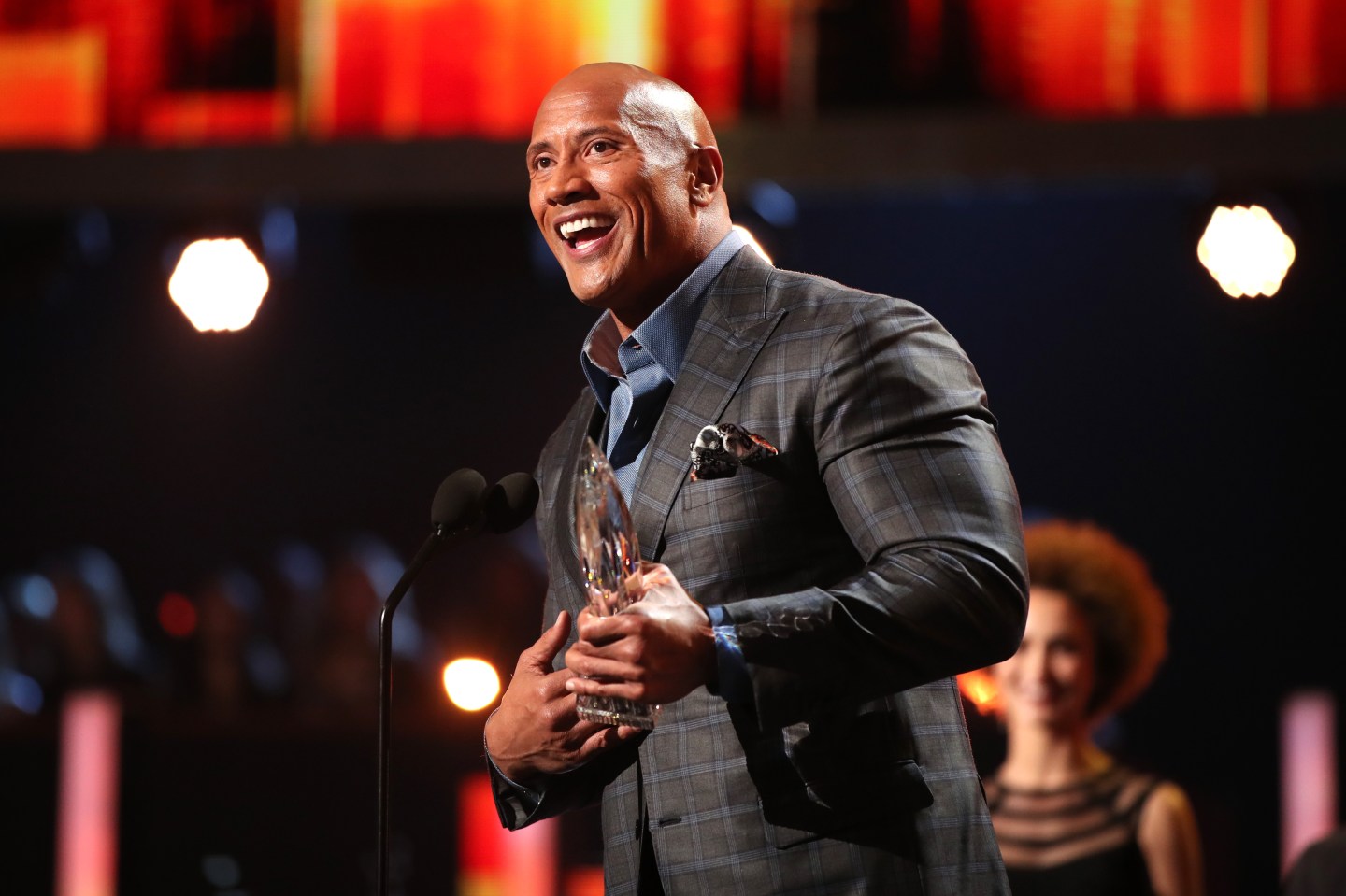
The possible solution arose when Ryan Singel, who runs a (non-garbage) website for publishers called Contextly, pointed to a Washington Post ad that suggested actor Dwayne Johnson, more widely known as The Rock, was in serious criminal trouble. Clicking on the ad led the reader to a fake sports site hawking some sort of nutritional supplement:
If you click on the ad, you get taken to a fake ESPN site, that's touting a fake muscle stimulant product. pic.twitter.com/6JN48qLTDb
— Ryan Singel – @ryansingel@writing.exchange (@rsingel) January 10, 2017
As Singel and others pointed out, it’s a safe bet The Rock didn’t sign up to be part of this advertising racket.
The same can be said of Tiffany Trump. During her father’s presidential campaign, it was almost impossible not to stumble on the ubiquitous ad below, which featured a highly unflattering picture of Tiffany and implied some sort of sinister secret about her:

If you clicked on the ad, you quickly discovered the “story” in question offered nothing salacious about Tiffany, but instead a mundane slide show about the Trump family. The slide show appeared on a site called Wizzed, which is run by a U.K. teenager, and its whole purpose appears to be racking up rack up page-views through gimmicks in order to and make money from the ads. Is it fair for Wizzed to use Tiffany this way?
Paul Ford, who runs a New York production studio, is among those who appear uneasy with misleading use of celebrities’ images for online advertising. In a Twitter response to Singel, he suggested a possible win-win:
https://twitter.com/ftrain/status/818623311605366784
This idea—for famous people to unleash attorneys on the garbage ad industry—is appealing. It could not only eliminate scads of scammy ads, but also redirect ad money from news industry parasites to real publishers. But the idea is also fraught from a legal and free speech perspective.
On the legal side, people like The Rock and Tiffany Trump may be able to make a case under libel laws or a concept known as personality rights. Different from copyright, personality rights are based on state laws and are used to protect people’s privacy and image.
According to Mark McKenna, an intellectual property scholar at Notre Dame Law Scholar, the celebrities’ legal power would vary based on the context.
“When they’re part of news stories, it’s much more difficult for celebrities to stop them,” he said by email. “Those claims are either false light invasion of privacy claims or defamation. And the First Amendment protections available to news organizations are significant.”
But the bar is lower in cases that involve ads. Those situations typically involve a type of personality rights known as “right of publicity” that lets people, especially famous ones, control what they endorse.
“When celebrities are used in ads, on the other hand, right of publicity claims are available, and the First Amendment does not weigh as heavily,” said McKenna, adding an important qualification — “So I think that’s the main issue – what are these things, ads or news stories?”
I would argue most people, including judges, would be quick to recognize much celebrity-based clickbait, like the Tom Hanks and Bill Cosby items below, as ads masquerading as stories:
https://twitter.com/EC_Clanton/status/818615850852909058
In the event famous people like Tiffany Trump and The Rock did succeed in a legal campaign against the media bottom feeders, the effort could, however, pose a different sort of threat to news sites. Namely, it would be easy for some celebrities to misuse the legal process, and use their rights of publicity to censor legitimate news stories.
Indeed, digital rights advocates are already expressing alarm at the recent expansion of right-of-publicity lawsuits, and alleged abuse of them by thin-skinned public figures. Bottom line, giving celebrities more legal rights could stanch the fake ad problem but at too steep a cost.