• Home
  • Latest
  • Fortune 500
  • Finance
  • Tech
  • Leadership
  • Lifestyle
  • Rankings
  • Multimedia
TechCRISPR

U.S. Patent Agency Weighs Rival Claims on Gene-Editing Technology

By
Reuters
Reuters
Down Arrow Button Icon
By
Reuters
Reuters
Down Arrow Button Icon
December 6, 2016, 8:47 AM ET
545861099
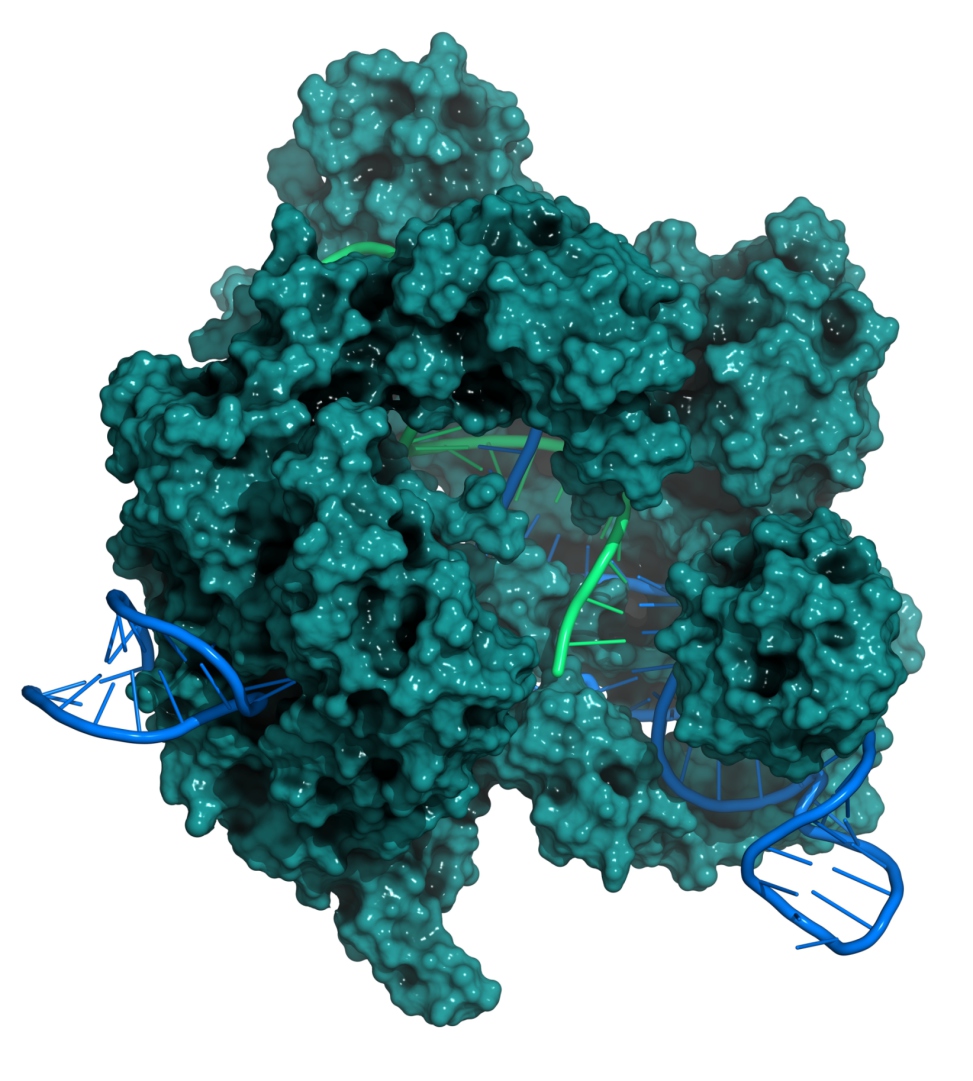
CRISPR-CAS9 gene editing complexImage by MOLEKUUL/SCIENCE PHOTO LIBRARY via Getty Images/Science Photo Libra

The U.S. patent agency on Tuesday will hear arguments in a heated dispute over who was first to invent a revolutionary gene-editing technology known as CRISPR.

Hundreds of millions of dollars may be at stake, as the technology promises commercial applications in treating genetic diseases, engineering crops, and other areas.

CRISPR works as a type of molecular scissors that can trim away unwanted parts of the genome, and replace them with new stretches of DNA. It has quickly become the preferred method of gene editing in research labs because of its ease of use compared with older techniques.

The hearing is before the U.S. Patent and Trademark Office’s Patent Trial and Appeal Board in Alexandria, Va. It will pit one group of researchers associated with the Broad Institute, affiliated with the Massachusetts Institute of Technology and Harvard University, against another group linked to the University of California at Berkeley and the University of Vienna in Austria.

The latter team, led by Berkeley’s Jennifer Doudna and Vienna’s Emmanuelle Charpentier, applied for a CRISPR patent in 2013.

The Broad team, led by MIT’s Feng Zhang, filed a patent application months later, and became the first to obtain a CRISPR patent in 2014. It has since obtained additional patents. The Berkeley team has obtained CRISPR patents as well, though the 2013 application has not been granted.

In April 2015, the Berkeley team petitioned the patent agency to launch a so-called interference proceeding, claiming Broad’s patents covered the same invention as the Berkeley team’s 2013 application.

Tuesday’s hearing will focus on preliminary motions, which the panel is expected to decide within the next few weeks.

One of those motions, filed by Broad, could end the case. Broad has argued that its patents, which describe the use of CRISPR specifically in animal cells, represent a breakthrough beyond the Berkeley team’s application, which described it more generally. CRISPR occurs naturally in bacteria.

The two teams, Broad has said, are not really claiming the same invention at all. If the panel agrees, the interference proceeding will end, and Broad’s patents will remain intact. Rulings from the panel can be appealed in federal court.

Otherwise, the proceeding will likely go on for another year or more, as the panel weighs evidence to determine which team was first to invent the technology.

Broad spokesman Lee McGuire said in a statement that the institute was confident of its case. Berkeley representatives could not be reached for comment.

The CRISPR dispute is among the last-ever interference proceedings, which were phased out by a 2011 patent reform law. The America Invents Act changed the U.S. patent system from a “first to invent” to “first inventor to file” for patent applications after March 16, 2013.

If the Berkeley team’s challenge succeeds, Broad could lose its patent rights.

Broad has already licensed its CRISPR patents for human therapeutics research to Editas Pharmaceuticals, a Cambridge, Mass.-based biotech firm whose founders included both Zhang and Doudna, who has since left.

It has also licensed its technology to large businesses, including agriculture company Monsanto and General Electric’s medical technology subsidiary GE Healthcare.

Doudna co-founded Berkeley biotech firm Caribou Biosciences, which licenses Berkeley’s intellectual property and is working on CRISPR with other companies, including Novartis AG and Dupont.

The case is The Broad Institute Inc v. Regents of the University of California, Patent Interference No. 106,048.
About the Author
By Reuters
See full bioRight Arrow Button Icon

Latest in Tech

InvestingStock
There have been head fakes before, but this time may be different as the latest stock rotation out of AI is just getting started, analysts say
By Jason MaDecember 13, 2025
2 hours ago
Politicsdavid sacks
Can there be competency without conflict in Washington?
By Alyson ShontellDecember 13, 2025
3 hours ago
InnovationRobots
Even in Silicon Valley, skepticism looms over robots, while ‘China has certainly a lot more momentum on humanoids’
By Matt O'Brien and The Associated PressDecember 13, 2025
4 hours ago
Sarandos
Arts & EntertainmentM&A
It’s a sequel, it’s a remake, it’s a reboot: Lawyers grow wistful for old corporate rumbles as Paramount, Netflix fight for Warner
By Nick LichtenbergDecember 13, 2025
9 hours ago
Oracle chairman of the board and chief technology officer Larry Ellison delivers a keynote address during the 2019 Oracle OpenWorld on September 16, 2019 in San Francisco, California.
AIOracle
Oracle’s collapsing stock shows the AI boom is running into two hard limits: physics and debt markets
By Eva RoytburgDecember 13, 2025
10 hours ago
robots
InnovationRobots
‘The question is really just how long it will take’: Over 2,000 gather at Humanoids Summit to meet the robots who may take their jobs someday
By Matt O'Brien and The Associated PressDecember 12, 2025
23 hours ago

Most Popular

placeholder alt text
Economy
Tariffs are taxes and they were used to finance the federal government until the 1913 income tax. A top economist breaks it down
By Kent JonesDecember 12, 2025
1 day ago
placeholder alt text
Success
Apple cofounder Ronald Wayne sold his 10% stake for $800 in 1976—today it’d be worth up to $400 billion
By Preston ForeDecember 12, 2025
1 day ago
placeholder alt text
Success
40% of Stanford undergrads receive disability accommodations—but it’s become a college-wide phenomenon as Gen Z try to succeed in the current climate
By Preston ForeDecember 12, 2025
1 day ago
placeholder alt text
Economy
The Fed just ‘Trump-proofed’ itself with a unanimous move to preempt a potential leadership shake-up
By Jason MaDecember 12, 2025
22 hours ago
placeholder alt text
Economy
For the first time since Trump’s tariff rollout, import tax revenue has fallen, threatening his lofty plans to slash the $38 trillion national debt
By Sasha RogelbergDecember 12, 2025
1 day ago
placeholder alt text
Success
Apple CEO Tim Cook out-earns the average American’s salary in just 7 hours—to put that into context, he could buy a new $439,000 home in just 2 days
By Emma BurleighDecember 12, 2025
1 day ago
Rankings
  • 100 Best Companies
  • Fortune 500
  • Global 500
  • Fortune 500 Europe
  • Most Powerful Women
  • Future 50
  • World’s Most Admired Companies
  • See All Rankings
Sections
  • Finance
  • Leadership
  • Success
  • Tech
  • Asia
  • Europe
  • Environment
  • Fortune Crypto
  • Health
  • Retail
  • Lifestyle
  • Politics
  • Newsletters
  • Magazine
  • Features
  • Commentary
  • Mpw
  • CEO Initiative
  • Conferences
  • Personal Finance
  • Education
Customer Support
  • Frequently Asked Questions
  • Customer Service Portal
  • Privacy Policy
  • Terms Of Use
  • Single Issues For Purchase
  • International Print
Commercial Services
  • Advertising
  • Fortune Brand Studio
  • Fortune Analytics
  • Fortune Conferences
  • Business Development
About Us
  • About Us
  • Editorial Calendar
  • Press Center
  • Work At Fortune
  • Diversity And Inclusion
  • Terms And Conditions
  • Site Map

© 2025 Fortune Media IP Limited. All Rights Reserved. Use of this site constitutes acceptance of our Terms of Use and Privacy Policy | CA Notice at Collection and Privacy Notice | Do Not Sell/Share My Personal Information
FORTUNE is a trademark of Fortune Media IP Limited, registered in the U.S. and other countries. FORTUNE may receive compensation for some links to products and services on this website. Offers may be subject to change without notice.