• Home
  • Latest
  • Fortune 500
  • Finance
  • Tech
  • Leadership
  • Lifestyle
  • Rankings
  • Multimedia
Tech

How Hacked Kremlin Emails Could Signal a Turn in the U.S.-Russia Cyberwar

By
Simon Shuster
Simon Shuster
and
TIME
TIME
Down Arrow Button Icon
By
Simon Shuster
Simon Shuster
and
TIME
TIME
Down Arrow Button Icon
November 7, 2016, 12:44 PM ET
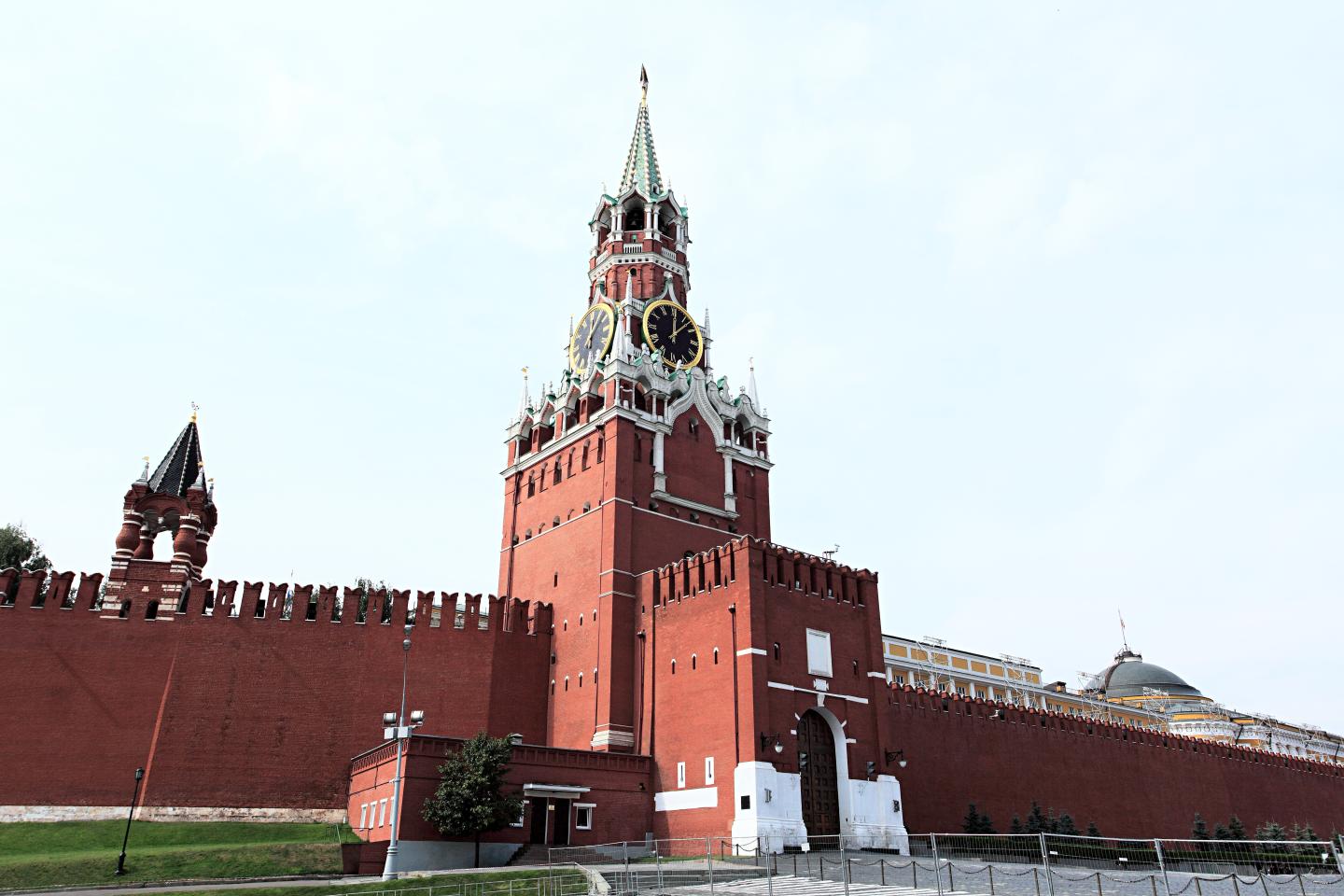
Eastern gate of moscow kremlin
The eastern gate of the Kremlin in Moscow, Russia.Photograph by Image Source Getty Images

Before they pulled off one of the most embarrassing cyber heists ever to hit the Kremlin, the hackers from the Ukrainian Cyber Alliance, who styled themselves as the online shock troops in Ukraine’s conflict with Russia, weren’t really on the radar. They had mostly spent the last two years on easy targets—the computers and cell phones of Russia-backed separatist rebels in eastern Ukraine, who are not known for their discipline when it comes to virus protection or, for that matter, anything else. Every once in a while, the hackers would also deface a Russian website, the cyber equivalent of spray-painting graffiti.

Victor Zhora, the head of Infosafe, one of Ukraine’s leading cyber security firms, had never met any of these hackers or heard much about them in the local tech community. “They just weren’t doing much,” he says—that is, until the past two weeks, during which they posted two troves of emails apparently stolen from the inboxes of Vladislav Surkov, the Kremlin’s former propaganda czar, who is now in charge of Russia’s shadow war in eastern Ukraine. Among the close aides to Russian President Vladimir Putin, Surkov is about as tough and consequential a hacking target as they come.

Read More: What’s Going On With Julian Assange and WikiLeaks? Here Are 4 Theories

Which is partly why the hack looked so suspicious to Zhora and other cyber experts. Its sophistication seemed well beyond the reach of amateurs, as did its presentation, which featured slickly produced video announcements and textual analysis translated into five languages, including flawless English and, for some reason, Bulgarian. Ukrainian hackers had never pulled off anything close to this level of operation. “This clearly involved top-level professionals,” Zhora says. And based on the resources that would have been required, he suspects the hackers may have had help from a foreign intelligence service—most likely a Western one.

Get Data Sheet, Fortune’s technology newsletter.

The timing would seem to support that theory. In a joint statement on Oct. 7, the U.S. Department of Homeland Security and the Director of National Intelligence formally accused “Russia’s senior-most officials” of authorizing the theft and disclosure of emails from Hillary Clinton’s presidential campaign and its allies in the Democratic Party, via WikiLeaks and other online conduits. A week later, Vice President Joe Biden said in an interview with NBC News that the U.S. would respond to these attacks “at the time of our choosing, and under the circumstances that have the greatest impact.” Pressed for details, Biden would only add that the U.S. was “sending a message” to Putin, and that he would know when that message arrives.

The following week, starting on Oct. 23, a group calling itself the CyberHunta, which is part of the Ukrainian Cyber Alliance, released the first batch of emails from a Russian government address that appeared to belong to Surkov’s office in the Kremlin. The documents showed in minute detail how Russia has micromanaged the separatist rebellion in eastern Ukraine over the past two years, picking its leaders, managing their finances and choreographing their propaganda.

Read More: Vladimir Putin Signs Order Making Steven Seagal a Russian Citizen

Asked to respond, the Kremlin’s chief spokesman, Dmitry Peskov, dismissed the documents as an elaborate forgery, pointing out that Surkov is so cautious with his digital affairs that he does not even use email. This appears to be true from the hack, at least: all of the messages taken from his accounts were handled by intermediaries and assistants; none came directly from him.

But in a detailed analysis of the leaked emails, the Atlantic Council’s Digital Forensic Research Lab concluded that they are almost certainly genuine—though not exactly rich in surprises: “The Surkov Leaks,” the analysts said, “show us a picture of the conflict in Eastern Ukraine that we have long suspected: the Kremlin had a guiding hand in orchestrating and funding the supposedly local and independent government.”

More striking than the actual contents of the documents, however, was the sudden reversal in what had previously been a fairly one-sided cyber conflict between Russia and its rivals. It appears the “message” Biden promised to send Putin may have been delivered through Ukraine. “From a technical and operational point of view, this does look like a message in reply to the attacks on the U.S. electoral system,” says Zhora.

Read More: The Future of Civilization Is a Battle Between Google and Wikileaks

Biden’s office, as well as the spokesman for the Director of National Intelligence, did not respond to requests for comment. But Zhora is not the only expert to voice suspicion of U.S. involvement in the hack. Mark Galeotti, a senior researcher at the Institute of International Relations in Prague, and an expert on Russian intelligence services, told USA Today that, “This kind of a leak is enough to warn the Russians [that] the USA has certain capabilities and is willing to use them.” But, as he was also careful to stress, “we are a long way from having any evidence of this—if we ever will.”

Such plausible deniability seems to be the nature of cyber conflict going forward. In hacking the Clinton campaign and the Democratic National Committee, Russia appears to have used a series of intermediaries and decoys in order to maintain deniability and keep the state’s fingerprints as far from the hack as possible. According to the Oct. 7 statement from U.S intelligence agencies, these Kremlin fronts have included WikiLeaks and an “online persona” known as Guccifer 2.0, who claimed to be a lone Romanian hacker after he posted emails from the DNC.

For their part, the members of the Ukrainian Cyber Alliance, appearing in video interviews this week with Halloween masks over their faces, have denied being anybody’s sock puppet. “Ukrainian hacking groups have fairly high technical skills,” one of them told Reuters on Nov. 3. “And so there is no need for the U.S. or any other NATO country to support us. What’s more, it would be quite an extreme foreign policy move from the U.S.” But probably not extreme enough to make Russian hackers back off in the cyberwars to come.

This article originally appeared on Time.com.

About the Authors
By Simon Shuster
See full bioRight Arrow Button Icon
By TIME
See full bioRight Arrow Button Icon

Latest in Tech

Finance
Lorem ipsum dolor sit amet, consectetur adipiscing elit, sed do eiusmod tempor incididunt ut labore et dolore magna aliqua. Ut enim ad minim veniam
By Fortune Editors
October 20, 2025
Finance
Lorem ipsum dolor sit amet, consectetur adipiscing elit, sed do eiusmod tempor incididunt ut labore et dolore magna aliqua. Ut enim ad minim veniam
By Fortune Editors
October 20, 2025
Finance
Lorem ipsum dolor sit amet, consectetur adipiscing elit, sed do eiusmod tempor incididunt ut labore et dolore magna aliqua. Ut enim ad minim veniam
By Fortune Editors
October 20, 2025
Finance
Lorem ipsum dolor sit amet, consectetur adipiscing elit, sed do eiusmod tempor incididunt ut labore et dolore magna aliqua. Ut enim ad minim veniam
By Fortune Editors
October 20, 2025
Finance
Lorem ipsum dolor sit amet, consectetur adipiscing elit, sed do eiusmod tempor incididunt ut labore et dolore magna aliqua. Ut enim ad minim veniam
By Fortune Editors
October 20, 2025
Finance
Lorem ipsum dolor sit amet, consectetur adipiscing elit, sed do eiusmod tempor incididunt ut labore et dolore magna aliqua. Ut enim ad minim veniam
By Fortune Editors
October 20, 2025

Most Popular

Finance
Lorem ipsum dolor sit amet, consectetur adipiscing elit, sed do eiusmod tempor incididunt ut labore et dolore magna aliqua. Ut enim ad minim veniam
By Fortune Editors
October 20, 2025
Finance
Lorem ipsum dolor sit amet, consectetur adipiscing elit, sed do eiusmod tempor incididunt ut labore et dolore magna aliqua. Ut enim ad minim veniam
By Fortune Editors
October 20, 2025
Finance
Lorem ipsum dolor sit amet, consectetur adipiscing elit, sed do eiusmod tempor incididunt ut labore et dolore magna aliqua. Ut enim ad minim veniam
By Fortune Editors
October 20, 2025
Finance
Lorem ipsum dolor sit amet, consectetur adipiscing elit, sed do eiusmod tempor incididunt ut labore et dolore magna aliqua. Ut enim ad minim veniam
By Fortune Editors
October 20, 2025
Finance
Lorem ipsum dolor sit amet, consectetur adipiscing elit, sed do eiusmod tempor incididunt ut labore et dolore magna aliqua. Ut enim ad minim veniam
By Fortune Editors
October 20, 2025
Finance
Lorem ipsum dolor sit amet, consectetur adipiscing elit, sed do eiusmod tempor incididunt ut labore et dolore magna aliqua. Ut enim ad minim veniam
By Fortune Editors
October 20, 2025
Fortune Secondary Logo
Rankings
  • 100 Best Companies
  • Fortune 500
  • Global 500
  • Fortune 500 Europe
  • Most Powerful Women
  • World's Most Admired Companies
  • See All Rankings
  • Lists Calendar
Sections
  • Finance
  • Fortune Crypto
  • Features
  • Leadership
  • Health
  • Commentary
  • Success
  • Retail
  • Mpw
  • Tech
  • Lifestyle
  • CEO Initiative
  • Asia
  • Politics
  • Conferences
  • Europe
  • Newsletters
  • Personal Finance
  • Environment
  • Magazine
  • Education
Customer Support
  • Frequently Asked Questions
  • Customer Service Portal
  • Privacy Policy
  • Terms Of Use
  • Single Issues For Purchase
  • International Print
Commercial Services
  • Advertising
  • Fortune Brand Studio
  • Fortune Analytics
  • Fortune Conferences
  • Business Development
  • Group Subscriptions
About Us
  • About Us
  • Press Center
  • Work At Fortune
  • Terms And Conditions
  • Site Map
  • About Us
  • Press Center
  • Work At Fortune
  • Terms And Conditions
  • Site Map
  • Facebook icon
  • Twitter icon
  • LinkedIn icon
  • Instagram icon
  • Pinterest icon

Latest in Tech

Photo of vegan cheese products
AITech
A Mark Cuban–backed vegan cheese company trained AI to scrutinize cardboard boxes. It’s saved $400,000
By Jake AngeloMay 1, 2026
10 hours ago
Young trade worker learning on job
SuccessHiring
Forget Big Tech: Small businesses will hire nearly 1 million grads in 2026—and some of the hottest roles are gloriously AI-proof
By Emma BurleighMay 1, 2026
12 hours ago
Andrew McAfee
SuccessCareers
MIT AI expert warns automating Gen Z entry-level jobs could backfire—and cost companies their future workforce
By Preston ForeMay 1, 2026
12 hours ago
duke
Big TechAmazon
Amazon Prime Video reaches deal with Duke Blue Devils to air 3 games per season
By The Associated PressMay 1, 2026
14 hours ago
valerie
CommentaryLayoffs
Tesla’s former HR chief: the AI layoff panic Is built on a false premise—here’s what most workers need to know
By Valerie Capers WorkmanMay 1, 2026
14 hours ago
AI
AIdisruption
Meet the Americans dismissing AI hype and using it with ingenuity: ‘The efficiencies gained out of it have been tremendous’
By Cathy Bussewitz and The Associated PressMay 1, 2026
14 hours ago

Most Popular

Scott Bessent on financial literacy: 'it drives me crazy' to see young men in blue-collar construction jobs playing the lottery
Personal Finance
Scott Bessent on financial literacy: 'it drives me crazy' to see young men in blue-collar construction jobs playing the lottery
By Fatima Hussein and The Associated PressMay 1, 2026
14 hours ago
China dominates the world's lithium supply. The U.S. just found 328 years' worth in its own backyard
North America
China dominates the world's lithium supply. The U.S. just found 328 years' worth in its own backyard
By Jake AngeloApril 30, 2026
1 day ago
The U.S. economy is booming — just not where 50 million Americans live
Commentary
The U.S. economy is booming — just not where 50 million Americans live
By Derek KilmerMay 1, 2026
19 hours ago
Accenture's Julie Sweet blew up 50 years of company history. She says the hardest part is still ahead
Conferences
Accenture's Julie Sweet blew up 50 years of company history. She says the hardest part is still ahead
By Nick LichtenbergApril 29, 2026
3 days ago
Apple cofounder Ronald Wayne—whose stake would be worth up to $400 billion had he not sold it in 1976—says that at 91, he has no regrets
Success
Apple cofounder Ronald Wayne—whose stake would be worth up to $400 billion had he not sold it in 1976—says that at 91, he has no regrets
By Preston ForeApril 27, 2026
5 days ago
Current price of oil as of May 1, 2026
Personal Finance
Current price of oil as of May 1, 2026
By Joseph HostetlerMay 1, 2026
15 hours ago

© 2026 Fortune Media IP Limited. All Rights Reserved. Use of this site constitutes acceptance of our Terms of Use and Privacy Policy | CA Notice at Collection and Privacy Notice | Do Not Sell/Share My Personal Information
FORTUNE is a trademark of Fortune Media IP Limited, registered in the U.S. and other countries. FORTUNE may receive compensation for some links to products and services on this website. Offers may be subject to change without notice.