• Home
  • Latest
  • Fortune 500
  • Finance
  • Tech
  • Leadership
  • Lifestyle
  • Rankings
  • Multimedia
Commentarynon-compete agreements

Obama’s Pitch to Ban Non-Compete Agreements Would Make the Rich Richer

By
Jonathan Macey
Jonathan Macey
and
Bethany Cianciolo
Bethany Cianciolo
Down Arrow Button Icon
By
Jonathan Macey
Jonathan Macey
and
Bethany Cianciolo
Bethany Cianciolo
Down Arrow Button Icon
November 3, 2016, 8:00 PM ET
President Obama Campaigns For Hillary Clinton In Orlando, Florida
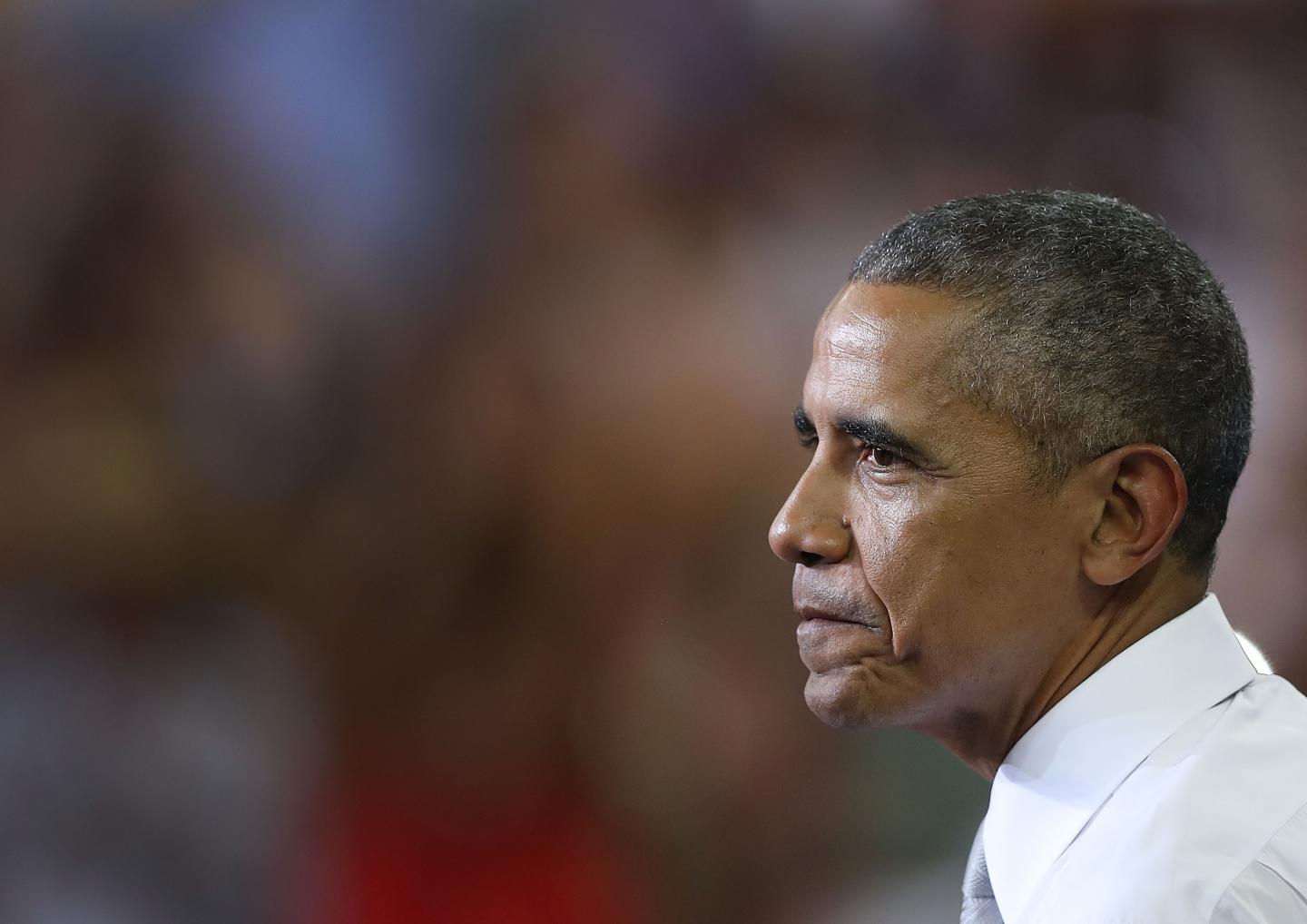
ORLANDO, FL - OCTOBER 28: President Barack Obama speaks as he attends a campaign rally in support of Democratic presidential candidate Hillary Clinton at the University of Central Florida on October 28, 2016 in Orlando, Florida. Election day for the presidential candidates is 10 days away. (Photo by Joe Raedle/Getty Images)Joe Raedle—Getty Images

At about one-third of U.S. companies—both public and private—when you accept a job offer, you’re asked to sign a non-compete agreement, which bars you from quitting to work for a direct competitor for a particular period of time. That could change if President Obama has it his way. Last month, the president issued a “state call to action” to stop companies and workers from entering non-compete agreements.

This is a bad idea. In states with poorly educated workers who have little or no employment history, non-compete agreements give employers incentives to hire and train unskilled workers, free from the worry that a nearby competitor will swoop in and hire away the best workers shortly after they’ve received the valuable training and work habits provided by their original employer. Hiring unskilled workers without non-compete agreements turns employers who do provide valuable training into suckers.

Moreover, states already have sensible rules that fit the particular needs of their populations. This is an area of law in which it makes sense for different states to experiment with different rules, and for diversity among the states that do enforce reasonable agreements not to compete be not merely tolerated, but applauded.

It is true that non-compete clauses are often used in low-wage jobs, such as those held by fast-food employees and warehouse workers. But what the data do not show is how many fewer workers are hired—how much less training is given in jurisdictions that decline to enforce non-compete agreements.

There is a solid economic reason for this: A worker’s value to his employer increases over time as he develops skills and experience on the job. Even low-skill jobs require some skills and knowledge, particularly as fast food restaurants, warehouses, and other low-skill job venues become more automated. Even truck drivers and Uber drivers learn better work habits, not to mention valuable rush-hour shortcuts on important routes, such as to a local airport or central business district.

In the absence of enforceable covenants not to compete, employers will invest less in on-the-job training, a critical job perk for under-educated workers. If, as the Obama plan envisions, a worker could simply jump ship after a two-week training period for a few cents more an hour or slightly better working conditions, employers would not be able to afford much training.

The Treasury Department has found that jurisdictions with lower-wage workers tend to enforce non-compete clauses. This is sensible, because employers in such states are facing a relatively large supply of untrained workers for the jobs that are available in the jurisdiction. That’s why the wages are low in the first place; it is a simple matter of supply and demand. Enforcing non-compete clauses is necessary to induce employers to take the costly and risky step of hiring untrained workers who must be trained before they can become fully productive.

Some scholars have argued that non-compete agreements cause low wages, and the Obama administration appears to have bought this specious argument lock, stock, and barrel. Though covenants not to compete are correlated with higher unemployment and lower wages, they do not cause unemployment or low wages.

Restricting workers from jumping ship and going to work for a nearby competitor will exert upward pressure on wages, not downward pressure. It simply makes no sense to assert that giving employers broader powers makes them less likely to hire workers. The opposite is true.

As with so many of government’s ideas, state-sponsored efforts to “help” low-wage workers by invalidating agreements not to compete does not provide succor for the poor. It is welfare for the rich. High-paid workers who bring an array of skills and a broad educational background with them to the workplace benefit from being allowed to change jobs freely. Scholars have demonstrated that California’s long-standing refusal to enforce non-compete clauses has boosted the economy, specifically in Silicon Valley, by enabling new startups to attract top engineers and designers from established firms without a legal hassle.

The existing empirical studies focus on executive—not ordinary—workers. But this “evidence” is transposed from highly educated, white-collar workers to everybody else, seemingly without considering how different the markets are for top executive talent and fast food and warehouse workers.

Of course, there are problems with agreements not to compete. In extreme cases, they are tantamount to slavery, and of course they should be banned entirely when they encompass an inappropriately long time period or an overly broad geographical range. But state law already protects workers. Agreements not to compete are enforced only to the extent necessary to protect a legitimate employer interest, like protecting trade secrets. Courts limit the applicability of agreements not to compete by requiring that the duration and geographic scope of covenants not to compete be reasonable.


Far from being used to exploit workers, agreements not to compete for unskilled laborers give potential employers stronger incentives to take the risk of hiring and training workers who are unskilled and have no work histories to recommend them. States including Delaware, Colorado, and Texas, for example, severely limit the applicability of covenants not to compete directed at physicians. Apparently motivated by an agreement not to compete at a restaurant chain that prevented employees, including delivery drivers, from working at a competing business within two miles of any of its restaurants, beginning on January 1, 2017, the Illinois Freedom to Work Act will make agreements not to compete for all employees earning less than $13 an hour—or the minimum wage required by applicable federal, state, or local minimum wage law—illegal. While the restaurant had not enforced the agreement not to compete, political points could be scored by restricting workers’ contractual freedom (by declining to enforce agreements not to compete), and so they were. The Illinois statute is so strict that it will prevent an employee from agreeing to refrain working even for a directly competing establishment that is next-door to the business that provided the low-wage worker with her initial job.

Low-wage workers are precisely the group that will benefit from signing agreements not to compete, because they are the ones most in need of the training and life skills that a first job can provide. Thus, while the Illinois legislature did the popular thing, it did not do its low-wage workers any favors.

Covenants not to compete may sometimes be a good idea for some highly skilled executives and tech workers in some situations. But taking this notion and ramming it, unstudied, down the throats of working people is not doing them a favor. In fact, looking at this proposal, one begins to wonder whether all of those folks without college educations who are voting Republican are really as crazy as my liberal colleagues tell me they are.

Mr. Macey is Sam Harris Professor of Corporate Law, Securities Law and Corporate Finance at Yale Law School and a professor in the Yale School of Management.

About the Authors
By Jonathan Macey
See full bioRight Arrow Button Icon
By Bethany Cianciolo
See full bioRight Arrow Button Icon

Latest in Commentary

Finance
Lorem ipsum dolor sit amet, consectetur adipiscing elit, sed do eiusmod tempor incididunt ut labore et dolore magna aliqua. Ut enim ad minim veniam
By Fortune Editors
October 20, 2025
Finance
Lorem ipsum dolor sit amet, consectetur adipiscing elit, sed do eiusmod tempor incididunt ut labore et dolore magna aliqua. Ut enim ad minim veniam
By Fortune Editors
October 20, 2025
Finance
Lorem ipsum dolor sit amet, consectetur adipiscing elit, sed do eiusmod tempor incididunt ut labore et dolore magna aliqua. Ut enim ad minim veniam
By Fortune Editors
October 20, 2025
Finance
Lorem ipsum dolor sit amet, consectetur adipiscing elit, sed do eiusmod tempor incididunt ut labore et dolore magna aliqua. Ut enim ad minim veniam
By Fortune Editors
October 20, 2025
Finance
Lorem ipsum dolor sit amet, consectetur adipiscing elit, sed do eiusmod tempor incididunt ut labore et dolore magna aliqua. Ut enim ad minim veniam
By Fortune Editors
October 20, 2025
Finance
Lorem ipsum dolor sit amet, consectetur adipiscing elit, sed do eiusmod tempor incididunt ut labore et dolore magna aliqua. Ut enim ad minim veniam
By Fortune Editors
October 20, 2025

Most Popular

Finance
Lorem ipsum dolor sit amet, consectetur adipiscing elit, sed do eiusmod tempor incididunt ut labore et dolore magna aliqua. Ut enim ad minim veniam
By Fortune Editors
October 20, 2025
Finance
Lorem ipsum dolor sit amet, consectetur adipiscing elit, sed do eiusmod tempor incididunt ut labore et dolore magna aliqua. Ut enim ad minim veniam
By Fortune Editors
October 20, 2025
Finance
Lorem ipsum dolor sit amet, consectetur adipiscing elit, sed do eiusmod tempor incididunt ut labore et dolore magna aliqua. Ut enim ad minim veniam
By Fortune Editors
October 20, 2025
Finance
Lorem ipsum dolor sit amet, consectetur adipiscing elit, sed do eiusmod tempor incididunt ut labore et dolore magna aliqua. Ut enim ad minim veniam
By Fortune Editors
October 20, 2025
Finance
Lorem ipsum dolor sit amet, consectetur adipiscing elit, sed do eiusmod tempor incididunt ut labore et dolore magna aliqua. Ut enim ad minim veniam
By Fortune Editors
October 20, 2025
Finance
Lorem ipsum dolor sit amet, consectetur adipiscing elit, sed do eiusmod tempor incididunt ut labore et dolore magna aliqua. Ut enim ad minim veniam
By Fortune Editors
October 20, 2025
Fortune Secondary Logo
Rankings
  • 100 Best Companies
  • Fortune 500
  • Global 500
  • Fortune 500 Europe
  • Most Powerful Women
  • Future 50
  • World’s Most Admired Companies
  • See All Rankings
Sections
  • Finance
  • Fortune Crypto
  • Features
  • Leadership
  • Health
  • Commentary
  • Success
  • Retail
  • Mpw
  • Tech
  • Lifestyle
  • CEO Initiative
  • Asia
  • Politics
  • Conferences
  • Europe
  • Newsletters
  • Personal Finance
  • Environment
  • Magazine
  • Education
Customer Support
  • Frequently Asked Questions
  • Customer Service Portal
  • Privacy Policy
  • Terms Of Use
  • Single Issues For Purchase
  • International Print
Commercial Services
  • Advertising
  • Fortune Brand Studio
  • Fortune Analytics
  • Fortune Conferences
  • Business Development
  • Group Subscriptions
About Us
  • About Us
  • Editorial Calendar
  • Press Center
  • Work At Fortune
  • Diversity And Inclusion
  • Terms And Conditions
  • Site Map
  • About Us
  • Editorial Calendar
  • Press Center
  • Work At Fortune
  • Diversity And Inclusion
  • Terms And Conditions
  • Site Map
  • Facebook icon
  • Twitter icon
  • LinkedIn icon
  • Instagram icon
  • Pinterest icon

Latest in Commentary

crowell
CommentaryRetirement
Retirees are facing a $345,000 bill they never saw coming — and most aren’t prepared
By Andrew CrowellApril 14, 2026
16 hours ago
AI agents are acting like employees, but company structures still treat them like software
CommentaryOkta
AI agents are acting like employees, but company structures still treat them like software
By Dan MountstephenApril 13, 2026
1 day ago
trump
CommentaryWhite House
The futility of Trump’s grandiose personal branding of public assets, from ballrooms and bills to ships and planes
By Jeffrey Sonnenfeld and Steven TianApril 13, 2026
1 day ago
mueller
CommentaryEntrepreneurship
I grew up in a family of entrepreneurs. Here’s what I had to unlearn to build a $1 billion business
By Samuel MuellerApril 12, 2026
3 days ago
boomer
CommentaryLongevity
America is not ready for its own longevity crisis — and 2026 is the wake-up call
By Aimee DeCamillo and Diane TyApril 12, 2026
3 days ago
layoff
CommentaryManagement
The middle manager cuts saving you millions today will cost you everything in 2028
By Kristien TurnerApril 12, 2026
3 days ago

Most Popular

Billionaire philanthropist MacKenzie Scott has donated again—a week after gifting millions to a college, she's just given $70 million to Meals on Wheels America
Success
Billionaire philanthropist MacKenzie Scott has donated again—a week after gifting millions to a college, she's just given $70 million to Meals on Wheels America
By Fortune EditorsApril 13, 2026
1 day ago
Retirees are facing a $345,000 bill they never saw coming — and most aren't prepared
Commentary
Retirees are facing a $345,000 bill they never saw coming — and most aren't prepared
By Fortune EditorsApril 14, 2026
16 hours ago
He was coding at 12 like Elon Musk and became one of Google’s youngest-ever CMOs—but now says Gen Z is better off ice skating than learning to code
Success
He was coding at 12 like Elon Musk and became one of Google’s youngest-ever CMOs—but now says Gen Z is better off ice skating than learning to code
By Fortune EditorsApril 14, 2026
19 hours ago
Current price of gold as of April 13, 2026
Personal Finance
Current price of gold as of April 13, 2026
By Fortune EditorsApril 13, 2026
2 days ago
Anthropic is facing a wave of user backlash over reports of performance issues with its Claude AI chatbot
AI
Anthropic is facing a wave of user backlash over reports of performance issues with its Claude AI chatbot
By Fortune EditorsApril 14, 2026
17 hours ago
New drones are giving Ukraine a battlefield advantage and ravaging Russia’s oil industry
Innovation
New drones are giving Ukraine a battlefield advantage and ravaging Russia’s oil industry
By Fortune EditorsApril 13, 2026
1 day ago

© 2026 Fortune Media IP Limited. All Rights Reserved. Use of this site constitutes acceptance of our Terms of Use and Privacy Policy | CA Notice at Collection and Privacy Notice | Do Not Sell/Share My Personal Information
FORTUNE is a trademark of Fortune Media IP Limited, registered in the U.S. and other countries. FORTUNE may receive compensation for some links to products and services on this website. Offers may be subject to change without notice.