• Home
  • Latest
  • Fortune 500
  • Finance
  • Tech
  • Leadership
  • Lifestyle
  • Rankings
  • Multimedia

Trendingnow

1

The pig in the python: Baby Boomers are strangling the economy they built by refusing to move or retire

2

The U.S. campaigned to host the World Cup. Now soccer fans will trade their countries' train system for the U.S.'s 'D' rated infrastructure

3

Jeff Bezos wants the bottom half of earners to pay zero income tax—he says nurses making just $75K should save $12K a year

1

The pig in the python: Baby Boomers are strangling the economy they built by refusing to move or retire

2

The U.S. campaigned to host the World Cup. Now soccer fans will trade their countries' train system for the U.S.'s 'D' rated infrastructure

3

Jeff Bezos wants the bottom half of earners to pay zero income tax—he says nurses making just $75K should save $12K a year
CommentaryInsurance

America turns 250. Its greatest innovation wasn’t the car or the computer — it was learning to share risk

By
Jim Williamson
Jim Williamson
Down Arrow Button Icon
By
Jim Williamson
Jim Williamson
Down Arrow Button Icon
May 26, 2026, 5:30 AM ET
Jim Williamson
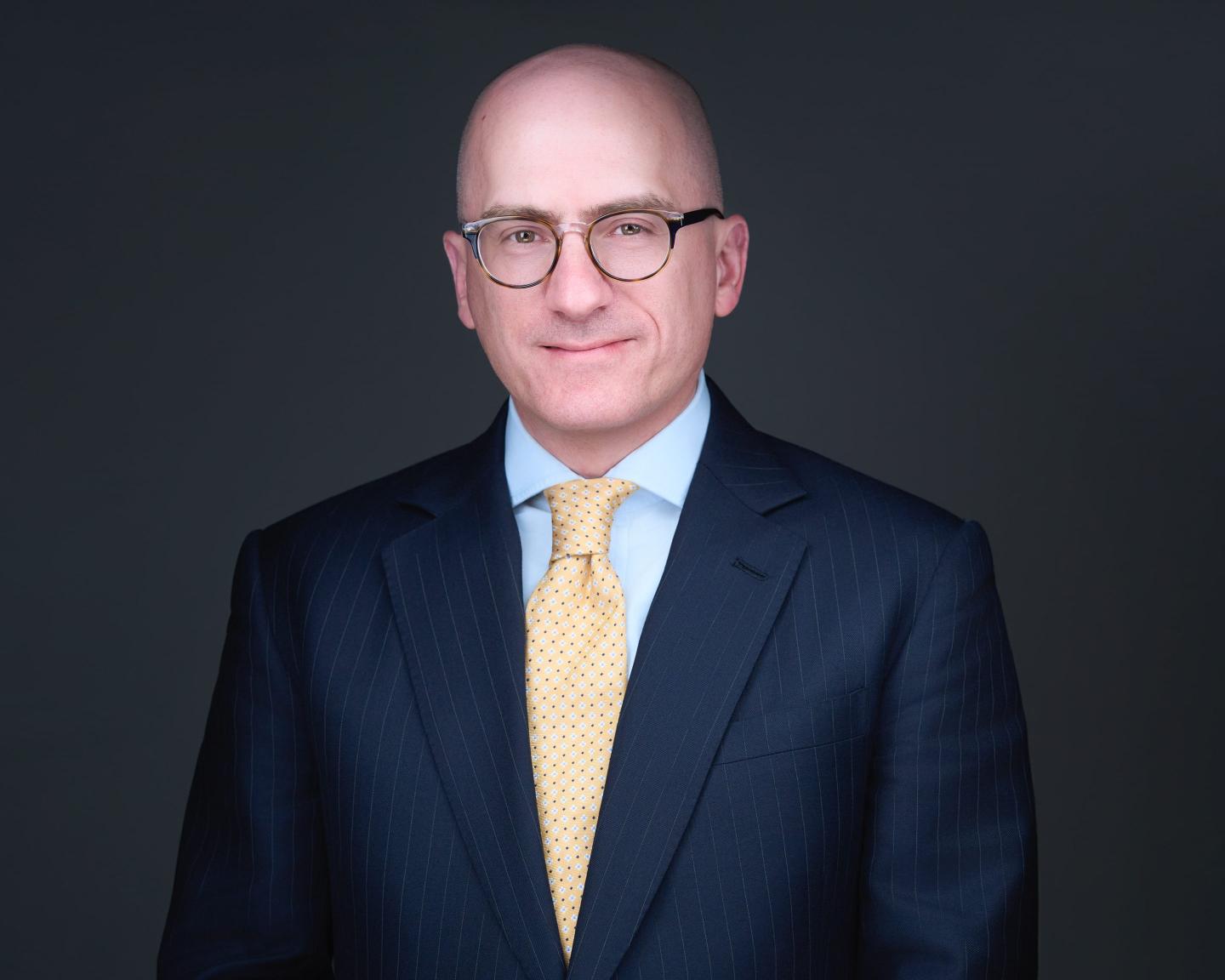
Jim WilliamsonCourtesy of Everest

The United States was not built on ambition alone. It was built on a willingness to share risk.

Recommended Video

“We mutually pledge to each other our Lives, our Fortunes and our sacred Honor.”

This is the closing line of the Declaration of Independence — a clear and deliberate commitment to distribute risk, not merely a symbolic sign-off.

This principle is easy to overlook in how we tell the story of American progress — a story more often centered on independence, innovation, and individual ambition. But these qualities depend on something more foundational: the ability to distribute risk so that failure does not stop progress.

As an American, and as the CEO of a global insurance and reinsurance company, I see that principle at work every day. Our role is straightforward. We provide financial resilience that allows people and businesses to act with confidence, and to recover and rebuild when things don’t go according to plan.

As the United States approaches its 250th anniversary, there will be no shortage of reflection on what the country has built. I tend to focus more on what made that progress possible.

Risk-Sharing Built America Before Anyone Called It That

Across every chapter of American development, one constant stands out: meaningful progress has required both a willingness to take risk and systems capable of absorbing it.

In colonial cities like Philadelphia, property owners pooled resources to cover fire losses and began inspecting buildings to reduce exposure. In doing so, they didn’t just protect assets — they helped establish the foundations of modern building standards and safer cities.

Merchants underwriting transatlantic voyages spread the risk of early global trade. The model, refined in places like Edward Lloyd’s coffeehouse in London, allowed commerce to expand beyond what any single balance sheet could sustain. That principle still underpins

the modern economy. Today, global trade has reached $33 trillion and more than 80% of those goods move by sea. Virtually none of it moves uninsured.

Because risk could be shared, pillars of the American dream became accessible to far more people. Home ownership expanded through the 30-year mortgage. The 49,000 miles of interstate highway we rely on today is are rooted in a post-World War II commitment to shared investment, shared exposure, and the confidence to build at national scale.

The past two and a half centuries have proven one thing consistently: large-scale investment does not happen in a vacuum. Capital moves when risk can be managed. Projects move forward when uncertainty can be absorbed.

The Same Principle Applies to What America Wants to Build Next

These historical examples illustrate ingenuity enabled by structural support — and that scaffolding is just as important now.

America’s ambitions to strengthen domestic manufacturing, expand energy infrastructure, lead in artificial intelligence, and build the data capacity required for a modern economy all depend on the ability to understand, price, and transfer risk.

At the same time, the nature of risk is evolving. Natural catastrophes are becoming more severe and more frequent. Cyber threats are introducing new forms of interconnected exposure. And when disruptions occur today, they do not stay contained — they move across industries and borders with speed.

Recent years have made this tangible. Global natural catastrophes now generate hundreds of billions of dollars in economic losses annually, with a significant portion uninsured. That protection gap is more than an industry issue — it has significant implications for how quickly communities recover and how confidently economies grow.

The Industry’s Responsibility

Maintaining a system that can support continued progress requires both capacity and discipline. Risk must be priced in a way that reflects reality. Underwriting has to be consistent across cycles. When risk and returns are misaligned, our industry has a responsibility to step back, be candid, and innovate — to build the structures that will define the next 250 years.

We cannot stand still. Risks are changing, and our industry must evolve with them. That means building new products, deepening analytical capabilities, investing in talent, and making better use of technology — including artificial intelligence — to understand risk in more dynamic ways. An industry that fails to do this is not a useful partner to anyone.

History suggests we will take those steps. It always has.

No country has done this better. The American system for absorbing risk — its capital markets, its legal protections, its insurance and reinsurance infrastructure — is the deepest and most sophisticated in the world. That is not an accident of geography or good fortune. It is the product of centuries of deliberate construction. The choice, made again and again, to build mechanisms that let ambition outrun fear.

The American experience demonstrates what many other economies are still building toward. Countries able to mobilize capital, distribute risk effectively, and recover efficiently from disruption are better positioned to sustain development and expand opportunity. This is not a uniquely American model; however, it is one the United States has repeatedly demonstrated at scale.

This country has always been ambitious. It has earned that reputation through repeated tests of resilience. That has been true for the past 250 years. But ambition alone is not enough. It requires a system that allows risk to be taken, absorbed, and carried forward.

Insurance and reinsurance are part of that system. They do not eliminate risk. They make it possible to move forward despite it — to build, to invest, and to rebuild when necessary. And that, more than anything, is what allows progress to endure.

The opinions expressed in Fortune.com commentary pieces are solely the views of their authors and do not necessarily reflect the opinions and beliefs of Fortune.

About the Author
By Jim Williamson
See full bioRight Arrow Button Icon

Latest in Commentary

Finance
Lorem ipsum dolor sit amet, consectetur adipiscing elit, sed do eiusmod tempor incididunt ut labore et dolore magna aliqua. Ut enim ad minim veniam
By Fortune Editors
October 20, 2025
Finance
Lorem ipsum dolor sit amet, consectetur adipiscing elit, sed do eiusmod tempor incididunt ut labore et dolore magna aliqua. Ut enim ad minim veniam
By Fortune Editors
October 20, 2025
Finance
Lorem ipsum dolor sit amet, consectetur adipiscing elit, sed do eiusmod tempor incididunt ut labore et dolore magna aliqua. Ut enim ad minim veniam
By Fortune Editors
October 20, 2025
Finance
Lorem ipsum dolor sit amet, consectetur adipiscing elit, sed do eiusmod tempor incididunt ut labore et dolore magna aliqua. Ut enim ad minim veniam
By Fortune Editors
October 20, 2025
Finance
Lorem ipsum dolor sit amet, consectetur adipiscing elit, sed do eiusmod tempor incididunt ut labore et dolore magna aliqua. Ut enim ad minim veniam
By Fortune Editors
October 20, 2025
Finance
Lorem ipsum dolor sit amet, consectetur adipiscing elit, sed do eiusmod tempor incididunt ut labore et dolore magna aliqua. Ut enim ad minim veniam
By Fortune Editors
October 20, 2025

Most Popular

Finance
Lorem ipsum dolor sit amet, consectetur adipiscing elit, sed do eiusmod tempor incididunt ut labore et dolore magna aliqua. Ut enim ad minim veniam
By Fortune Editors
October 20, 2025
Finance
Lorem ipsum dolor sit amet, consectetur adipiscing elit, sed do eiusmod tempor incididunt ut labore et dolore magna aliqua. Ut enim ad minim veniam
By Fortune Editors
October 20, 2025
Finance
Lorem ipsum dolor sit amet, consectetur adipiscing elit, sed do eiusmod tempor incididunt ut labore et dolore magna aliqua. Ut enim ad minim veniam
By Fortune Editors
October 20, 2025
Finance
Lorem ipsum dolor sit amet, consectetur adipiscing elit, sed do eiusmod tempor incididunt ut labore et dolore magna aliqua. Ut enim ad minim veniam
By Fortune Editors
October 20, 2025
Finance
Lorem ipsum dolor sit amet, consectetur adipiscing elit, sed do eiusmod tempor incididunt ut labore et dolore magna aliqua. Ut enim ad minim veniam
By Fortune Editors
October 20, 2025
Finance
Lorem ipsum dolor sit amet, consectetur adipiscing elit, sed do eiusmod tempor incididunt ut labore et dolore magna aliqua. Ut enim ad minim veniam
By Fortune Editors
October 20, 2025
Fortune Secondary Logo
Rankings
  • 100 Best Companies
  • Fortune 500
  • Global 500
  • Fortune 500 Europe
  • Most Powerful Women
  • World's Most Admired Companies
  • See All Rankings
  • Lists Calendar
Sections
  • Finance
  • Fortune Crypto
  • Features
  • Leadership
  • Health
  • Commentary
  • Success
  • Retail
  • Mpw
  • Tech
  • Lifestyle
  • CEO Initiative
  • Asia
  • Politics
  • Conferences
  • Europe
  • Newsletters
  • Personal Finance
  • Environment
  • Magazine
  • Education
Customer Support
  • Frequently Asked Questions
  • Customer Service Portal
  • Privacy Policy
  • Terms Of Use
  • Single Issues For Purchase
  • International Print
Commercial Services
  • Advertising
  • Fortune Brand Studio
  • Fortune Analytics
  • Fortune Conferences
  • Business Development
  • Group Subscriptions
About Us
  • About Us
  • Press Center
  • Work At Fortune
  • Terms And Conditions
  • Site Map
  • About Us
  • Press Center
  • Work At Fortune
  • Terms And Conditions
  • Site Map
  • Facebook icon
  • Twitter icon
  • LinkedIn icon
  • Instagram icon
  • Pinterest icon

Jim Williamson is President and CEO of Everest Group. He previously served as Everest’s Executive Vice President and Group COO. He joined Everest from Chubb, where he most recently served as Division President, North America Small Business. Jim began his insurance career as a casualty underwriter at The Hartford and later led the underwriting and service operation for the small business insurance franchise.


Latest in Commentary

Jim Williamson
CommentaryInsurance
America turns 250. Its greatest innovation wasn’t the car or the computer — it was learning to share risk
By Jim WilliamsonMay 26, 2026
52 minutes ago
rose
CommentaryJobs
From service to skilled trades: America’s most overlooked workforce pipeline
By Rose Van AlstineMay 26, 2026
1 hour ago
Richard McCathron is President & CEO, Hippo.
CommentaryInsurance
I’m leading a $100 million corporate turnaround. Here’s why I learned to distrust the growth mindset
By Richard McCathronMay 25, 2026
1 day ago
David Bennahum
CommentaryMedia
I was one of the internet’s first influencers. AI just killed the whole category — and created something better
By David S. BennahumMay 24, 2026
2 days ago
employees
CommentarySuccession
Millions of business owners are about to retire. They should sell to their employees
By Matt Helmer and Maxwell JohnsonMay 23, 2026
3 days ago
Ashley Yetman
Commentarydisruption
Everyone is blaming AI for the death of ‘craft.’ Take a good look in the mirror
By Ashley YetmanMay 23, 2026
3 days ago

Most Popular

The pig in the python: Baby Boomers are strangling the economy they built by refusing to move or retire
Economy
The pig in the python: Baby Boomers are strangling the economy they built by refusing to move or retire
By Nick LichtenbergMay 25, 2026
1 day ago
The U.S. campaigned to host the World Cup. Now soccer fans will trade their countries' train system for the U.S.'s 'D' rated infrastructure
Travel & Leisure
The U.S. campaigned to host the World Cup. Now soccer fans will trade their countries' train system for the U.S.'s 'D' rated infrastructure
By Catherina GioinoMay 25, 2026
23 hours ago
Jeff Bezos wants the bottom half of earners to pay zero income tax—he says nurses making just $75K should save $12K a year
Success
Jeff Bezos wants the bottom half of earners to pay zero income tax—he says nurses making just $75K should save $12K a year
By Preston ForeMay 21, 2026
5 days ago
Elon Musk's best friend could make more than $100 billion from SpaceX's IPO. His firm is also owed billions by SpaceX
Investing
Elon Musk's best friend could make more than $100 billion from SpaceX's IPO. His firm is also owed billions by SpaceX
By Eva RoytburgMay 25, 2026
22 hours ago
A billionaire and an A-list actor found refuge in a 37-home Florida neighborhood with armed guards—proof that privacy is now the ultimate luxury
Real Estate
A billionaire and an A-list actor found refuge in a 37-home Florida neighborhood with armed guards—proof that privacy is now the ultimate luxury
By Marco Quiroz-GutierrezMay 25, 2026
23 hours ago
Uber CEO says rideshare 'freed up' his son from having to get a driver’s license—and he's one of many Gen Zers who aren’t willing to drive
Lifestyle
Uber CEO says rideshare 'freed up' his son from having to get a driver’s license—and he's one of many Gen Zers who aren’t willing to drive
By Sasha RogelbergMay 24, 2026
2 days ago

© 2026 Fortune Media IP Limited. All Rights Reserved. Use of this site constitutes acceptance of our Terms of Use and Privacy Policy | CA Notice at Collection and Privacy Notice | Do Not Sell/Share My Personal Information
FORTUNE is a trademark of Fortune Media IP Limited, registered in the U.S. and other countries. FORTUNE may receive compensation for some links to products and services on this website. Offers may be subject to change without notice.