• Home
  • Latest
  • Fortune 500
  • Finance
  • Tech
  • Leadership
  • Lifestyle
  • Rankings
  • Multimedia

Trendingnow

1

Microsoft AI chief gives it 18 months—for all white-collar work to be automated by AI

2

Former top Russian official admits the country is over Putin and can 'imagine a future without him' — even elites bail as Kremlin seizes their assets 

3

Meet the 20-year-old CEO who launched a company in high school to solve Gen Z's entry-level job crisis

1

Microsoft AI chief gives it 18 months—for all white-collar work to be automated by AI

2

Former top Russian official admits the country is over Putin and can 'imagine a future without him' — even elites bail as Kremlin seizes their assets 

3

Meet the 20-year-old CEO who launched a company in high school to solve Gen Z's entry-level job crisis
Commentary

What OPEC Means for Today’s Oil Market

By
Frank A. Wolak
Frank A. Wolak
and
Bethany Cianciolo
Bethany Cianciolo
Down Arrow Button Icon
By
Frank A. Wolak
Frank A. Wolak
and
Bethany Cianciolo
Bethany Cianciolo
Down Arrow Button Icon
October 12, 2016, 1:00 AM ET
The 169th Organization Of Petroleum Exporting Countries (OPEC) Conference
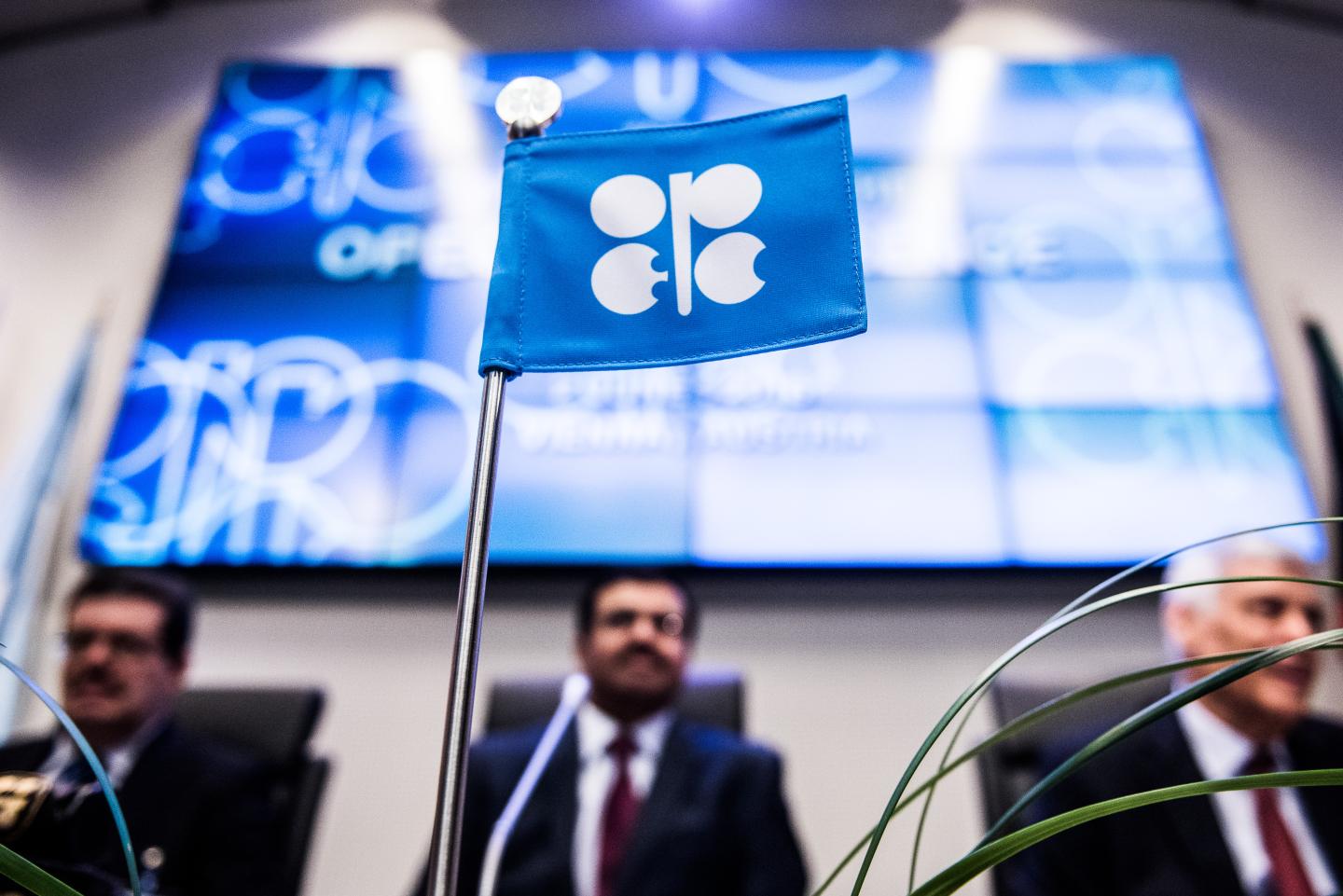
An OPEC flag sits on a table ahead of the 169th Organization of Petroleum Exporting Countries (OPEC) meeting in Vienna, Austria, on Thursday, June 2, 2016. Saudi Arabia is ready to consider a surprise deal with fellow OPEC members, attempting to mend divisions that had grown so wide many dubbed the group as good as dead. Photographer: Akos Stiller/Bloomberg via Getty ImagesPhotograph by Akos Stiller—Bloomberg via Getty Images

During its heyday in the mid-1970s, OPEC supplied nearly 50% of the global oil market. In August of this year, it produced 33.47 million barrels of oil per day—its highest ever—according to the International Energy Agency. But because of the substantial growth in global oil demand since that time, this record output only amounted to slightly more than a 30% market share. This fact and several others explains why OPEC’s recent proposal to reduce its production by 700,000 barrels per day in an attempt to raise oil prices is highly unlikely to be successful under current market conditions.

Economic theory suggests that the higher a cartel’s market share, the greater its ability to control the market price. OPEC’s current market share implies significantly less ability for even a well-organized cartel to increase prices. But OPEC is not a well-organized cartel. Since the first Arab Oil Embargo in 1973, the cartel has continually struggled to prevent member countries from producing more oil than the amounts agreed upon the during cartel members’ periodic meetings. Saudi Arabia, the cartel’s largest member, usually responded to output increases by other OPEC member countries by producing less oil in order to maintain higher prices. However, as more member countries exceeded their cartel allocations, Saudi Arabia eventually gave up and either raised or maintained production, which in turn caused prices to fall.

The current level of oil prices has made it even more challenging for OPEC members to maintain their cartel output levels. All of the Middle Eastern member countries—Saudi Arabia, Iran, Iraq, Kuwait, United Arab Emirates, and Qatar—fund virtually all of their government spending from oil sales. And they’ve each set their spending levels based on an assumed price of oil that is significantly higher than the current price of $50 per barrel. At current oil prices, these OPEC member countries maximize the contribution that oil sales make to their government budgets by producing as much as possible. Consequently, given the dire financial straits facing many of these governments, it is unlikely any members of the cartel will agree to produce less oil unless it is in their unilateral interest.

Even if OPEC produces 700,000 fewer barrels per day, this is unlikely to move oil prices by a discernible amount, thanks to changes in the global oil market over the past six years. The shale oil boom has almost doubled U.S. oil production from slightly over 5 million barrels per day in 2010 to over 9.5 million barrels per day in 2016. Shale oil extraction technology requires frequent drilling and fracturing of the shale oil deposit to maintain oil production. While current oil prices have led to a significant decline in the amount of drilling activity in the U.S. over the past year, there are still many locations in the U.S.—North Dakota, Pennsylvania, and Texas, to name a few—with significant shale oil deposits, which makes it easy for North American producers to quickly ramp up their output in response to an oil price increase.


Outside of the U.S., China has one of the largest shale oil and gas reserves in the world, according to the U.S. Energy Information Administration. Currently, there is significant exploration and development activity there, and in other countries, such as Argentina, Mexico, and Australia.

All of these factors imply that an even-more significant reduction in OPEC’s output than the amount it proposed will not noticeably increase oil prices. In spite of this reality, a near-future reduction in output is still likely to be in the unilateral interest of the majority of OPEC’s member countries, as many of them are currently producing at record levels, even with OPEC oil inventories at record levels. Unless there are investments in new oil production capacity in these countries (which is unlikely at current prices), depletion of existing resources will cause output in these countries to fall over time.

Because an OPEC output reduction is likely to occur without any explicit coordination among member countries, there is little cost and some potential benefit to OPEC from acting as if it is the result of their coordinated actions. If OPEC’s output reduction happens to coincide with an oil price increase, then OPEC can claim credit and potentially gain political clout with oil-importing governments. If this sequence of events occurs without OPEC first announcing its intentions, then it has lost an opportunity to demonstrate its ability to raise prices.

Nevertheless, this is a set of circumstances under which OPEC’s output reduction could raise global oil prices. If a moratorium is placed on shale oil extraction in the U.S. and in other parts of the world, OPECs ability to control oil prices would once again emerge. Hence, the continued development and spread of shale oil extraction technology is the best defense against the emergence of OPEC’s market power.

Frank A. Wolak is the director of the Program on Energy and Sustainable Development and the Holbrook Working Professor of Commodity Price Studies in the Department of Economics at Stanford University.

About the Authors
By Frank A. Wolak
See full bioRight Arrow Button Icon
By Bethany Cianciolo
See full bioRight Arrow Button Icon

Latest in Commentary

Finance
Lorem ipsum dolor sit amet, consectetur adipiscing elit, sed do eiusmod tempor incididunt ut labore et dolore magna aliqua. Ut enim ad minim veniam
By Fortune Editors
October 20, 2025
Finance
Lorem ipsum dolor sit amet, consectetur adipiscing elit, sed do eiusmod tempor incididunt ut labore et dolore magna aliqua. Ut enim ad minim veniam
By Fortune Editors
October 20, 2025
Finance
Lorem ipsum dolor sit amet, consectetur adipiscing elit, sed do eiusmod tempor incididunt ut labore et dolore magna aliqua. Ut enim ad minim veniam
By Fortune Editors
October 20, 2025
Finance
Lorem ipsum dolor sit amet, consectetur adipiscing elit, sed do eiusmod tempor incididunt ut labore et dolore magna aliqua. Ut enim ad minim veniam
By Fortune Editors
October 20, 2025
Finance
Lorem ipsum dolor sit amet, consectetur adipiscing elit, sed do eiusmod tempor incididunt ut labore et dolore magna aliqua. Ut enim ad minim veniam
By Fortune Editors
October 20, 2025
Finance
Lorem ipsum dolor sit amet, consectetur adipiscing elit, sed do eiusmod tempor incididunt ut labore et dolore magna aliqua. Ut enim ad minim veniam
By Fortune Editors
October 20, 2025

Most Popular

Finance
Lorem ipsum dolor sit amet, consectetur adipiscing elit, sed do eiusmod tempor incididunt ut labore et dolore magna aliqua. Ut enim ad minim veniam
By Fortune Editors
October 20, 2025
Finance
Lorem ipsum dolor sit amet, consectetur adipiscing elit, sed do eiusmod tempor incididunt ut labore et dolore magna aliqua. Ut enim ad minim veniam
By Fortune Editors
October 20, 2025
Finance
Lorem ipsum dolor sit amet, consectetur adipiscing elit, sed do eiusmod tempor incididunt ut labore et dolore magna aliqua. Ut enim ad minim veniam
By Fortune Editors
October 20, 2025
Finance
Lorem ipsum dolor sit amet, consectetur adipiscing elit, sed do eiusmod tempor incididunt ut labore et dolore magna aliqua. Ut enim ad minim veniam
By Fortune Editors
October 20, 2025
Finance
Lorem ipsum dolor sit amet, consectetur adipiscing elit, sed do eiusmod tempor incididunt ut labore et dolore magna aliqua. Ut enim ad minim veniam
By Fortune Editors
October 20, 2025
Finance
Lorem ipsum dolor sit amet, consectetur adipiscing elit, sed do eiusmod tempor incididunt ut labore et dolore magna aliqua. Ut enim ad minim veniam
By Fortune Editors
October 20, 2025
Fortune Secondary Logo
Rankings
  • 100 Best Companies
  • Fortune 500
  • Global 500
  • Fortune 500 Europe
  • Most Powerful Women
  • World's Most Admired Companies
  • See All Rankings
  • Lists Calendar
Sections
  • Finance
  • Fortune Crypto
  • Features
  • Leadership
  • Health
  • Commentary
  • Success
  • Retail
  • Mpw
  • Tech
  • Lifestyle
  • CEO Initiative
  • Asia
  • Politics
  • Conferences
  • Europe
  • Newsletters
  • Personal Finance
  • Environment
  • Magazine
  • Education
Customer Support
  • Frequently Asked Questions
  • Customer Service Portal
  • Privacy Policy
  • Terms Of Use
  • Single Issues For Purchase
  • International Print
Commercial Services
  • Advertising
  • Fortune Brand Studio
  • Fortune Analytics
  • Fortune Conferences
  • Business Development
  • Group Subscriptions
About Us
  • About Us
  • Press Center
  • Work At Fortune
  • Terms And Conditions
  • Site Map
  • About Us
  • Press Center
  • Work At Fortune
  • Terms And Conditions
  • Site Map
  • Facebook icon
  • Twitter icon
  • LinkedIn icon
  • Instagram icon
  • Pinterest icon

Latest in Commentary

Mary Moreland-Abbott Executive Vice President of Human Resources.
CommentaryRetirement
Gen X is the most indebted generation in America. Their employers can fix that
By Mary MorelandMay 17, 2026
33 minutes ago
liberman
Commentarystart-ups
We watched social media concentrate. The same thing is happening in AI, only at a deeper layer
By David Liberman and Daniil LibermanMay 16, 2026
22 hours ago
olivier
CommentaryAnthropic
I’ve been studying Big Tech for a long time. What just happened with Anthropic and the Pentagon terrifies me
By Olivier SylvainMay 16, 2026
23 hours ago
lawyer
CommentaryLaw
Would you hire the lawyer who just got sanctioned for using AI?
By Alexandra SmythMay 16, 2026
1 day ago
greg
Personal FinanceAviation
Mamdani’s New York is coming to tax your private jet. Here’s how to prepare
By Greg RaiffMay 16, 2026
1 day ago
chase
CommentaryCities
San Francisco has $2 trillion in AI wealth and can’t fix its own city. That’s every city’s problem
By Chase GarbarinoMay 15, 2026
2 days ago

Most Popular

Microsoft AI chief gives it 18 months—for all white-collar work to be automated by AI
AI
Microsoft AI chief gives it 18 months—for all white-collar work to be automated by AI
By Jake AngeloMay 16, 2026
23 hours ago
Former top Russian official admits the country is over Putin and can 'imagine a future without him' — even elites bail as Kremlin seizes their assets 
Politics
Former top Russian official admits the country is over Putin and can 'imagine a future without him' — even elites bail as Kremlin seizes their assets 
By Jason MaMay 16, 2026
13 hours ago
Meet the 20-year-old CEO who launched a company in high school to solve Gen Z's entry-level job crisis
Future of Work
Meet the 20-year-old CEO who launched a company in high school to solve Gen Z's entry-level job crisis
By Jake AngeloMay 16, 2026
1 day ago
The Bezos family just donated $100 million to help achieve one of Mayor Zohran Mamdani’s top campaign promises
Politics
The Bezos family just donated $100 million to help achieve one of Mayor Zohran Mamdani’s top campaign promises
By Jake AngeloMay 12, 2026
5 days ago
‘You’re not a hero, you’re a liability’: Shark Tank’s Kevin O’Leary warns Gen Z founders to stop glorifying hustle culture
Future of Work
‘You’re not a hero, you’re a liability’: Shark Tank’s Kevin O’Leary warns Gen Z founders to stop glorifying hustle culture
By Jacqueline MunisMay 16, 2026
23 hours ago
Oil markets could be a month away from the moment of truth. Brace for a 'non-linear' price spike and panic buying, analysts warn
Energy
Oil markets could be a month away from the moment of truth. Brace for a 'non-linear' price spike and panic buying, analysts warn
By Jason MaMay 16, 2026
16 hours ago

© 2026 Fortune Media IP Limited. All Rights Reserved. Use of this site constitutes acceptance of our Terms of Use and Privacy Policy | CA Notice at Collection and Privacy Notice | Do Not Sell/Share My Personal Information
FORTUNE is a trademark of Fortune Media IP Limited, registered in the U.S. and other countries. FORTUNE may receive compensation for some links to products and services on this website. Offers may be subject to change without notice.