• Home
  • Latest
  • Fortune 500
  • Finance
  • Tech
  • Leadership
  • Lifestyle
  • Rankings
  • Multimedia

Trendingnow

1

Now worth $200 million, Sarah Jessica Parker credits being ‘one of eight kids that struggled financially’ for her hunger, ambition, and work ethic

2

MacKenzie Scott alone accounted for one-third of America's $19.2 billion in megagifts last year

3

Amazon's record Prime Day masks a darker truth: Americans are spending more and getting less

1

Now worth $200 million, Sarah Jessica Parker credits being ‘one of eight kids that struggled financially’ for her hunger, ambition, and work ethic

2

MacKenzie Scott alone accounted for one-third of America's $19.2 billion in megagifts last year

3

Amazon's record Prime Day masks a darker truth: Americans are spending more and getting less
CommentaryAnthropic

I’ve been studying Big Tech for a long time. What just happened with Anthropic and the Pentagon terrifies me

By
Olivier Sylvain
Olivier Sylvain
Down Arrow Button Icon
By
Olivier Sylvain
Olivier Sylvain
Down Arrow Button Icon
May 16, 2026, 8:15 AM ET
olivier
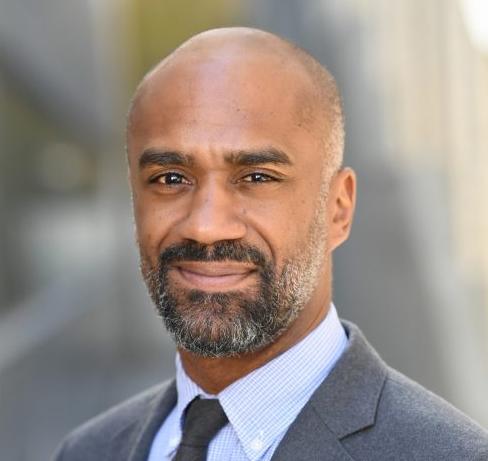
Olivier Sylvain is Fordham law professor.
Add Fortune on Google for similar content.

I spent two years at the Federal Trade Commission, watching regulators doing their best to keep pace with Silicon Valley. I thought I had seen the outer limits of how Big Tech’s command over government policy could be; I did not think it could get worse. I was wrong.

Recommended Video

Last month, Anthropic refused to allow the Defense Department to use Claude, the company’s popular flagship family of AI assistants, for domestic mass surveillance and lethal autonomous warfare. In response, the government canceled its $200 million contract with Anthropic. According to the Department, the company’s constraints would undercut its ability to defend the country from real threats.

The Pentagon designated the company a “supply-chain risk” because, according to Secretary of Defense Pete Hegseth, the company’s “woke” approach threatens national security. This move will not significantly impact Anthropic because most of the company’s business comes from nongovernmental partners and clients. But it matters; the company stands to lose hundreds of millions of dollars.

Anthropic has accordingly sued. As it should. It alleges that, among other things, the Department’s designation is based on the company’s protected views about AI safety. This, it argues, violates the First Amendment. A court has so far upheld the designation while briefing continues.

For years, tech companies have invoked the First Amendment and other laws to shield themselves from legal accountability. In this case, Anthropic does the opposite: it argues that the First Amendment allows it to make decisions that safeguard the public, against the government’s wishes. 

None of this is normal — and I say that as someone whose job at the FTC and as a law professor is to define what normal government oversight of these companies looks like. In ordinary times, we would expect government procurement officials to insist that private contractors implement technical safeguards in their products, just as policymakers require car manufacturers to implement safety features like seatbelts, airbags, and rearview cameras. For decades, regulators and judges have also successfully forced pharmaceutical manufacturers to attend to the addictiveness of opioids and other pain relief medicines.

Then again, these are not normal times. Tech companies have an outsized impact on public policy. The administration enlists tech firms like Palantir to spy on residents in unprecedented ways. It asked a tech billionaire to take a chainsaw to the administrative state while his young acolytes hoovered up unknown amounts of personal data about U.S. residents with impunity.

Even Anthropic has assumed a lot about its freedom and authority, having just announced a new tool called Mythos, an AI model that finds security vulnerabilities in software and networked resources. At the FTC, we asked that tech companies implement clear reasonable measures that protect against foreseeable security risks. We didn’t wait for companies to make those assessments at their own discretion.

It is a sign of the times that a military tech contractor’s moral compass is our policy lodestar.

This didn’t happen overnight.And it wasn’t inevitable. But it was foretold. In the 1990s, when the commercial internet was new, an influential cadre of well-meaning Silicon Valley insiders argued that internet entrepreneurs should be free to develop the new “technologies of freedom,” unfettered by law.

John Perry Barlow, the self-styled prophet of the information age, penned perhaps the most recognizable expression of the point in A Declaration of the Independence of Cyberspace*. In it, he stridently protested a 1996 federal law that would have blocked kids’ access to online porn. The document, however, said so much more. Above all, it argued that the internet would organize public life in ways that were better than anything government could offer.

The ideas that Barlow’s manifesto expressed prevailed in courts and Congress immediately. In 1997, the Supreme Court pronounced broad online free speech rights for users when it struck down the very anti-porn legislation that drew Barlow’s ire. The Court has since expanded this conception of anti-government free speech norms to apply to online companies. This is largely why the most powerful companies today reflexively invoke the First Amendment to shield their products from legal scrutiny.

In 1996, Congress also passed a handful of laws that gifted tech companies exceptional legal protections, the most notable of which blocks legal challenges to companies that host user-generated content. This statute, colloquially called Section 230 for its place in the Communications Act, rests on the conceit that, free from the threat of litigation, platforms would do good and attend to user preferences far better than regulators ever could. At the FTC, we lived with the consequences of that conceit every day.

Judges have since cited the law to dismiss cases against search engines, dating apps, and review sites because those companies presumably promote user-generated content. It has not mattered that the information they knowingly host is unlawful or offensive.

This statutory protection, however, has morphed into far more than a shield for hosting user-generated content. Courts have also relied on it to block cases involving platforms that solicit compromising deepfakes of young women, match violent terrorists, and enable the sale of unregistered weapons to domestic abusers. The courts have reasoned that, in all of these circumstances, the companies are mere platforms of for user-generated content.

Today, moreover, the White House is Big Tech’s most powerful friend and lobbyist. Recall how Silicon Valley’s CEO celebrities stood right behind the President on Inauguration Day in January 2025, preening over the crowd before them. Since, the administration has led the charge to advance their interests. It, for example, has argued for moratoria on state-level AI regulation. (It now seems to be scrambling and waffling given the public outcry.) It also wants to reverse the EU’s regulation of competition and commercial surveillance practices.

Given all of this, it is not surprising that, today, tech companies could presume to preside over public life as they do.

The U.S. has always revered its captains of industry. Bell and Ford earned admiration for their entrepreneurial acumen and foresight. But companies like Standard Oil, even at the height of its power, did not have a direct line to the Oval Office, a seat at the inauguration, and an AI model capable of finding security vulnerabilities in critical infrastructure.

There surely is something to admire in Anthropic’s decision to hold the line against the Defense Department. But in a democracy, where voters are sovereign, this state of affairs is upside down. Why should we trust Anthropic now when, tomorrow, it could change its mind about mass surveillance or automated weaponry? Or Mythos? I have watched enough companies change their minds when the financial incentives shifted. Principles have a way of bending under billion-dollar pressure.

In some regards, the tide may finally be turning against Big Tech. Just a few weeks ago, two juries, one in Los Angeles and the other in Santa Fe, held Meta and YouTube accountable for the ways in which they design social media to hold consumer attention irrespective of users’ mental health effects. The companies would do better to implement technical safeguards in their products before releasing them to the public.

Red and blue states and localities are pushing back against the development of data centers in their communities because of concerns over high energy usage and water consumption, among other things.

I have spent my career arguing that government can and must do this job. The Anthropic moment is not a reason for optimism — it is a warning. If Congress won’t act, voters need to put people in office who will. Because the alternative is a future where a private AI company’s terms of service are the closest thing we have to a constitution for the digital age. That should terrify all of us.

The opinions expressed in Fortune.com commentary pieces are solely the views of their authors and do not necessarily reflect the opinions and beliefs of Fortune.

About the Author
By Olivier Sylvain
See full bioRight Arrow Button Icon
Add Fortune on Google for similar content.

Latest in Commentary

Finance
Lorem ipsum dolor sit amet, consectetur adipiscing elit, sed do eiusmod tempor incididunt ut labore et dolore magna aliqua. Ut enim ad minim veniam
By Fortune Editors
October 20, 2025
Finance
Lorem ipsum dolor sit amet, consectetur adipiscing elit, sed do eiusmod tempor incididunt ut labore et dolore magna aliqua. Ut enim ad minim veniam
By Fortune Editors
October 20, 2025
Finance
Lorem ipsum dolor sit amet, consectetur adipiscing elit, sed do eiusmod tempor incididunt ut labore et dolore magna aliqua. Ut enim ad minim veniam
By Fortune Editors
October 20, 2025
Finance
Lorem ipsum dolor sit amet, consectetur adipiscing elit, sed do eiusmod tempor incididunt ut labore et dolore magna aliqua. Ut enim ad minim veniam
By Fortune Editors
October 20, 2025
Finance
Lorem ipsum dolor sit amet, consectetur adipiscing elit, sed do eiusmod tempor incididunt ut labore et dolore magna aliqua. Ut enim ad minim veniam
By Fortune Editors
October 20, 2025
Finance
Lorem ipsum dolor sit amet, consectetur adipiscing elit, sed do eiusmod tempor incididunt ut labore et dolore magna aliqua. Ut enim ad minim veniam
By Fortune Editors
October 20, 2025

Most Popular

Finance
Lorem ipsum dolor sit amet, consectetur adipiscing elit, sed do eiusmod tempor incididunt ut labore et dolore magna aliqua. Ut enim ad minim veniam
By Fortune Editors
October 20, 2025
Finance
Lorem ipsum dolor sit amet, consectetur adipiscing elit, sed do eiusmod tempor incididunt ut labore et dolore magna aliqua. Ut enim ad minim veniam
By Fortune Editors
October 20, 2025
Finance
Lorem ipsum dolor sit amet, consectetur adipiscing elit, sed do eiusmod tempor incididunt ut labore et dolore magna aliqua. Ut enim ad minim veniam
By Fortune Editors
October 20, 2025
Finance
Lorem ipsum dolor sit amet, consectetur adipiscing elit, sed do eiusmod tempor incididunt ut labore et dolore magna aliqua. Ut enim ad minim veniam
By Fortune Editors
October 20, 2025
Finance
Lorem ipsum dolor sit amet, consectetur adipiscing elit, sed do eiusmod tempor incididunt ut labore et dolore magna aliqua. Ut enim ad minim veniam
By Fortune Editors
October 20, 2025
Finance
Lorem ipsum dolor sit amet, consectetur adipiscing elit, sed do eiusmod tempor incididunt ut labore et dolore magna aliqua. Ut enim ad minim veniam
By Fortune Editors
October 20, 2025
Fortune Secondary Logo
Rankings
  • 100 Best Companies
  • Fortune 500
  • Global 500
  • Fortune 500 Europe
  • Most Powerful Women
  • World's Most Admired Companies
  • See All Rankings
  • Lists Calendar
Sections
  • Finance
  • Fortune Crypto
  • Features
  • Leadership
  • Health
  • Commentary
  • Success
  • Retail
  • Mpw
  • Tech
  • Lifestyle
  • CEO Initiative
  • Asia
  • Politics
  • Conferences
  • Europe
  • Newsletters
  • Personal Finance
  • Environment
  • Magazine
  • Education
Customer Support
  • Frequently Asked Questions
  • Customer Service Portal
  • Privacy Policy
  • Terms Of Use
  • Single Issues For Purchase
  • International Print
Commercial Services
  • Advertising
  • Fortune Brand Studio
  • Fortune Analytics
  • Fortune Conferences
  • Business Development
  • Group Subscriptions
About Us
  • About Us
  • Press Center
  • Work At Fortune
  • Terms And Conditions
  • Site Map
  • About Us
  • Press Center
  • Work At Fortune
  • Terms And Conditions
  • Site Map
  • Facebook icon
  • Twitter icon
  • LinkedIn icon
  • Instagram icon
  • Pinterest icon

Olivier Sylvain is Fordham law professor, Knight First Amendment Institute fellow, former senior advisor at the Federal Trade Commission, and author of RECLAIMING THE INTERNET: How Big Tech TookControl—and How We Can Take It Back (Columbia Global Reports; March 17, 2026).


Latest in Commentary

nido
Commentary250 Years of Innovation
As an immigrant turned entrepreneur and college president, here is why I celebrate our nation as it turns 250
By Nido R. QubeinJune 25, 2026
7 hours ago
Asia’s defense boom is rewiring the global arms supply chain
Commentaryarms, weapons, and defense
Asia’s defense boom is rewiring the global arms supply chain
By Chris OberoiJune 24, 2026
22 hours ago
steve
Commentary250 Years of Innovation
Steve Case: America was built by entrepreneurs. Here’s how we keep that edge for the next 250 years
By Steve CaseJune 24, 2026
1 day ago
t
CommentaryWhite House
Trump mistakes the bully pulpit for bullying leadership — history’s villains were never heroes
By Jeffrey Sonnenfeld and Steven TianJune 24, 2026
1 day ago
mg
CommentaryHealth
The ‘tech neck’ time bomb: why 43 million young Americans could cripple U.S. health care within a generation
By Michael GerlingJune 24, 2026
1 day ago
sb
Commentaryclimate change
The climate policy triangle: why leaders can no longer choose between growth, security and sustainability
By Sebastian BuckupJune 23, 2026
2 days ago

Most Popular

Now worth $200 million, Sarah Jessica Parker credits being ‘one of eight kids that struggled financially’ for her hunger, ambition, and work ethic
Success
Now worth $200 million, Sarah Jessica Parker credits being ‘one of eight kids that struggled financially’ for her hunger, ambition, and work ethic
By Orianna Rosa RoyleJune 24, 2026
1 day ago
MacKenzie Scott alone accounted for one-third of America's $19.2 billion in megagifts last year
Success
MacKenzie Scott alone accounted for one-third of America's $19.2 billion in megagifts last year
By Sydney LakeJune 25, 2026
12 hours ago
Amazon's record Prime Day masks a darker truth: Americans are spending more and getting less
Retail
Amazon's record Prime Day masks a darker truth: Americans are spending more and getting less
By Nick LichtenbergJune 24, 2026
1 day ago
Ray Dalio just finished a 10-day trip to China. He says global leaders know America ‘doesn’t have what it takes to fight to maintain its empire’
Asia
Ray Dalio just finished a 10-day trip to China. He says global leaders know America ‘doesn’t have what it takes to fight to maintain its empire’
By Nick LichtenbergJune 24, 2026
1 day ago
After forcing workers back to the office, Goldman Sachs and JPMorgan Chase are now letting their staff work remotely—but only for the World Cup
Success
After forcing workers back to the office, Goldman Sachs and JPMorgan Chase are now letting their staff work remotely—but only for the World Cup
By Orianna Rosa RoyleJune 23, 2026
2 days ago
Ikea’s billionaire founder was so frugal that he bought clothes from flea markets and took free salt and pepper from restaurants
Success
Ikea’s billionaire founder was so frugal that he bought clothes from flea markets and took free salt and pepper from restaurants
By Orianna Rosa RoyleJune 25, 2026
12 hours ago

© 2026 Fortune Media IP Limited. All Rights Reserved. Use of this site constitutes acceptance of our Terms of Use and Privacy Policy | CA Notice at Collection and Privacy Notice | Do Not Sell/Share My Personal Information
FORTUNE is a trademark of Fortune Media IP Limited, registered in the U.S. and other countries. FORTUNE may receive compensation for some links to products and services on this website. Offers may be subject to change without notice.