
• Home
  • Latest
  • Fortune 500
  • Finance
  • Tech
  • Leadership
  • Lifestyle
  • Rankings
  • Multimedia
TechFuture of Work

Here’s Why This Software Scuffle Should Matter to Non-Techies

Barb Darrow
By
Barb Darrow
Barb Darrow
Down Arrow Button Icon
Barb Darrow
By
Barb Darrow
Barb Darrow
Down Arrow Button Icon
September 6, 2016, 1:41 PM ET
US-MCDONALDS
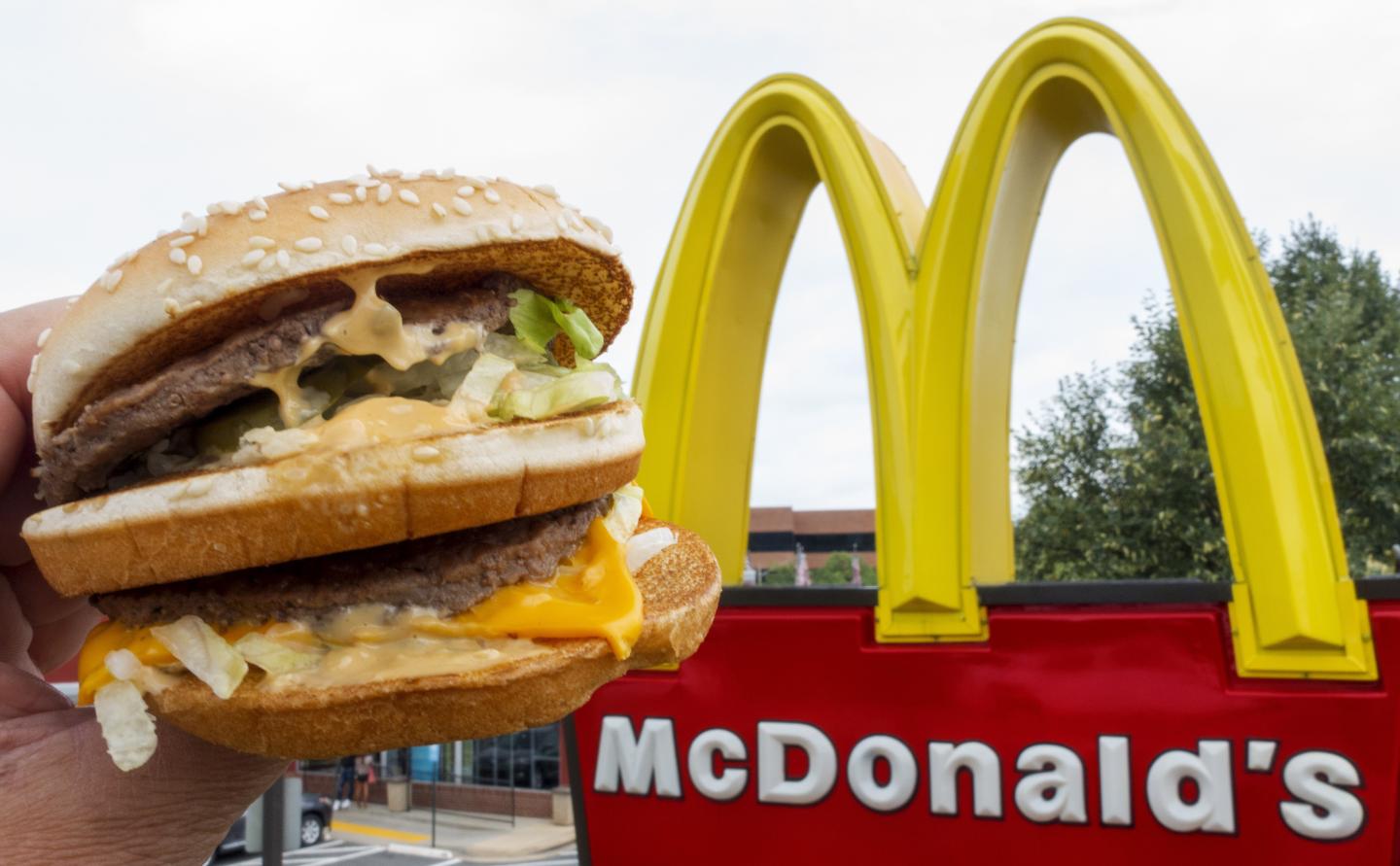
A McDonald's Big Mac, their signature sandwich is held up near the golden arches at a McDonalds's August 10, 2015, in Centreville, Virginia. AFP PHOTO/PAUL J. RICHARDS (Photo credit should read PAUL J. RICHARDS/AFP/Getty Images)Photograph by Paul J. Richards—AFP via Getty Images

There’s been a battle brewing in the world of software development concerning how companies build and update the applications they use internally and, perhaps more importantly, those they use to serve outside customers. It directly involves Docker, which is becoming the standard way for packing up the pieces of these applications in a way that makes them easier to run and update quickly.

That speed-and-ease is increasingly important now as even old-school companies have to build, test, and tweak new software features faster to serve corporate customers. Thus, it’s also the sort of battle that chief information officers and others in the C-Level suite need to watch.

“10 to 15 years ago, enterprise applications were for internal users only. Now, every bank has millions of users it needs to serve,” says Tobi Knaup, chief technology officer for Mesosphere, a company that offers tools to manage and deploy containers.

The use of containers greatly helps in that regard because they make more efficient use of computing resources, stretching them even further than virtualization, which lets a single server run multiple operating systems and applications. Containers extend hardware even further because that server can now run many containers on the same operating system on that server.

Translated that means a company can can pack more applications onto one server than before. Another big perk: Containers can be moved around from one set of servers to another as needed.

Containers also are the vehicle for running “microservices”—basically modular pieces of software that when assembled provide major software services.

“Microservices are all about breaking up massive applications into smaller components that are easy to update and rapid to deploy. When you break big software into small bunches of code, you don’t want to spin up an entire virtual machine, you use a container,” said Joe Fernandes, senior director of project management for Red Hat (RHT), a big proponent of Docker use.

Docker is the name of both of the underlying container technology and the San Francisco company that popularized its use. When the company started out in 2013, the notion of a container was not really new. The Linux operating system has used containers for a long time, but the company (from now on referred to as Docker Inc.) made the technology much easier for developers to use.

Here’s the issue that has bubbled up among tech industry professionals over the past few weeks. Docker Inc. has been the keeper of the core Docker code, but it’s also been adding new management and orchestration features atop that core. Meanwhile, a raft of other companies including CoreOS, Mesosphere, Joyent, Hashicorp, Apprenda, and others are building their own management and orchestration tools. Several of these back Kubernetes, a way of managing Docker containers pushed by Google (GOOG). All of these tools promise to make it easier to manage and deploy many Docker containers quickly, a task that gets confusing fast.

Get Data Sheet, Fortune’s technology newsletter.

Earlier this year, Docker Inc. added some of its advanced features and capabilities—a product called Swarm— to the core Docker download. That raised a ruckus among many of those other companies that are basically doing the same thing. Swarm claims to make it easier to run multiple (or a cluster of) Docker nodes as a single system.

Put another way, it’s like the basic Docker code is the beef patty of a Big Mac, while Swarm and third-party enhancements are different versions of the special sauce. When Docker Inc. added Swarm to Docker code, it made life difficult for customers to use an alternate special sauce, which of course, provoked howls of complaint from Swarm competitors.

Critics of Docker Inc. further argue frequent updates to Swarm itself have destabilized that core software code. Nobody wants an unstable foundation.

Bob Wise, chief technologist for Samsung SDSA, recently outlined his personal take on the issue in Medium post positing that now may be the time to “fork” Docker, meaning break off the core components for continued development by a community outside of Docker Inc. itself.

Wise wrote:

Docker’s recent move to embed Swarm into the docker engine is equal parts poor architecture and brilliant marketing. Docker is moving away from the simple building block that can be used by many systems. This was a large new system developed in secret without transparent community involvement. Docker seems to be moving away from an open community. The commercial strategy here is one that should be worrying to those who prefer the architecture or communities of Kubernetes, Mesos, or Cloud Foundry. Docker has established that they will use their position to impede the progress of those communities in favor of their commercial interests.

Tech publication The New Stack followed up with more on the kerfuffle, reporting that some tech companies are considering a fork to lessen what they see as Docker Inc.’s control of the core code. A few industry sources confirmed that to Fortune, but none would speak on the record because they are not authorized to do so. Docker Inc. officials didn’t comment on this story but one developer in their camp said talk of a fork was overblown.

“The putative forkers doth protest too much,” said Charles Fitzgerald, an angel investor and former tech executive who follows the market.

“These are competitors with an acute complexity problem. Docker was not the first to do containers, it was just the first to simplify the technology to make it mainstream. Now the same thing is playing out in container orchestration and the vendors are unhappy that Docker is making it so much easier than their own approaches.”

Still, even its fans know that Docker Inc., like other companies founded on open-source technology, has to figure out a way to make money off of what is essentially free software. Thus the push to add more value to core Docker, and charge for it. Given that Docker Inc., has raised $180 million in venture funding, there has to be some pressure there.

The idea of forking code is controversial. Some see it as a hostile act of seizing freely available code and taking it another direction. That could mean two separate sets of code develop over time, which in turn can lead to incompatibilities. Typically in the open source world, code is available to anyone who can tweak and change it as long as they contribute their changes back to the overall community.

Red Hat, which ships core Docker with its Linux operating system, is officially opposed to any sort of fragmentation of the basic Docker runtime and packaging format. Fernandes, echoed Wise’s concern that instability of that key layer increases as “more stuff gets added in” is warranted.

But, company says it wants no part of any fork. Red Hat’s take is that the Open Container Initiative backed by nearly everyone in this space—including Docker Inc.—should drive the container standard, ensuring no one company dominates the process or the technology Daniel Rieks, Red Hat’s senior director of systems design and engineering, wrote more about that stance on LinkedIn.

For more on open-source software, watch

While some industry insiders think there might be a place for multiple container specs to suit different application needs—much as there are different file formats for word processing documents or digital images today—others are pushing hard for the Docker spat to be resolved amicably and result in one set of core code.

Whether that can be achieved as various parties advocate for a fork, remains a big question.

Note: this story was updated with Charles Fitzgerald’s comments.

About the Author
Barb Darrow
By Barb Darrow
See full bioRight Arrow Button Icon

Latest in Tech

Finance
Lorem ipsum dolor sit amet, consectetur adipiscing elit, sed do eiusmod tempor incididunt ut labore et dolore magna aliqua. Ut enim ad minim veniam
By Fortune Editors
October 20, 2025
Finance
Lorem ipsum dolor sit amet, consectetur adipiscing elit, sed do eiusmod tempor incididunt ut labore et dolore magna aliqua. Ut enim ad minim veniam
By Fortune Editors
October 20, 2025
Finance
Lorem ipsum dolor sit amet, consectetur adipiscing elit, sed do eiusmod tempor incididunt ut labore et dolore magna aliqua. Ut enim ad minim veniam
By Fortune Editors
October 20, 2025
Finance
Lorem ipsum dolor sit amet, consectetur adipiscing elit, sed do eiusmod tempor incididunt ut labore et dolore magna aliqua. Ut enim ad minim veniam
By Fortune Editors
October 20, 2025
Finance
Lorem ipsum dolor sit amet, consectetur adipiscing elit, sed do eiusmod tempor incididunt ut labore et dolore magna aliqua. Ut enim ad minim veniam
By Fortune Editors
October 20, 2025
Finance
Lorem ipsum dolor sit amet, consectetur adipiscing elit, sed do eiusmod tempor incididunt ut labore et dolore magna aliqua. Ut enim ad minim veniam
By Fortune Editors
October 20, 2025

Most Popular

Finance
Lorem ipsum dolor sit amet, consectetur adipiscing elit, sed do eiusmod tempor incididunt ut labore et dolore magna aliqua. Ut enim ad minim veniam
By Fortune Editors
October 20, 2025
Finance
Lorem ipsum dolor sit amet, consectetur adipiscing elit, sed do eiusmod tempor incididunt ut labore et dolore magna aliqua. Ut enim ad minim veniam
By Fortune Editors
October 20, 2025
Finance
Lorem ipsum dolor sit amet, consectetur adipiscing elit, sed do eiusmod tempor incididunt ut labore et dolore magna aliqua. Ut enim ad minim veniam
By Fortune Editors
October 20, 2025
Finance
Lorem ipsum dolor sit amet, consectetur adipiscing elit, sed do eiusmod tempor incididunt ut labore et dolore magna aliqua. Ut enim ad minim veniam
By Fortune Editors
October 20, 2025
Finance
Lorem ipsum dolor sit amet, consectetur adipiscing elit, sed do eiusmod tempor incididunt ut labore et dolore magna aliqua. Ut enim ad minim veniam
By Fortune Editors
October 20, 2025
Finance
Lorem ipsum dolor sit amet, consectetur adipiscing elit, sed do eiusmod tempor incididunt ut labore et dolore magna aliqua. Ut enim ad minim veniam
By Fortune Editors
October 20, 2025
Fortune Secondary Logo
Rankings
  • 100 Best Companies
  • Fortune 500
  • Global 500
  • Fortune 500 Europe
  • Most Powerful Women
  • World's Most Admired Companies
  • See All Rankings
  • Lists Calendar
Sections
  • Finance
  • Fortune Crypto
  • Features
  • Leadership
  • Health
  • Commentary
  • Success
  • Retail
  • Mpw
  • Tech
  • Lifestyle
  • CEO Initiative
  • Asia
  • Politics
  • Conferences
  • Europe
  • Newsletters
  • Personal Finance
  • Environment
  • Magazine
  • Education
Customer Support
  • Frequently Asked Questions
  • Customer Service Portal
  • Privacy Policy
  • Terms Of Use
  • Single Issues For Purchase
  • International Print
Commercial Services
  • Advertising
  • Fortune Brand Studio
  • Fortune Analytics
  • Fortune Conferences
  • Business Development
  • Group Subscriptions
About Us
  • About Us
  • Press Center
  • Work At Fortune
  • Terms And Conditions
  • Site Map
  • About Us
  • Press Center
  • Work At Fortune
  • Terms And Conditions
  • Site Map
  • Facebook icon
  • Twitter icon
  • LinkedIn icon
  • Instagram icon
  • Pinterest icon

Latest in Tech

Google Cloud CEO Thomas Kurian at Fortune Brainstorm AI 2025 in San Francisco. (Photo: Stuart Isett/Fortune)
NewslettersFortune Tech
Google Cloud is almost one-fifth of Alphabet’s business
By Andrew NuscaApril 30, 2026
11 minutes ago
Photo: Donald Trump
Big TechMarkets
With no end in sight, Trump considers new options in Iran war—including the ‘Dark Eagle’ hypersonic missile
By Jim EdwardsApril 30, 2026
40 minutes ago
Google Cloud revenue is now 18% of Alphabet’s business. Is this the beginning of the end of Google’s search identity?
Big TechGoogle
Google Cloud revenue is now 18% of Alphabet’s business. Is this the beginning of the end of Google’s search identity?
By Alexei OreskovicApril 29, 2026
9 hours ago
Man wearing a suit and tie and glasses
Big TechTech
Microsoft, Meta, and Google just announced billions more in AI spending. Only Google convinced investors it’s paying off
By Amanda GerutApril 29, 2026
10 hours ago
A man in a suit and tie
InvestingMeta
Meta just bumped its 2026 capex forecast up to as much as $145 billion for the AI boom—and investors flinched
By Amanda GerutApril 29, 2026
12 hours ago
How JPMorgan’s CIO is reshaping work at the bank with a $19.8 billion annual tech and AI budget
NewslettersCIO Intelligence
How JPMorgan’s CIO is reshaping work at the bank with a $19.8 billion annual tech and AI budget
By John KellApril 29, 2026
17 hours ago

Most Popular

Apple cofounder Ronald Wayne—whose stake would be worth up to $400 billion had he not sold it in 1976—says that at 91, he has no regrets
Success
Apple cofounder Ronald Wayne—whose stake would be worth up to $400 billion had he not sold it in 1976—says that at 91, he has no regrets
By Preston ForeApril 27, 2026
3 days ago
‘Take the money and run’: Johns Hopkins economist Steve Hanke on why the UAE quit OPEC
Energy
‘Take the money and run’: Johns Hopkins economist Steve Hanke on why the UAE quit OPEC
By Shawn TullyApril 29, 2026
1 day ago
‘The cost of compute is far beyond the costs of the employees’: Nvidia executive says right now AI is more expensive than paying human workers
AI
‘The cost of compute is far beyond the costs of the employees’: Nvidia executive says right now AI is more expensive than paying human workers
By Sasha RogelbergApril 28, 2026
2 days ago
Jamie Dimon gets candid about national debt: ‘There will be a bond crisis, and then we’ll have to deal with it’
Economy
Jamie Dimon gets candid about national debt: ‘There will be a bond crisis, and then we’ll have to deal with it’
By Eleanor PringleApril 29, 2026
1 day ago
‘They left me no choice’: Powell isn’t going anywhere—blocking Trump from another Fed appointee
Banking
‘They left me no choice’: Powell isn’t going anywhere—blocking Trump from another Fed appointee
By Eva RoytburgApril 29, 2026
16 hours ago
More than two-thirds of U.S. schools say they’re unable to afford the cost of student free lunch—and MAHA’s dietary guidelines may make it worse
Economy
More than two-thirds of U.S. schools say they’re unable to afford the cost of student free lunch—and MAHA’s dietary guidelines may make it worse
By Sasha RogelbergApril 29, 2026
1 day ago

© 2026 Fortune Media IP Limited. All Rights Reserved. Use of this site constitutes acceptance of our Terms of Use and Privacy Policy | CA Notice at Collection and Privacy Notice | Do Not Sell/Share My Personal Information
FORTUNE is a trademark of Fortune Media IP Limited, registered in the U.S. and other countries. FORTUNE may receive compensation for some links to products and services on this website. Offers may be subject to change without notice.