Chinese telecommunications equipment giant Huawei Technologies has spent considerable time in U.S. courtrooms defending itself from allegedly infringing on other companies’ patents.
Huawei or its subsidiaries have been cited as a defendant or co-defendant in at least 172 federal patent infringement cases since 2003, according to a review of court filings. But the same records showed that the company had never pressed its own federal lawsuits until this year.
In January, it filed a patent infringement case against U.S. telecommunications carrier T-Mobile (TMUS), with an additional filing this week. And in May it sued Korean electronics giant Samsung.
The seemingly sudden change in strategy has been a long time coming. Huawei first notified T-Mobile in 2013 that it wanted royalty payments for patents it held related to transmission standards for high-speed 3G and 4G wireless networks, according to court filings. And it touched base with Samsung over similar industry-standard patents at least as early as 2013, although portions of that lawsuit have been filed under seal. Huawei has also had talks with Nokia (NOK) over patents held by both companies, Fortune has learned.
But the highly public lawsuits have ignited speculation across the industry over why the Chinese giant has chosen finally to seek legal redress in U.S. courts.
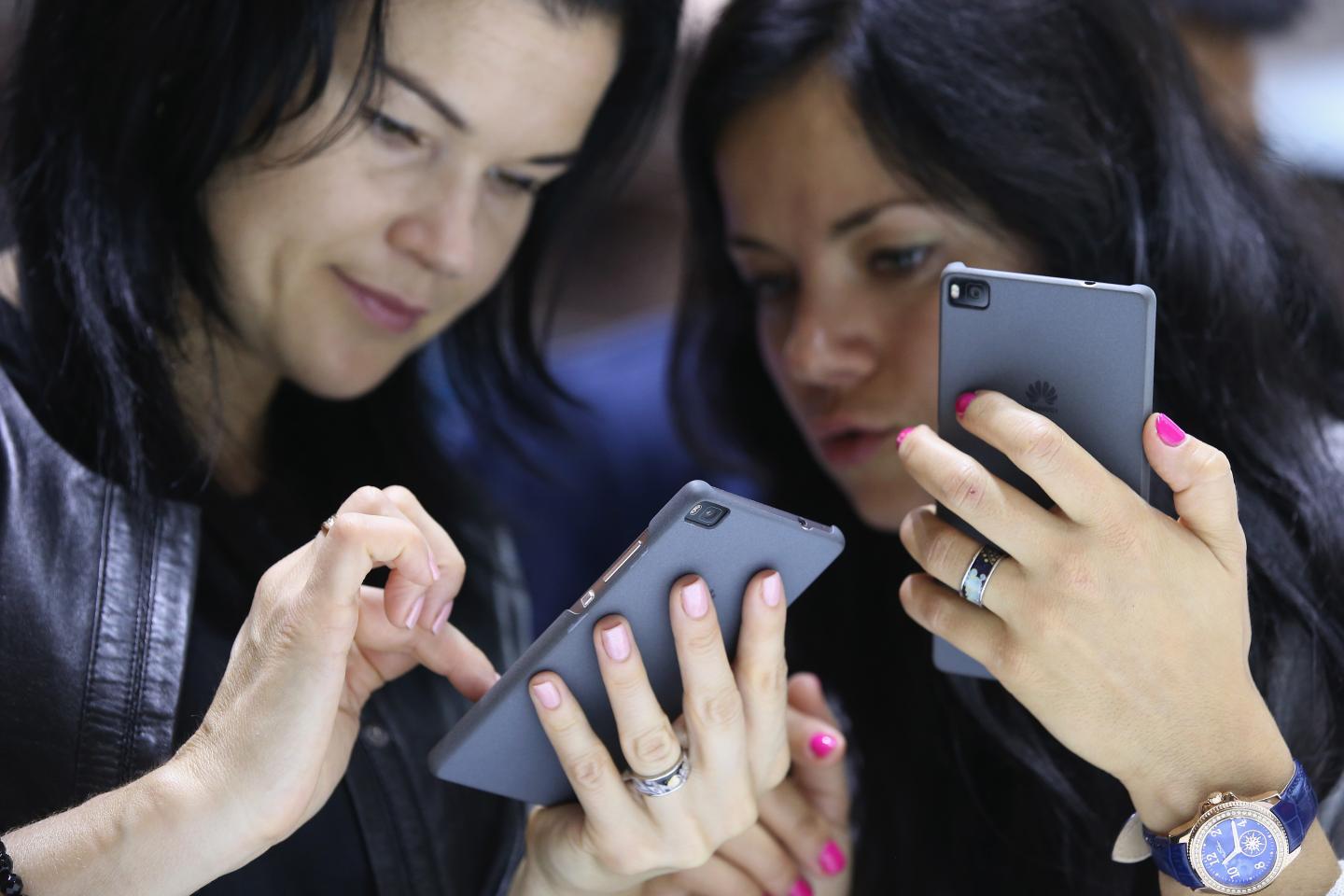
Many in the patent community see the move as a prelude to Huawei selling its popular smartphone handsets in the U.S. market on a large scale. Huawei has offered a few phone previously, such as the Nexus 6P sold by Google. The company’s long track record of being sued for patent infringement was thought to be a hurdle to entering the U.S. phone market, where Apple and others have not hesitated to sue rivals. And the company’s bid to supply telecom networking gear has in the past been hampered by national security concerns.
Get Data Sheet, Fortune’s technology newsletter.
More recently, Huawei executives have openly discussed making a major phone push in the U.S. “We have already seized a leading position in the Chinese [smartphone] market,” Huawei deputy chairman Ken Hu told the Wall Street Journal in December. “We hope that in the U.S. we can achieve the same success.”
With that in mind, the Huawei lawsuits could be the “opening salvo” of a new round of smartphone litigation, Brian Ferguson, co-chair of the patent litigation practice at Weil, Gotshal & Manges, says.
“Huawei wants to break into the U.S. mobile device market and it knows that the industry leaders are not going to just welcome it to the party,” Ferguson says. “Rather than wait to be sued, it looks like Huawei wants to send a message that it has its own patents and will not just sit back and be a target.”
Smartphone Wars
Despite all the lawsuits against Huawei over the years, the company points to an extensive intellectual property catalog of its own. In both its recent lawsuits, Huawei says it has over 50,000 patents worldwide, including 1,268 issued in the United States just last year. The patents involved in the lawsuits have been incorporated into mobile industry standards, making it virtually impossible for any phone maker or wireless carrier to avoid them.
The lawsuits from Huawei have also arrived just as it seemed that the smartphone patent wars, kicked off by the late Apple CEO Steve Jobs in 2010, were finally winding down. Most of the major players, including Apple (AAPL), Google (GOOGL), Microsoft (MSFT), and Ericsson have reached settlements over the past few years. And the Supreme Court will hear what remains of Apple’s early suit against Samsung in its upcoming term.
Huawei’s new lawsuits are a sign, however, that the battles are likely to flare up again, according to Michael Santorelli, who heads the Advanced Communications Law & Policy Institute at New York Law School.
“It looks like it will continue to rage on so long as patents are viewed and wielded as swords and shields in the ongoing fight for supremacy in this intensely competitive space,” Santorelli says.
Huawei, which has made no secret of its plans to enter the U.S. mobile phone market, isn’t saying much itself beyond the obvious.
“Huawei owns numerous patents which are essential to the operation of LTE network services,” William Plummer, vice president for external affairs, tells Fortune. “Negotiation is always the preferred route, but, in some instances, companies are compelled to (go to) the courts to protect their investments and intellectual property.”
The company declined to comment on the timing of the lawsuits, whether it planned to sue additional companies, or if it had reached any negotiated settlements. The company struck a deal with Apple this year for patent royalties, the Wall Street Journal reported last month.
Some insiders reject the connection between the recent lawsuits and the coming market push. The litigation is simply due to other companies refusing to pay licensing fees as Huawei has been awarded more patents, according to one person familiar with the company. “If you don’t want to play ball, we’re going to enforce our rights,” the person said.
Essential Patents
Huawei was founded in 1987 in Shenzhen, a city near Hong Kong that was the country’s first designated “special economic zone” with looser economic regulations. Last year, the company reported sales of almost $61 billion, ranking as one of the top two makers of cellular network equipment and as the world’s third-largest seller of mobile devices. Its U.S. headquarters is in Plano, Tex.
The company’s lawsuits don’t rely on controversial design patents, like one of the patents Apple wielded against Samsung that covers a phone with a rectangular shape and rounded corners. Instead, Huawei is suing over technology it developed for wireless networks that was subsequently incorporated into essential industry standards.
Before a patented technology is included in an essential standard, the owner must agree to license it on “fair, reasonable and non-discriminatory” terms. That’s to prevent a company from seeking to hamper rivals for use of technology that an entire industry may depend on. But even under the so-called FRAND requirement, a patent owner is still entitled to royalties.
In the case of Samsung, Huawei says virtually all of the Korean companies smartphones, including the most recent Galaxy S7 models, use its technology to connect to UMTS and LTE cellular networks. One patent cited in the lawsuit, for example, improves the rate of data flowing to a phone by reducing the amount of information the phone must communicate to a cellular base station. The lawsuit cites 11 patents that Samsung is allegedly infringing, with two additional causes for action that could be patents currently filed under seal.
Samsung has not yet filed its reply to Huawei’s lawsuit. The Korean company, the world’s largest phone maker, is “thoroughly reviewing the complaints and will take appropriate action to defend Samsung’s business interests,” a spokeswoman said.
In the T-Mobile case that Huawei filed this week, the Chinese company says it has dozens of patents that are part of the standards for high-speed wireless networks used by T-Mobile. That followed a case filed in January alleging infringement on 14 specific patents.
T-Mobile, which has not yet filed a reply in the case, declined to comment. The company sued Huawei in 2014 for allegedly stealing trade secrets related to a robot that tests smartphones by simulating a person tapping the screen. The case is still pending.
To learn more about Apple’s patent case at the Supreme Court, watch:
In response to the January lawsuit, T-Mobile argued that Huawei failed to say specifically how it infringed on the 14 patents and noted that it had purchased all of the equipment to build its networks from third parties. Last month, one of those third parties–Nokia–told the court that it supplied much of T-Mobile’s equipment related to the case and was already negotiating with Huawei about possibly cross-licensing patents.
Nokia says it so far been unable to strike a deal. “Huawei has refused all reasonable resolution options Nokia has offered to date,” the Finnish company said in a statement to Fortune. Huawei’s lawsuit against a telecom carrier, instead of against equipment makers, is unprecedented, Nokia said.
On Wednesday, U.S. Magistrate Judge Roy Payne referred the case to a mediator to seek a negotiated settlement.
A settlement could take months. In the meantime, other companies will have to wait and see if Huawei plans to expand its legal attack ahead of its market attack.