• Home
  • Latest
  • Fortune 500
  • Finance
  • Tech
  • Leadership
  • Lifestyle
  • Rankings
  • Multimedia
CommentaryWall Street

What the Sad End of Blackberry’s Iconic Keyboard Means for Every Wall Street Banker

By
Kabir Sehgal
Kabir Sehgal
Down Arrow Button Icon
By
Kabir Sehgal
Kabir Sehgal
Down Arrow Button Icon
July 7, 2016, 3:12 PM ET
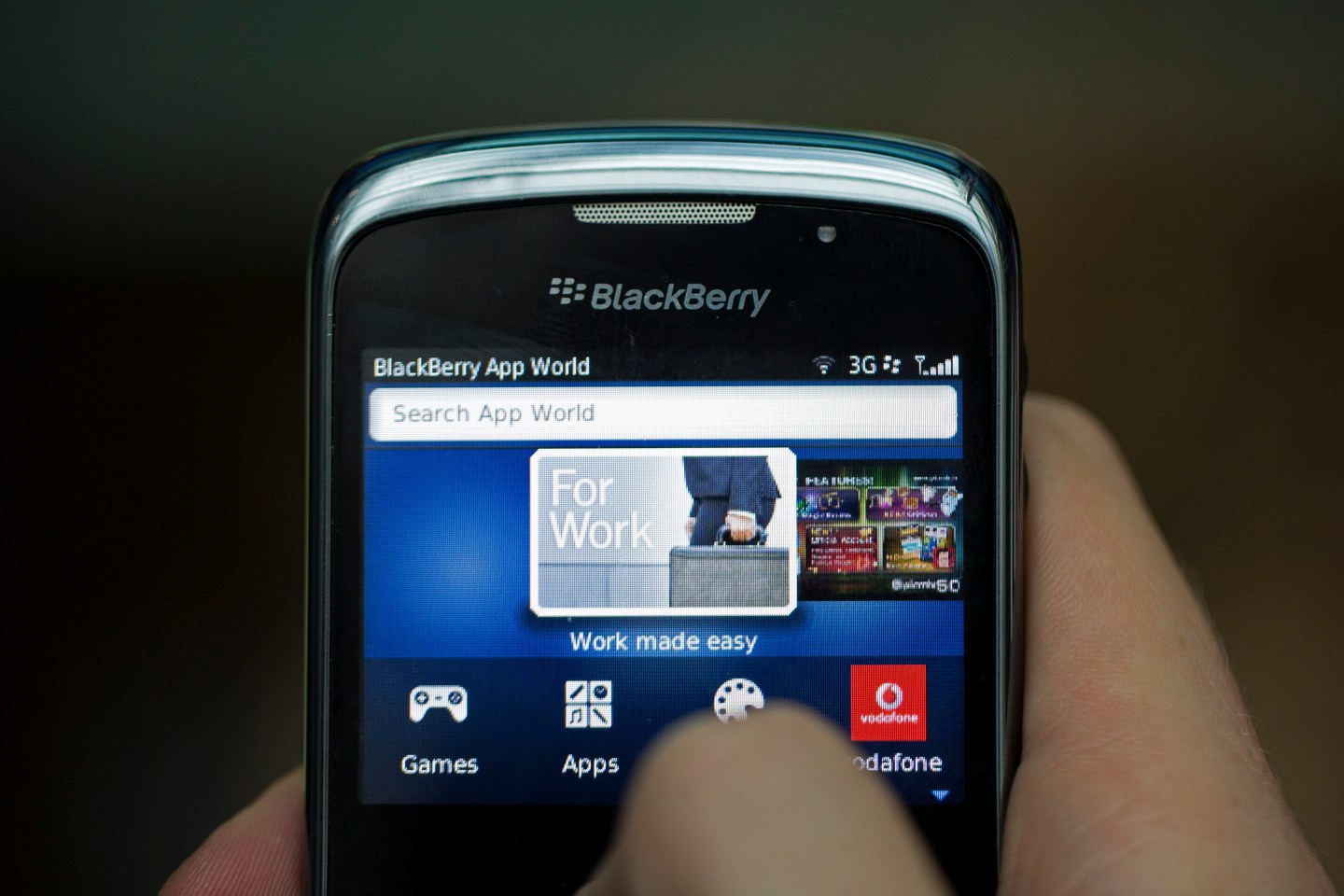
BlackBerry Smartphones And U.K. Headquarters As 4.7 Billion Buyout Looms
The BlackBerry App World logo is seen on the screen of a BlackBerry Curve smartphone, produced by BlackBerry Ltd., in this arranged photograph taken in London, U.K., on Monday, Sept. 23, 2013. BlackBerry said yesterday it reached a tentative agreement for a $4.7 billion buyout by a group led by Fairfax Financial Holdings Ltd., its biggest shareholder. Photographer: Simon Dawson/Bloomberg via Getty ImagesPhotograph by Simon Dawson — Bloomberg via Getty Images

Kabir Sehgal is a former vice president at J.P. Morgan and the author of Coined: The Rich Life of Money And How It’s History Has Shaped Us. He is also executive producer of the forthcoming album, Presidential Suite by Ted Nash Big Band

It’s the end of an era on Wall Street. The move this week to shutter the Blackberry Classic, the mobile device with the iconic QWERTY keyboard, was all but expected, but it also served notice of the eventual and full disarmament of the American banker, as he or she will have to relinquish the most beloved of hand axes. A full surrender to the forward-march of technology.

When I reported for duty at J.P. Morgan, I was issued a banker’s equivalent of a badge and gun: a Blackberry Curve 8300 Series and corporate credit card (otherwise known as “the keys to the city,” as it made the best restaurants like La Grenouille and nightclubs like Provocateur in New York City instantly affordable). But while the corporate card remained out of sight, the Blackberry became a visible and ubiquitous extension of the investment banker.

To be sure, Blackberry has seen its market share of the U.S. mobile device market crater from over 50 percent in 2007 to less than 1% in the first quarter of 2016.

Consumers have flocked to the iPhone and devices that run Android. But while most Americans have moved on, many bankers haven’t. Because of Blackberry’s reputation as a secure device that runs on a reliable operating system, several banks like HSBC have remained holdouts, opting for their employees to keep using these gadgets, even as large employers in other industries shifted to other devices.

In fact, John Chen, CEO of Blackberry (RIM), based his plan to revive the company’s fortunes partly on convincing banks to keep valuing security in their devices: “The Federal Reserve … put cybersecurity as one of the top risk factors for all financial institutions in the U.S….This plays to the strength of BlackBerry…we have the only end-to-end encryption,” he said, in an interview with American Banker in 2014.

But banks aren’t immune to industry trends. The number of Blackberrys at Credit Suisse dropped from 16,500 in 2011 to 8,500 in 2013, while usage of personal devices surged.

J.P. Morgan has also moved away from Blackberrys to personal devices that use the Good email application, saving in costs.

During my meeting with Jamie Dimon outside his 48th floor office in 2015, he noticed that I was using a Samsung Galaxy: “Why don’t you use an iPhone?” he asked. I explained that as an emerging markets banker, I wanted to be familiar with the Korean company’s product, to which he nodded. Noticeably absent was any mention of Blackberry.

Nonetheless, what Blackberrys brought to Wall Street shouldn’t be dismissed. A Blackberry outage in 2011 showed just how reliant Wall Street had become on these little gadgets: Bankers were unable to look up meeting locations and many emails went unreturned. “[The outage is] potentially dangerous, you don’t know what caused this problem and where this information is going,” said one fund manager.

With its ubiquity, the Blackberry also ushered in an era of distraction and perhaps obnoxiousness for the banker, capturing his or her attention with its every red (or in later years, blue) blink. Those little LED flashes became the banker’s version of “SQUIRREL,” the whiplash distraction of Dug the dog in Pixar’s “Up.” Stop whatever you are doing. My “crackberry” needs me. Then vice chairman of Deutsche Bank lamented giving up his Blackberry in 2007: “It’s tough going from 125 emails a day to none. It’s cold turkey.”

The device was part of the standard-issue uniform: a wool pinstripe Brooks Brothers suit, silk Hermes tie, lace-up black Johnston & Murphy shoes, and the beloved (unholstered) Blackberry with its full, tactile keyboard and glistening trackpad.

Just as the cowboy has his lasso, the city slicker banker relied upon his or her Blackberry to catch bucking deals and rein in opportunities. With its quick-to-type keyboard and fast-to-transmit emails, you could have a conversation over email that rivaled the speed of text messages or instant message platforms. The banker could fire off missives as quickly as he or she could think: buy puts, sell calls, sushi lunch?

It’s even fair to say that many bankers, myself included, developed an intimacy with these svelte, luminescent devices, joining us under the covers in bed: the last thing you check at night, the first thing you open in the morning, and maybe a peak in the middle of the night (to check the Hang Seng Index, of course). While at work, restroom breaks became a little longer, as bankers slinked away not with research to read, but with their loyal Blackberrys in tow, “just one more try” at beating their top score on BrickBreaker, the once de facto game of the investing class.

Even though Blackberry’s days on Wall Street are now numbered, it will still be missed for its speed, reliability, and familiarity. Recognizing the declining use of Blackberrys on Wall Street, I tried to keep its name in the lights, labeling my morning email to clients as the “Blackberry Breakfast.”

Even now, after leaving my Wall Street job, I still find myself occasionally clutching at my pocket instinctively, expecting but not feeling the familiar keyboard through the fabric of my suit. This ex-banker is without his beloved Blackberry. And now every banker will soon be too.


About the Author
By Kabir Sehgal
See full bioRight Arrow Button Icon

Latest in Commentary

Finance
Lorem ipsum dolor sit amet, consectetur adipiscing elit, sed do eiusmod tempor incididunt ut labore et dolore magna aliqua. Ut enim ad minim veniam
By Fortune Editors
October 20, 2025
Finance
Lorem ipsum dolor sit amet, consectetur adipiscing elit, sed do eiusmod tempor incididunt ut labore et dolore magna aliqua. Ut enim ad minim veniam
By Fortune Editors
October 20, 2025
Finance
Lorem ipsum dolor sit amet, consectetur adipiscing elit, sed do eiusmod tempor incididunt ut labore et dolore magna aliqua. Ut enim ad minim veniam
By Fortune Editors
October 20, 2025
Finance
Lorem ipsum dolor sit amet, consectetur adipiscing elit, sed do eiusmod tempor incididunt ut labore et dolore magna aliqua. Ut enim ad minim veniam
By Fortune Editors
October 20, 2025
Finance
Lorem ipsum dolor sit amet, consectetur adipiscing elit, sed do eiusmod tempor incididunt ut labore et dolore magna aliqua. Ut enim ad minim veniam
By Fortune Editors
October 20, 2025
Finance
Lorem ipsum dolor sit amet, consectetur adipiscing elit, sed do eiusmod tempor incididunt ut labore et dolore magna aliqua. Ut enim ad minim veniam
By Fortune Editors
October 20, 2025

Most Popular

Finance
Lorem ipsum dolor sit amet, consectetur adipiscing elit, sed do eiusmod tempor incididunt ut labore et dolore magna aliqua. Ut enim ad minim veniam
By Fortune Editors
October 20, 2025
Finance
Lorem ipsum dolor sit amet, consectetur adipiscing elit, sed do eiusmod tempor incididunt ut labore et dolore magna aliqua. Ut enim ad minim veniam
By Fortune Editors
October 20, 2025
Finance
Lorem ipsum dolor sit amet, consectetur adipiscing elit, sed do eiusmod tempor incididunt ut labore et dolore magna aliqua. Ut enim ad minim veniam
By Fortune Editors
October 20, 2025
Finance
Lorem ipsum dolor sit amet, consectetur adipiscing elit, sed do eiusmod tempor incididunt ut labore et dolore magna aliqua. Ut enim ad minim veniam
By Fortune Editors
October 20, 2025
Finance
Lorem ipsum dolor sit amet, consectetur adipiscing elit, sed do eiusmod tempor incididunt ut labore et dolore magna aliqua. Ut enim ad minim veniam
By Fortune Editors
October 20, 2025
Finance
Lorem ipsum dolor sit amet, consectetur adipiscing elit, sed do eiusmod tempor incididunt ut labore et dolore magna aliqua. Ut enim ad minim veniam
By Fortune Editors
October 20, 2025
Fortune Secondary Logo
Rankings
  • 100 Best Companies
  • Fortune 500
  • Global 500
  • Fortune 500 Europe
  • Most Powerful Women
  • Future 50
  • World’s Most Admired Companies
  • See All Rankings
Sections
  • Finance
  • Fortune Crypto
  • Features
  • Leadership
  • Health
  • Commentary
  • Success
  • Retail
  • Mpw
  • Tech
  • Lifestyle
  • CEO Initiative
  • Asia
  • Politics
  • Conferences
  • Europe
  • Newsletters
  • Personal Finance
  • Environment
  • Magazine
  • Education
Customer Support
  • Frequently Asked Questions
  • Customer Service Portal
  • Privacy Policy
  • Terms Of Use
  • Single Issues For Purchase
  • International Print
Commercial Services
  • Advertising
  • Fortune Brand Studio
  • Fortune Analytics
  • Fortune Conferences
  • Business Development
  • Group Subscriptions
About Us
  • About Us
  • Editorial Calendar
  • Press Center
  • Work At Fortune
  • Diversity And Inclusion
  • Terms And Conditions
  • Site Map
  • About Us
  • Editorial Calendar
  • Press Center
  • Work At Fortune
  • Diversity And Inclusion
  • Terms And Conditions
  • Site Map
  • Facebook icon
  • Twitter icon
  • LinkedIn icon
  • Instagram icon
  • Pinterest icon

Latest in Commentary

assis
CommentaryIBM
The digital sovereignty dilemma is a false choice — here’s how enterprises can have both
By Ana Paula AssisApril 9, 2026
23 hours ago
housing
CommentaryHousing
The housing market has been frozen for 3 years. Here’s why this spring could finally change that
By Jessica LautzApril 8, 2026
2 days ago
curtin
CommentaryInfrastructure
TE Connectivity CEO: the real promise of AI is long-term transformation, not short-term efficiency gains
By Terrence CurtinApril 7, 2026
3 days ago
philip
CommentaryEducation
I just became CEO of one of education’s Big 3. Here’s why AI will never replace a great teacher
By Philip MoyerApril 7, 2026
3 days ago
omar
Commentarydisruption
Pearson CEO: the AI job apocalypse is a Silicon Valley story. The data tells a different one
By Omar AbboshApril 6, 2026
4 days ago
no kings
CommentaryLeadership
America’s CEOs have become reluctant guardians of democracy
By Jeffrey Sonnenfeld and Stephen HenriquesApril 6, 2026
4 days ago

Most Popular

The U.S. government is spending $88 billion a month in interest on national debt—equal to spending on defense and education combined
Economy
The U.S. government is spending $88 billion a month in interest on national debt—equal to spending on defense and education combined
By Fortune EditorsApril 9, 2026
21 hours ago
A Meta employee created a dashboard so coworkers can compete to be the company's No. 1 AI token user—and Zuckerberg doesn't even rank in the top 250
AI
A Meta employee created a dashboard so coworkers can compete to be the company's No. 1 AI token user—and Zuckerberg doesn't even rank in the top 250
By Fortune EditorsApril 9, 2026
23 hours ago
Gen Z doesn't want your full-time job. They want several part-time roles, and it's reshaping the entire workforce
Success
Gen Z doesn't want your full-time job. They want several part-time roles, and it's reshaping the entire workforce
By Fortune EditorsApril 9, 2026
24 hours ago
White-collar workers are quietly rebelling against AI as 80% outright refuse adoption mandates
AI
White-collar workers are quietly rebelling against AI as 80% outright refuse adoption mandates
By Fortune EditorsApril 9, 2026
22 hours ago
Gen Z workers are so fearful AI will take their job they’re intentionally sabotaging their company’s AI rollout
AI
Gen Z workers are so fearful AI will take their job they’re intentionally sabotaging their company’s AI rollout
By Fortune EditorsApril 8, 2026
2 days ago
2 years ago, Saudi Arabia quietly canceled the ‘petrodollar’ deal with America that wired the world economy for 50 years. Then war broke out in Iran
Energy
2 years ago, Saudi Arabia quietly canceled the ‘petrodollar’ deal with America that wired the world economy for 50 years. Then war broke out in Iran
By Fortune EditorsApril 7, 2026
2 days ago

© 2026 Fortune Media IP Limited. All Rights Reserved. Use of this site constitutes acceptance of our Terms of Use and Privacy Policy | CA Notice at Collection and Privacy Notice | Do Not Sell/Share My Personal Information
FORTUNE is a trademark of Fortune Media IP Limited, registered in the U.S. and other countries. FORTUNE may receive compensation for some links to products and services on this website. Offers may be subject to change without notice.