• Home
  • Latest
  • Fortune 500
  • Finance
  • Tech
  • Leadership
  • Lifestyle
  • Rankings
  • Multimedia
Leadership

Where Would the U.S. Economy Be If We Didn’t Pass NAFTA?

By
Chris Matthews
Chris Matthews
Down Arrow Button Icon
By
Chris Matthews
Chris Matthews
Down Arrow Button Icon
June 30, 2016, 11:32 AM ET
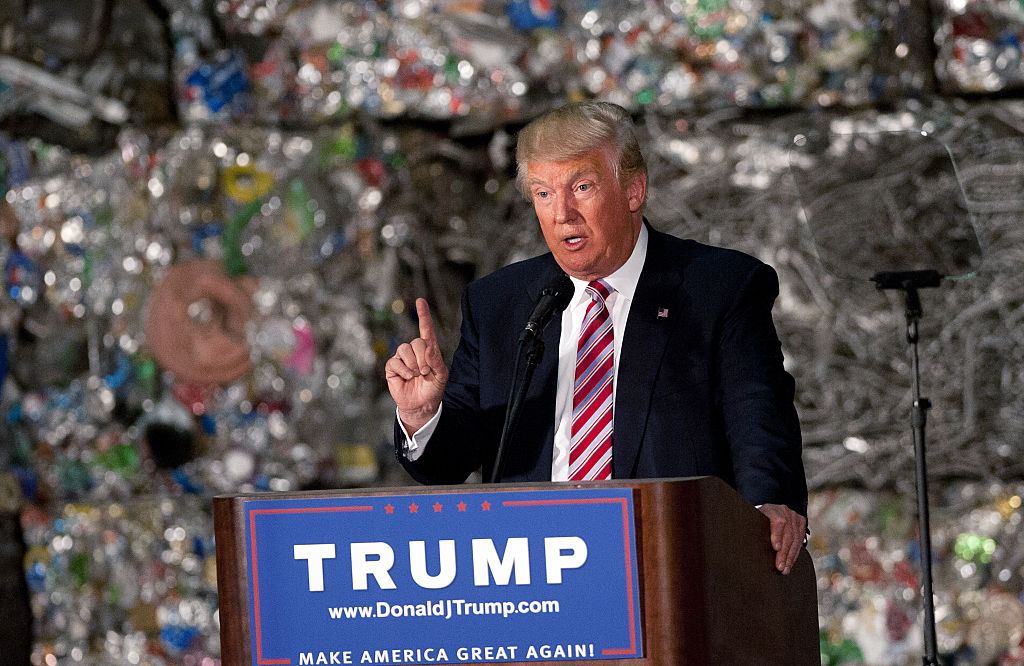
MONESSEN, PA - JUNE 28: Presumptive Republican candidate for President Donald Trump speaks to guests during a policy speech during a campaign stop at Alumisource on June 28, 2016 in Monessen, Pennsylvania. Trump continued to attack Hillary Clinton while delivering an economic policy speech targeting globalization and free trade. (Photo by Jeff Swensen/Getty Images)
Photograph by Jeff Swensen — Getty Images

Donald Trump has made U.S. trade policy and what he sees as the economic mistakes of the Bill Clinton administration a central theme of his presidential campaign. Is he onto something here or just simplifying a complicated economic story for quick political gain?

Trump argued during a speech on Tuesday in Western Pennsylvania that America’s slow wage growth and low labor force participation rates is partly because manufacturing employment has declined significantly over the past 20 years. “At the center of this catastrophe are two trade deals pushed by Bill and Hillary Clinton,” Trump said, arguing that the passage of the North American Free Trade Agreement (NAFTA) and China’s accession to the World Trade Organization (WTO) are to blame for the woes of American workers in 2016.

Economists have been debating the effects of NAFTA and China’s entry into the WTO for years, and it is impossible to know what the U.S. economy would look like absent those policies. But critics of the bipartisan consensus toward more numerous and comprehensive trade deals over the past 25 years have some pretty convincing data.
fredgraph

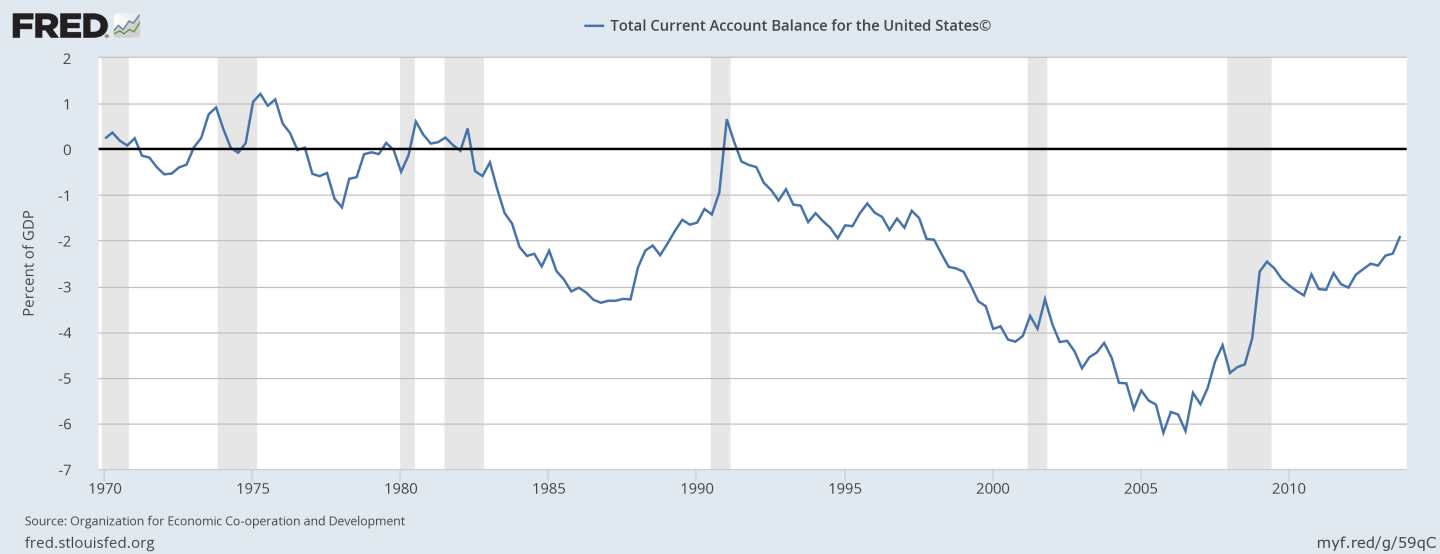
Currently, the U.S. trade deficit as a percentage of GDP is historically high, even taking into account its recent dip, which is partly a result of increased domestic energy production. The story is the same when you look at the country’s individual deficits with Mexico and China, the two nations Donald Trump has accused of stealing U.S. manufacturing jobs.

It’s these trade deficit figures that economist Robert Scott of the Economic Policy Institute points to when asked where the U.S. economy would be without NAFTA and China’s entry into the WTO. “We had balanced trade with Mexico for 15 years before NAFTA took effect,” he says. “NAFTA encouraged U.S. multinationals to outsource and exports factories to Mexico. Absent NAFTA, I’m not sure that would have happened.” Scott also points out that since China entered the WTO, the U.S. trade deficit with the nation has exploded.

It’s impossible to know for sure what would have happened if these events didn’t take place, but it’s reasonable to conclude that trade deficits reduce employment in the U.S. Scott has estimated that between 1993 and 2010, NAFTA’s passage cost the U.S. economy hundreds of thousands of relatively high-paying manufacturing jobs, and the growing trade deficit with China since its accession to the WTO cost the American economy 3.2 million more.

Other analysts take issue with these figures. Jeffrey J. Schott, former Treasury official and a fellow at the Peterson Institute, argues that it is a “fallacy” to assume that larger trade deficits cause job losses. “Over the last 25 years, we have implemented a large array of trade agreements,” he writes. “During that period, the U.S. trade deficit has fluctuated generally in line with U.S. economic performance. The deficit grows when times are good and shrinks when the economy slows.”

That said, most economists agree that the U.S. would prefer to produce things at home rather than import them from abroad, as production at home supports American jobs. It’s also undeniable that the U.S. trade deficit is quite large, and that policy makers have long looked to increasing exports as a way to boost job growth.

Trump and Robert Scott both argue that the U.S. government has not done enough to persuade its biggest trading partners to cease subsidizing exports and that it hasn’t done enough to counter those subsidies with incentives of its own. “Globalization is a fact of life because of technology and lower transportation costs,” Scott says. “But what is not a fact of life is unfair trade.”

Scott argues that the most important question is not whether we should have passed NAFTA or acquiesced to China’s entry into the World Trade Organization, but “how did we respond to changes in the international economic environment and to the exploitation of our market by trade partners.”

Trump’s claim that Hillary Clinton in her role as First Lady and Secretary of State was responsible for the state of manufacturing employment in America is wrong. But he is on firmer ground when he criticizes the American government for not doing enough to support exports or dissuading its trading partners from doing more. It is true that countries like Japan, China, and Germany benefit greatly—in terms of increasing domestic employment—from the relative cheapness of their currencies and by other subsidies they confer onto manufacturers, and that the World Trade Organization is not well equipped to penalize these countries for not playing by the rules.

At the same time, it’s fair to argue that China at least is no longer manipulating its currency downward. In fact, capital has been fleeing the country for months and the central bank has been propping up the currency. Even Scott, a fierce critic of trade deals, believes that taking a tougher stance with U.S. trade partners is just one part of a multifaceted approach needed to support American manufacturing and high paying jobs, from investing in clean energy, infrastructure, and workforce development. “Making it illegal for countries to manipulate their currencies and penalizing them if they [do] is just scratching the surface,” Scott says. “It’s an important policy statement, but it doesn’t reverse 20 years of unfair trade.”

Donald Trump’s argument that the American worker has been hurt first and foremost by two Clinton-era trade policy decisions is a vast oversimplification of the problems the U.S. economy faces. The United States would have likely faced increased competition from lower wage economies regardless of whether we accepted China’s entry into the WTO or made a trade agreement with Mexico. But the U.S. government could have done more to protect American manufacturing and improve the welfare of the working class.


About the Author
By Chris Matthews
See full bioRight Arrow Button Icon

Latest in Leadership

Finance
Lorem ipsum dolor sit amet, consectetur adipiscing elit, sed do eiusmod tempor incididunt ut labore et dolore magna aliqua. Ut enim ad minim veniam
By Fortune Editors
October 20, 2025
Finance
Lorem ipsum dolor sit amet, consectetur adipiscing elit, sed do eiusmod tempor incididunt ut labore et dolore magna aliqua. Ut enim ad minim veniam
By Fortune Editors
October 20, 2025
Finance
Lorem ipsum dolor sit amet, consectetur adipiscing elit, sed do eiusmod tempor incididunt ut labore et dolore magna aliqua. Ut enim ad minim veniam
By Fortune Editors
October 20, 2025
Finance
Lorem ipsum dolor sit amet, consectetur adipiscing elit, sed do eiusmod tempor incididunt ut labore et dolore magna aliqua. Ut enim ad minim veniam
By Fortune Editors
October 20, 2025
Finance
Lorem ipsum dolor sit amet, consectetur adipiscing elit, sed do eiusmod tempor incididunt ut labore et dolore magna aliqua. Ut enim ad minim veniam
By Fortune Editors
October 20, 2025
Finance
Lorem ipsum dolor sit amet, consectetur adipiscing elit, sed do eiusmod tempor incididunt ut labore et dolore magna aliqua. Ut enim ad minim veniam
By Fortune Editors
October 20, 2025

Most Popular

Finance
Lorem ipsum dolor sit amet, consectetur adipiscing elit, sed do eiusmod tempor incididunt ut labore et dolore magna aliqua. Ut enim ad minim veniam
By Fortune Editors
October 20, 2025
Finance
Lorem ipsum dolor sit amet, consectetur adipiscing elit, sed do eiusmod tempor incididunt ut labore et dolore magna aliqua. Ut enim ad minim veniam
By Fortune Editors
October 20, 2025
Finance
Lorem ipsum dolor sit amet, consectetur adipiscing elit, sed do eiusmod tempor incididunt ut labore et dolore magna aliqua. Ut enim ad minim veniam
By Fortune Editors
October 20, 2025
Finance
Lorem ipsum dolor sit amet, consectetur adipiscing elit, sed do eiusmod tempor incididunt ut labore et dolore magna aliqua. Ut enim ad minim veniam
By Fortune Editors
October 20, 2025
Finance
Lorem ipsum dolor sit amet, consectetur adipiscing elit, sed do eiusmod tempor incididunt ut labore et dolore magna aliqua. Ut enim ad minim veniam
By Fortune Editors
October 20, 2025
Finance
Lorem ipsum dolor sit amet, consectetur adipiscing elit, sed do eiusmod tempor incididunt ut labore et dolore magna aliqua. Ut enim ad minim veniam
By Fortune Editors
October 20, 2025
Rankings
  • 100 Best Companies
  • Fortune 500
  • Global 500
  • Fortune 500 Europe
  • Most Powerful Women
  • Future 50
  • World’s Most Admired Companies
  • See All Rankings
Sections
  • Finance
  • Leadership
  • Success
  • Tech
  • Asia
  • Europe
  • Environment
  • Fortune Crypto
  • Health
  • Retail
  • Lifestyle
  • Politics
  • Newsletters
  • Magazine
  • Features
  • Commentary
  • Mpw
  • CEO Initiative
  • Conferences
  • Personal Finance
  • Education
Customer Support
  • Frequently Asked Questions
  • Customer Service Portal
  • Privacy Policy
  • Terms Of Use
  • Single Issues For Purchase
  • International Print
Commercial Services
  • Advertising
  • Fortune Brand Studio
  • Fortune Analytics
  • Fortune Conferences
  • Business Development
About Us
  • About Us
  • Editorial Calendar
  • Press Center
  • Work At Fortune
  • Diversity And Inclusion
  • Terms And Conditions
  • Site Map
  • Facebook icon
  • Twitter icon
  • LinkedIn icon
  • Instagram icon
  • Pinterest icon

Latest in Leadership

Economyconstruction
The U.S. construction industry’s need for labor is soaring and will need half a million new workers next year while AI giants ramp up spending
By Jason MaFebruary 7, 2026
11 minutes ago
Future of Workthe future of work
Anthropic cofounder says studying the humanities will be ‘more important than ever’ and reveals what the AI company looks for when hiring
By Jason MaFebruary 7, 2026
4 hours ago
AIMark Cuban
AI can make anyone rich: Mark Cuban says it could turn ‘just one dude in a basement’ into a trillionaire
By Sydney LakeFebruary 7, 2026
6 hours ago
giannis
BankingSports
NBA star Giannis Antetokounmpo gets in bed with sports gambling as a Kalshi shareholder
By Jay Cohen and The Associated PressFebruary 7, 2026
6 hours ago
Airbnb CEO Brian Chesky
Successchief executive officer (CEO)
Airbnb’s Brian Chesky says CEOs don’t have to be ‘miserable’—that’s why he got rid of emails and banned meetings before 10 a.m.
By Emma BurleighFebruary 7, 2026
6 hours ago
C-Suitechief executive officer (CEO)
You’ve vanquished your rival in a CEO succession race. Now, how do you lead them?
By Claire ZillmanFebruary 7, 2026
9 hours ago

Most Popular

placeholder alt text
Success
Even with $850 billion to his name, Elon Musk admits ‘money can’t buy happiness.’ But billionaire Mark Cuban says it’s not so simple
By Preston ForeFebruary 6, 2026
1 day ago
placeholder alt text
Politics
Meet the Palm Beach billionaire who paid $2 million for a private White House visit with Trump
By Tristan BoveFebruary 3, 2026
4 days ago
placeholder alt text
Success
Nestlé’s CEO drinks 8 coffees a day, but says Gen Z staffers are his secret to staying sharp by ‘learning constantly’
By Emma BurleighFebruary 5, 2026
2 days ago
placeholder alt text
C-Suite
OpenAI’s Sam Altman says his highly disciplined daily routine has ‘fallen to crap’—and now unwinds on weekends at a ranch with no cell phone service
By Jacqueline MunisFebruary 5, 2026
2 days ago
placeholder alt text
Travel & Leisure
How Japan replaced France as the country young Americans obsessively romanticize—they’re longing for civility they don’t see at home
By Nick LichtenbergFebruary 5, 2026
2 days ago
placeholder alt text
Crypto
What caused the massive Bitcoin crash? Clues point to a blow-up at Hong Kong hedge funds
By Jeff John RobertsFebruary 6, 2026
22 hours ago

© 2026 Fortune Media IP Limited. All Rights Reserved. Use of this site constitutes acceptance of our Terms of Use and Privacy Policy | CA Notice at Collection and Privacy Notice | Do Not Sell/Share My Personal Information
FORTUNE is a trademark of Fortune Media IP Limited, registered in the U.S. and other countries. FORTUNE may receive compensation for some links to products and services on this website. Offers may be subject to change without notice.