• Home
  • Latest
  • Fortune 500
  • Finance
  • Tech
  • Leadership
  • Lifestyle
  • Rankings
  • Multimedia

Trendingnow

1

When SpaceX starts trading, some 'shareholders' will discover they own nothing at all

2

Corporate America has been draining the world's water. Matt Damon's new campaign calls on Gap, Starbucks, and Amazon to help give it back

3

Current price of oil as of June 12, 2026

1

When SpaceX starts trading, some 'shareholders' will discover they own nothing at all

2

Corporate America has been draining the world's water. Matt Damon's new campaign calls on Gap, Starbucks, and Amazon to help give it back

3

Current price of oil as of June 12, 2026
CommentaryZika Virus

How Businesses Should Respond to the Zika Virus

By
Charles Perrings
Charles Perrings
,
Carlos Castillo-Chavez
, and
Bertram Jacobs
Bertram Jacobs
Down Arrow Button Icon
By
Charles Perrings
Charles Perrings
,
Carlos Castillo-Chavez
, and
Bertram Jacobs
Bertram Jacobs
Down Arrow Button Icon
May 26, 2016, 11:17 AM ET
Brazil Faces New Health Epidemic As Mosquito-Borne Zika Virus Spreads Rapidly
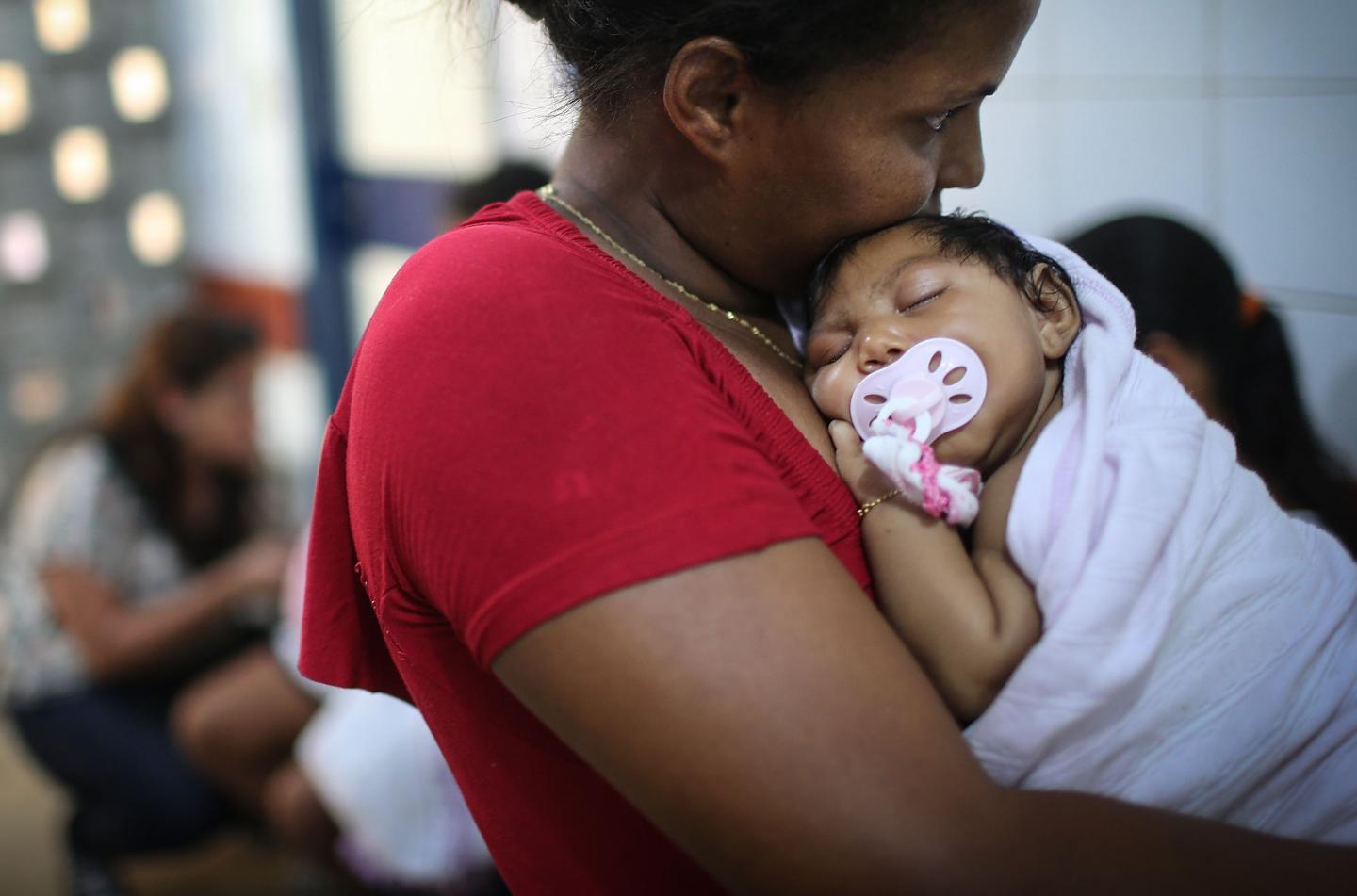
RECIFE, BRAZIL - JANUARY 26: Grandmother Ivalda Caetano holds Ludmilla Hadassa Dias de Vasconcelos (2 months), who has microcephaly, at Oswald Cruz hospital on January 26, 2016 in Recife, Brazil. In the last four months, authorities have recorded close to 4,000 cases in Brazil in which the mosquito-borne Zika virus may have led to microcephaly in infants. The ailment results in an abnormally small head in newborns and is associated with various disorders including decreased brain development. According to the World Health Organization (WHO), the Zika virus outbreak is likely to spread throughout nearly all the Americas. At least twelve cases in the United States have now been confirmed by the CDC. The Brazilian government announced it will deploy more than 200,000 troops to combat the mosquitos which are spreading the Zika virus. (Photo by Mario Tama/Getty Images)Photograph by Mario Tama Getty Images

Zika is the latest in a long line of infectious zoonotic diseases to achieve pandemic status as a result of trade and travel. The reason it rings alarm bells is the potentially devastating effect it can have on unborn children. The World Health Organization and the Centers for Disease Control found a link between Zika infections in pregnant women and the birth defect microcephaly. Just how far and fast it has spread is, however, uncertain. Zika symptoms are similar to those of Chikungunya and dengue, also transmitted by the mosquito Aedes aegypti, which makes diagnosis difficult. In fact, since blood samples can react in tests for both Zika and dengue, mapping the spread of the disease is hard. Add to this the fact that Zika can be transmitted from person to person via sexual contact, and we have all the conditions for what is unfortunately becoming a classic disease response. To meet concern over the latest threat, public resources are diverted from other diseases.

The problem with this is that Zika is just one among many emerging and re-emerging infectious disease risks linked to recent global demographic and economic trends. Like Chikungunya before it, Zika is an arbovirus—a virus transmitted by arthropods—that has spread from a center of origin in Africa. As with Chikungunya, successive mutations of the virus have made it increasingly challenging for previously unexposed populations. And as with all other mosquito borne arboviruses, it is especially challenging in the world’s cities. Zika, like other mosquito-borne diseases, is primarily an urban phenomenon, spread through the growth of trade and travel among the world’s cities.

Two things make cities central to the problem. First, cities everywhere share microclimates that favor mosquitoes. Cities are typically warmer and more humid than surrounding areas. They also experience lower diurnal temperature ranges—less day-night variation. They have more impermeable surfaces, and so collect more water and have more places for mosquitos to reproduce. In fact the primary vector for Zika, Aedes aegypti, is currently spreading to many cities around the world that lie well beyond its natural range. Second, mosquito-borne diseases are generally spread more by the movement of infected people than by the movement of infected mosquitoes, and cities are critical nodes in a rapidly expanding global trade and travel network.

Reducing the risk of any one infectious zoonotic disease involves an integrated set of control and intervention measures, each operating at a different spatial scale. Typically, risk reduction includes the development of an effective vaccine. While vaccine development is notoriously difficult for rapidly mutating viruses, there are potentially promising lines of attack on Zika. Perhaps the most promising is a modification of a Sanofi dengue vaccine that is currently in clinical trials. Beyond vaccine development, risk mitigation is almost entirely a matter of changing the activities that bring susceptible people into contact with disease vectors, and that bring infected people into contact with susceptible people.

In the case of Zika, risk factors include the unplanned and uncontrolled growth of cities, the absence of effective vector control within cities, and the neglect of personal defensive measures against Aedes aegypti. The trade and travel that connect one city to the next means that infected people, often asymptomatic themselves, may transmit the virus from one mosquito population to another. And because Zika can be transmitted directly, risk factors include the same activities that affect the spread of all sexually transmitted diseases. People travelling to and from infected areas may be infected, and may infect others with whom they come into sexual contact. The probability of infection can be reduced through the adoption of precautionary measures, but it cannot be eliminated.

Zika is particularly frightening because of the danger it poses to future generations, but it is not unique. It is not the first, and it will not be the last frightening disease to spread globally. What is needed is a more systematic effort to manage infectious zoonotic disease risks at the scale at which those risks are realized. Globalization and the growth of the world trade system has delivered many benefits to people everywhere, but it has also imposed costs—the spread of infectious zoonotic diseases amongst them. The international transmission of disease is an externality of trade and travel. While the World Health Organization (WHO) is currently exploring ways to improve the international response to disease outbreaks, there is little scope for coordinated preemptive action to reduce trade- and travel-related risks of disease. The WHO’s hands are effectively tied by three international agreements that are notoriously hard to renegotiate: the General Agreement on Tariffs and Trade, the International Health Regulations, and the Sanitary and Phytosanitary Agreement.

There may, however, be another way to meet the international challenge posed by emerging zoonotic diseases. Corporations operating in countries affected by infectious diseases have a narrow, short-term interest in the financial consequences if customers defer or cancel trade and travel plans. Zika’s potential impact on the Brazilian Olympics is a case in point. But corporations are also responsible to their employees in infected areas, and to the wider communities within which they operate. They have a broad, longer-term interest in the disease risks of international engagement, and the scope for direct action to mitigate those risks.

Increasingly, corporations are taking responsibility for the international environmental consequences of their activities whether or not there is a legal obligation to do so. A number are engaged directly in the provision of environmental public goods. Indeed, the Gates Foundation’s work on child and maternal health has shown that corporations have the capacity to provide global public goods on a scale that the community of nation states finds hard to match. The Gates Foundation’s work has also shown that direct action in the most vulnerable countries can pay global health dividends worldwide. For the general problem of infectious zoonotic disease risks, targeted direct intervention by businesses in support of vaccine development, urban planning, vector control, and other preventive measures, has the potential both to serve the bottom line and to reduce the risks to all.

Charles Perrings is a professor of environmental economics at the School of Life Sciences at Arizona State University. Carlos Castillo-Chavez is Regent’s professor of mathematical biology in the School of Human Evolution and Social Change. Bertram Jacobs is a professor of virology and director of the School of Life Sciences.

About the Authors
By Charles Perrings
See full bioRight Arrow Button Icon
By Carlos Castillo-Chavez
See full bioRight Arrow Button Icon
By Bertram Jacobs
See full bioRight Arrow Button Icon

Latest in Commentary

Finance
Lorem ipsum dolor sit amet, consectetur adipiscing elit, sed do eiusmod tempor incididunt ut labore et dolore magna aliqua. Ut enim ad minim veniam
By Fortune Editors
October 20, 2025
Finance
Lorem ipsum dolor sit amet, consectetur adipiscing elit, sed do eiusmod tempor incididunt ut labore et dolore magna aliqua. Ut enim ad minim veniam
By Fortune Editors
October 20, 2025
Finance
Lorem ipsum dolor sit amet, consectetur adipiscing elit, sed do eiusmod tempor incididunt ut labore et dolore magna aliqua. Ut enim ad minim veniam
By Fortune Editors
October 20, 2025
Finance
Lorem ipsum dolor sit amet, consectetur adipiscing elit, sed do eiusmod tempor incididunt ut labore et dolore magna aliqua. Ut enim ad minim veniam
By Fortune Editors
October 20, 2025
Finance
Lorem ipsum dolor sit amet, consectetur adipiscing elit, sed do eiusmod tempor incididunt ut labore et dolore magna aliqua. Ut enim ad minim veniam
By Fortune Editors
October 20, 2025
Finance
Lorem ipsum dolor sit amet, consectetur adipiscing elit, sed do eiusmod tempor incididunt ut labore et dolore magna aliqua. Ut enim ad minim veniam
By Fortune Editors
October 20, 2025

Most Popular

Finance
Lorem ipsum dolor sit amet, consectetur adipiscing elit, sed do eiusmod tempor incididunt ut labore et dolore magna aliqua. Ut enim ad minim veniam
By Fortune Editors
October 20, 2025
Finance
Lorem ipsum dolor sit amet, consectetur adipiscing elit, sed do eiusmod tempor incididunt ut labore et dolore magna aliqua. Ut enim ad minim veniam
By Fortune Editors
October 20, 2025
Finance
Lorem ipsum dolor sit amet, consectetur adipiscing elit, sed do eiusmod tempor incididunt ut labore et dolore magna aliqua. Ut enim ad minim veniam
By Fortune Editors
October 20, 2025
Finance
Lorem ipsum dolor sit amet, consectetur adipiscing elit, sed do eiusmod tempor incididunt ut labore et dolore magna aliqua. Ut enim ad minim veniam
By Fortune Editors
October 20, 2025
Finance
Lorem ipsum dolor sit amet, consectetur adipiscing elit, sed do eiusmod tempor incididunt ut labore et dolore magna aliqua. Ut enim ad minim veniam
By Fortune Editors
October 20, 2025
Finance
Lorem ipsum dolor sit amet, consectetur adipiscing elit, sed do eiusmod tempor incididunt ut labore et dolore magna aliqua. Ut enim ad minim veniam
By Fortune Editors
October 20, 2025
Fortune Secondary Logo
Rankings
  • 100 Best Companies
  • Fortune 500
  • Global 500
  • Fortune 500 Europe
  • Most Powerful Women
  • World's Most Admired Companies
  • See All Rankings
  • Lists Calendar
Sections
  • Finance
  • Fortune Crypto
  • Features
  • Leadership
  • Health
  • Commentary
  • Success
  • Retail
  • Mpw
  • Tech
  • Lifestyle
  • CEO Initiative
  • Asia
  • Politics
  • Conferences
  • Europe
  • Newsletters
  • Personal Finance
  • Environment
  • Magazine
  • Education
Customer Support
  • Frequently Asked Questions
  • Customer Service Portal
  • Privacy Policy
  • Terms Of Use
  • Single Issues For Purchase
  • International Print
Commercial Services
  • Advertising
  • Fortune Brand Studio
  • Fortune Analytics
  • Fortune Conferences
  • Business Development
  • Group Subscriptions
About Us
  • About Us
  • Press Center
  • Work At Fortune
  • Terms And Conditions
  • Site Map
  • About Us
  • Press Center
  • Work At Fortune
  • Terms And Conditions
  • Site Map
  • Facebook icon
  • Twitter icon
  • LinkedIn icon
  • Instagram icon
  • Pinterest icon

Latest in Commentary

herrin
CommentaryInfrastructure
America just committed $1.2 trillion to fix its infrastructure. We’re still flying blind
By Gregg HerrinJune 13, 2026
8 minutes ago
cyber
Commentarycyber
Accenture cyber leads: why hiring more people won’t solve the cybersecurity talent gap
By Harpreet Sidhu and Vikram DesaiJune 13, 2026
53 minutes ago
t
CommentaryHospitality
AI is making promises your brand never made. Hotels are paying the price
By Teresa MackintoshJune 13, 2026
1 hour ago
axel
CommentaryEntrepreneurship
Our budgeted $180 million year ended in the red after the Ukraine war. Here’s how we survived
By Axel SöderbergJune 13, 2026
4 hours ago
ss
CommentaryWorld Cup
‘Soccernomics’ co-author: FIFA’s ticket strategy isn’t price discovery, it’s a wealth filter
By Stefan Szymanski and The ConversationJune 12, 2026
15 hours ago
fort
CommentaryFlorida
Ken Griffin has Miami. Stephen Ross has West Palm Beach. Fort Lauderdale had Wayne Huizenga — and it’s been winning ever since
By Jenni MorejonJune 12, 2026
24 hours ago

Most Popular

When SpaceX starts trading, some 'shareholders' will discover they own nothing at all
Investing
When SpaceX starts trading, some 'shareholders' will discover they own nothing at all
By Jim EdwardsJune 12, 2026
1 day ago
Corporate America has been draining the world's water. Matt Damon's new campaign calls on Gap, Starbucks, and Amazon to help give it back
Environment
Corporate America has been draining the world's water. Matt Damon's new campaign calls on Gap, Starbucks, and Amazon to help give it back
By Catherina GioinoJune 9, 2026
4 days ago
Current price of oil as of June 12, 2026
Personal Finance
Current price of oil as of June 12, 2026
By Joseph HostetlerJune 12, 2026
22 hours ago
American taxpayers have spent $33 billion on sports stadiums. They got fewer seats—and higher prices
Success
American taxpayers have spent $33 billion on sports stadiums. They got fewer seats—and higher prices
By Catherina GioinoJune 11, 2026
2 days ago
Analysts expected oil to surge above $200 but China has quietly kept prices half of that—and can’t for much longer
Energy
Analysts expected oil to surge above $200 but China has quietly kept prices half of that—and can’t for much longer
By Sasha RogelbergJune 10, 2026
3 days ago
Meet the SpaceX employees who are set to become multimillionaires thanks to its IPO: from execs to even welders
Success
Meet the SpaceX employees who are set to become multimillionaires thanks to its IPO: from execs to even welders
By Preston ForeJune 11, 2026
2 days ago

© 2026 Fortune Media IP Limited. All Rights Reserved. Use of this site constitutes acceptance of our Terms of Use and Privacy Policy | CA Notice at Collection and Privacy Notice | Do Not Sell/Share My Personal Information
FORTUNE is a trademark of Fortune Media IP Limited, registered in the U.S. and other countries. FORTUNE may receive compensation for some links to products and services on this website. Offers may be subject to change without notice.