• Home
  • News
  • Fortune 500
  • Tech
  • Finance
  • Leadership
  • Lifestyle
  • Rankings
  • Multimedia
LeadershipBrexit

Britain Risks a Year-Long Recession If It Votes for Brexit

By
Reuters
Reuters
Down Arrow Button Icon
By
Reuters
Reuters
Down Arrow Button Icon
May 23, 2016, 5:48 AM ET
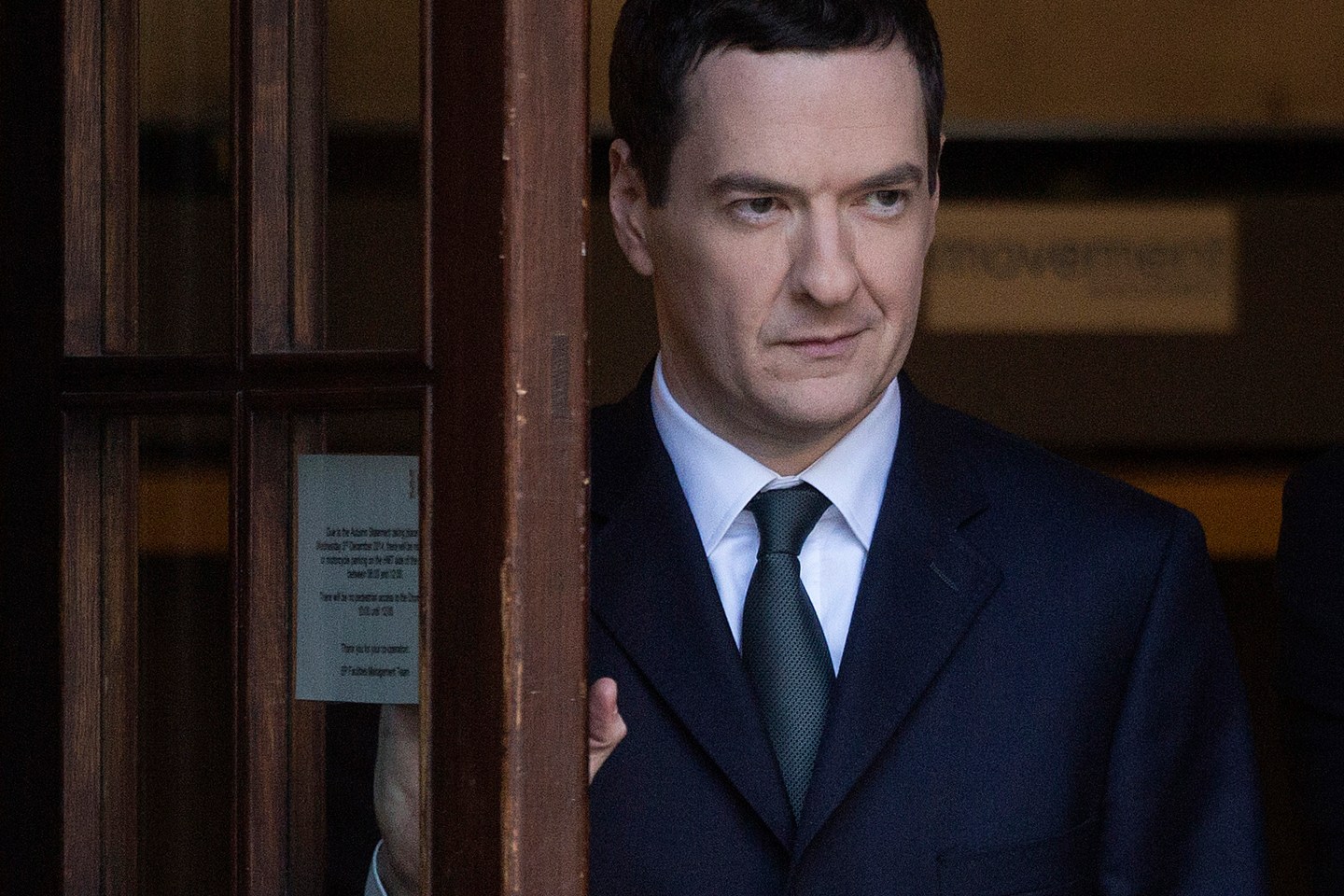
U.K. Chancellor Of The Exchequer George Osborne Delivers Autumn Budget Statement
George Osborne, U.K. chancellor of the exchequer, leaves the HM Treasury building before heading to deliver his Autumn budget statement at the Houses of Parliament in London, U.K., on Wednesday, Dec. 3, 2014. Osborne will present his end-of-year outlook to Parliament today -- his last Autumn Statement before next year's general election. Photographer: Simon Dawson/Bloomberg via Getty ImagesPhotograph by Simon Dawson — Bloomberg via Getty Images

Britain could sink into a year-long recession if it votes to leave the European Union, finance minister George Osborne said in his latest attempt to focus voters on the potential hit to the economy from an “Out” vote.

“The British people must ask themselves this question: can we knowingly vote for a recession?” Osborne said in excerpts of a speech he is due to make on Monday which were released by the finance ministry. “Does Britain really want this DIY recession?”

With a month to go before Britons take their most important strategic decision in decades, recent opinion polls have shown voters are leaning towards an “In” decision on June 23, but pollsters say the outcome remains too close to call.

Osborne and Prime Minister David Cameron, who are leading the “In” campaign, have stressed the risks of a so-called Brexit for Britain’s economy, forecasting lower living standards, a fall in house prices and higher shopping bills.

The new analysis by the finance ministry of the referendum’s short-term implications for economy set out two post-Brexit scenarios.

A milder ‘shock’ scenario, based on Britain reaching a trade deal with the EU, would result in the economy being 3.6% lower after two years than it would be if Britain stayed in the EU, the ministry said. Inflation would rise and house prices would be 10 percent lower than under an “In” vote.

The economy would suffer a more severe shock if Britain left the EU’s single market, as suggested by some leading “Out” campaigners, and defaulted to World Trade Organisation rules, which would raise barriers to trade.

Under that scenario, the economy would be 6% smaller within two years than if Britain voted to stay in the EU, inflation would rise more sharply and house prices would be 18% lower, the report said.

The rival “Out” campaign dismissed the new analysis as politically motivated.

“This Treasury document is not an honest assessment but a deeply biased view of the future and it should not be believed by anyone,” said Iain Duncan Smith, a former senior minister in Cameron’s Conservative government.

Supporters of a Brexit argue that Britain’s economy would flourish outside the EU because it would be able to ditch rules imposed by the bloc and strike its own trade deals.

But they have run into a wall of warnings about the economic risks from bodies such as the International Monetary Fund and the Organisation for Economic Co-operation and Development. As a result, the “Out” camp has relied increasingly on its core message to voters that only leaving the EU can slow high levels of migration.

Monday’s forecast of a year-long recession by the finance ministry was gloomier than a warning by Bank of England Governor Mark Carney who said earlier this month that Britain’s economy could enter a technical recession—which means two consecutive calendar quarters of contraction—after a vote to leave the EU.

The Treasury said a vote to remain in the bloc would see current uncertainty fade rapidly with little lasting impact.

A previously published finance ministry report on the longer-term consequences of an “Out” vote estimated British households would be 4,300 pounds worse off by 2030 than if they voted to stay in the EU.

The ministry said its new report had been reviewed by Charlie Bean, a former deputy governor of the Bank of England.


About the Author
By Reuters
See full bioRight Arrow Button Icon

Latest in Leadership

CryptoBinance
Binance has been proudly nomadic for years. A new announcement suggests it’s finally chosen a headquarters
By Ben WeissDecember 7, 2025
2 hours ago
Future of WorkJamie Dimon
Jamie Dimon says even though AI will eliminate some jobs ‘maybe one day we’ll be working less hard but having wonderful lives’
By Jason MaDecember 7, 2025
12 hours ago
business
C-Suitechief executive officer (CEO)
Inside the Fortune 500 CEO pressure cooker: surviving is harder than ever and requires an ‘odd combination’ of traits
By Nick LichtenbergDecember 7, 2025
16 hours ago
Alex Amouyel is the President and CEO of Newman’s Own Foundation
Commentaryphilanthropy
Following in Paul Newman and Yvon Chouinard’s footsteps: There are more ways for leaders to give it away in ‘the Great Boomer Fire Sale’ than ever
By Alex AmouyelDecember 7, 2025
16 hours ago
Hank Green sipping tea
SuccessPersonal Finance
Millionaire YouTuber Hank Green tells Gen Z to rethink their Tesla bets—and shares the portfolio changes he’s making to avoid AI-bubble fallout
By Preston ForeDecember 7, 2025
17 hours ago
MagazineWarren Buffett
Warren Buffett: Business titan and cover star
By Indrani SenDecember 7, 2025
19 hours ago

Most Popular

placeholder alt text
Real Estate
The 'Great Housing Reset' is coming: Income growth will outpace home-price growth in 2026, Redfin forecasts
By Nino PaoliDecember 6, 2025
2 days ago
placeholder alt text
AI
Nvidia CEO says data centers take about 3 years to construct in the U.S., while in China 'they can build a hospital in a weekend'
By Nino PaoliDecember 6, 2025
1 day ago
placeholder alt text
Economy
The most likely solution to the U.S. debt crisis is severe austerity triggered by a fiscal calamity, former White House economic adviser says
By Jason MaDecember 6, 2025
1 day ago
placeholder alt text
Big Tech
Mark Zuckerberg rebranded Facebook for the metaverse. Four years and $70 billion in losses later, he’s moving on
By Eva RoytburgDecember 5, 2025
2 days ago
placeholder alt text
Economy
JPMorgan CEO Jamie Dimon says Europe has a 'real problem’
By Katherine Chiglinsky and BloombergDecember 6, 2025
1 day ago
placeholder alt text
Uncategorized
Transforming customer support through intelligent AI operations
By Lauren ChomiukNovember 26, 2025
11 days ago
Rankings
  • 100 Best Companies
  • Fortune 500
  • Global 500
  • Fortune 500 Europe
  • Most Powerful Women
  • Future 50
  • World’s Most Admired Companies
  • See All Rankings
Sections
  • Finance
  • Leadership
  • Success
  • Tech
  • Asia
  • Europe
  • Environment
  • Fortune Crypto
  • Health
  • Retail
  • Lifestyle
  • Politics
  • Newsletters
  • Magazine
  • Features
  • Commentary
  • Mpw
  • CEO Initiative
  • Conferences
  • Personal Finance
  • Education
Customer Support
  • Frequently Asked Questions
  • Customer Service Portal
  • Privacy Policy
  • Terms Of Use
  • Single Issues For Purchase
  • International Print
Commercial Services
  • Advertising
  • Fortune Brand Studio
  • Fortune Analytics
  • Fortune Conferences
  • Business Development
About Us
  • About Us
  • Editorial Calendar
  • Press Center
  • Work At Fortune
  • Diversity And Inclusion
  • Terms And Conditions
  • Site Map

© 2025 Fortune Media IP Limited. All Rights Reserved. Use of this site constitutes acceptance of our Terms of Use and Privacy Policy | CA Notice at Collection and Privacy Notice | Do Not Sell/Share My Personal Information
FORTUNE is a trademark of Fortune Media IP Limited, registered in the U.S. and other countries. FORTUNE may receive compensation for some links to products and services on this website. Offers may be subject to change without notice.