• Home
  • Latest
  • Fortune 500
  • Finance
  • Tech
  • Leadership
  • Lifestyle
  • Rankings
  • Multimedia
Financetoo big to fail

Does Hillary Clinton’s Plan to End Too-Big-to-Fail Add Up?

By
Chris Matthews
Chris Matthews
Down Arrow Button Icon
By
Chris Matthews
Chris Matthews
Down Arrow Button Icon
May 17, 2016, 6:00 AM ET
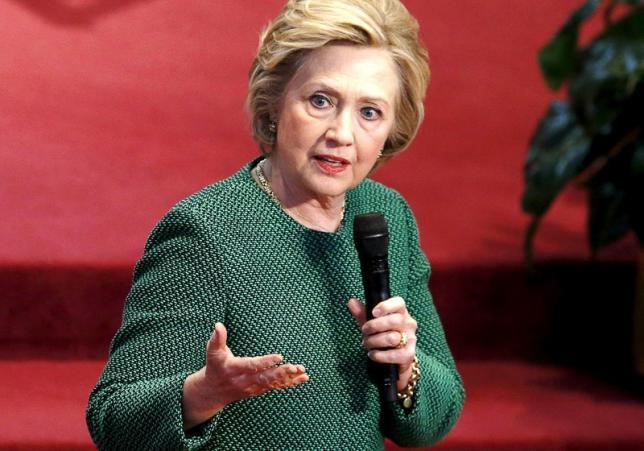
Democratic U.S. presidential candidate Clinton speaks during a campaign event at the AME church in the Queens borough of New York
Democratic U.S. presidential candidate Hillary Clinton speaks during a campaign event at the AME church in the Queens borough of New York April 10, 2016. REUTERS/Eduardo MunozEduardo Munoz REUTERS

One of the central disagreements in the still ongoing, though all but wrapped up, Democratic presidential primary is what to do about the big banks.

Bernie Sanders says break ’em up. He argues smaller banks will equal fewer financial crisises. Hillary Clinton, on the other hand, says it’s not so much the “bigness” of the banks that caused the financial crisis, but their interconnectedness and overall riskiness that was the problem.

But while it appears Clinton will survive the populist assault Sanders launched against her campaign, it remains to be seen whether she’ll be as successful fighting large banks and the next financial crisis if she is able to take the White House this fall.

On Monday, Minneapolis Fed president Neel Kashkari, who has emerged as an unlikely torch bearer for the too big to fail crowd, held the second in a series of symposiums on bank bailouts. The focus of one of the panels: Clinton’s plan to rein in the big banks.

Unlike Sanders, Clinton’s plan focuses not on the banks’ size, but how risky the banks are in terms of the amount and types of leverage they take onto their balance sheet. Her thesis: It’s the amount of debt the banks take on that makes them risky, not their absolute size. Clinton has proposed putting in place a tax that banks would have to pay based on how much leverage they take on. As debt goes up, the annual tax would go up, creating a disincentive to take on more and more debt.

At the Federal Reserve Bank of Minneapolis on Monday, economist John Cochrane argued that we need a financial regulatory system that moves away from trying to micromanage countless bank activities to one that simply requires that bank shareholders are willing and able to absorb whatever losses the bank creates.

As it stands now, large banks fund themselves mostly with debt. That’s cheaper, than say issuing shares, because of various government subsidies, from insuring customer deposits to the deductibility of debt for corporate income tax purposes. Cochrane argues that we should simply require that banks fund themselves with much higher levels of equity, i.e. stock, even suggesting that we could theoretically ban debt financing altogether, though he said we wouldn’t have to go that far in order to prevent another crisis.

This is essentially what Clinton is suggesting with her plan to impose a “risk fee” on complex financial institutions. She has proposed “a graduated risk fee on the liabilities of banks with more than $50 billion in assets,” which would apply to roughly the 30 biggest U.S. banks. The fee would be higher for banks “with greater amounts of debt and riskier, short-term forms of debt.”

In theory, such a plan would discourage banks from being risky, even if it doesn’t prevent them from being large.

For Sanders supporters, though, such an approach is both overly complicated and too easy on banks. Sanders himself often conflates his desire to prevent another financial crisis with his belief that large corporations in general and banks in particular are simply too powerful as a result of their size. So while cutting down the size of large banks might not be a surefire way to prevent a systemic bank run like what we saw in 2008, it would help his goal of making those individual banks less powerful.

But another appeal of the Sanders approach is that it is both easy for people to understand and simple to implement. You just choose a size—economist Simon Johnson has suggested 2% of GDP—and say that no bank can grow larger. Clinton’s approach requires regulators to decide what kind of debt is risky and to stay on top of banks to make sure they don’t violate the spirit of the regulation. For instance, Thomas Philippon, professor of finance at NYU’s Stern School of Business, argued at the symposium that taxing leverage makes sense, but is easier said than done. He argues that banks could hide their leverage using complex financial instruments like contingent assets or derivatives, avoiding Clinton’s tax while still bulking up on risk.

The symposium underscored the essential difference between Clinton and Sanders during this 2016 election. Clinton has proposed solutions like her bank leverage fee that don’t fit nicely into campaign slogans but are more targeted to to the problems the are supposed to address. Sanders has proposed solutions—like a hard cap on the size of banks—that are easier to promote, but risk being too blunt in its attempt to solve the problem it’s supposed to address.

Both approaches actually have a pretty high chance of failure.

As Phillipon pointed out, banks are pretty darn good at hiding their true riskiness from investors and regulators, so there’s reason to believe that banks will be able to keep on being risky even if Clinton can get her risk fee passed. On the other hand, there’s reason to believe the financial industry as a whole can be pretty risky too even if no individual bank is “too big too fail.”

In other words, the debate between Clinton and Sanders can be seen as an argument over whether it’s riskier to do too much or too little when trying to defend against a threat as grave as a financial crisis. Clinton appears to have won the battle in favor of cautious pragmatism, but with populist feelings running hot even on the Republican side of the aisle, the war over how to regulate the financial industry is far from over.

About the Author
By Chris Matthews
See full bioRight Arrow Button Icon

Latest in Finance

Finance
Lorem ipsum dolor sit amet, consectetur adipiscing elit, sed do eiusmod tempor incididunt ut labore et dolore magna aliqua. Ut enim ad minim veniam
By Fortune Editors
October 20, 2025
Finance
Lorem ipsum dolor sit amet, consectetur adipiscing elit, sed do eiusmod tempor incididunt ut labore et dolore magna aliqua. Ut enim ad minim veniam
By Fortune Editors
October 20, 2025
Finance
Lorem ipsum dolor sit amet, consectetur adipiscing elit, sed do eiusmod tempor incididunt ut labore et dolore magna aliqua. Ut enim ad minim veniam
By Fortune Editors
October 20, 2025
Finance
Lorem ipsum dolor sit amet, consectetur adipiscing elit, sed do eiusmod tempor incididunt ut labore et dolore magna aliqua. Ut enim ad minim veniam
By Fortune Editors
October 20, 2025
Finance
Lorem ipsum dolor sit amet, consectetur adipiscing elit, sed do eiusmod tempor incididunt ut labore et dolore magna aliqua. Ut enim ad minim veniam
By Fortune Editors
October 20, 2025
Finance
Lorem ipsum dolor sit amet, consectetur adipiscing elit, sed do eiusmod tempor incididunt ut labore et dolore magna aliqua. Ut enim ad minim veniam
By Fortune Editors
October 20, 2025

Most Popular

Finance
Lorem ipsum dolor sit amet, consectetur adipiscing elit, sed do eiusmod tempor incididunt ut labore et dolore magna aliqua. Ut enim ad minim veniam
By Fortune Editors
October 20, 2025
Finance
Lorem ipsum dolor sit amet, consectetur adipiscing elit, sed do eiusmod tempor incididunt ut labore et dolore magna aliqua. Ut enim ad minim veniam
By Fortune Editors
October 20, 2025
Finance
Lorem ipsum dolor sit amet, consectetur adipiscing elit, sed do eiusmod tempor incididunt ut labore et dolore magna aliqua. Ut enim ad minim veniam
By Fortune Editors
October 20, 2025
Finance
Lorem ipsum dolor sit amet, consectetur adipiscing elit, sed do eiusmod tempor incididunt ut labore et dolore magna aliqua. Ut enim ad minim veniam
By Fortune Editors
October 20, 2025
Finance
Lorem ipsum dolor sit amet, consectetur adipiscing elit, sed do eiusmod tempor incididunt ut labore et dolore magna aliqua. Ut enim ad minim veniam
By Fortune Editors
October 20, 2025
Finance
Lorem ipsum dolor sit amet, consectetur adipiscing elit, sed do eiusmod tempor incididunt ut labore et dolore magna aliqua. Ut enim ad minim veniam
By Fortune Editors
October 20, 2025
Fortune Secondary Logo
Rankings
  • 100 Best Companies
  • Fortune 500
  • Global 500
  • Fortune 500 Europe
  • Most Powerful Women
  • World's Most Admired Companies
  • See All Rankings
  • Lists Calendar
Sections
  • Finance
  • Fortune Crypto
  • Features
  • Leadership
  • Health
  • Commentary
  • Success
  • Retail
  • Mpw
  • Tech
  • Lifestyle
  • CEO Initiative
  • Asia
  • Politics
  • Conferences
  • Europe
  • Newsletters
  • Personal Finance
  • Environment
  • Magazine
  • Education
Customer Support
  • Frequently Asked Questions
  • Customer Service Portal
  • Privacy Policy
  • Terms Of Use
  • Single Issues For Purchase
  • International Print
Commercial Services
  • Advertising
  • Fortune Brand Studio
  • Fortune Analytics
  • Fortune Conferences
  • Business Development
  • Group Subscriptions
About Us
  • About Us
  • Press Center
  • Work At Fortune
  • Terms And Conditions
  • Site Map
  • About Us
  • Press Center
  • Work At Fortune
  • Terms And Conditions
  • Site Map
  • Facebook icon
  • Twitter icon
  • LinkedIn icon
  • Instagram icon
  • Pinterest icon

Latest in Finance

Iran juggles oil cuts and storage strain to resist U.S. blockade
EnergyIran
Iran juggles oil cuts and storage strain to resist U.S. blockade
By Anthony Di Paola, Ben Bartenstein, Patrick Sykes, Weilun Soon, Charles Gorrivan and BloombergMay 2, 2026
20 minutes ago
Disney’s new CEO is exploring a ‘super app’ for theme park tickets, movies and more
Big TechMedia
Disney’s new CEO is exploring a ‘super app’ for theme park tickets, movies and more
By Thomas Buckley, Lucas Shaw and BloombergMay 2, 2026
29 minutes ago
Unionized workers form alliance with rich tech giants on AI data centers, pushing back on local opposition and redrawing political lines
AIData centers
Unionized workers form alliance with rich tech giants on AI data centers, pushing back on local opposition and redrawing political lines
By Marc Levy and The Associated PressMay 2, 2026
50 minutes ago
San Diego Padres to sell team to investor group led by Kwanza Jones and José E. Feliciano, who will become the second Latino owner in baseball
Bankingbaseball
San Diego Padres to sell team to investor group led by Kwanza Jones and José E. Feliciano, who will become the second Latino owner in baseball
By Greg Beacham and The Associated PressMay 2, 2026
1 hour ago
Warren Buffett says markets are like a church with a casino attached, but ‘we’ve never had people in a more gambling mood than now’
InvestingWarren Buffett
Warren Buffett says markets are like a church with a casino attached, but ‘we’ve never had people in a more gambling mood than now’
By Jason MaMay 2, 2026
1 hour ago
Interest on U.S. debt is becoming a top driver of future deficits, as the sheer size of past borrowing overwhelms the fiscal outlook 
EconomyDebt
Interest on U.S. debt is becoming a top driver of future deficits, as the sheer size of past borrowing overwhelms the fiscal outlook 
By Jason MaMay 2, 2026
4 hours ago

Most Popular

Scott Bessent on financial literacy: 'it drives me crazy' to see young men in blue-collar construction jobs playing the lottery
Personal Finance
Scott Bessent on financial literacy: 'it drives me crazy' to see young men in blue-collar construction jobs playing the lottery
By Fatima Hussein and The Associated PressMay 1, 2026
1 day ago
A Chick-fil-A worker got fired and then showed up behind the register to allegedly refund himself over $80,000 in mac and cheese
Law
A Chick-fil-A worker got fired and then showed up behind the register to allegedly refund himself over $80,000 in mac and cheese
By Catherina GioinoMay 1, 2026
1 day ago
Current price of oil as of May 1, 2026
Personal Finance
Current price of oil as of May 1, 2026
By Joseph HostetlerMay 1, 2026
1 day ago
China dominates the world's lithium supply. The U.S. just found 328 years' worth in its own backyard
North America
China dominates the world's lithium supply. The U.S. just found 328 years' worth in its own backyard
By Jake AngeloApril 30, 2026
2 days ago
Apple cofounder Ronald Wayne—whose stake would be worth up to $400 billion had he not sold it in 1976—says that at 91, he has no regrets
Success
Apple cofounder Ronald Wayne—whose stake would be worth up to $400 billion had he not sold it in 1976—says that at 91, he has no regrets
By Preston ForeApril 27, 2026
5 days ago
Gen Z is rebelling against the economy with ‘disillusionomics,’ tackling near 6-figure debt by turning life into a giant list of income streams
Economy
Gen Z is rebelling against the economy with ‘disillusionomics,’ tackling near 6-figure debt by turning life into a giant list of income streams
By Jacqueline MunisMay 2, 2026
8 hours ago

© 2026 Fortune Media IP Limited. All Rights Reserved. Use of this site constitutes acceptance of our Terms of Use and Privacy Policy | CA Notice at Collection and Privacy Notice | Do Not Sell/Share My Personal Information
FORTUNE is a trademark of Fortune Media IP Limited, registered in the U.S. and other countries. FORTUNE may receive compensation for some links to products and services on this website. Offers may be subject to change without notice.