This piece originally appeared on Oilprice.com.
Saudi Arabia appears committed to its recently-announced long-term economic plan, dubbed Vision 2030, which aims to remove the country’s economic dependence on oil exports within the next several decades. The removal of Ali al-Naimi, who for twenty-five years acted as the Kingdom’s oil minister and engineered the production surge guiding Saudi policy since November 2014, is a further indication of the government’s determination to make a major economic course correction.
The question is, can they do it? Oil covers 70 percent of government revenue, while the oil industry is a major employer for the Saudi workforce. The immediate reaction to the plan, announced on April 25 by Crown Prince Muhammed bin Salman, was guarded optimism. Recently there has been much more skepticism, with some doubting how Saudi Arabia could accomplish all that it has planned for itself.
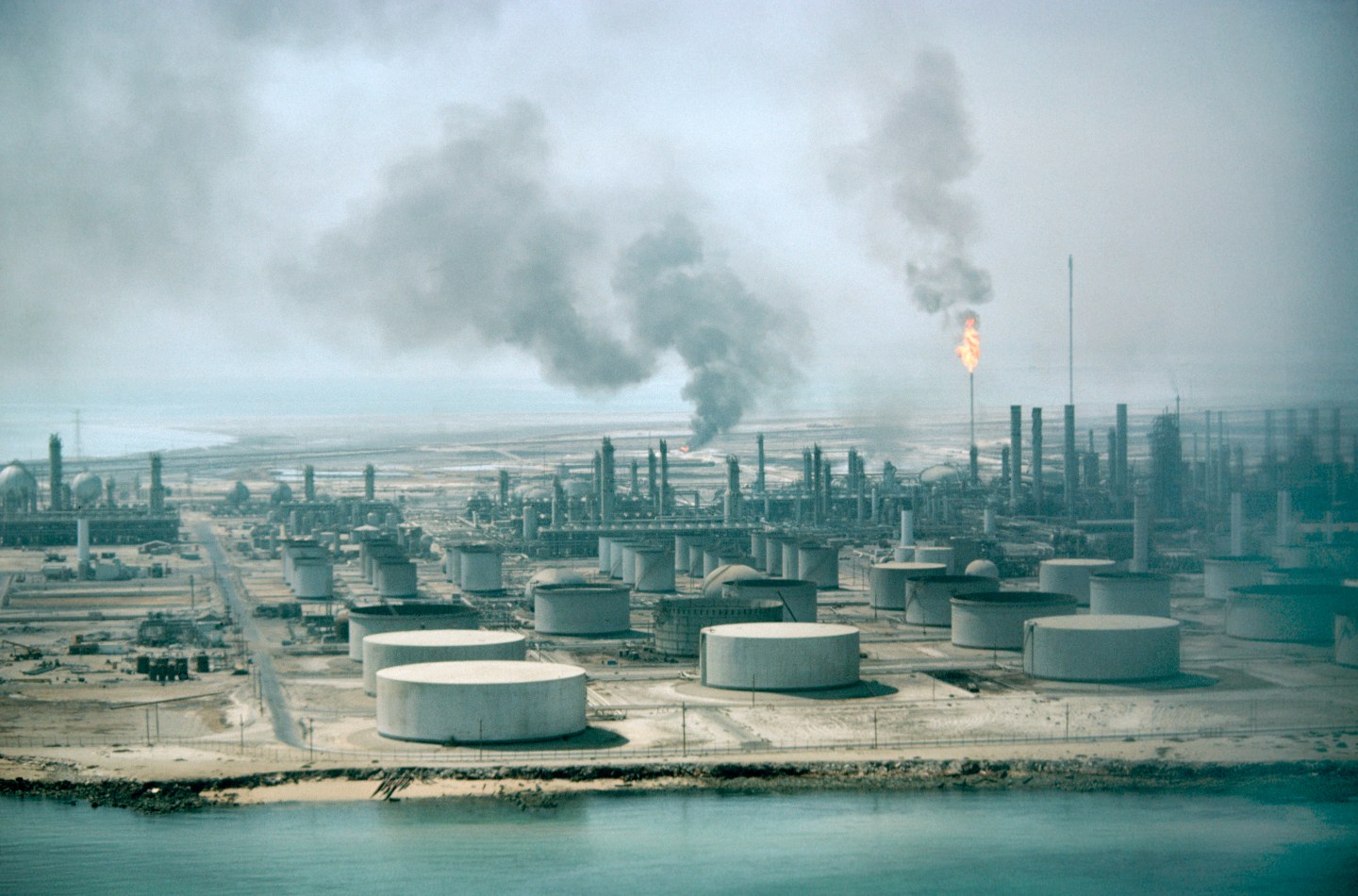
Prince Salman, who at 30 is both a powerful member of the royal family and a standard-bearer for a new generation of Saudi leaders, emphasized in his announcement that Saudi Arabia would begin its transition to an “oil-less” economy through an IPO of Saudi Aramco, the state-owned oil company. A 5 percent IPO will take place in 2017, and due to the size of Aramco will take place on the London, New York and Hong Kong markets simultaneously. The IPO is a clear sign that Saudi Arabia, perhaps the nation most associated with oil wealth and extravagance, has realized amidst the current energy glut that oil revenues simply aren’t the basis for a stable economy.
Economists have been arguing for years that oil revenues, rather than offering a strong foundation for a viable economy, actually create long-term systemic problems that can stifle practical growth, feed nepotism, patronage and corruption, and transform governments into rentier states disassociated from the needs of the people. It has been apparent for some time that major oil producers had to diversify their economies in order to achieve long-term viability, but that argument was hard to make when oil was $140 a barrel.
Now, in the midst of a crisis for oil-producers, economic reform looks like more than just a smart idea: increasingly, it’s looking like the only way for oil-producers to survive in a new energy economy. This is true for Saudi Arabia, which ran a $100 billion deficit last year and has already cut workers and trimmed spending to cope with the downturn in prices. Vision 2030 is a permanent plan to end the country’s dependence on oil and replace Saudi Aramco with a brand-new economy.
But what, in the Saudi case, could replace a $2 trillion industry? Prince Salman offered some suggestions: tourism, investment in manufacturing, health care, education. Private investment will be crucial, and one of the many goals of Vision 2030 is to increase the privately owned share of the economy from 40 percent to 65 percent. Even more important will be the Public Investment Fund, into which the proceeds of the Saudi Aramco IPO will be funneled. Much of the possible success of Vision 2030 hinges on this fund paying out in the long-term.
However, there are now doubts that the declared value ($2.5 trillion) is a massive exaggeration: at least one commenter has pegged Saudi Aramco’s worth at closer to $400 billion, which means an IPO would generate far less than what Vision 2030 assumes. There is also traditional investor wariness regarding state industries, which are often ill-ran and exposed to political upheavals, which may further depress the share price, as in the case of the Russian company Rosneft in 2006.
But Saudi Arabia will need more than capital. Education will have to be overhauled, with some ramifications for Saudi culture. It was recently announced that the Saudi government hopes for women to make up 30 percent of the workforce by 2030, up from 22 percent. How this will be accomplished when men and women are largely forbidden to work together in close quarters is a particularly pertinent question.
The Saudi population is around 30 million. Two-thirds of that populace is under 30, and of that number one-third are unemployed. In the next decade 1.9 million young Saudis will enter the workforce, and it is not entirely clear what kinds of jobs they will be able to find. There are institutional problems, such as a lackluster education system (which the late King Abdullah worked to reform, with some success), and a dependence on imported labor in some industries: there are more than 9 million foreign expatriates working in Saudi Arabia. The internal Saudi market is relatively small; industries created to feed domestic demand will not have much room for growth.
Decades of oil exports have afflicted Saudi Arabia with the “Dutch Disease,” where its currency has remained artificially high, rendering its goods more expensive in foreign markets. If Saudi Arabia hopes to export to South Asia, as is suggested, it would have to do from a position of weakness. In some cases products with high pedigrees or luxurious associations can carve out niches for themselves, particularly among the urban affluent. But Saudi Arabia has no products, no industries to call its own: just oil.
More from Oilprice.com:
What OPEC Has To Fear From The New Saudi Oil Minister
Turkey, At Energy Crossroads, Sliding Towards Authoritarianism
Russian Oil Executives Not Optimistic About Oil Prices
There is more to Vision 2030 than just economics. Prince Salman has maneuvered himself into a position of pre-eminent power within the Saudi government. As foreign minister he has been responsible for the Saudi intervention in Yemen, and it was his intervention at the Doha conference in mid-April that scotched plans for an oil freeze and led, indirectly, to minister al-Naimi’s removal this weekend. Prince Salman is well-positioned to eventually become King, and his influence over foreign policy, the oil industry and the country’s economic future solidifies his position as one of the most powerful people in the Saudi government, after perhaps only King Salman himself. Vision 2030 could be all “smoke and mirrors,” a veil disguising the power politics inside one of the world’s last absolute monarchies. Time will tell.