• Home
  • Latest
  • Fortune 500
  • Finance
  • Tech
  • Leadership
  • Lifestyle
  • Rankings
  • Multimedia
LeadershipChina

China’s Leader Xi Jinping Reminds Party Members to Be ‘Unyielding Marxist Atheists’

By
Charlie Campbell
Charlie Campbell
and
TIME
TIME
Down Arrow Button Icon
By
Charlie Campbell
Charlie Campbell
and
TIME
TIME
Down Arrow Button Icon
April 25, 2016, 6:11 AM ET
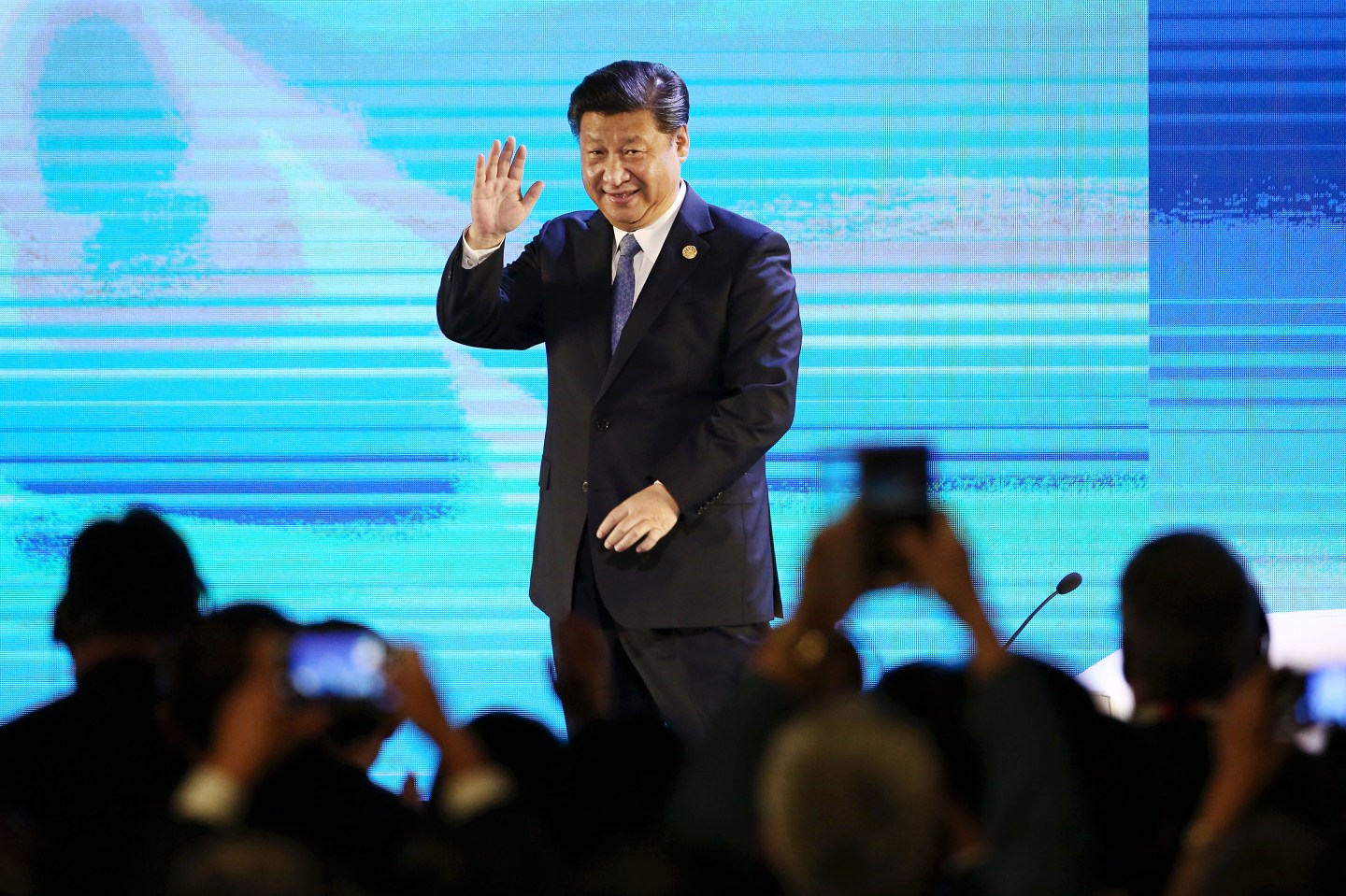
Key Speakers At The Final Day Of The APEC Summit
Xi Jinping, China's president, waves as he leaves the stage at the Asia-Pacific Economic Cooperation (APEC) CEO Summit in Manila, the Philippines, on Wednesday, Nov. 18, 2015. Xi acknowledged downside risks to growth while assuring fellow leaders that Asia's biggest economy is resilient and will remain on the path of reform. Photographer: SeongJoon Cho/Bloomberg via Getty ImagesPhotograph by SeongJoon Cho — Bloomberg via Getty Images

Li Jiangong and his wife, Ding Cuimei, stood in front of the bulldozer in a last-ditch protest. A government-backed firm had ordered the demolition of the small church they ran in Zhumadian, in eastern China’s Henan province, on April 14. In the end, the workmen simply ran over the couple, burying them in a deep pit. Li somehow managed to dig himself out, according to the religious advocacy group China Aid, but Ding suffocated in the dark earth.

“Bulldozing and burying alive Ding Cuimei, a peaceful and devout Christian woman, was a cruel, murderous act,” said China Aid president Bob Fu in a statement. “This case is a serious violation of the rights to life, religious freedom and rule of law.”

Two workman have apparently been detained in connection with the incident, though no names or charges have so far been released. While Ding’s death is an extreme example, it is clear that there is a widespread attack on religious institutions in China. More than 1,700 churches have had their crosses torn down in the country’s east, according to activists, and many have been completely demolished. Muslims in China’s far western state of Xinjiang have been hit with bans on beards, veils as well as fasting during the holy month of Ramadan. Religious sects such as the Falun Gong have long complained of persecution.

On Saturday, President Xi Jinping indicated there would be no easing of this crackdown, telling a Beijing conference on religion that China must be vigilant against what are seen as pernicious foreign religious influences. “We must resolutely guard against overseas infiltrations via religious means and prevent ideological infringement by extremists,” he said,according to the official Xinhua News Agency.

The constitution of officially atheist China promises “freedom of religious belief.” In practice, that freedom is severely curtailed: there are only five accepted creeds in China — Buddhist, Taoist, Muslim, Catholic, Protestant — and even then must operate under the control and scrutiny of the Chinese Communist Party (CCP). The Chinese Catholic church doesn’t officially recognize the authority of the Pope, for instance, and you will not find any overt reference to the Tibet’s exiled spiritual leader the Dalai Lama — decried by Beijing as a dangerous separatist — in Buddhist temples. Besides the influence of foreign patriarchs, Beijing is also worried about ISIS-inspired attacks by Uighur separatists in Xinjiang, to the democratic values espoused by American pastors, and the self-immolation of Tibetan monks.

And yet Beijing is unable to stifle interest in religion, which emerged following the economic liberalization initiated by Deng Xiaoping in 1978. Much like the protestant bourgeoisie of Reformation Europe, or the evangelicals of American boom towns, increasingly affluent Chinese turned to spirituality to compliment their newfound wealth and education. Today, house churches are packed across China’s eastern cities, and there are reportedly 100 million Christians nationwide. Sociologists cite the breakdown of traditional family units — given that a large proportion of the population consists of only children, and of migrants who have come from rural areas to the cities to find work — as being behind a yearning for religious ties to replace the dissolved bonds of kinship and village.

Yang Fenggang, an expert on religion at Purdue University, predicts that at current rates China could be home to the world’s largest number of Christians by 2030 — with 247 million believers. Considering the CCP currently has only 88 million members, it is easy to see why the party top brass might be wary. Certainly, Xi thought necessary to emphasize in his weekend speech that CCP cadres must act as “unyielding Marxist atheists … and bear in mind the Party’s tenets.” Deploying an oddly religious phrase, he also told them to “consolidate their faith.”

According to William Nee, China researcher for Amnesty International, obligatory Marxist atheism has been conspicuously absent from party decrees over the last two or three decades. No longer. “It’s not a change per se but it’s significant when that message is being reinforced by the highest levels,” Nee says.

Essentially, the government wants to ensure any religion in China is Sinicized and compliments the CCP. Last year, for example, the CCP even insisted that the party would chose who the next reincarnation of the Dalai Lama would be. “They want to find a merger between these religious faiths and ‘Chinese civilization,’” says Nee. “And for religious believers to unite with the Party.”

If the alternative is burial by bulldozer, many might be inclined to comply.

This article is published in partnership with Time.com. The original version can be foundhere.

About the Authors
By Charlie Campbell
See full bioRight Arrow Button Icon
By TIME
See full bioRight Arrow Button Icon

Latest in Leadership

Nicholas Thompson
C-SuiteBook Excerpt
I took over one of the most prestigious media firms while training for an ultramarathon. Here’s what I learned becoming CEO of The Atlantic
By Nicholas ThompsonDecember 13, 2025
20 hours ago
Lauren Antonoff
SuccessCareers
Once a college dropout, this CEO went back to school at 52—but she still says the Gen Zers who will succeed are those who ‘forge their own path’
By Preston ForeDecember 13, 2025
21 hours ago
Asiathe future of work
The CEO of one of Asia’s largest co-working space providers says his business has more in common with hotels
By Angelica AngDecember 12, 2025
1 day ago
Donald Trump
HealthHealth Insurance
‘Tragedy in the making’: Top healthcare exec on why insurance will spike to subsidize a tax cut to millionaires and billionaires
By Nick LichtenbergDecember 12, 2025
2 days ago
three men in suits, one gesturing
AIBrainstorm AI
The fastest athletes in the world can botch a baton pass if trust isn’t there—and the same is true of AI, Blackbaud exec says
By Amanda GerutDecember 12, 2025
2 days ago
Brainstorm AI panel
AIBrainstorm AI
Creative workers won’t be replaced by AI—but their roles will change to become ‘directors’ managing AI agents, executives say
By Beatrice NolanDecember 12, 2025
2 days ago

Most Popular

placeholder alt text
Success
Apple cofounder Ronald Wayne sold his 10% stake for $800 in 1976—today it’d be worth up to $400 billion
By Preston ForeDecember 12, 2025
2 days ago
placeholder alt text
Economy
Tariffs are taxes and they were used to finance the federal government until the 1913 income tax. A top economist breaks it down
By Kent JonesDecember 12, 2025
2 days ago
placeholder alt text
Success
40% of Stanford undergrads receive disability accommodations—but it’s become a college-wide phenomenon as Gen Z try to succeed in the current climate
By Preston ForeDecember 12, 2025
2 days ago
placeholder alt text
Economy
The Fed just ‘Trump-proofed’ itself with a unanimous move to preempt a potential leadership shake-up
By Jason MaDecember 12, 2025
1 day ago
placeholder alt text
Success
Apple CEO Tim Cook out-earns the average American’s salary in just 7 hours—to put that into context, he could buy a new $439,000 home in just 2 days
By Emma BurleighDecember 12, 2025
2 days ago
placeholder alt text
Economy
For the first time since Trump’s tariff rollout, import tax revenue has fallen, threatening his lofty plans to slash the $38 trillion national debt
By Sasha RogelbergDecember 12, 2025
2 days ago
Rankings
  • 100 Best Companies
  • Fortune 500
  • Global 500
  • Fortune 500 Europe
  • Most Powerful Women
  • Future 50
  • World’s Most Admired Companies
  • See All Rankings
Sections
  • Finance
  • Leadership
  • Success
  • Tech
  • Asia
  • Europe
  • Environment
  • Fortune Crypto
  • Health
  • Retail
  • Lifestyle
  • Politics
  • Newsletters
  • Magazine
  • Features
  • Commentary
  • Mpw
  • CEO Initiative
  • Conferences
  • Personal Finance
  • Education
Customer Support
  • Frequently Asked Questions
  • Customer Service Portal
  • Privacy Policy
  • Terms Of Use
  • Single Issues For Purchase
  • International Print
Commercial Services
  • Advertising
  • Fortune Brand Studio
  • Fortune Analytics
  • Fortune Conferences
  • Business Development
About Us
  • About Us
  • Editorial Calendar
  • Press Center
  • Work At Fortune
  • Diversity And Inclusion
  • Terms And Conditions
  • Site Map

© 2025 Fortune Media IP Limited. All Rights Reserved. Use of this site constitutes acceptance of our Terms of Use and Privacy Policy | CA Notice at Collection and Privacy Notice | Do Not Sell/Share My Personal Information
FORTUNE is a trademark of Fortune Media IP Limited, registered in the U.S. and other countries. FORTUNE may receive compensation for some links to products and services on this website. Offers may be subject to change without notice.