• Home
  • Latest
  • Fortune 500
  • Finance
  • Tech
  • Leadership
  • Lifestyle
  • Rankings
  • Multimedia
Commentary

What Texas Fails to See in its Challenge to Obama’s Immigration Plan

By
Kevin R. Johnson
Kevin R. Johnson
and
Bethany Cianciolo
Down Arrow Button Icon
April 21, 2016, 1:56 PM ET
President Obama Delivers His Last State Of The Union Address To Joint Session Of Congress
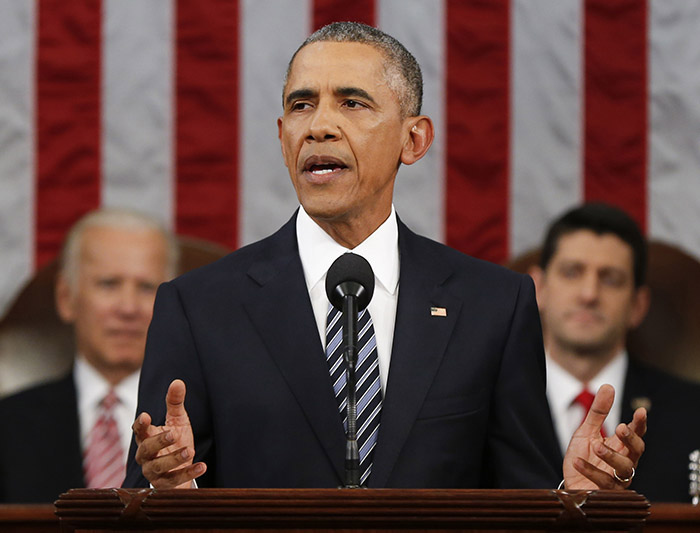
WASHINGTON, DC - JANUARY 12: President Barack Obama delivers his State of the Union address before a joint session of Congress on Capitol Hill January 12, 2016 in Washington, D.C. In his final State of the Union, President Obama reflected on the past seven years in office and spoke on topics including climate change, gun control, immigration and income inequality. (Photo by Evan Vucci - Pool/Getty Images)Photograph by Evan Vucci — Pool via Getty Images

Make no mistake about it: Immigration reform is a political hot potato. The case pending in the United States Supreme Court, United States v. Texas—which the Court just heard Monday—is simply the latest battle in the long—and, at times, bloody—political war over immigration reform. Texas has made it clear that it disagrees with President Obama’s immigration policy choices and appears to be using the federal courts to achieve political ends not envisioned by the framers of the U.S. Constitution. The lawsuit, based primarily on technical and generally unpersuasive administrative law procedural claims, strongly suggests that the suit is little more than a political gambit.

It is difficult to say after oral argument how the Supreme Court will decide the case. Matters are complicated by the fact that, with Justice Antonin Scalia’s untimely death, the Court could be split 4-4, thus allowing a lower court injunction prohibiting the implementation of the Obama Administration’s November 2014 immigration program to stand. Still, the fact that the Court appeared divided suggests that the case may raise some close questions.

The Obama Administration was not way off base legally in the November 2014 deferred action programs. Immigration has been debated in Congress for more than a decade. A vocal supporter of comprehensive immigration reform, President Obama’s 2008 election generated optimism among reform proponents. Hoping to convince Congress to pass legislation, he dramatically boosted the number of deportations during his first term in office, removing around 400,000 noncitizens annually—more than any administration in U.S. history. Some pro-immigrant activists have even referred to him as the “deporter in chief.”

In 2013, the U.S. Senate passed a comprehensive immigration reform bill. It would have increased enforcement but also would have eased the provisions for legal immigration and provided a path to legalization for eligible undocumented immigrants. The Republican House leadership never allowed the bill to come up for a vote, so in 2012, the Administration announced the Deferred Action for Childhood Arrivals (DACA) program, which granted “deferred action” to eligible immigrants brought to the U.S. as children. The U.S. government announced that it would exercise prosecutorial discretion and not target undocumented youth for removal who were otherwise law-abiding. It instead would focus removal efforts on criminals and suspected terrorists.


Republicans have since been claiming that President Obama was arrogating congressional power by enacting immigration reform that only Congress constitutionally could do. And now Texas—on behalf of 26 states—is suing in federal court, challenging the expanded deferred action programs. The deeply political nature of the dispute can be seen in the many friend-of-the-court briefs filed in the Supreme Court on both sides of the political spectrum. For example, a brief filed by Republican members of Congress in support of the states challenged the lawfulness of the Obama program. In contrast, a brief filed by Democratic members of Congress sided with the Administration.

Some of the political hyperbole has obscured the fundamental truths underlying the issues raised by United States v. Texas:

We expect government to exercise prosecutorial discretion in enforcing the laws. Texas fails to recognize that the deferred action “guidance” issued by the Obama Administration in November 2014 is a routine exercise of prosecutorial discretion. Deferred action places low priority on the removal of certain undocumented immigrants, and the idea is that the U.S. government should focus its removal efforts on true dangers to society, not otherwise law-abiding residents. Law enforcement and prosecutors on a daily basis exercise discretion in deciding which violations of the law to prosecute, such as focusing on speeding rather than jaywalking, or heroin dealing instead of simple possession of marijuana. Exercising prosecutorial discretion is precisely what the government should do to enforce the laws, including immigration laws.

Deferred action is limited relief. In other words, the U.S. government acknowledges that President Obama’s deferred action programs would provide temporary, limited relief to certain undocumented immigrants. Recipients would not be transformed into lawful permanent residents, a legal path that only Congress could create. The Administration has not purported to create a pathway to U.S. citizenship for undocumented immigrants. Indeed, a new president could abolish the deferred action program. And, if a deferred action recipient commits a crime, he or she could be subject to removal. Although work authorization can be secured by deferred action recipients under a regulation put into place during President Ronald Reagan’s administration, Congress could eliminate it if it so chose.

One of the technical legal issues before the Court is whether states have the “standing” necessary under Article III of the U.S. Constitution to sue in federal court. (Interestingly, conservative justices, such as Chief Justice Roberts, often invoke standing doctrine to limit access to the federal courts.) Texas claims that the “injury” that justifies its standing is the increased costs it will bear for providing driver’s licenses to deferred action recipients, though several justices have expressed doubts about the case belonging in federal court. Texas’ argument is a bit of a stretch and, if accepted, opens the door to federal lawsuits by the states meddling for partisan political reasons with federal law enforcement decision, such as drug enforcement and tax enforcement.

United States v. Texas also raises complex administrative law questions. One such question is whether the Obama administration’s 2014 deferred action “guidance” was issued in compliance with the Administrative Procedure Act (APA). Specifically, was the “guidance” subject to the APA requirement that regulations be made available for notice-and-comment by the public before going into effect? Administrative law professors generally agree that the president’s arguments are on firm ground on this point.

In short, United States v. Texas is just another stop on the road to true reform of the immigration laws. It remains deeply uncertain when the nation will come to the end of that journey.

Kevin R. Johnson is dean of the University of California, Davis School of Law.

About the Authors
By Kevin R. Johnson
See full bioRight Arrow Button Icon
By Bethany Cianciolo
See full bioRight Arrow Button Icon

Latest in Commentary

Finance
Lorem ipsum dolor sit amet, consectetur adipiscing elit, sed do eiusmod tempor incididunt ut labore et dolore magna aliqua. Ut enim ad minim veniam
By Fortune Editors
October 20, 2025
Finance
Lorem ipsum dolor sit amet, consectetur adipiscing elit, sed do eiusmod tempor incididunt ut labore et dolore magna aliqua. Ut enim ad minim veniam
By Fortune Editors
October 20, 2025
Finance
Lorem ipsum dolor sit amet, consectetur adipiscing elit, sed do eiusmod tempor incididunt ut labore et dolore magna aliqua. Ut enim ad minim veniam
By Fortune Editors
October 20, 2025
Finance
Lorem ipsum dolor sit amet, consectetur adipiscing elit, sed do eiusmod tempor incididunt ut labore et dolore magna aliqua. Ut enim ad minim veniam
By Fortune Editors
October 20, 2025
Finance
Lorem ipsum dolor sit amet, consectetur adipiscing elit, sed do eiusmod tempor incididunt ut labore et dolore magna aliqua. Ut enim ad minim veniam
By Fortune Editors
October 20, 2025
Finance
Lorem ipsum dolor sit amet, consectetur adipiscing elit, sed do eiusmod tempor incididunt ut labore et dolore magna aliqua. Ut enim ad minim veniam
By Fortune Editors
October 20, 2025

Most Popular

Finance
Lorem ipsum dolor sit amet, consectetur adipiscing elit, sed do eiusmod tempor incididunt ut labore et dolore magna aliqua. Ut enim ad minim veniam
By Fortune Editors
October 20, 2025
Finance
Lorem ipsum dolor sit amet, consectetur adipiscing elit, sed do eiusmod tempor incididunt ut labore et dolore magna aliqua. Ut enim ad minim veniam
By Fortune Editors
October 20, 2025
Finance
Lorem ipsum dolor sit amet, consectetur adipiscing elit, sed do eiusmod tempor incididunt ut labore et dolore magna aliqua. Ut enim ad minim veniam
By Fortune Editors
October 20, 2025
Finance
Lorem ipsum dolor sit amet, consectetur adipiscing elit, sed do eiusmod tempor incididunt ut labore et dolore magna aliqua. Ut enim ad minim veniam
By Fortune Editors
October 20, 2025
Finance
Lorem ipsum dolor sit amet, consectetur adipiscing elit, sed do eiusmod tempor incididunt ut labore et dolore magna aliqua. Ut enim ad minim veniam
By Fortune Editors
October 20, 2025
Finance
Lorem ipsum dolor sit amet, consectetur adipiscing elit, sed do eiusmod tempor incididunt ut labore et dolore magna aliqua. Ut enim ad minim veniam
By Fortune Editors
October 20, 2025
Rankings
  • 100 Best Companies
  • Fortune 500
  • Global 500
  • Fortune 500 Europe
  • Most Powerful Women
  • Future 50
  • World’s Most Admired Companies
  • See All Rankings
Sections
  • Finance
  • Leadership
  • Success
  • Tech
  • Asia
  • Europe
  • Environment
  • Fortune Crypto
  • Health
  • Retail
  • Lifestyle
  • Politics
  • Newsletters
  • Magazine
  • Features
  • Commentary
  • Mpw
  • CEO Initiative
  • Conferences
  • Personal Finance
  • Education
Customer Support
  • Frequently Asked Questions
  • Customer Service Portal
  • Privacy Policy
  • Terms Of Use
  • Single Issues For Purchase
  • International Print
Commercial Services
  • Advertising
  • Fortune Brand Studio
  • Fortune Analytics
  • Fortune Conferences
  • Business Development
About Us
  • About Us
  • Editorial Calendar
  • Press Center
  • Work At Fortune
  • Diversity And Inclusion
  • Terms And Conditions
  • Site Map

© 2025 Fortune Media IP Limited. All Rights Reserved. Use of this site constitutes acceptance of our Terms of Use and Privacy Policy | CA Notice at Collection and Privacy Notice | Do Not Sell/Share My Personal Information
FORTUNE is a trademark of Fortune Media IP Limited, registered in the U.S. and other countries. FORTUNE may receive compensation for some links to products and services on this website. Offers may be subject to change without notice.


Most Popular

placeholder alt text
Economy
The $38 trillion national debt is to blame for over $1 trillion in annual interest payments from here on out, CRFB says
By Nick LichtenbergDecember 17, 2025
2 days ago
placeholder alt text
C-Suite
Red Lobster CEO Damola Adamolekun says the key to being a better leader is being a better person: ‘Leadership is self-improvement’
By Sydney LakeDecember 17, 2025
2 days ago
placeholder alt text
AI
'Robots are going to be amongst us': Qualcomm exec says buckle up for the next 5 years. Your car is going to be the first shoe to drop
By Nino PaoliDecember 17, 2025
2 days ago
placeholder alt text
Success
As millions of Gen Zers face unemployment, McDonald's CEO dishes out some tough love career advice for navigating the market: ‘You've got to make things happen for yourself’
By Preston ForeDecember 16, 2025
3 days ago
placeholder alt text
Success
Britain’s defense chief calls on Gen Z grads leaving university to skip corporate jobs and join the military as war with Russia becomes a growing risk
By Emma BurleighDecember 17, 2025
2 days ago
placeholder alt text
Future of Work
LinkedIn CEO says it's 'outdated' to have a five-year career plan: It's a 'little bit foolish' considering the pace AI is changing the workplace
By Sydney LakeDecember 18, 2025
16 hours ago

Latest in Commentary

unemployed
CommentaryLayoffs
The AI efficiency illusion: why cutting 1.1 million jobs will stifle, not scale, your strategy
By Katica RoyDecember 18, 2025
12 hours ago
Muddu
CommentaryIT
IT service is reaching its breaking point. At Salesforce, we see 3 tipping points
By Muddu SudhakarDecember 18, 2025
17 hours ago
small business
CommentaryLayoffs
Our data shows that companies of 500 and fewer workers mostly avoided the AI layoffs. They’re making AI work for them
By Gabby BurlacuDecember 18, 2025
17 hours ago
Sophia Romee is the General Manager of the GenAI Studio at the College Board
CommentaryEducation
Gen Z is on the fence about AI in the classroom. That’s a good thing
By Sophia RomeeDecember 18, 2025
17 hours ago
Tim Parker
CommentaryAutos
How Bentley’s brand is creating business advantage in disruptive times 
By Tim ParkerDecember 18, 2025
20 hours ago
layoffs
CommentaryLayoffs
The AI layoff wave is just beginning — and it’s by design
By Kevin OakesDecember 17, 2025
2 days ago