• Home
  • News
  • Fortune 500
  • Tech
  • Finance
  • Leadership
  • Lifestyle
  • Rankings
  • Multimedia
athletes

This Is How Much Floyd Mayweather Earned Per Second in the Ring

By
Jonathan Chew
Jonathan Chew
Down Arrow Button Icon
By
Jonathan Chew
Jonathan Chew
Down Arrow Button Icon
April 6, 2016, 12:31 PM ET
Floyd Mayweather Jr. v Marcos Maidana
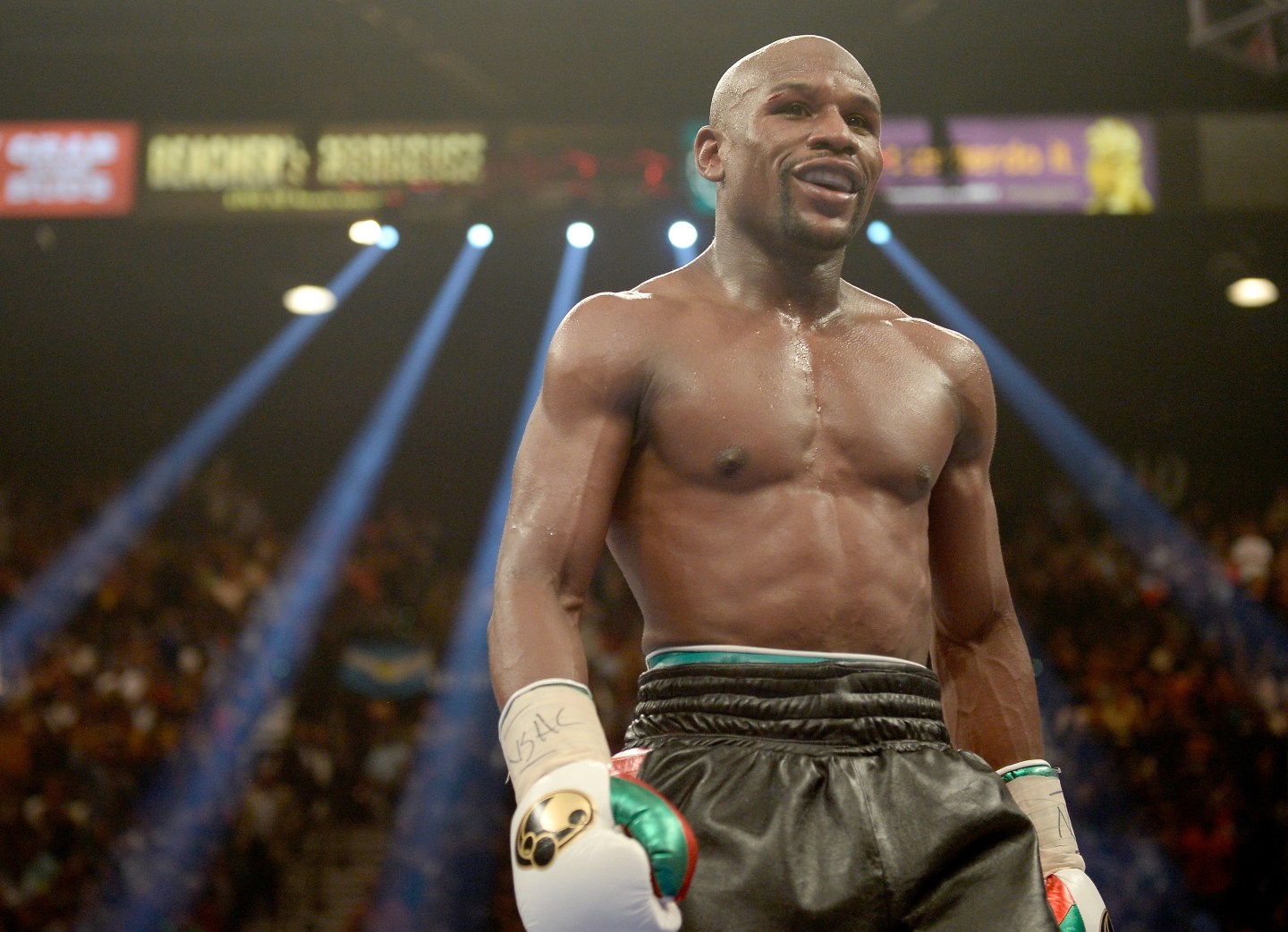
LAS VEGAS, NV - MAY 03: Floyd Mayweather Jr. smiles while taking on Marcos Maidana during their WBC/WBA welterweight unification fight at the MGM Grand Garden Arena on May 3, 2014 in Las Vegas, Nevada. (Photo by Harry How/Getty Images)Photograph by Harry How—Getty Images

Floyd Mayweather Jr. was known as the world’s highest-paid athlete—but how much did the boxer earn for the actual work he put in?

Turns out, Mayweather earned more in one second of fighting in the ring last year than the average person makes annually, according to an analysis done by business research hub Expert Market. Mayweather took in around $65,972 per second of boxing, based on his earnings last year on 4,320 seconds of play, or $285 million. If you factor in endorsements, that number jumps to around $69,444 per second of boxing, or $300 million, according to Forbes estimates.

That would be more than an entire year’s income for the average household in the U.S., since the median household income was estimated to be $53,657 in 2014, as reported by the U.S. Census Bureau.

Mayweather has since retired and gone into promotion, but other athletes who reaped big bucks last year for a second’s worth of work include MMA fighters Conor McGregor and Ronda Rousey, Formula One racer Lewis Hamilton, and football superstar Cristiano Ronaldo:

How does that compare with the income from your usual white-collar jobs? It would surpass them by huge margins—a doctor, according to Expert Market, took home around $0.016 per second of work last year, while firefighters earned an average of just $0.0046 per second. That means a doctor would take about 47 days to earn what Mayweather takes home in one second of work.

Lest you think this is a sign of wealth inequality gone mad, there is an economic reason for the disparity: an athlete’s talent is relatively more scare compared to, say, the ability of a firefighter, and the market we live in assigns value based on how rare that commodity is. It is behind the age-old debate of why diamonds have a higher value than water—also known as the “paradox of value”—although some economists argue that this could be changing.


About the Author
By Jonathan Chew
See full bioRight Arrow Button Icon
Rankings
  • 100 Best Companies
  • Fortune 500
  • Global 500
  • Fortune 500 Europe
  • Most Powerful Women
  • Future 50
  • World’s Most Admired Companies
  • See All Rankings
Sections
  • Finance
  • Leadership
  • Success
  • Tech
  • Asia
  • Europe
  • Environment
  • Fortune Crypto
  • Health
  • Retail
  • Lifestyle
  • Politics
  • Newsletters
  • Magazine
  • Features
  • Commentary
  • Mpw
  • CEO Initiative
  • Conferences
  • Personal Finance
  • Education
Customer Support
  • Frequently Asked Questions
  • Customer Service Portal
  • Privacy Policy
  • Terms Of Use
  • Single Issues For Purchase
  • International Print
Commercial Services
  • Advertising
  • Fortune Brand Studio
  • Fortune Analytics
  • Fortune Conferences
  • Business Development
About Us
  • About Us
  • Editorial Calendar
  • Press Center
  • Work At Fortune
  • Diversity And Inclusion
  • Terms And Conditions
  • Site Map

© 2025 Fortune Media IP Limited. All Rights Reserved. Use of this site constitutes acceptance of our Terms of Use and Privacy Policy | CA Notice at Collection and Privacy Notice | Do Not Sell/Share My Personal Information
FORTUNE is a trademark of Fortune Media IP Limited, registered in the U.S. and other countries. FORTUNE may receive compensation for some links to products and services on this website. Offers may be subject to change without notice.