• Home
  • News
  • Fortune 500
  • Tech
  • Finance
  • Leadership
  • Lifestyle
  • Rankings
  • Multimedia
TechMicrosoft

Microsoft’s Future Involves A Lot of Talking

By
Jonathan Vanian
Jonathan Vanian
Down Arrow Button Icon
By
Jonathan Vanian
Jonathan Vanian
Down Arrow Button Icon
March 30, 2016, 5:59 PM ET
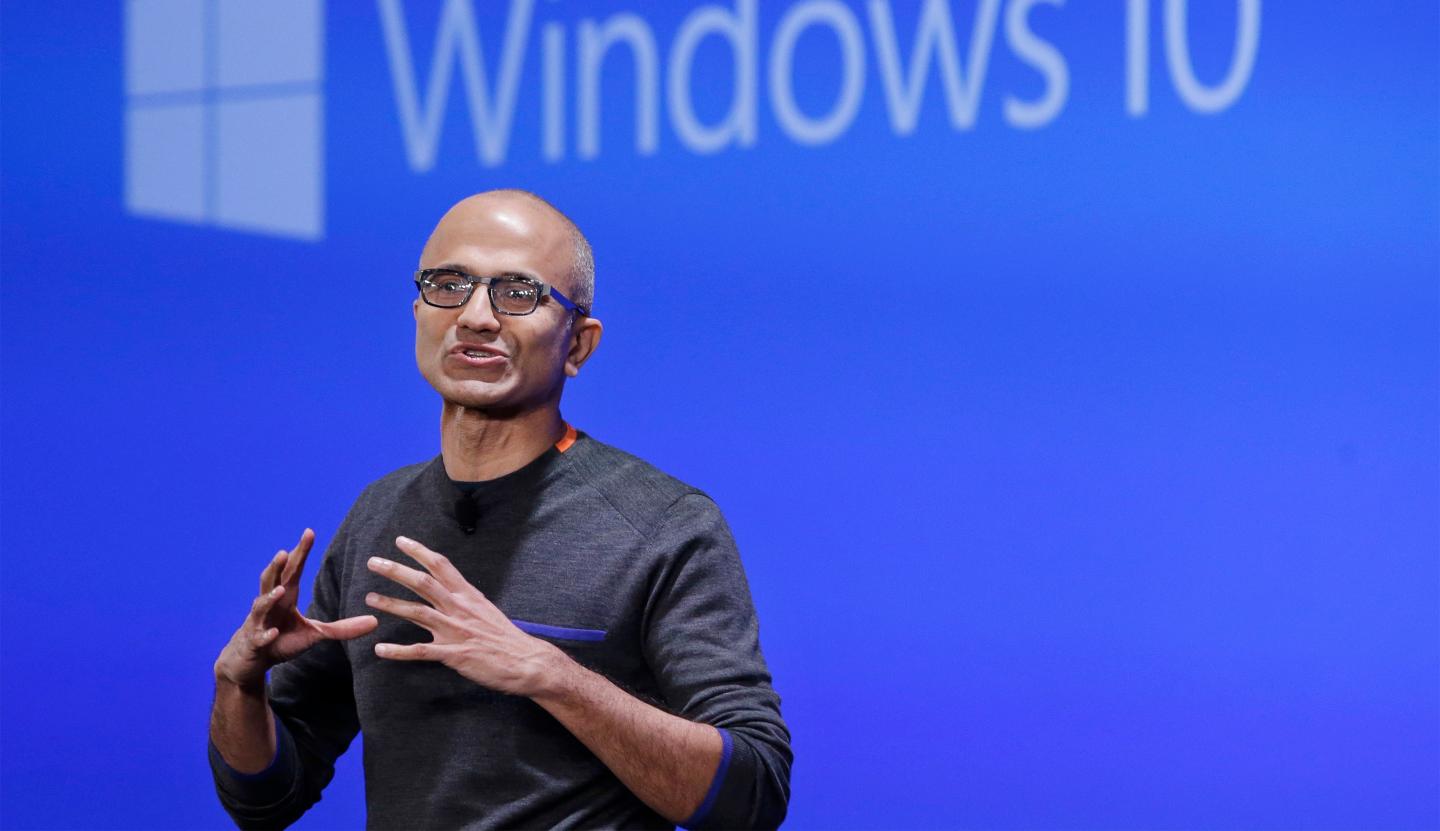
FILE - In this Jan. 21, 2015, file photo, Microsoft CEO Satya Nadella speaks at an event demonstrating the new features of Windows 10 at the company's headquarters in Redmond, Wash. When Chinese President Xi Jinping arrives in Washington state on his way to the other Washington (Washington, D.C.), he’ll be visiting the American state that does more business with his country than any other. Washington companies sold China more than $20 billion in products last year, from airplanes to wheat and apples. (AP Photo/Elaine Thompson, File)
SATYA NADELLA, CEO OF MICROSOFT ALIX COLOW. PICK UP. (AP Photo/Elaine Thompson, File)Photograph by Elaine Thompson — AP

In the future, people won’t have to waste time fidgeting with their smartphones as they try to order pizza from an app. They’ll just have to talk to the device, and little software helpers will do all the work for them.

At least, that’s the way Microsoft CEO Satya Nadella sees it. Nadella outlined his vision of the future of human and computer interaction during Microsoft’s annual developer conference in San Francisco on Wednesday.

For Nadella, using “the power of human language” to communicate with machines will be as profound as the development of the Internet and the use of touchscreens on mobile devices.

At the center of Nadella’s glimpse into the future is Microsoft’s (MSFT) Cortana personal assistant software. Microsoft has been pushing Cortana as an easy way for consumers to ask for directions to movie theaters, remind them of tasks, and even send emails.

Get Data Sheet, Fortune’s technology newsletter.

Similar to other digital assistants like Apple’s (AAPL) Siri and Google Now, Cortana is powered by machine-learning algorithms that train the service as it ingests data from users every time they ask it a question. Although these digital assistants don’t always work correctly, they are getting better.

Nadella is betting that Cortana will eventually get so good at answering questions that people will stop moving their fingers and start moving their mouths to perform daily tasks on their devices.

Besides Cortana, Nadella also believes that so-called chat bots will be an important element for computer interaction. These software programs, which are increasingly used by retailers and investment companies on their websites, prompt visitors to ask basic questions and then answer them.

Like digital assistants, however, these chat bots are getting better at understanding human language as coders wire them up with machine-learning capabilities. With more advances in artificial intelligence like natural language processing, bots are now capable of performing more advanced tasks like ordering a ride from Uber for people who ask for one through workplace messaging service Slack.

Microsoft executives demonstrated on stage how placing orders for a dessert delivery would be almost completely handled by software.

For example, Lilian Rincon, an executive for Microsoft’s Skype Internet calling service, showed that she could talk to Cortana within Skype, and have Cortana interact with a software bot created by a bakery to coordinate a cake delivery. Rincon also showed off how Cortana would one day be able to learn from a user’s previous chat messages and anticipate what that person will want.

In one example, she showed how Cortana had deduced that she would be traveling out of town for a conference. It then decided to help her by looping in a chat bot from the Westin Hotels to show her some available rooms during the dates she was traveling.

Everything worked smoothly. But this was merely a demonstration, after all. In real life, artificial intelligence technologies and chatting software don’t always work as intended.

“We want to build more technology so that it gets the best of humanity and not the worst,” Nadella said as the audience of coders laughed.

They were chuckling because last week, a Microsoft research project involving an experimental chat bot named Tay went haywire after Internet pranksters fed the bot offensive language, which trained it to say hostile things. Nadella addressed the problem by saying that Microsoft “quickly realized that it was not up to the market” and took Tay offline.

“And so we are back to the drawing board,” said Nadella.

Hiccups aside, it’s clear Nadella views chatting and voice commands as a way to spread Microsoft’s influence. It’s also noteworthy that he laid out the future of voice interactions at a developer conference.

Microsoft is continuing to push the idea to coders that they can trust the company and build software using Microsoft technology. This is not the same company under former CEO Steve Ballmer, who preferred a more closed business that critics say missed the boat on new technologies. Ballmer even admitted in 2014 that Microsoft failed to anticipate the rise of mobile computing during his tenure.

Nadella wants coders to believe that Microsoft is a new company that is on top of the latest technological trends.

For more on Microsoft, watch:

And while Microsoft may brag about how smart Cortana is, it will need companies to build the advanced chat bots that will help Nadella’s vision of the future to become reality. Without outside coders building the versatile chat bots that enable Cortana to book hotels and order pastries, Nadella’s future of voice interactions will fail to pan out.

About the Author
By Jonathan Vanian
LinkedIn iconTwitter icon

Jonathan Vanian is a former Fortune reporter. He covered business technology, cybersecurity, artificial intelligence, data privacy, and other topics.

See full bioRight Arrow Button Icon

Latest in Tech

AIBrainstorm AI
Cursor developed an internal AI Help Desk that handles 80% of its employees’ support tickets says the $29 billion startup’s CEO
By Beatrice NolanDecember 8, 2025
2 hours ago
Trump
Big TechSemiconductors
Trump says he’ll allow Nvidia to sell advanced chips to ‘approved customers’ in China
By Josh Boak and The Associated PressDecember 8, 2025
2 hours ago
AIBrainstorm AI
Exclusive: Glean hits $200 million ARR, up from $100 million nine months back
By Allie GarfinkleDecember 8, 2025
3 hours ago
Big TechBrainstorm AI
Amazon robotaxi service Zoox to start charging for rides in 2026, with ‘laser focus’ on transporting people, not deliveries, says cofounder
By Amanda GerutDecember 8, 2025
4 hours ago
Apple CEO Tim Cook wearing a white polo shirt and throwing up a peace sign
Big TechApple
Apple won’t be the same in 2026. Meet the company’s next generation of leaders and rising stars after its biggest executive exodus in years
By Dave SmithDecember 8, 2025
9 hours ago
Photo of Craig Newmark
Successphilanthropy
Craigslist founder signs the Giving Pledge, and his fortune will go to military families, fighting cyberattacks—and a pigeon rescue
By Sydney LakeDecember 8, 2025
10 hours ago

Most Popular

placeholder alt text
Real Estate
The 'Great Housing Reset' is coming: Income growth will outpace home-price growth in 2026, Redfin forecasts
By Nino PaoliDecember 6, 2025
3 days ago
placeholder alt text
Uncategorized
Transforming customer support through intelligent AI operations
By Lauren ChomiukNovember 26, 2025
12 days ago
placeholder alt text
Politics
Supreme Court to reconsider a 90-year-old unanimous ruling that limits presidential power on removing heads of independent agencies
By Mark Sherman and The Associated PressDecember 7, 2025
1 day ago
placeholder alt text
Economy
The most likely solution to the U.S. debt crisis is severe austerity triggered by a fiscal calamity, former White House economic adviser says
By Jason MaDecember 6, 2025
2 days ago
placeholder alt text
AI
Nvidia CEO says data centers take about 3 years to construct in the U.S., while in China 'they can build a hospital in a weekend'
By Nino PaoliDecember 6, 2025
2 days ago
placeholder alt text
Investing
Baby boomers have now 'gobbled up' nearly one-third of America's wealth share, and they're leaving Gen Z and millennials behind
By Sasha RogelbergDecember 8, 2025
7 hours ago
Rankings
  • 100 Best Companies
  • Fortune 500
  • Global 500
  • Fortune 500 Europe
  • Most Powerful Women
  • Future 50
  • World’s Most Admired Companies
  • See All Rankings
Sections
  • Finance
  • Leadership
  • Success
  • Tech
  • Asia
  • Europe
  • Environment
  • Fortune Crypto
  • Health
  • Retail
  • Lifestyle
  • Politics
  • Newsletters
  • Magazine
  • Features
  • Commentary
  • Mpw
  • CEO Initiative
  • Conferences
  • Personal Finance
  • Education
Customer Support
  • Frequently Asked Questions
  • Customer Service Portal
  • Privacy Policy
  • Terms Of Use
  • Single Issues For Purchase
  • International Print
Commercial Services
  • Advertising
  • Fortune Brand Studio
  • Fortune Analytics
  • Fortune Conferences
  • Business Development
About Us
  • About Us
  • Editorial Calendar
  • Press Center
  • Work At Fortune
  • Diversity And Inclusion
  • Terms And Conditions
  • Site Map

© 2025 Fortune Media IP Limited. All Rights Reserved. Use of this site constitutes acceptance of our Terms of Use and Privacy Policy | CA Notice at Collection and Privacy Notice | Do Not Sell/Share My Personal Information
FORTUNE is a trademark of Fortune Media IP Limited, registered in the U.S. and other countries. FORTUNE may receive compensation for some links to products and services on this website. Offers may be subject to change without notice.