How do you fight off a bunch of rabid short sellers out for blood? Well, you can start by knocking your earnings out of the park, while beating on both the top and bottom lines. If that doesn’t do it, you could also raise your dividend, announce a huge stock buyback, and up your yearly guidance numbers, as well.
Then, if you really wanted to stick it to them, you could release an addendum to your earnings, explaining why those short sellers truly have no idea what they are talking about, all while boosting the cost and revenue synergies associated with that huge acquisition, whose validity had been in question for some time.
That may be overkill, but that’s apparently how they do it in Akron, Ohio, home to legendary basketball star Lebron James, who consistently crushes his opponents on the court, as well as Signet (SIG), the jewelry store juggernaut, whose management clearly has no problem bringing a bazooka to a knife fight.
Mark Light, Signet’s chief executive, did just that last week on a call with analysts while reviewing the company’s performance for 2015. In addition to killing it on the sales floor during the critical fourth quarter, Light also confirmed all of the above-mentioned shareholder-friendly moves, proving once again that the best way to fight short sellers isn’t through financial and legal trickery, but by delivering a solid performance.
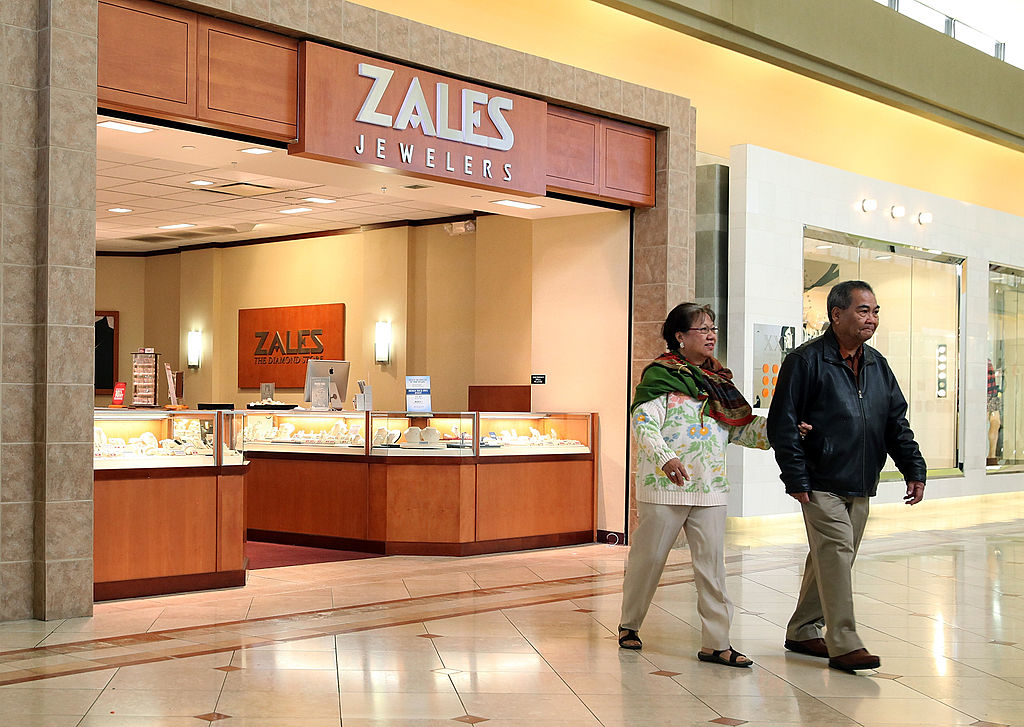
Signet’s fight with the shorts began in November, after the company failed to meet analyst expectations in the third quarter. While the mid-market jewelry company, known for such well-known brands as Kays, Jared, and Zales, posted a healthy profit for the quarter, it just wasn’t as strong as investors had hoped, sending Signet’s shares down 15% in a single day. The earnings miss shook investors, many of whom began to question the logic behind the company’s controversial $1.4 billion acquisition of rival mid-market jeweler, Zales, back in 2014. There was concern that the deal wasn’t panning out as well as management had promised; that Zales’ bad debt reserve, the amount of cash set aside to absorb losses deriving from its financing activities, was worse than originally believed; or that the lofty synergies promised would never materialize.
But Signet’s management brushed off the concerns. They knew the company derived a minuscule percentage of its annual revenues in the sleepy third quarter, so any results, good or bad, really didn’t give an accurate picture of how the company was doing overall.
To prepare for the upcoming fourth quarter, which included the crucial holiday season, the company had just launched its “Ever Us” product line and marketing campaign. Months of testing and analysis concluded that it would be a big hit and would help drive sales up in the quarter, which would more than make up for any weakness the company showed in the third quarter.
“It was by far and away the biggest launch we’ve ever had,” Light, told Fortune in an interview last week. “It was the first time in our company’s history where we took the whole strength of Signet’s major brands and was able to leverage it to promote only one product, one idea, to all of our customers.”
The two stone intertwining design of the “Ever Us” diamond ring was an instant hit on both the marketing and sales fronts, rivaling such storied campaigns as De Beers iconic “A diamond is forever” tagline, which the company debuted back in 1947 (and will be resurrected in ads later this year).
“This idea of two stones representing a couple and two stones representing your true love and your best friend scored off the charts in our research,” Light said. “We took that research, developed products, and gave it to our stores to see how the customers reacted to it. And to say that the reaction was phenomenal would be an understatement.”
The campaign helped the company deliver “some ole fashioned retail strength,” according to a research note on the company released on Monday by analysts at Nomura.
“Ever Us” helped drive same store sales growth to 4.9% on the year. Sales were up 7.3% at its flagship Kay stores and up 6.3% at its Zales stores, putting to rest this notion that Zales had been a bad buy. Meanwhile, overall revenue growth at the company came in at 5.1% for the year to $2.39 billion.
As a mid-market jeweler, though, Signet’s clientele skews young, with most purchases made on credit. Light told Fortune that around 50% of the company’s sales came from bridal purchases, mainly diamond engagement rings, of which 70% were financed in-house. This allows young men to purchase more expensive diamond engagement rings than they normally would if they had to rely solely on their credit cards for payment. The program is a major revenue generator for the company.
Self-financing your sales can be a dangerous game if left unchecked, but this is how Signet has run its business for decades. Losses on average tend to be no more than 3% to 4% in any given year, which is far less than what the company earns from interest charges. But an uptick in loan losses in the third quarter spooked some investors. They were concerned that the company might have juiced up their past sales numbers by lowering their credit standards and that more losses were on the horizon, similar to the mortgage mess that drove up home sales during the housing boom, albeit at a much smaller scale.
Signet’s stock price began to tank in February, as more investors began to short, or bet against, the company’s shares. There was talk that Signet was trying to hide its losses using accounting tricks and that they were a subprime lender dressed up as a jewelry company.
But Light was not going to let a bunch of talk ruin what was supposed to be a milestone quarter for the company. He announced a $750 million stock buyback. That stopped the free-fall in the company’s stock, as it sent a signal to investors that management viewed the recent dip in the company’s share price to be a buying opportunity. Light then increased the company’s dividend, which showed that he wasn’t hoarding cash to defend against some sort of “credit event” in the near future. He then boosted the cost and revenue synergies associated with the Zales acquisition by 50%, saying that the deal was far better than they originally expected, ending speculation that the company’s loan portfolio was chock full of deadbeats.
“We just needed to explain to the financial community that you can’t judge the performance of a retail company like Signet by what happens in just one quarter,” Light told Fortune.
When Signet reported its earnings last week, Light attached an addendum to the company’s annual filing explaining the company’s credit methodology,which helped to further diminish the view that the company was being deceptive with its accounting.
Indeed, we found out that Signet’s underwriting standards had actually gone up, not down, with the average Fico scores for new customers in 2015 coming in at 684, which was higher than the company’s average score in the mid 660s.
With the string of successive moves and announcements, Signet excised just about all doubts related to the company’s solvency. While some may consider its actions as a bit too aggressive, Signet clearly wanted to make sure the record was crystal clear. Light told Fortune that the company plans on continuing its “Ever Us” campaign in 2016, expanding the product line. Signet is now forecasting earnings per share growth of around 20% to 25% during that time. While that sounds high for a retailer, Light and his team seem to have earned the benefit of the doubt when it comes to projections, at least for the next few quarters.