• Home
  • Latest
  • Fortune 500
  • Finance
  • Tech
  • Leadership
  • Lifestyle
  • Rankings
  • Multimedia

Trendingnow

1

As Big Tech showers employees with perks to win the talent war, Nvidia built a nearly $5 trillion company by making people pay for their own lunch

2

MacKenzie Scott alone accounted for one-third of America's $19.2 billion in megagifts last year

3

Current price of oil as of July 1, 2026

1

As Big Tech showers employees with perks to win the talent war, Nvidia built a nearly $5 trillion company by making people pay for their own lunch

2

MacKenzie Scott alone accounted for one-third of America's $19.2 billion in megagifts last year

3

Current price of oil as of July 1, 2026
CommentaryApple

Why Apple’s Fight Against the FBI Is Not Over Yet

By
Jay Kaplan
Jay Kaplan
Down Arrow Button Icon
By
Jay Kaplan
Jay Kaplan
Down Arrow Button Icon
March 26, 2016, 9:00 AM ET
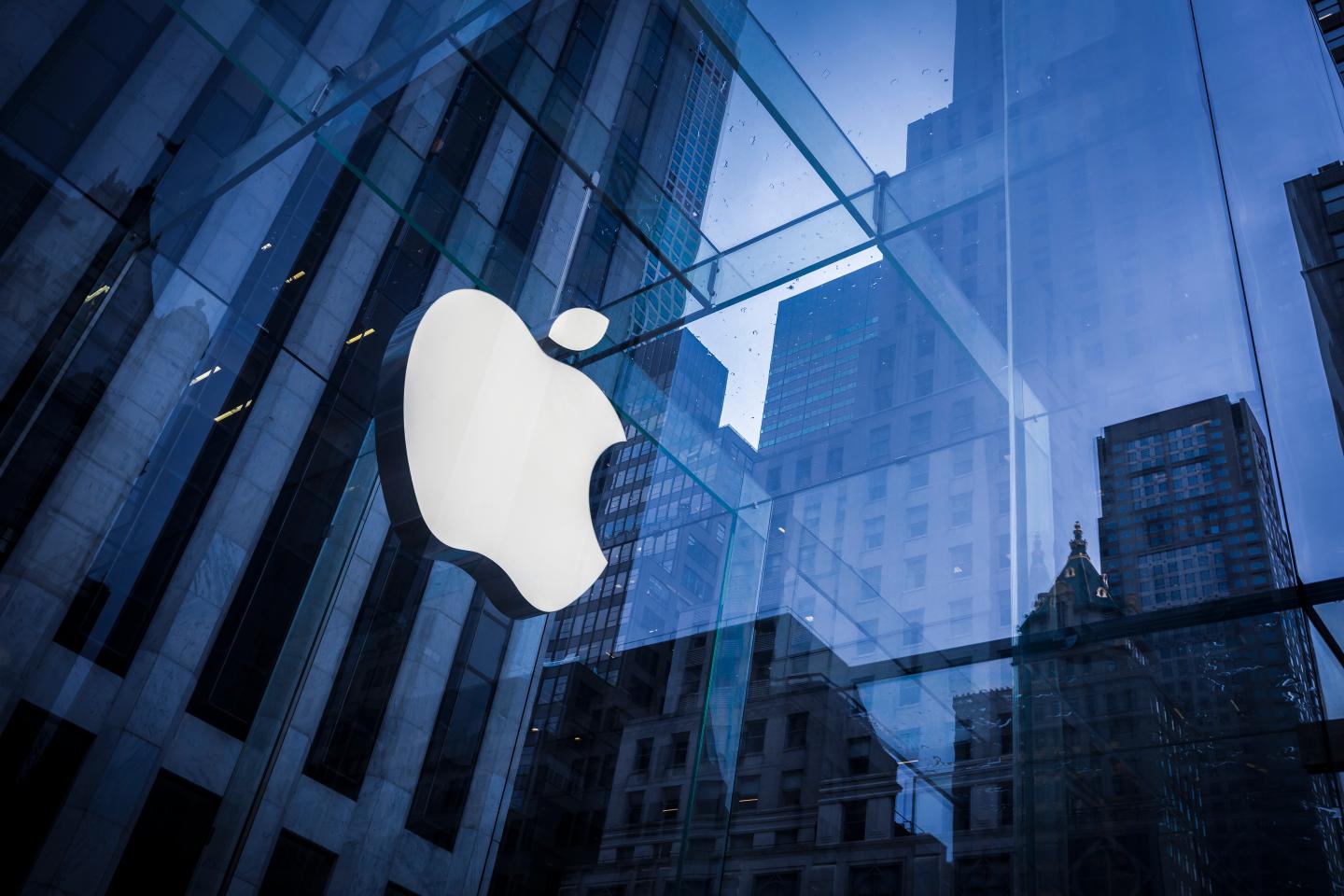
Photograph by Thomas Trutschel Photothek via Getty Images
Add Fortune on Google for similar content.

Earlier this week, the FBI stalled its impending court date with Apple (AAPL) after it revealed that it might have found a way to unlock the San Bernardino shooter’s iPhone without Apple’s help. Just 24 hours before the hearing, the FBI’s filing stated that it would use alternate means to access the data on Syed Rizwan Farook’s iPhone. Since the filing, it has been reported that Cellebrite, a provider of mobile forensic software, will be the third-party aiding the FBI. But without any specification as to what specifically Cellebrite will do, everyone has been left to wonder what those methods may be. More importantly, many are concerned about what this means for personal privacy.

Could this be viewed as the government essentially hiring someone to hack into personal data? What kind of precedent does this set, and should companies other than Apple be worried? The short answer is that this is not a new issue. Governments around the world, including our own, have been hacking into devices long before this case. It’s inevitable, especially in high-profile criminal or terrorist cases like this one that pose risks to national security.

As such, vendors need to prioritize user privacy — either create the most secure products possible to safeguard their customers or risk losing the trust of consumers. For their own part, consumers should continue trusting both in the products and the laws meant to protect them. Privacy should not be a problem as long as consumers stay out of trouble.

Worries about the possible implications of the government hacking their way into this particular iPhone are unfounded. While the act itself can be debated over—whether it’s wrong or right—the fact of the matter is that it’s been happening for years and will continue to happen as more of our lives become entrenched in the digital world.

In many cases, it’s the only way to stay ahead of threats that jeopardize national security. A single user’s privacy does not outweigh the safety of thousands of individuals. The counter-argument lies more in the principle — just one exception can lead to uncontrolled chain reactions of abuse of knowledge and power. Regardless, governments will continue to do what they need to do for national security and businesses will continue to be modeled around this paradigm.

The infamous Hacking Team, for instance, is a prime example of a company that makes its money selling malware to government and law enforcement entities across the world. They are essentially a malware-as-a-service vendor. Exploit brokers also do something similar, buying exploits from researchers or finding them on the Dark Web so they can then provide them to their “customers.” One such company, Zerodium, offered a $1 million bounty late last year for an exploit that could bypass Apple’s iOS security controls.

What is unique about this case is that the FBI took Apple to court instead of finding its own way to break into the phone. Perhaps the FBI assumed that it would be easy to pull off. If you need to get into a house, it makes sense to ask for the keys first before breaking down the door. Fortunately, Apple stood its ground and the Department of Justice (DOJ) blinked first.

An important distinction to make in this case is that it’s not a debate over encryption, intercepting communication or spying on the masses. It’s about being able to pull the information from a device that they have in their physical possession. How it will likely achieve this won’t be available for mass use, but even the possibility of a workaround strongly influences groups to focus on zero-day discovery and reverse engineering efforts.

As such, it’s possible that the FBI managed to gain one of these successful exploits from Cellebrite that can be leveraged with the device in hand. If so, it’d likely need time to confirm the exploit works and then pay for it—a likely reason behind the FBI’s ask for a two- week grace period. Another compelling theory comes from computer scientist Jonathan Zdziarski. The idea itself has been circling for some time—the DOJ likely found a way to replicate a key chip in the iPhone. It grants them the ability to replace the chip and essentially brute force their way in without worrying about losing data due to the auto-swipe feature. This method requires valuable time, expert resources, and, most importantly, possession of the device. Consumers at home shouldn’t worry (yet).

More importantly, there are laws and regulations in place meant to protect against a “Big Brother” outcome, especially after the Edward Snowden incident. For instance, wiretapping can’t be done domestically, interception of communications can only be performed with a warrant, and devices can’t be seized without a warrant or reasonable cause. Whether these actions unlawfully happen in the background is not relevant to this particular case or its implications.

What we can learn from this is that vendors need to design and build devices with the utmost degree of security possible. Security must be a priority—not an afterthought or added feature—so that if the situation arises, the government or other entities can’t easily probe them. In the same vein, consumers need to be able to trust the laws and vendors, while also understanding that any data on any electronic device is potentially at risk.

In all, Apple won (for now)—but expect the DOJ to bring this issue to the forefront again.

Jay Kaplan is CEO of Synack, a cybersecurity firm based in Silicon Valley. Kaplan and his firm are not investors of the companies referenced in this article.

About the Author
By Jay Kaplan
See full bioRight Arrow Button Icon
Add Fortune on Google for similar content.

Latest in Commentary

Finance
Lorem ipsum dolor sit amet, consectetur adipiscing elit, sed do eiusmod tempor incididunt ut labore et dolore magna aliqua. Ut enim ad minim veniam
By Fortune Editors
October 20, 2025
Finance
Lorem ipsum dolor sit amet, consectetur adipiscing elit, sed do eiusmod tempor incididunt ut labore et dolore magna aliqua. Ut enim ad minim veniam
By Fortune Editors
October 20, 2025
Finance
Lorem ipsum dolor sit amet, consectetur adipiscing elit, sed do eiusmod tempor incididunt ut labore et dolore magna aliqua. Ut enim ad minim veniam
By Fortune Editors
October 20, 2025
Finance
Lorem ipsum dolor sit amet, consectetur adipiscing elit, sed do eiusmod tempor incididunt ut labore et dolore magna aliqua. Ut enim ad minim veniam
By Fortune Editors
October 20, 2025
Finance
Lorem ipsum dolor sit amet, consectetur adipiscing elit, sed do eiusmod tempor incididunt ut labore et dolore magna aliqua. Ut enim ad minim veniam
By Fortune Editors
October 20, 2025
Finance
Lorem ipsum dolor sit amet, consectetur adipiscing elit, sed do eiusmod tempor incididunt ut labore et dolore magna aliqua. Ut enim ad minim veniam
By Fortune Editors
October 20, 2025

Most Popular

Finance
Lorem ipsum dolor sit amet, consectetur adipiscing elit, sed do eiusmod tempor incididunt ut labore et dolore magna aliqua. Ut enim ad minim veniam
By Fortune Editors
October 20, 2025
Finance
Lorem ipsum dolor sit amet, consectetur adipiscing elit, sed do eiusmod tempor incididunt ut labore et dolore magna aliqua. Ut enim ad minim veniam
By Fortune Editors
October 20, 2025
Finance
Lorem ipsum dolor sit amet, consectetur adipiscing elit, sed do eiusmod tempor incididunt ut labore et dolore magna aliqua. Ut enim ad minim veniam
By Fortune Editors
October 20, 2025
Finance
Lorem ipsum dolor sit amet, consectetur adipiscing elit, sed do eiusmod tempor incididunt ut labore et dolore magna aliqua. Ut enim ad minim veniam
By Fortune Editors
October 20, 2025
Finance
Lorem ipsum dolor sit amet, consectetur adipiscing elit, sed do eiusmod tempor incididunt ut labore et dolore magna aliqua. Ut enim ad minim veniam
By Fortune Editors
October 20, 2025
Finance
Lorem ipsum dolor sit amet, consectetur adipiscing elit, sed do eiusmod tempor incididunt ut labore et dolore magna aliqua. Ut enim ad minim veniam
By Fortune Editors
October 20, 2025
Fortune Secondary Logo
Rankings
  • 100 Best Companies
  • Fortune 500
  • Global 500
  • Fortune 500 Europe
  • Most Powerful Women
  • World's Most Admired Companies
  • See All Rankings
  • Lists Calendar
Sections
  • Finance
  • Fortune Crypto
  • Features
  • Leadership
  • Health
  • Commentary
  • Success
  • Retail
  • Mpw
  • Tech
  • Lifestyle
  • CEO Initiative
  • Asia
  • Politics
  • Conferences
  • Europe
  • Newsletters
  • Personal Finance
  • Environment
  • Magazine
  • Education
Customer Support
  • Frequently Asked Questions
  • Customer Service Portal
  • Privacy Policy
  • Terms Of Use
  • Single Issues For Purchase
  • International Print
Commercial Services
  • Advertising
  • Fortune Brand Studio
  • Fortune Analytics
  • Fortune Conferences
  • Business Development
  • Group Subscriptions
About Us
  • About Us
  • Press Center
  • Work At Fortune
  • Terms And Conditions
  • Site Map
  • About Us
  • Press Center
  • Work At Fortune
  • Terms And Conditions
  • Site Map
  • Facebook icon
  • Twitter icon
  • LinkedIn icon
  • Instagram icon
  • Pinterest icon

Latest in Commentary

rn
CommentaryCryptocurrency
Former Iran director at NSC: Crypto legislation is a ticket to sanctions evasion
By Richard NephewJuly 2, 2026
2 hours ago
m
CommentaryManufacturing
McKinsey chairs: Building a more resilient industrial base may require $2 trillion in investment
By Eric Kutcher and Shubham SinghalJuly 2, 2026
2 hours ago
em
Commentary250 Years of Innovation
America’s 250th birthday has Elon Musk and a record IPO. Its 15th had Alexander Hamilton — and a stock market bubble
By Owen LamontJuly 2, 2026
6 hours ago
paramount
CommentaryAntitrust
How Paramount’s theater commitments could boost local economies across the nation
By Ike BrannonJuly 2, 2026
6 hours ago
elon
CommentaryChina
China has 400 private space companies. The West is barely paying attention
By Rainer ZitelmannJuly 2, 2026
7 hours ago
senate
CommentaryCongress
One rare bipartisan AI bill is moving through Congress. Here’s why it deserves to pass
By Neil Björkman and Betsy BrewerJuly 1, 2026
1 day ago

Most Popular

As Big Tech showers employees with perks to win the talent war, Nvidia built a nearly $5 trillion company by making people pay for their own lunch
Big Tech
As Big Tech showers employees with perks to win the talent war, Nvidia built a nearly $5 trillion company by making people pay for their own lunch
By Marco Quiroz-GutierrezJuly 1, 2026
1 day ago
MacKenzie Scott alone accounted for one-third of America's $19.2 billion in megagifts last year
Success
MacKenzie Scott alone accounted for one-third of America's $19.2 billion in megagifts last year
By Sydney LakeJune 25, 2026
7 days ago
Current price of oil as of July 1, 2026
Personal Finance
Current price of oil as of July 1, 2026
By Joseph HostetlerJuly 1, 2026
1 day ago
Trump got a $78K pension from the Screen Actors Guild in 2025 because he appeared in Home Alone 2 in 1992
Politics
Trump got a $78K pension from the Screen Actors Guild in 2025 because he appeared in Home Alone 2 in 1992
By Sasha RogelbergJuly 1, 2026
23 hours ago
Philanthropy leader at Warren Buffett and Bill Gates’ Giving Pledge says children of billionaires are pushing them to give their wealth away faster
Success
Philanthropy leader at Warren Buffett and Bill Gates’ Giving Pledge says children of billionaires are pushing them to give their wealth away faster
By Preston ForeJune 27, 2026
5 days ago
CEO of $248 billion cybersecurity company says workers are about to face a ‘Darwinian moment’ thanks to AI: Evolve or get cut
Success
CEO of $248 billion cybersecurity company says workers are about to face a ‘Darwinian moment’ thanks to AI: Evolve or get cut
By Emma BurleighJuly 1, 2026
1 day ago

© 2026 Fortune Media IP Limited. All Rights Reserved. Use of this site constitutes acceptance of our Terms of Use and Privacy Policy | CA Notice at Collection and Privacy Notice | Do Not Sell/Share My Personal Information
FORTUNE is a trademark of Fortune Media IP Limited, registered in the U.S. and other countries. FORTUNE may receive compensation for some links to products and services on this website. Offers may be subject to change without notice.