• Home
  • Latest
  • Fortune 500
  • Finance
  • Tech
  • Leadership
  • Lifestyle
  • Rankings
  • Multimedia
TechPrivacy

Fury As U.K. Makes Proposed Internet Spying Law Even More Invasive

By
David Meyer
David Meyer
Down Arrow Button Icon
By
David Meyer
David Meyer
Down Arrow Button Icon
March 1, 2016, 10:05 AM ET
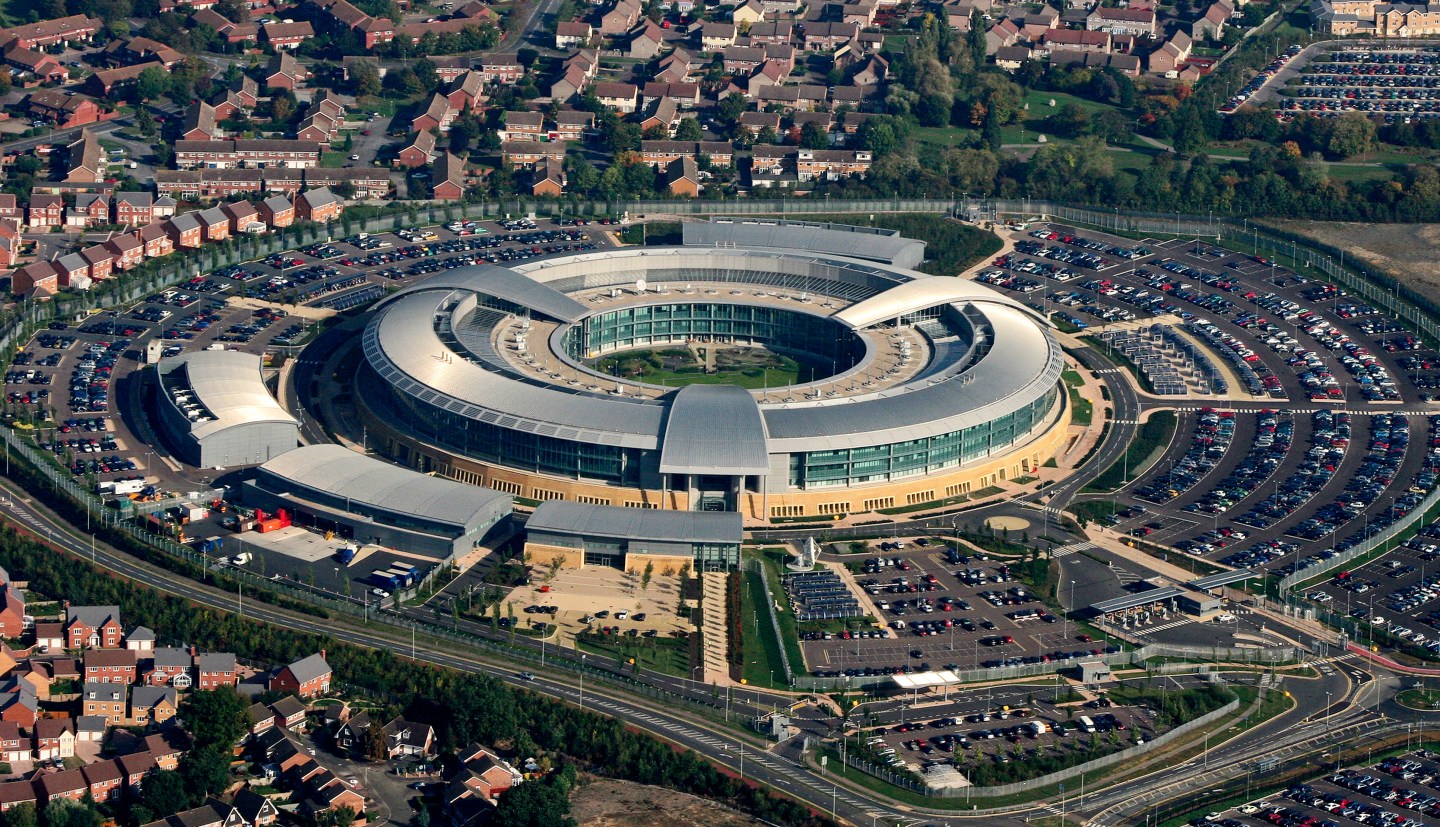
An Aerial View of GCHQ
GLOUCESTERSHIRE, ENGLAND - OOCTOBER 10: Amidst the houses and the car parks sits GCHQ the Government Communications Headquarters in this aerial photo taken on October 10, 2005. (Photo by David Goddard/Getty Images)Photograph by David Goddard--Getty Images

The British government has presented the final draft of legislation that critics call a “snooper’s charter”—it would create records of all the websites that people visit, legitimize the hacking of people’s computing devices, force organizations to hand over bulk data sets about the people they serve, and compel tech firms to remove encryption when asked to do so.

Some of the changes since the first draft of the Investigatory Powers Bill include attempts to satisfy calls for better safeguards. Urgent surveillance warrants will now need to be reviewed by a senior judge more quickly than before. There is also now a requirement for the home secretary to authorize any request from British intelligence agencies to their overseas partners to spy on British people.

The government has expressly rejected some of the recommendations made by parliamentary committees scrutinizing the bill last month—it insists it will keep the idea of bulk hacking warrants, along with the right to do all this surveillance to protect the U.K.’s “economic well-being.”

“The bill ensures that the security and intelligence agencies and law enforcement continue to have the powers they need to keep us safe against a backdrop of an increasingly complex, serious, and unpredictable threat,” home secretary Theresa May said in Parliament on Tuesday.

“The continued inclusion of powers for bulk interception and bulk equipment interference—hacking by any other name—leaves the right to privacy dangerously undermined and the security of our infrastructure at risk,” said Gus Hosein, the executive director of Privacy International. “Despite this, the Home Office stands by its claim that the Bill represents ‘world-leading’ legislation. It is truly world-leading, for all the wrong reasons.”

Get Data Sheet, Fortune’s technology newsletter.

What’s more, the new version of the bill actually broadens some of its powers. Police will now be able to access all of a person’s web-browsing records in an investigation, not just those pointing to illegal websites and communications services. And the police—rather than just the intelligence services—will also be able to hack into computers in cases involving missing people or “threat to life.”

“It beggars belief that the government is blundering on with its snooping power grab completely disregarding the concerns being raised from all sides, including no fewer than three of its own parliamentary committees, every privacy group in the country, the UN, and tech firms like Apple,” (AAPL) said Kate Allen, the director of Amnesty U.K.

Meanwhile, the World Wide Web Foundation warned that pushing the bill through in haste would be “a slap in the face for Britain’s democracy and her people.”

“The bill and its supporting documents run to well over 500 pages. If, as reported, the Bill will get its second reading within a fortnight or sooner, MPs will have to crunch through more than 50 complex and technical pages per working day just to get a basic handle on the Bill and hold an informed debate. This is not only unrealistic, but dangerous,” said Anne Jellema, the foundation’s CEO.

The purpose of the Investigatory Powers Bill, introduced last November, is ostensibly to provide a simplified, unified replacement for the many bits and pieces of existing legislation that say what the U.K.’s law enforcement and intelligence services can and cannot do in the realm of surveillance. Even the bill’s critics agree simplification and more transparency is much needed, though they’re not so keen on the fact that the bill would legalize many shadowy activities that only came to light through Edward Snowden’s revelations.

However, the initial draft of the bill came in for criticism last month by no fewer than three government committees (Science and Technology, Intelligence and Security, plus a special joint committee) over its broadness, inconsistency, and incomprehensibility. For example, here’s an actual quote from the first draft: “Data includes any information that is not data.”

One particular gem from the joint committee’s report read: “We recommend that more effort should be made to reflect not only the policy aims but also the practical realities of how the Internet works on a technical level.” Ouch.

Observers were therefore mildly surprised to see the government come back with its next attempt just a few weeks after this stinging criticism. This morning a host of politicians, human rights advocates, and legal experts (including members of those committees) said in a letter to The Telegraph that the government’s insistence on pushing through the bill this year is “not in the nation’s interest” and getting it right would be a better idea.

Why is the government so keen to make these new surveillance powers law as soon as possible? Ostensibly because another piece of legislation it rushed through in 2014, the Data Retention and Investigatory Powers (DRIP) Act, only works until the end of this year.

For more on privacy and national security, watch:

The DRIP Act is a piece of data retention legislation, allowing the government to force Internet service providers to store customers’ communications records, in case investigators want to comb through them. It was passed as “emergency” legislation because the U.K.’s previous data retention law was based on an EU-wide law that got struck down by the EU’s highest court in 2014, because it was anti-privacy.

So the U.K. government is desperate to make sure it doesn’t lose data retention, which is a form of mass surveillance. However, the signatories to the Telegraph letter noted, that aspect of the new bill can be split off to be dealt with more urgently—there’s no need to also rush through all the other stuff about hacking and recording what people do online.

(Bonus fact: The High Court struck down part of the DRIP Act last year because it lacked sufficient safeguards, but gave the government until this month to rewrite it. If you’re thinking, “So the court allowed a law to stay in operation, despite the fact that it illegally tramples over fundamental rights?” then yes, that is what happened.)

Anyhow, the government is pushing ahead with its plan of getting the whole Investigatory Powers Bill package on the statute books by the end of this year.

“On first reading, the revised bill barely pays lip service to the concerns raised by the committees that scrutinized the draft bill,” said Jim Killock, the executive director of the Open Rights Group. “If passed, it would mean that the U.K. has one of the most draconian surveillance laws of any democracy with mass surveillance powers to monitor every citizen’s browsing history.”

“In the short term, I cannot see how security-conscious cloud and hosting companies can remain in the country if this bill is passed,” said Jacob Ginsberg, a senior director at email encryption outfit Echoworx.

Oh, and what about that “data includes any information that is not data” absurdity? The replacement for that definition is equally broad, if not as paradoxical: “‘Data’ includes data which is not electronic data and any information (whether or not electronic).”


About the Author
By David Meyer
LinkedIn icon
See full bioRight Arrow Button Icon

Latest in Tech

Finance
Lorem ipsum dolor sit amet, consectetur adipiscing elit, sed do eiusmod tempor incididunt ut labore et dolore magna aliqua. Ut enim ad minim veniam
By Fortune Editors
October 20, 2025
Finance
Lorem ipsum dolor sit amet, consectetur adipiscing elit, sed do eiusmod tempor incididunt ut labore et dolore magna aliqua. Ut enim ad minim veniam
By Fortune Editors
October 20, 2025
Finance
Lorem ipsum dolor sit amet, consectetur adipiscing elit, sed do eiusmod tempor incididunt ut labore et dolore magna aliqua. Ut enim ad minim veniam
By Fortune Editors
October 20, 2025
Finance
Lorem ipsum dolor sit amet, consectetur adipiscing elit, sed do eiusmod tempor incididunt ut labore et dolore magna aliqua. Ut enim ad minim veniam
By Fortune Editors
October 20, 2025
Finance
Lorem ipsum dolor sit amet, consectetur adipiscing elit, sed do eiusmod tempor incididunt ut labore et dolore magna aliqua. Ut enim ad minim veniam
By Fortune Editors
October 20, 2025
Finance
Lorem ipsum dolor sit amet, consectetur adipiscing elit, sed do eiusmod tempor incididunt ut labore et dolore magna aliqua. Ut enim ad minim veniam
By Fortune Editors
October 20, 2025

Most Popular

Finance
Lorem ipsum dolor sit amet, consectetur adipiscing elit, sed do eiusmod tempor incididunt ut labore et dolore magna aliqua. Ut enim ad minim veniam
By Fortune Editors
October 20, 2025
Finance
Lorem ipsum dolor sit amet, consectetur adipiscing elit, sed do eiusmod tempor incididunt ut labore et dolore magna aliqua. Ut enim ad minim veniam
By Fortune Editors
October 20, 2025
Finance
Lorem ipsum dolor sit amet, consectetur adipiscing elit, sed do eiusmod tempor incididunt ut labore et dolore magna aliqua. Ut enim ad minim veniam
By Fortune Editors
October 20, 2025
Finance
Lorem ipsum dolor sit amet, consectetur adipiscing elit, sed do eiusmod tempor incididunt ut labore et dolore magna aliqua. Ut enim ad minim veniam
By Fortune Editors
October 20, 2025
Finance
Lorem ipsum dolor sit amet, consectetur adipiscing elit, sed do eiusmod tempor incididunt ut labore et dolore magna aliqua. Ut enim ad minim veniam
By Fortune Editors
October 20, 2025
Finance
Lorem ipsum dolor sit amet, consectetur adipiscing elit, sed do eiusmod tempor incididunt ut labore et dolore magna aliqua. Ut enim ad minim veniam
By Fortune Editors
October 20, 2025
Fortune Secondary Logo
Rankings
  • 100 Best Companies
  • Fortune 500
  • Global 500
  • Fortune 500 Europe
  • Most Powerful Women
  • Future 50
  • World’s Most Admired Companies
  • See All Rankings
Sections
  • Finance
  • Fortune Crypto
  • Features
  • Leadership
  • Health
  • Commentary
  • Success
  • Retail
  • Mpw
  • Tech
  • Lifestyle
  • CEO Initiative
  • Asia
  • Politics
  • Conferences
  • Europe
  • Newsletters
  • Personal Finance
  • Environment
  • Magazine
  • Education
Customer Support
  • Frequently Asked Questions
  • Customer Service Portal
  • Privacy Policy
  • Terms Of Use
  • Single Issues For Purchase
  • International Print
Commercial Services
  • Advertising
  • Fortune Brand Studio
  • Fortune Analytics
  • Fortune Conferences
  • Business Development
  • Group Subscriptions
About Us
  • About Us
  • Editorial Calendar
  • Press Center
  • Work At Fortune
  • Diversity And Inclusion
  • Terms And Conditions
  • Site Map
  • About Us
  • Editorial Calendar
  • Press Center
  • Work At Fortune
  • Diversity And Inclusion
  • Terms And Conditions
  • Site Map
  • Facebook icon
  • Twitter icon
  • LinkedIn icon
  • Instagram icon
  • Pinterest icon

Latest in Tech

Dario Amodei
NewslettersTerm Sheet
What Anthropic’s too-dangerous-to-release AI model means for its upcoming IPO
By Beatrice NolanApril 10, 2026
5 minutes ago
Even Nvidia’s own research teams can’t get enough GPUs amid the race for AI computing power
NewslettersEye on AI
Even Nvidia’s own research teams can’t get enough GPUs amid the race for AI computing power
By Sharon GoldmanApril 9, 2026
16 hours ago
You’re looking at the AI revolution all wrong, top economist says: 40% unemployment and a 3-day work week are the same thing
AIdisruption
You’re looking at the AI revolution all wrong, top economist says: 40% unemployment and a 3-day work week are the same thing
By Nick LichtenbergApril 9, 2026
16 hours ago
Zoom CEO Eric Yuan
Successthe future of work
‘I hate working 5 days’: Zoom CEO says traditional work schedules are becoming obsolete—and predicts a 3-day workweek by 2031
By Preston ForeApril 9, 2026
17 hours ago
Nutella seen aboard the Orion spacecraft Integrity.
RetailFood and drink
Nutella jumps on the best product placement money can’t buy: A trip to the far side of the Moon
By Catherina GioinoApril 9, 2026
18 hours ago
kash
Cybersecuritycyber
Trump’s ‘cease-fire’ won’t stop Iranian hackers for long, cyber experts say
By David Klepper and The Associated PressApril 9, 2026
18 hours ago

Most Popular

The U.S. government is spending $88 billion a month in interest on national debt—equal to spending on defense and education combined
Economy
The U.S. government is spending $88 billion a month in interest on national debt—equal to spending on defense and education combined
By Fortune EditorsApril 9, 2026
21 hours ago
A Meta employee created a dashboard so coworkers can compete to be the company's No. 1 AI token user—and Zuckerberg doesn't even rank in the top 250
AI
A Meta employee created a dashboard so coworkers can compete to be the company's No. 1 AI token user—and Zuckerberg doesn't even rank in the top 250
By Fortune EditorsApril 9, 2026
23 hours ago
Gen Z doesn't want your full-time job. They want several part-time roles, and it's reshaping the entire workforce
Success
Gen Z doesn't want your full-time job. They want several part-time roles, and it's reshaping the entire workforce
By Fortune EditorsApril 9, 2026
1 day ago
White-collar workers are quietly rebelling against AI as 80% outright refuse adoption mandates
AI
White-collar workers are quietly rebelling against AI as 80% outright refuse adoption mandates
By Fortune EditorsApril 9, 2026
22 hours ago
Gen Z workers are so fearful AI will take their job they’re intentionally sabotaging their company’s AI rollout
AI
Gen Z workers are so fearful AI will take their job they’re intentionally sabotaging their company’s AI rollout
By Fortune EditorsApril 8, 2026
2 days ago
2 years ago, Saudi Arabia quietly canceled the ‘petrodollar’ deal with America that wired the world economy for 50 years. Then war broke out in Iran
Energy
2 years ago, Saudi Arabia quietly canceled the ‘petrodollar’ deal with America that wired the world economy for 50 years. Then war broke out in Iran
By Fortune EditorsApril 7, 2026
2 days ago

© 2026 Fortune Media IP Limited. All Rights Reserved. Use of this site constitutes acceptance of our Terms of Use and Privacy Policy | CA Notice at Collection and Privacy Notice | Do Not Sell/Share My Personal Information
FORTUNE is a trademark of Fortune Media IP Limited, registered in the U.S. and other countries. FORTUNE may receive compensation for some links to products and services on this website. Offers may be subject to change without notice.