• Home
  • Latest
  • Fortune 500
  • Finance
  • Tech
  • Leadership
  • Lifestyle
  • Rankings
  • Multimedia
Leadership

Rubio and Cruz Wade Into Long History of Whether to Draft Women

By
Lily Rothman
Lily Rothman
and
TIME
TIME
Down Arrow Button Icon
By
Lily Rothman
Lily Rothman
and
TIME
TIME
Down Arrow Button Icon
February 29, 2016, 5:13 PM ET
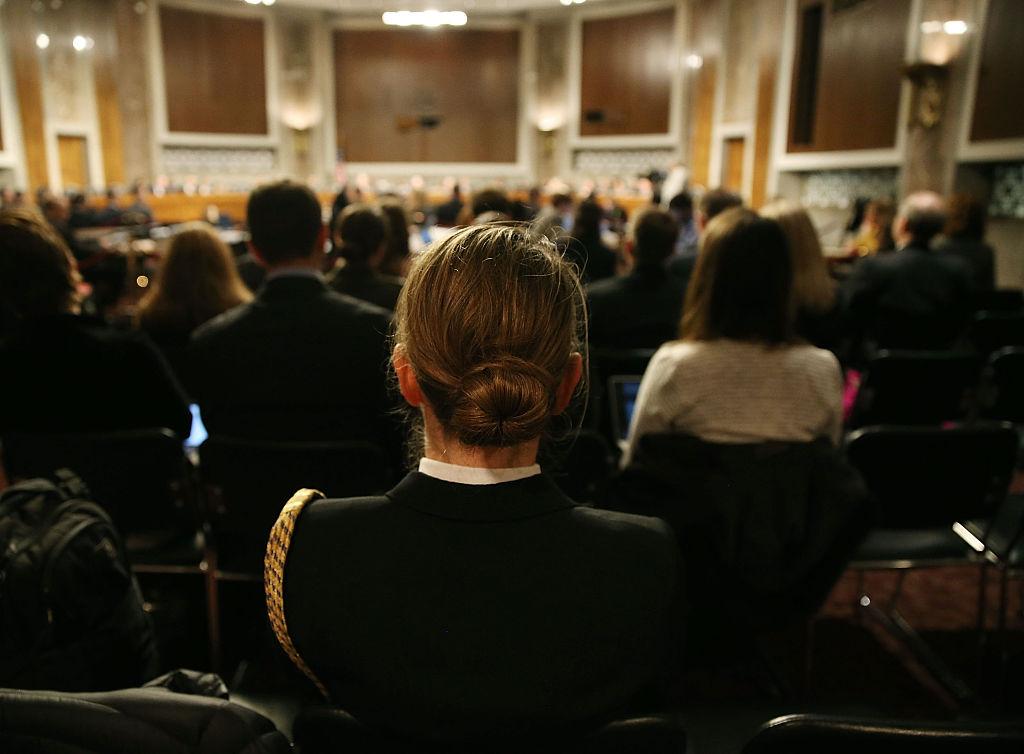
Senate Holds Hearing On Military Decision To Open All Combat Units To Women
Photo by Mark Wilson—Getty Images

Late last week, Utah Sen. Mike Lee introduced a bill that at first looks like a straightforward matter of Congressional logistics. Under his plan, any potential future change to the requirements for registering for the military draft would have to go through Congress. But, though the bill mentions nothing about gender, Lee’s office has said that he hopes through this mechanism to preempt any chance that the recent lifting of the combat ban for women in the U.S. military would lead to a situation in which women are required to register for the draft. The bill has drawn extra attention ever since presidential candidates Marco Rubio and Ted Cruz announced that they would co-sponsor it, even after Rubio had earlier expressed his belief that it would make sense for women to register. In doing so, the candidates have entered a debate that has endured for more than half a century.

In 1968, a New York City lawyer arguing on behalf of a draft evader made what was then a surprising argument: that the draft was illegal in the first place, because it discriminated on the basis of sex. It was actually not the first time a draft for women had occurred to U.S. officials—a nurse draft was considered and rejected during World War II—but it was mostly considered a joke at the time. “Now that would put real meaning into Uncle Sam’s saying ‘I Want You,’” TIME quoted a young Manhattan woman saying. “The old lecher!”

The court agreed: “In providing for involuntary service for men and voluntary service for women, Congress followed the teachings of history that if a nation is to survive, men must provide the first line of defense while women keep the home fires burning,” declared a district court judge in response to the filing. “Moreover, Congress recognized that in modern times there are certain duties in the Armed Forces which may be performed by women volunteers. For these reasons, the distinction between men and women with respect to service in the Armed Forces is not arbitrary, unreasonable or capricious.”

A decade later, however, the idea that women should be drafted was no laughing matter.

In the decade that followed the 1968 case, a cap on women in uniform was abolished, legal rulings let women into military from which they’d once been banned and some women-only branches of the armed forces were shut down. Though some worried about the impact of a more mixed military, demographic needs—a declining population of 18-year-old men, post-Baby Boom, and a post-Vietnam need to refresh the forces—counteracted many of those fears.

But the military wasn’t the only area in which things were changing that decade. The intervening years had also seen Congress pass the Equal Rights Amendment, the proposed change to the Constitution—which later failed in the states—that would have guaranteed equal rights to women. The Vietnam draft ended shortly after the ERA was passed, but its memory loomed large. So, for opponents of the equality amendment, the threat of a gender-neutral draft—a threat to women and to national security—was a powerful argument against ratification. As Phyllis Schlafly, the most outspoken opponent of the ERA, put it, “America is entitled to better protection than women’s physical strength can give us.”

By 1980, as the ERA continued to move through the ratification process and the Cold War replaced the Vietnam War in the fear centers of many American minds, President Jimmy Carter discussed reinstating the draft. The question of women was, by that point, unavoidable. Many prominent feminists said that they believed that if men should fight, women should too—and in fact Karen DeCrow, one-time president of the National Organization for Women, told TIME that she thought ratification of the ERA should be a prerequisite for a new draft, as otherwise it would be unfair to men.

Sure enough, that February, when Carter wanted to require young Americans to register for the draft, he sent two bills to Congress, one of which would require women to register. “There is no distinction possible, on the basis of ability or performance, that would allow me to exclude women,” he said. But the use of two separate bills was not a coincidence: registration (though not active conscription) resumed for men, but the women’s registration did not move ahead.

The decision prompted a revival of the same argument made during Vietnam: that the new draft was discriminatory against men and thus a violation of the Fifth Amendment. In 1981, the Supreme Court held that a men-only draft was constitutional. Since the point of a draft was to get troops for combat, the argument went, and women were excluded from active combat at the time, the draft system made sense as-is. As for Phyllis Schlafly, she predicted that the decision would mean the failure of ERA, as it was proof that women and men really did not bear the same responsibilities in society.

Whether or not the draft was the cause, she was right about the result. The ratification period for ERA expired in 1982.

It’s striking to note that many of the most effective anti-ERA arguments—same-sex marriage and unisex toilets—of the 1970s and ‘80s have come to pass without the help of the ERA. Though not every American may be happy about them, they’re hardly the cultural bugbears they once were, terrifying enough to derail a constitutional amendment. Whether that arc will hold true for a gender-neutral draft remains to be seen (and Lee’s bill has been referred to the Senate Armed Services Committee), but the increased presence of women in the military and their admission to combat roles has already shown that the idea doesn’t seem like as much of a threat to femininity or national security as it once did. Even as many Americans continue to disagree about whether a potential draft ought to include women—or whether it should exist in the first place—the nation’s women have shown their mettle.

After all, perhaps the most affecting argument is the one expressed by a TIME reader in 1978, during an earlier iteration of this debate.

“Nothing I saw the troops or their officers do during the time I served in Viet Nam could not have been done by a 100-lb. female,” wrote William D. Watson of Denver. “The bleeding is the only hard part, and it requires no special skill.”

This article was originally published on Time.com.

About the Authors
By Lily Rothman
See full bioRight Arrow Button Icon
By TIME
See full bioRight Arrow Button Icon

Latest in Leadership

Finance
Lorem ipsum dolor sit amet, consectetur adipiscing elit, sed do eiusmod tempor incididunt ut labore et dolore magna aliqua. Ut enim ad minim veniam
By Fortune Editors
October 20, 2025
Finance
Lorem ipsum dolor sit amet, consectetur adipiscing elit, sed do eiusmod tempor incididunt ut labore et dolore magna aliqua. Ut enim ad minim veniam
By Fortune Editors
October 20, 2025
Finance
Lorem ipsum dolor sit amet, consectetur adipiscing elit, sed do eiusmod tempor incididunt ut labore et dolore magna aliqua. Ut enim ad minim veniam
By Fortune Editors
October 20, 2025
Finance
Lorem ipsum dolor sit amet, consectetur adipiscing elit, sed do eiusmod tempor incididunt ut labore et dolore magna aliqua. Ut enim ad minim veniam
By Fortune Editors
October 20, 2025
Finance
Lorem ipsum dolor sit amet, consectetur adipiscing elit, sed do eiusmod tempor incididunt ut labore et dolore magna aliqua. Ut enim ad minim veniam
By Fortune Editors
October 20, 2025
Finance
Lorem ipsum dolor sit amet, consectetur adipiscing elit, sed do eiusmod tempor incididunt ut labore et dolore magna aliqua. Ut enim ad minim veniam
By Fortune Editors
October 20, 2025

Most Popular

Finance
Lorem ipsum dolor sit amet, consectetur adipiscing elit, sed do eiusmod tempor incididunt ut labore et dolore magna aliqua. Ut enim ad minim veniam
By Fortune Editors
October 20, 2025
Finance
Lorem ipsum dolor sit amet, consectetur adipiscing elit, sed do eiusmod tempor incididunt ut labore et dolore magna aliqua. Ut enim ad minim veniam
By Fortune Editors
October 20, 2025
Finance
Lorem ipsum dolor sit amet, consectetur adipiscing elit, sed do eiusmod tempor incididunt ut labore et dolore magna aliqua. Ut enim ad minim veniam
By Fortune Editors
October 20, 2025
Finance
Lorem ipsum dolor sit amet, consectetur adipiscing elit, sed do eiusmod tempor incididunt ut labore et dolore magna aliqua. Ut enim ad minim veniam
By Fortune Editors
October 20, 2025
Finance
Lorem ipsum dolor sit amet, consectetur adipiscing elit, sed do eiusmod tempor incididunt ut labore et dolore magna aliqua. Ut enim ad minim veniam
By Fortune Editors
October 20, 2025
Finance
Lorem ipsum dolor sit amet, consectetur adipiscing elit, sed do eiusmod tempor incididunt ut labore et dolore magna aliqua. Ut enim ad minim veniam
By Fortune Editors
October 20, 2025
Fortune Secondary Logo
Rankings
  • 100 Best Companies
  • Fortune 500
  • Global 500
  • Fortune 500 Europe
  • Most Powerful Women
  • World's Most Admired Companies
  • See All Rankings
  • Lists Calendar
Sections
  • Finance
  • Fortune Crypto
  • Features
  • Leadership
  • Health
  • Commentary
  • Success
  • Retail
  • Mpw
  • Tech
  • Lifestyle
  • CEO Initiative
  • Asia
  • Politics
  • Conferences
  • Europe
  • Newsletters
  • Personal Finance
  • Environment
  • Magazine
  • Education
Customer Support
  • Frequently Asked Questions
  • Customer Service Portal
  • Privacy Policy
  • Terms Of Use
  • Single Issues For Purchase
  • International Print
Commercial Services
  • Advertising
  • Fortune Brand Studio
  • Fortune Analytics
  • Fortune Conferences
  • Business Development
  • Group Subscriptions
About Us
  • About Us
  • Press Center
  • Work At Fortune
  • Terms And Conditions
  • Site Map
  • About Us
  • Press Center
  • Work At Fortune
  • Terms And Conditions
  • Site Map
  • Facebook icon
  • Twitter icon
  • LinkedIn icon
  • Instagram icon
  • Pinterest icon

Latest in Leadership

cox
C-SuiteWealth
Billionaires have a problem money can’t solve: They don’t know how to talk to their kids
By Nick LichtenbergMay 1, 2026
31 minutes ago
male engineer working under pylon
EnergyElectricity
Utility CEOs pocket $626 million as American energy bills hit record highs
By Tristan BoveMay 1, 2026
39 minutes ago
Fortune 500 Power Moves: Which executives gained and lost power this week
C-SuiteFortune 500 Power Moves
Fortune 500 Power Moves: Which executives gained and lost power this week
By Fortune EditorsMay 1, 2026
3 hours ago
Young trade worker learning on job
SuccessHiring
Forget Big Tech: Small businesses will hire nearly 1 million grads in 2026—and some of the hottest roles are gloriously AI-proof
By Emma BurleighMay 1, 2026
3 hours ago
Andrew McAfee
SuccessCareers
MIT AI expert warns automating Gen Z entry-level jobs could backfire—and cost companies their future workforce
By Preston ForeMay 1, 2026
3 hours ago
francis
CommentaryFlorida
Former Miami Mayor Francis Suarez: Why I’m joining Stephen Ross and Ken Griffin in betting big on ambitious business leaders
By Francis SuarezMay 1, 2026
4 hours ago

Most Popular

China dominates the world's lithium supply. The U.S. just found 328 years' worth in its own backyard
North America
China dominates the world's lithium supply. The U.S. just found 328 years' worth in its own backyard
By Jake AngeloApril 30, 2026
1 day ago
Accenture's Julie Sweet blew up 50 years of company history. She says the hardest part is still ahead
Conferences
Accenture's Julie Sweet blew up 50 years of company history. She says the hardest part is still ahead
By Nick LichtenbergApril 29, 2026
2 days ago
The U.S. economy is booming — just not where 50 million Americans live
Commentary
The U.S. economy is booming — just not where 50 million Americans live
By Derek KilmerMay 1, 2026
10 hours ago
Apple cofounder Ronald Wayne—whose stake would be worth up to $400 billion had he not sold it in 1976—says that at 91, he has no regrets
Success
Apple cofounder Ronald Wayne—whose stake would be worth up to $400 billion had he not sold it in 1976—says that at 91, he has no regrets
By Preston ForeApril 27, 2026
4 days ago
Scott Bessent on financial literacy: 'it drives me crazy' to see young men in blue-collar construction jobs playing the lottery
Personal Finance
Scott Bessent on financial literacy: 'it drives me crazy' to see young men in blue-collar construction jobs playing the lottery
By Fatima Hussein and The Associated PressMay 1, 2026
6 hours ago
Exclusive: America's largest Black-owned bank launches podcast with mission to unlock hidden shame holding back generational wealth
Banking
Exclusive: America's largest Black-owned bank launches podcast with mission to unlock hidden shame holding back generational wealth
By Nick LichtenbergApril 29, 2026
2 days ago

© 2026 Fortune Media IP Limited. All Rights Reserved. Use of this site constitutes acceptance of our Terms of Use and Privacy Policy | CA Notice at Collection and Privacy Notice | Do Not Sell/Share My Personal Information
FORTUNE is a trademark of Fortune Media IP Limited, registered in the U.S. and other countries. FORTUNE may receive compensation for some links to products and services on this website. Offers may be subject to change without notice.