• Home
  • Latest
  • Fortune 500
  • Finance
  • Tech
  • Leadership
  • Lifestyle
  • Rankings
  • Multimedia
TechMedia

The Guardian, Paywalls, and the Death of Print Newspapers

By
Mathew Ingram
Mathew Ingram
Down Arrow Button Icon
By
Mathew Ingram
Mathew Ingram
Down Arrow Button Icon
February 17, 2016, 11:01 AM ET
153449618
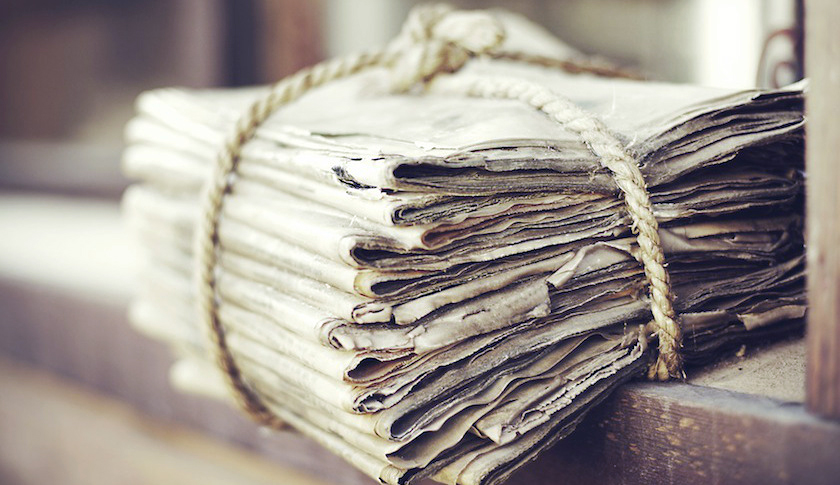
NewspapersPhotograph by Hachephotography/Getty Images/Flickr RF

As revenues continue to decline for newspapers in the U.S. and elsewhere, many have adopted paywalls or digital-subscription models, inspired by the New York Times’ metered access plan. But there have been a number of significant holdouts, and one of the most prominent is The Guardian in Britain. Now, the paper’s CEO says it may start to charge readers for content—does that mean its commitment to not having a paywall has crumbled?

Chief executive David Pemsel says no. What The Guardian has in mind, he says, is expanding its existing membership-based program, and potentially offering content to paying members that isn’t available to non-paying readers. As he described it in a recent interview:

That might mean producing some journalism which only our members can access but no, it’s not a paywall. A paywall is a very different route, which of course we have considered, but putting one up now would diminish our reach and influence around the world, which is the opposite of what we’re trying to do.

Isn’t this just semantic quibbling though? Isn’t a membership plan where some readers get access to content and others don’t just a paywall by another name? Some of the reaction to Pemsel’s comments implied that The Guardian is trying to do an end-run around the idea of a paywall and launch one without actually admitting to it.

In reality, however, a membership-based approach is very different from a one-size-fits-all paywall around your content, even a metered one.

A paywall is something that every reader runs into when they try to read something, and frequent readers run into the most. Eventually, some may respond to the nagging of the paywall police and subscribe, and in doing so they get access to everything. A membership plan turns this idea on its head: Instead of a penalty system, it’s a reward system—i.e., the most loyal members of an audience get access to new things.

News Corp. executive Raju Narisetti once called this a “reverse paywall.” Instead of penalizing your most frequent customers by having them run into a credit-card wall, you reward them with extra benefits.

Peretti: We want to make media for the way the world is today

The Guardian has had a membership-based model since 2014, and it involves special events such as readings or panel discussions, or local workshops on various topics. Other media outlets have also experimented with memberships, including Slate with Slate Plus, which offers exclusive access to stories and podcasts. The New York Times recently launched The Insider, which gives readers behind-the-scenes access to NYT journalists and special content.

Some digital-only entities have made a sustainable business out of this kind of membership reward program: TechDirt, a technology analysis site run by Mike Masnick, is built on memberships. Members get access to discussion forums and other benefits, and can even get access to content before non-paying members see it. The political news and commentary site Talking Points Memo is another example of a similar approach.

If it’s done properly, a membership model forces a media entity to change the way it thinks about its readers. Instead of “Hit them with a nagging popup and force them to pay,” the approach changes to “How can we figure out what they want and give it to them?”

Sign up for Data Sheet, Fortune’s technology newsletter.

USA Today columnist and media gadfly Michael Wolff wrote recently about the ongoing decline of print newspapers, and how the revenues from new digital efforts aren’t even close to filling the gap left by falling print ad sales. In order to make those numbers line up, papers will have to cut costs dramatically—but they will also have to figure out how to convince their readers to support them in more ways than they currently are.

One of those ways is a hard paywall, obviously. But that approach is fundamentally inflexible, and it treats every reader like every other reader. It’s a giant hammer, and so it treats every member of the audience as a nail.

It’s worth noting what Pemsel says about one of The Guardian’s main reasons for opposing a paywall: Namely, that the newspaper wants to expand its influence, not restrict it, and putting up a wall means the latter. That appears to be part of the reason why Britain’s Sun newspaper took its paywall down recently—because it had lost a huge proportion of its readership, and that meant it could not be as influential.

Former Guardian editor-in-chief Alan Rusbridger and current editor Katharine Viner have also talked about how having a paywall makes it inherently more difficult for a newspaper like The Guardian to engage in what Rusbridger called “open journalism,” where readers become part of the process. And a strong relationship with readers could be the only thing that saves both traditional print newspapers and the digital-only crowd from extinction.


About the Author
By Mathew Ingram
See full bioRight Arrow Button Icon

Latest in Tech

Finance
Lorem ipsum dolor sit amet, consectetur adipiscing elit, sed do eiusmod tempor incididunt ut labore et dolore magna aliqua. Ut enim ad minim veniam
By Fortune Editors
October 20, 2025
Finance
Lorem ipsum dolor sit amet, consectetur adipiscing elit, sed do eiusmod tempor incididunt ut labore et dolore magna aliqua. Ut enim ad minim veniam
By Fortune Editors
October 20, 2025
Finance
Lorem ipsum dolor sit amet, consectetur adipiscing elit, sed do eiusmod tempor incididunt ut labore et dolore magna aliqua. Ut enim ad minim veniam
By Fortune Editors
October 20, 2025
Finance
Lorem ipsum dolor sit amet, consectetur adipiscing elit, sed do eiusmod tempor incididunt ut labore et dolore magna aliqua. Ut enim ad minim veniam
By Fortune Editors
October 20, 2025
Finance
Lorem ipsum dolor sit amet, consectetur adipiscing elit, sed do eiusmod tempor incididunt ut labore et dolore magna aliqua. Ut enim ad minim veniam
By Fortune Editors
October 20, 2025
Finance
Lorem ipsum dolor sit amet, consectetur adipiscing elit, sed do eiusmod tempor incididunt ut labore et dolore magna aliqua. Ut enim ad minim veniam
By Fortune Editors
October 20, 2025

Most Popular

Finance
Lorem ipsum dolor sit amet, consectetur adipiscing elit, sed do eiusmod tempor incididunt ut labore et dolore magna aliqua. Ut enim ad minim veniam
By Fortune Editors
October 20, 2025
Finance
Lorem ipsum dolor sit amet, consectetur adipiscing elit, sed do eiusmod tempor incididunt ut labore et dolore magna aliqua. Ut enim ad minim veniam
By Fortune Editors
October 20, 2025
Finance
Lorem ipsum dolor sit amet, consectetur adipiscing elit, sed do eiusmod tempor incididunt ut labore et dolore magna aliqua. Ut enim ad minim veniam
By Fortune Editors
October 20, 2025
Finance
Lorem ipsum dolor sit amet, consectetur adipiscing elit, sed do eiusmod tempor incididunt ut labore et dolore magna aliqua. Ut enim ad minim veniam
By Fortune Editors
October 20, 2025
Finance
Lorem ipsum dolor sit amet, consectetur adipiscing elit, sed do eiusmod tempor incididunt ut labore et dolore magna aliqua. Ut enim ad minim veniam
By Fortune Editors
October 20, 2025
Finance
Lorem ipsum dolor sit amet, consectetur adipiscing elit, sed do eiusmod tempor incididunt ut labore et dolore magna aliqua. Ut enim ad minim veniam
By Fortune Editors
October 20, 2025
Fortune Secondary Logo
Rankings
  • 100 Best Companies
  • Fortune 500
  • Global 500
  • Fortune 500 Europe
  • Most Powerful Women
  • Future 50
  • World’s Most Admired Companies
  • See All Rankings
Sections
  • Finance
  • Fortune Crypto
  • Features
  • Leadership
  • Health
  • Commentary
  • Success
  • Retail
  • Mpw
  • Tech
  • Lifestyle
  • CEO Initiative
  • Asia
  • Politics
  • Conferences
  • Europe
  • Newsletters
  • Personal Finance
  • Environment
  • Magazine
  • Education
Customer Support
  • Frequently Asked Questions
  • Customer Service Portal
  • Privacy Policy
  • Terms Of Use
  • Single Issues For Purchase
  • International Print
Commercial Services
  • Advertising
  • Fortune Brand Studio
  • Fortune Analytics
  • Fortune Conferences
  • Business Development
About Us
  • About Us
  • Editorial Calendar
  • Press Center
  • Work At Fortune
  • Diversity And Inclusion
  • Terms And Conditions
  • Site Map
Fortune Secondary Logo
  • About Us
  • Editorial Calendar
  • Press Center
  • Work At Fortune
  • Diversity And Inclusion
  • Terms And Conditions
  • Site Map
  • Facebook icon
  • Twitter icon
  • LinkedIn icon
  • Instagram icon
  • Pinterest icon

Latest in Tech

daron acemoglu
AILayoffs
The Nobel laureate who co-wrote ‘Why Nations Fail’ warns U.S. democracy won’t survive unless these two things change
By Jake AngeloFebruary 22, 2026
4 hours ago
jesse
CommentaryDEI
A decade ago, I had a front row seat as Jesse Jackson held big tech firms accountable for being overwhelmingly white and male
By Brennan Nevada JohnsonFebruary 22, 2026
4 hours ago
Man wearing a suit awkwardly takes a video call on a laptop
Future of WorkInterview
Recruiter reveals broken Zoom interview etiquette: bathrobes, yoga, and outsourcing thinking to AI
By Nick LichtenbergFebruary 22, 2026
4 hours ago
werfel
CommentaryTaxes
Former IRS Commissioner: Here’s how we used AI to create immediate value when taxpayers scrutinized every dollar
By Danny WerfelFebruary 22, 2026
5 hours ago
LawMedia
DOJ probes Netflix’s power over filmmakers in Warner deal review
By Josh Sisco and BloombergFebruary 21, 2026
16 hours ago
Big TechTech
Microsoft CEO Satya Nadella says Bill Gates told him his big bet on OpenAI would be a flop: ‘Yeah, you’re going to burn this billion dollars’
By Marco Quiroz-GutierrezFebruary 21, 2026
1 day ago

Most Popular

placeholder alt text
Innovation
The U.S. spent $30 billion to ditch textbooks for laptops and tablets: The result is the first generation less cognitively capable than their parents
By Sasha RogelbergFebruary 21, 2026
1 day ago
placeholder alt text
Big Tech
Peter Thiel and other tech billionaires are publicly shielding their children from the products that made them rich
By Marco Quiroz-GutierrezFebruary 21, 2026
1 day ago
placeholder alt text
Startups & Venture
'I have a chip on my shoulder.' Phoebe Gates wants her $185 million AI startup Phia to succeed with 'no ties to my privilege or my last name'
By Sydney LakeFebruary 21, 2026
1 day ago
placeholder alt text
Success
40% of Stanford undergrads receive disability accommodations—but it's become a college-wide phenomenon as Gen Z try to succeed in the current climate
By Preston ForeFebruary 21, 2026
1 day ago
placeholder alt text
Success
Mark Cuban says AI won’t take your job anytime soon because it still acts like a hungover college intern—with a $100K price tag to show for it
By Preston ForeFebruary 20, 2026
2 days ago
placeholder alt text
Politics
Trump's plan B to impose new tariffs is also illegal because a balance-of-payments deficit doesn't exist, trade experts say
By Jason MaFebruary 21, 2026
22 hours ago

© 2026 Fortune Media IP Limited. All Rights Reserved. Use of this site constitutes acceptance of our Terms of Use and Privacy Policy | CA Notice at Collection and Privacy Notice | Do Not Sell/Share My Personal Information
FORTUNE is a trademark of Fortune Media IP Limited, registered in the U.S. and other countries. FORTUNE may receive compensation for some links to products and services on this website. Offers may be subject to change without notice.