• Home
  • News
  • Fortune 500
  • Tech
  • Finance
  • Leadership
  • Lifestyle
  • Rankings
  • Multimedia
Tech

How To Actually Motivate Employees To Exercise

By
Hilary Brueck
Hilary Brueck
Down Arrow Button Icon
By
Hilary Brueck
Hilary Brueck
Down Arrow Button Icon
February 16, 2016, 12:06 PM ET
US-IT-INTERNET-HEALTH-JAWBONE
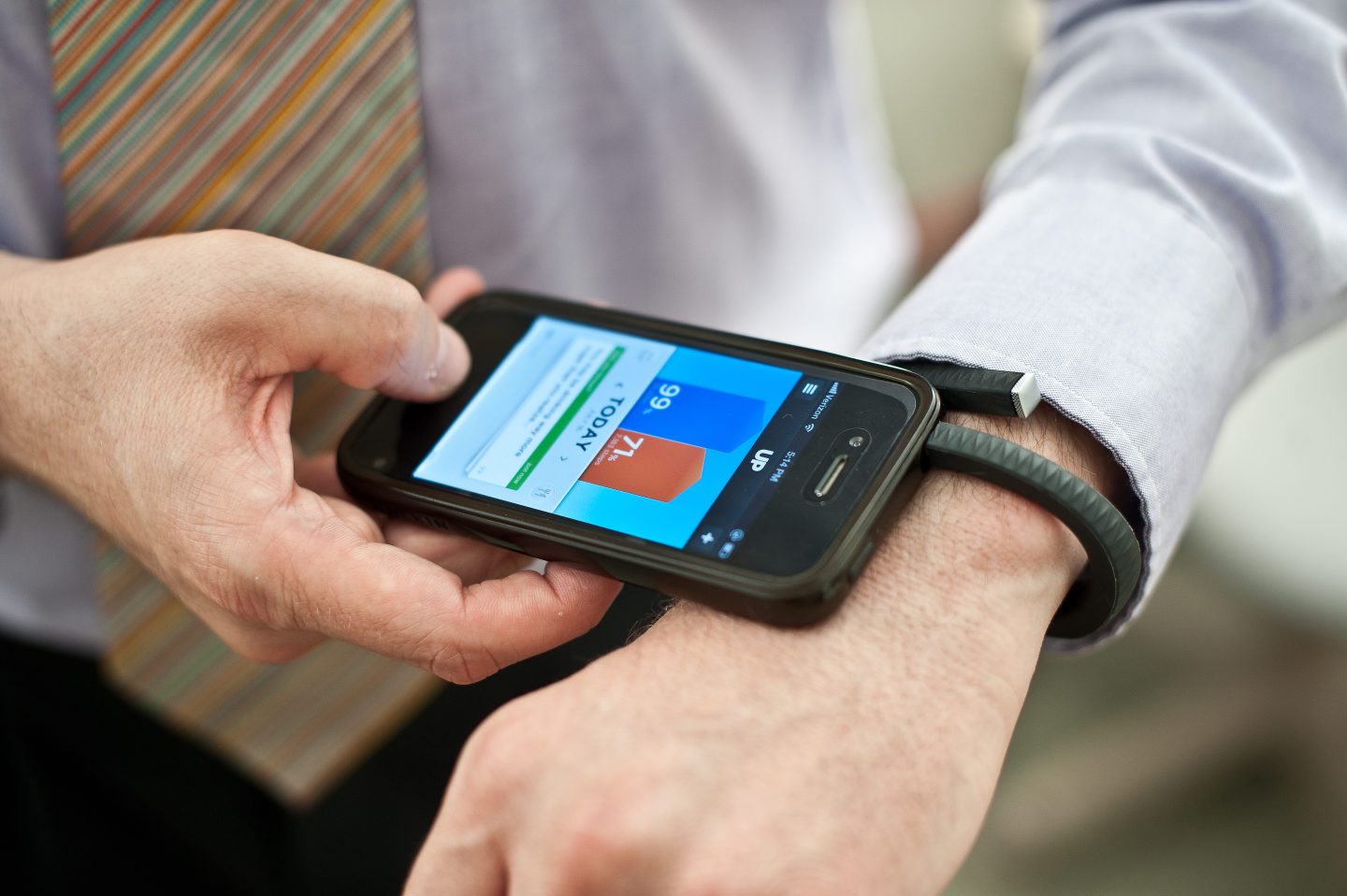
A man uses an UP fitness wristband and its smartphone application in Washington on July 16, 2013. Jawbone, the San Francisco-based company behind "smart" wireless earpieces and Jambox speakers, late last year released redesigned UP wristbands that combine fashion with smartphone lifestyles to help people along paths to improved fitness. UP wristbands are priced at $129 in the United States. UP applications tailored for Apple or Android mobile devices collect data from the bands to let people get pictures of activity, sleep, eating, and even moods on any given day or over time. AFP PHOTO/Nicholas KAMM (Photo credit should read NICHOLAS KAMM/AFP/Getty Images)Photograph by Nicholas Kamm — AFP/Getty Images

Wellness in the workplace is no longer a passing fad. Today, more than 80% of large employers in the U.S. use some kind of financial incentive to help employees get active. IBM even offers employees free or low-cost Apple Watches to track their progress.

But just how effective are all these rewards systems at motivating the desk-bound masses? A new study released in the Annals of Internal Medicine Monday suggests all the cash incentives may not be doing much to get employees moving.

In the study, 281 overweight and obese employees at the University of Pennsylvania were asked to carry their smartphones with them throughout the day to track their steps. Some were offered a daily cash bonus ($1.40) for hitting a target of 7,000 steps, and some weren’t.

Get Data Sheet, Fortune’stechnology newsletter.

Turns out, the workers who were offered a cash incentive were no more likely to increase their step counts than their peers. But the new research did point to a new and surprising solution for getting employees to up their fitness game.

The researchers gave a third group of employees that exact same $1.40 cash incentive upfront in a monthly exercise ‘piggy bank.’ Then, each day those employees didn’t meet their step count, they took the money out of their banks.

The researchers found the workers with ‘piggy banks’ hit their target step goal 50% more often than others.

So why is a program designed around losing an upfront cash haul so much more effective than a payout after-the-fact?

The answer is ingrained in what psychologists call ‘loss aversion.’ It’s the principle that we’ll typically work about twice as hard to keep something than we will to get something new.

The Surprising Company Perk That Can Boost Your Work Day

It’s a trick behavioral economists have known about for years. Lead study author Mitesh Patel says this new application for fitness is an encouraging one, especially because this study was only tracking overweight & obese employees.

“If we can engage a less motivated population, that’s evidence we should be doing this on a larger scale” Patel says.

Company wellness programs are already a boon for employers: Health policy journal Health Affairs estimates companies save more than $3 in medical costs for every dollar spent on wellness programs. But Patel says these programs don’t target all employees equally.

“Many of these wellness programs engage people that are really motivated,” he says.

The Consumer Revolution In Healthcare Is Approaching:

Patel says it’s all about figuring out how to design better incentives that include everyone, from building teams at work to lowering step counts for less active employees.

But when it comes to designing financial rewards, it’s important to remember: Employees can’t lose what they never had.


About the Author
By Hilary Brueck
See full bioRight Arrow Button Icon

Latest in Tech

LawInternet
A Supreme Court decision could put your internet access at risk. Here’s who could be affected
By Dave Lozo and Morning BrewDecember 2, 2025
6 hours ago
AITikTok
China’s ByteDance could be forced to sell TikTok U.S., but its quiet lead in AI will help it survive—and maybe even thrive
By Nicholas GordonDecember 2, 2025
7 hours ago
United Nations
AIUnited Nations
UN warns about AI becoming another ‘Great Divergence’ between rich and poor countries like the Industrial Revolution
By Elaine Kurtenbach and The Associated PressDecember 2, 2025
8 hours ago
Anthropic cofounder and CEO Dario Amodei
AIEye on AI
How Anthropic’s safety first approach won over big business—and how its own engineers are using its Claude AI
By Jeremy KahnDecember 2, 2025
8 hours ago
Nvidia founder and CEO Jensen Huang reacts during a press conference at the Asia-Pacific Economic Cooperation (APEC) CEO Summit in Gyeongju on October 31, 2025.
AINvidia
Nvidia CFO admits the $100 billion OpenAI megadeal ‘still’ isn’t signed—two months after it helped fuel an AI rally
By Eva RoytburgDecember 2, 2025
10 hours ago
Big TechInstagram
Instagram CEO calls staff back to the office 5 days a week to build a ‘winning culture’—while canceling every recurring meeting
By Marco Quiroz-GutierrezDecember 2, 2025
11 hours ago

Most Popular

placeholder alt text
Economy
Ford workers told their CEO 'none of the young people want to work here.' So Jim Farley took a page out of the founder's playbook
By Sasha RogelbergNovember 28, 2025
4 days ago
placeholder alt text
Success
Warren Buffett used to give his family $10,000 each at Christmas—but when he saw how fast they were spending it, he started buying them shares instead
By Eleanor PringleDecember 2, 2025
17 hours ago
placeholder alt text
Economy
Elon Musk says he warned Trump against tariffs, which U.S. manufacturers blame for a turn to more offshoring and diminishing American factory jobs
By Sasha RogelbergDecember 2, 2025
11 hours ago
placeholder alt text
C-Suite
MacKenzie Scott's $19 billion donations have turned philanthropy on its head—why her style of giving actually works
By Sydney LakeDecember 2, 2025
18 hours ago
placeholder alt text
Success
Forget the four-day workweek, Elon Musk predicts you won't have to work at all in ‘less than 20 years'
By Jessica CoacciDecember 1, 2025
1 day ago
placeholder alt text
AI
More than 1,000 Amazon employees sign open letter warning the company's AI 'will do staggering damage to democracy, our jobs, and the earth’
By Nino PaoliDecember 2, 2025
19 hours ago
Rankings
  • 100 Best Companies
  • Fortune 500
  • Global 500
  • Fortune 500 Europe
  • Most Powerful Women
  • Future 50
  • World’s Most Admired Companies
  • See All Rankings
Sections
  • Finance
  • Leadership
  • Success
  • Tech
  • Asia
  • Europe
  • Environment
  • Fortune Crypto
  • Health
  • Retail
  • Lifestyle
  • Politics
  • Newsletters
  • Magazine
  • Features
  • Commentary
  • Mpw
  • CEO Initiative
  • Conferences
  • Personal Finance
  • Education
Customer Support
  • Frequently Asked Questions
  • Customer Service Portal
  • Privacy Policy
  • Terms Of Use
  • Single Issues For Purchase
  • International Print
Commercial Services
  • Advertising
  • Fortune Brand Studio
  • Fortune Analytics
  • Fortune Conferences
  • Business Development
About Us
  • About Us
  • Editorial Calendar
  • Press Center
  • Work At Fortune
  • Diversity And Inclusion
  • Terms And Conditions
  • Site Map

© 2025 Fortune Media IP Limited. All Rights Reserved. Use of this site constitutes acceptance of our Terms of Use and Privacy Policy | CA Notice at Collection and Privacy Notice | Do Not Sell/Share My Personal Information
FORTUNE is a trademark of Fortune Media IP Limited, registered in the U.S. and other countries. FORTUNE may receive compensation for some links to products and services on this website. Offers may be subject to change without notice.