• Home
  • Latest
  • Fortune 500
  • Finance
  • Tech
  • Leadership
  • Lifestyle
  • Rankings
  • Multimedia
Commentaryflint

What Flint’s Water Crisis Means For The Future of U.S. Cities

By
Daniel Bergstresser
Daniel Bergstresser
Down Arrow Button Icon
By
Daniel Bergstresser
Daniel Bergstresser
Down Arrow Button Icon
January 27, 2016, 1:03 PM ET
Jesse Jackson Leads Rally Protesting Flint Water Crisis
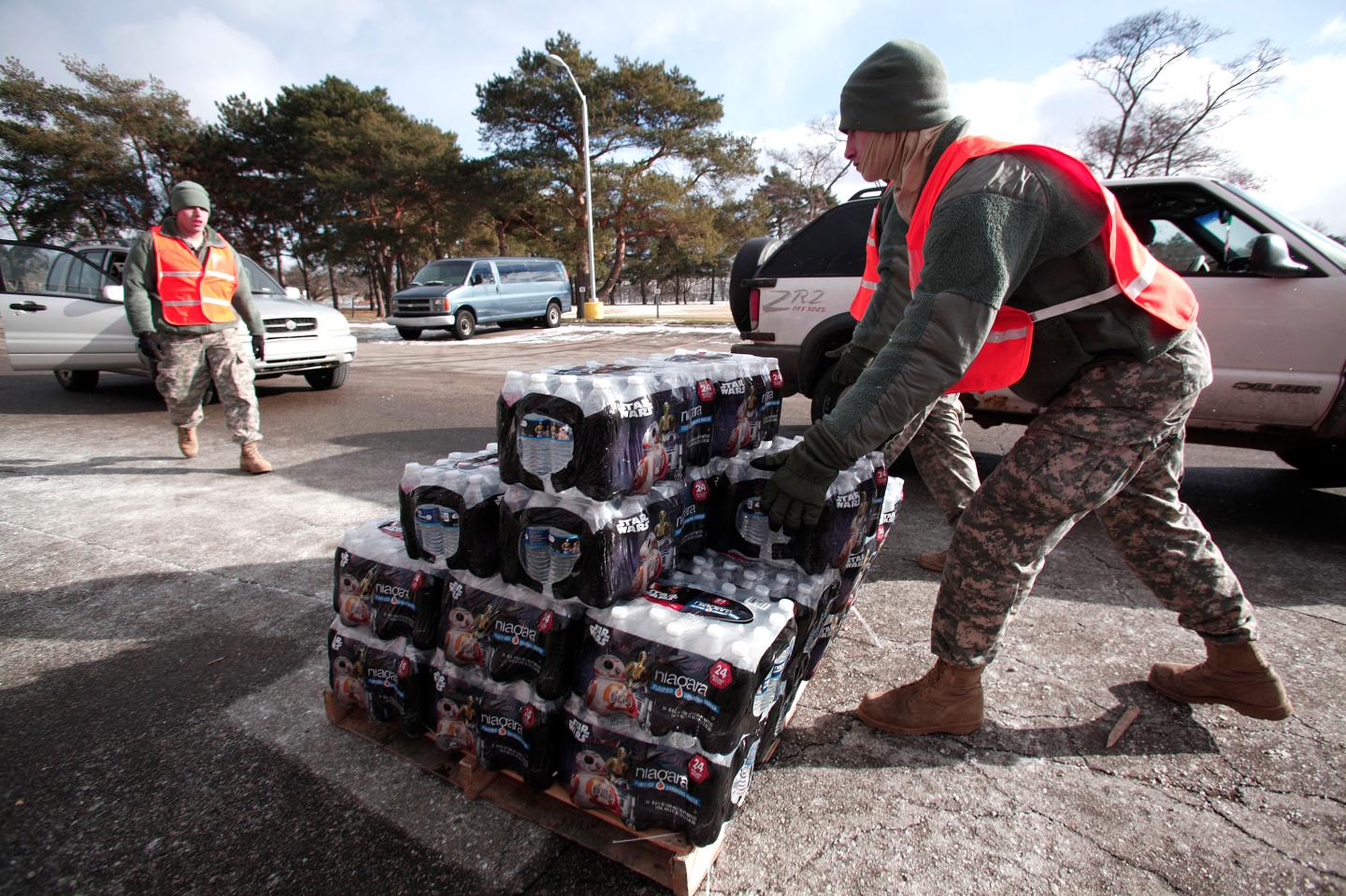
FLINT, MI - JANUARY 17: Soldiers from the Michigan Army National Guard Flint prepare to give Flint residents bottled water at a fire station January 17, 2016 in Flint, Michigan. U.S. President Barack Obama declared a federal emergency in Michigan, which will free up federal aid to help the city of Flint with lead contaminated drinking water. Michigan Gov. Rick Snyder requested emergency and disaster declarations after activating the National Guard to help the American Red Cross distribute water to residents. (Photo by Bill Pugliano/Getty Images)Photograph by Bill Pugliano—Getty Images

Harvard Business School Professor Max Bazerman defines a ‘predictable surprise’ as a situation where the relevant leaders have all of the data and insight needed to recognize the inevitability of a coming crisis, but fail to respond with effective preventative action. By that definition, the publicly-administered poisoning of the people of Flint, Michigan, has been a predictable surprise. This mass poisoning has been the inevitable outcome of decades of underinvestment in the city’s water infrastructure, coupled with more recent short-sighted cost-saving measures of a financially strapped government. The poisoning of Flint offers a vision of the future for the rest of us, should our nation fail to reinvest in a serious way in its aging infrastructure.

First, the Flint facts. Between 1964 and 2014, the cash-strapped city drew its water from the Detroit Water and Sewerage Department. In 2014, the state-appointed emergency manager abruptly switched from drawing water from Detroit to drawing from the city’s backup supply, the polluted Flint River. The goal was for financially-struggling Flint to save a few million dollars and eventually switch water supply to Lake Huron. But the new pipeline connecting Flint to the relatively clean water of Lake Huron was at then and remains unfinished.

The condition of Flint’s aging water infrastructure was no secret to anyone. Neither was the corrosive nature of the water that, starting in 2014, was pumped through these often lead-lined pipes. For reasons that are not entirely clear, no steps were taken to add corrosion inhibitors to the water; corrosion inhibitors could have at least partially prevented lead from leaching from the pipes into the water used by the city’s residents. In any case, the chemical reaction between the aging pipes and corrosive water was perfectly predictable, as was the massive release of lead into the city’s water supply.

The outcomes of this release of lead have also been predictable: since 2014, lead levels observed in Flint’s children spiked. These lead levels appear to have spiked the most in the neighborhoods that where the water lead levels, subsequent to the changeover in supply, were the highest. There is no safe level of lead for a developing brain, and early exposure to lead leads to consequences ranging from lower academic performance in childhood to higher levels of aggression and unplanned pregnancy in the teenage years and higher levels of criminal behavior in adulthood. The effects of the mass poisoning of Flint – a predictiable surprise – will be felt for generations.

Flint is a lesson for U.S. cities. Unless officials invest in upgrades to the nation’s infrastructure, other predictable surprises wait for Americans as well. The pain of these predictable surprises will often be felt most acutely by society’s most vulnerable populations. The recent example of my own city of Boston is a case in point. Until October of 2014, Boston Harbor’s Long Island housed and served hundreds of Boston’s homeless. The shelter served 400 people, and up to 300 other people, mostly women, were served by drug addiction and recovery programs located on the island. Long Island was connected to the rest of Boston by one bridge, constructed in 1951. That tether deteriorated, year after year, in full view of anyone who ever drove over or looked at its rusting metal. Maintenance that could have saved the bridge was deferred, and by June of 2014, the bridge had begun to buckle noticeably.

But the end, though it had long been in sight, came very abruptly. Late in the afternoon of October 8, the city’s engineers gave notice to the mayor that the bridge must close by the end of the day. Even though the bridge’s demise was perfectly foreseeable, the city was unprepared for the closure of the bridge. There was no plan in place for housing or continuing treatment for the people who depended on the island’s services. There was not even a plan in place for evacuating residents – once the city’s engineers declared that the bridge had a ‘zero tons’ rating, meaning that it was unsafe even for one car to cross, the island’s residents and staff were simply driven back out over the condemned bridge and dropped off on the mainland. Residents left food, clothing, medications, and their other possessions on the island. Because of city officials’ failure to maintain the infrastructure, and also their failure to plan for the inevitable consequences of this poor maintenance, hundreds of homeless and addicted Bostonians were thrown into the streets just before the most brutal winter in memory. Their suffering was the result of a predictable surprise.

The failures that I have described above have hit the very most vulnerable in our society, but we are all exposed to the disruptions that are caused by decaying infrastructure. Failure to reinvest and upgrade will continue to lead to predictable surprises of the sorts that I have described above: bridges will continue to fail, children’s lives will continue to be stunted by lead exposure, and our economy will continue to fail to reach its full potential. What is needed is a significant national plan for reinvesting in and upgrading all components of our infrastructure. Our continuing deferral of this needed reinvestment amounts to a national debt that is as real as the U.S. Treasury’s stock of borrowing from capital markets.

Three years ago, the American Society of Civil Engineers made an attempt to estimate the size of this infrastructure debt. They considered 16 different components of infrastructure, giving each one of them a letter grade reflecting its current state. The lowest grades – grades of D-minus – went to our nation’s levee system and our inland waterways. Schools, roads, transit, drinking water, and other components received grades of D. The ASCE estimated the total dollar value of our infrastructure debt at over $3 trillion – a large number, indeed. But failing to invest in infrastructure does not reduce our total national debt – it only shifts this debt from a financial form to the more physical and tangible form of unsafe bridges, levees, and water systems. And with this aging infrastructure, the failures, when they come, should not shock us at all. The failures will be predictable surprises.

Daniel Bergstresser is an associate professor of finance at Brandeis University’s International Business School.

About the Author
By Daniel Bergstresser
See full bioRight Arrow Button Icon

Latest in Commentary

Finance
Lorem ipsum dolor sit amet, consectetur adipiscing elit, sed do eiusmod tempor incididunt ut labore et dolore magna aliqua. Ut enim ad minim veniam
By Fortune Editors
October 20, 2025
Finance
Lorem ipsum dolor sit amet, consectetur adipiscing elit, sed do eiusmod tempor incididunt ut labore et dolore magna aliqua. Ut enim ad minim veniam
By Fortune Editors
October 20, 2025
Finance
Lorem ipsum dolor sit amet, consectetur adipiscing elit, sed do eiusmod tempor incididunt ut labore et dolore magna aliqua. Ut enim ad minim veniam
By Fortune Editors
October 20, 2025
Finance
Lorem ipsum dolor sit amet, consectetur adipiscing elit, sed do eiusmod tempor incididunt ut labore et dolore magna aliqua. Ut enim ad minim veniam
By Fortune Editors
October 20, 2025
Finance
Lorem ipsum dolor sit amet, consectetur adipiscing elit, sed do eiusmod tempor incididunt ut labore et dolore magna aliqua. Ut enim ad minim veniam
By Fortune Editors
October 20, 2025
Finance
Lorem ipsum dolor sit amet, consectetur adipiscing elit, sed do eiusmod tempor incididunt ut labore et dolore magna aliqua. Ut enim ad minim veniam
By Fortune Editors
October 20, 2025

Most Popular

Finance
Lorem ipsum dolor sit amet, consectetur adipiscing elit, sed do eiusmod tempor incididunt ut labore et dolore magna aliqua. Ut enim ad minim veniam
By Fortune Editors
October 20, 2025
Finance
Lorem ipsum dolor sit amet, consectetur adipiscing elit, sed do eiusmod tempor incididunt ut labore et dolore magna aliqua. Ut enim ad minim veniam
By Fortune Editors
October 20, 2025
Finance
Lorem ipsum dolor sit amet, consectetur adipiscing elit, sed do eiusmod tempor incididunt ut labore et dolore magna aliqua. Ut enim ad minim veniam
By Fortune Editors
October 20, 2025
Finance
Lorem ipsum dolor sit amet, consectetur adipiscing elit, sed do eiusmod tempor incididunt ut labore et dolore magna aliqua. Ut enim ad minim veniam
By Fortune Editors
October 20, 2025
Finance
Lorem ipsum dolor sit amet, consectetur adipiscing elit, sed do eiusmod tempor incididunt ut labore et dolore magna aliqua. Ut enim ad minim veniam
By Fortune Editors
October 20, 2025
Finance
Lorem ipsum dolor sit amet, consectetur adipiscing elit, sed do eiusmod tempor incididunt ut labore et dolore magna aliqua. Ut enim ad minim veniam
By Fortune Editors
October 20, 2025
Fortune Secondary Logo
Rankings
  • 100 Best Companies
  • Fortune 500
  • Global 500
  • Fortune 500 Europe
  • Most Powerful Women
  • World's Most Admired Companies
  • See All Rankings
  • Lists Calendar
Sections
  • Finance
  • Fortune Crypto
  • Features
  • Leadership
  • Health
  • Commentary
  • Success
  • Retail
  • Mpw
  • Tech
  • Lifestyle
  • CEO Initiative
  • Asia
  • Politics
  • Conferences
  • Europe
  • Newsletters
  • Personal Finance
  • Environment
  • Magazine
  • Education
Customer Support
  • Frequently Asked Questions
  • Customer Service Portal
  • Privacy Policy
  • Terms Of Use
  • Single Issues For Purchase
  • International Print
Commercial Services
  • Advertising
  • Fortune Brand Studio
  • Fortune Analytics
  • Fortune Conferences
  • Business Development
  • Group Subscriptions
About Us
  • About Us
  • Press Center
  • Work At Fortune
  • Terms And Conditions
  • Site Map
  • About Us
  • Press Center
  • Work At Fortune
  • Terms And Conditions
  • Site Map
  • Facebook icon
  • Twitter icon
  • LinkedIn icon
  • Instagram icon
  • Pinterest icon

Latest in Commentary

francis
CommentaryFlorida
Former Miami Mayor Francis Suarez: Why I’m joining Stephen Ross and Ken Griffin in betting big on ambitious business leaders
By Francis SuarezMay 1, 2026
2 hours ago
valerie
CommentaryLayoffs
Tesla’s former HR chief: the AI layoff panic Is built on a false premise—here’s what most workers need to know
By Valerie Capers WorkmanMay 1, 2026
3 hours ago
tamas
CommentaryPolymarket
SEON CEO: Prediction markets can forecast the future. Can they survive their own manipulation problem?
By Tamas KadarMay 1, 2026
6 hours ago
sundar
Commentary250 Years of Innovation
America at 250: immigration and the making of an innovative nation
By Nasser KazeminyMay 1, 2026
8 hours ago
Derek Kilmer
CommentaryEconomics
The U.S. economy is booming — just not where 50 million Americans live
By Derek KilmerMay 1, 2026
8 hours ago
hegseth
CommentaryMilitary
America shot its arsenal empty in 2 wars. Now it needs Beijing’s permission to reload
By Steve H. Hanke and Jeffrey WengApril 30, 2026
23 hours ago

Most Popular

China dominates the world's lithium supply. The U.S. just found 328 years' worth in its own backyard
North America
China dominates the world's lithium supply. The U.S. just found 328 years' worth in its own backyard
By Jake AngeloApril 30, 2026
22 hours ago
Accenture's Julie Sweet blew up 50 years of company history. She says the hardest part is still ahead
Conferences
Accenture's Julie Sweet blew up 50 years of company history. She says the hardest part is still ahead
By Nick LichtenbergApril 29, 2026
2 days ago
Apple cofounder Ronald Wayne—whose stake would be worth up to $400 billion had he not sold it in 1976—says that at 91, he has no regrets
Success
Apple cofounder Ronald Wayne—whose stake would be worth up to $400 billion had he not sold it in 1976—says that at 91, he has no regrets
By Preston ForeApril 27, 2026
4 days ago
The U.S. economy is booming — just not where 50 million Americans live
Commentary
The U.S. economy is booming — just not where 50 million Americans live
By Derek KilmerMay 1, 2026
8 hours ago
America shot its arsenal empty in 2 wars. Now it needs Beijing's permission to reload
Commentary
America shot its arsenal empty in 2 wars. Now it needs Beijing's permission to reload
By Steve H. Hanke and Jeffrey WengApril 30, 2026
23 hours ago
Exclusive: America's largest Black-owned bank launches podcast with mission to unlock hidden shame holding back generational wealth
Banking
Exclusive: America's largest Black-owned bank launches podcast with mission to unlock hidden shame holding back generational wealth
By Nick LichtenbergApril 29, 2026
2 days ago

© 2026 Fortune Media IP Limited. All Rights Reserved. Use of this site constitutes acceptance of our Terms of Use and Privacy Policy | CA Notice at Collection and Privacy Notice | Do Not Sell/Share My Personal Information
FORTUNE is a trademark of Fortune Media IP Limited, registered in the U.S. and other countries. FORTUNE may receive compensation for some links to products and services on this website. Offers may be subject to change without notice.