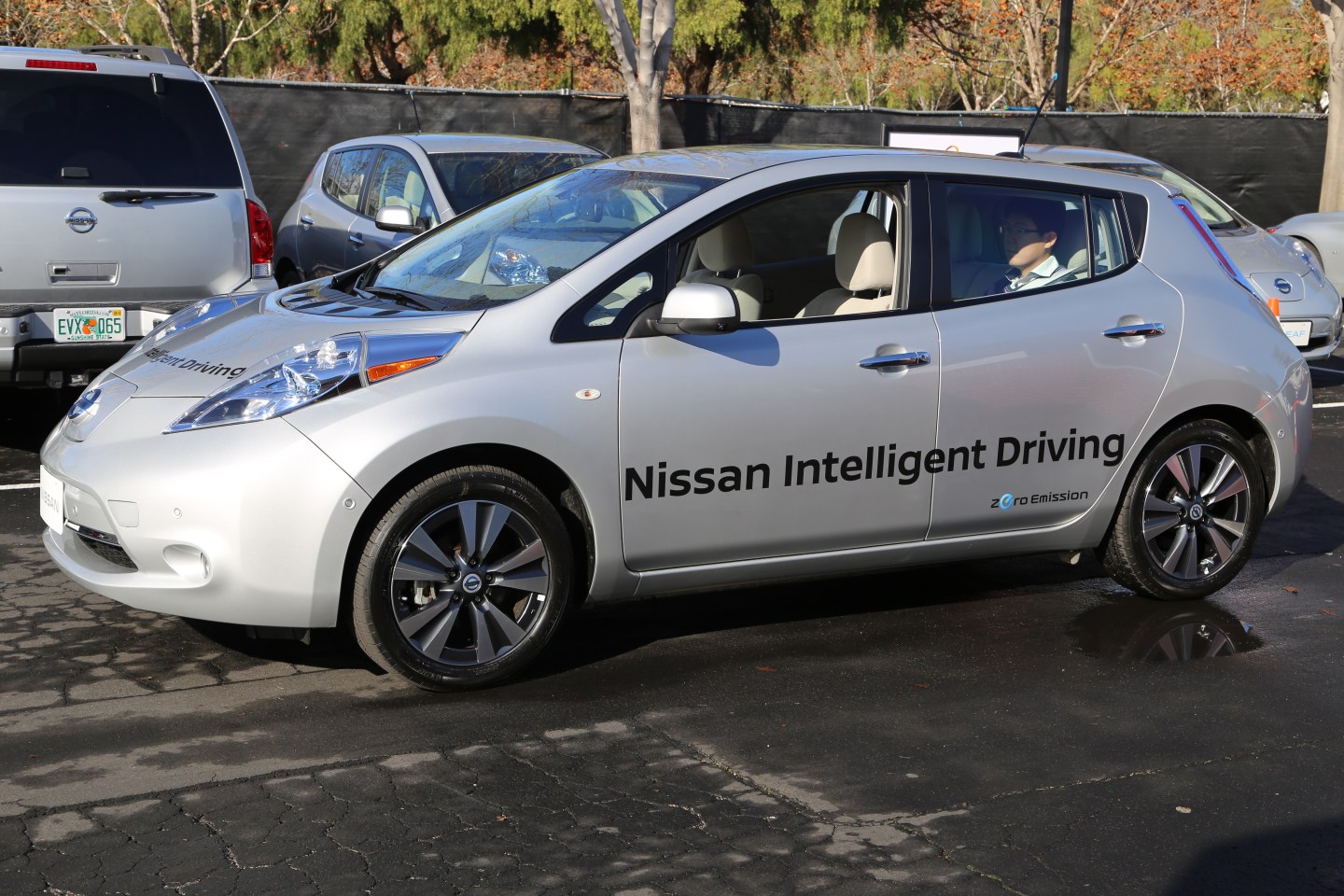
Last week, Japanese automaker Nissan showed off a prototype of a mobile app that could automatically park a LEAF electric car without a driver. Sensors and cameras helped the car find an open parking spot and then slowly ease into it.
It’s unclear exactly when Nissan might make self-parking available for the LEAF, or any of its others cars. A Nissan spokesperson told Fortune the company planned to offer something called “parking assist,” potentially in 2018.
Meanwhile this weekend, owners of the latest version of Tesla’s Model S electric car also got a glimpse of self-parking technology. By downloading some software, drivers could get their Model S cars to park on their own—today, not years from now.
Tesla and Nissan’s divergent strategies around self-parking cars highlights a pair of very different philosophies from two of the most important companies leading the electric car industry.
Nissan is using its large balance sheet and auto industry credentials to deliver new technology in a step-by-step manner to a mass market audience. Tesla is using its outsider status and tech industry roots to quickly deliver early technology to a more narrow and affluent audience in an entirely new way.
The opposite approaches put a spotlight on the early state of the electric car industry. But they also show how the tech industry and the auto sector are beginning to battle over the future of how cars are designed, made, and sold.
Tech companies like Google (GOOG) and Apple [fortune stock-symbol=”AAPL”] are rapidly building auto divisions. while the world’s biggest car companies are opening up Silicon Valley offices to tap into engineering talent and new ideas. At stake is the massive market for automobiles for drivers who are glued to cell phones, raised on ubiquitous data connections, and comfortable with car sharing and on-demand car services like Uber.
Nissan, in partnership with French giant Renault, has massive global reach through their sales of one in ten of all cars globally. Nissan, alone, expects an annual profit of $4.4 billion for fiscal year 2015, partly off the back of strong sales of traditional gas-powered SUVs in the U.S.
The 80-year-old company’s strategy is to bring both electric cars and autonomous car technology to the widest market possible at a price that mainstream consumers can afford. Over the past five years, Nissan has sold close to 300,000 electric vehicles including about 200,000 electric LEAFs, its pioneering electric car priced at around $30,000.
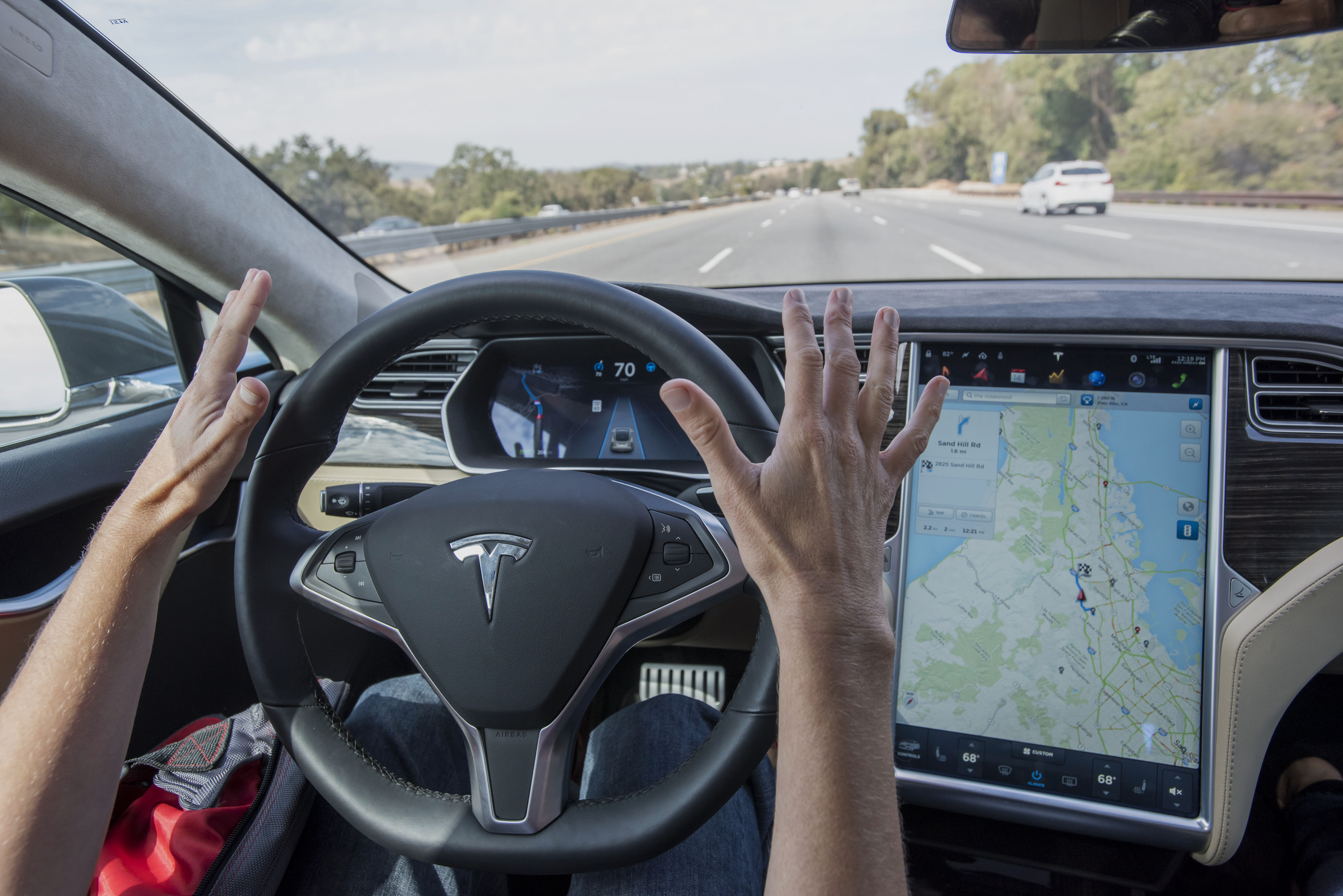
In contrast, 13-year old Silicon Valley darling Tesla (TSLA) has likely delivered close to 100,000 vehicles. That includes shipments of its electric Model S sedan, its Model X SUV, and its early Roadster sports cars (Tesla had delivered 90,000 Model S cars as of the end of November).
Although that amount is just a third of that of Nissan, the number is still remarkable considering it’s coming from a young upstart. Furthermore, Tesla CEO Elon Musk has accomplished it by following a different strategy to Nissan.
To date, many of Tesla’s cars have had six-figure price tags and high-end luxury features. While Tesla plans to launch a lower-priced electric Model 3 in 2017, its business was built by making electric cars for wealthy drivers.
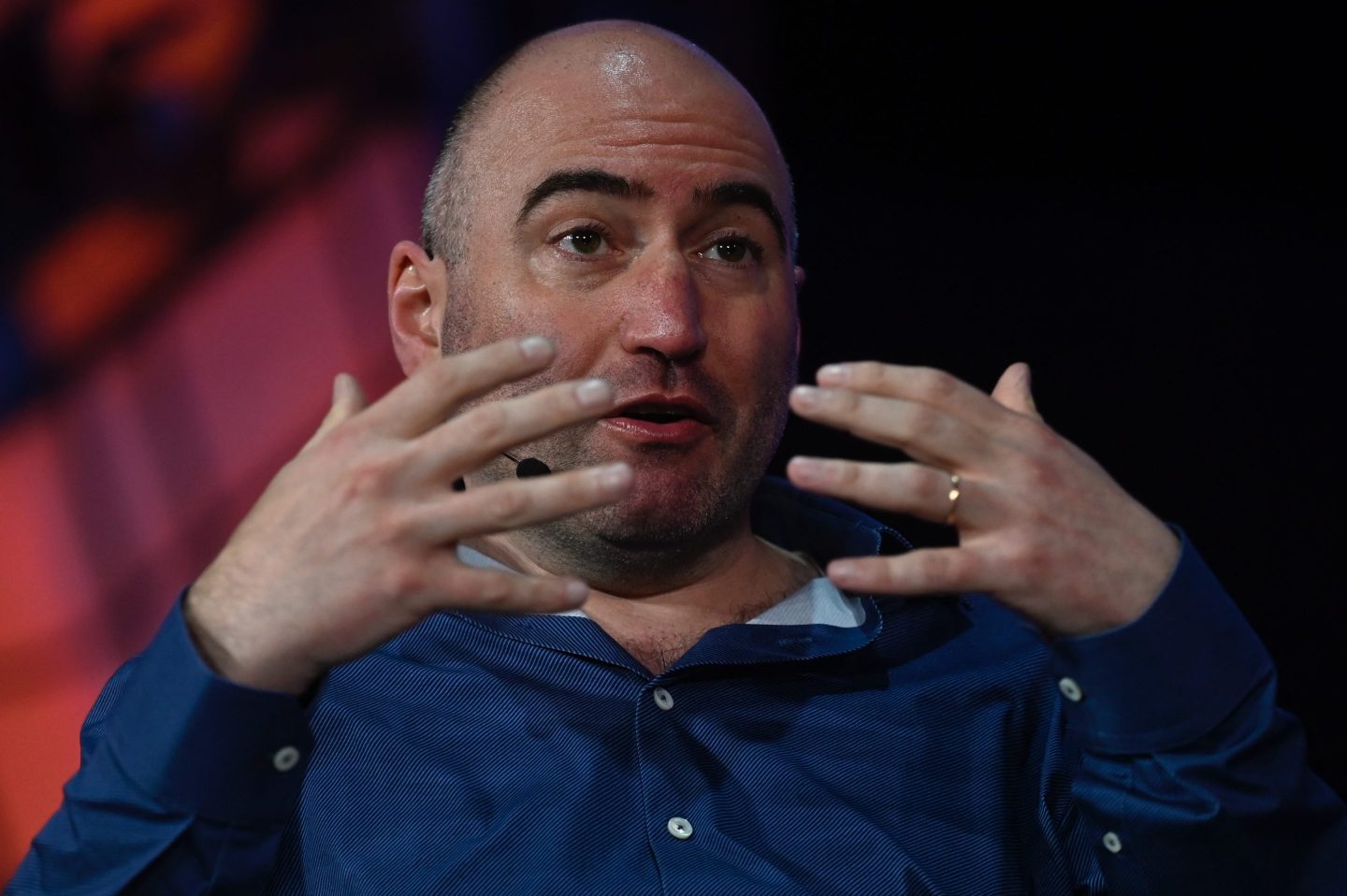
On the other hand, at Nissan’s event at its Silicon Valley office last week, CEO Carlos Ghosn emphasized the car company’s mass market goals. He referred to the $100,000 electric car as “a niche” and said that Nissan isn’t making autonomous technology to be “beta-tested on a few vehicles.” Neither comments directly referred to Tesla, but they easily could have.
Instead, Nissan plans to only add autonomous technology to its cars when the feature is inexpensive and widely available enough to work safely on a $30,000 car. The company says 10 of its models will get autonomous features over the next four years, and those cars will be “mainstream, mass-market cars at affordable prices.”
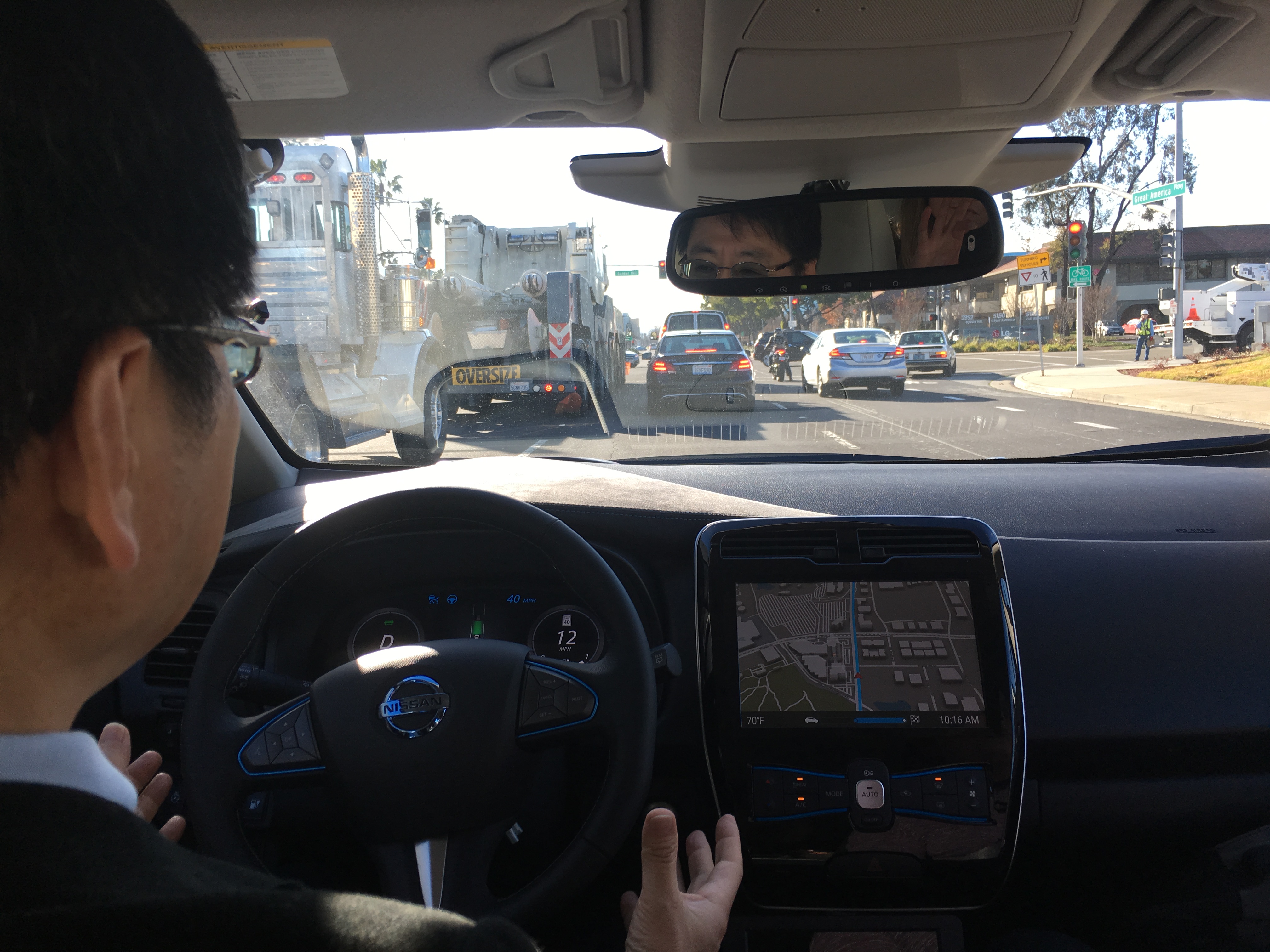
It’s a marked contrast to Tesla’s autonomous software upgrade this past weekend. Though Tesla doesn’t have the reach of Nissan (or profits yet), it is willing to move fast and push out innovative new features over its cars’ wireless connections.
More than any other car company in the world, Tesla has focused on using software and wireless connectivity to routinely upgrade its cars. This hardware and software infrastructure (and the company’s willingness to optimize it) is a huge advantage that lets Tesla act—or react—more quickly than pretty much any other automotive manufacturer.
But rolling out those features can also be risky. For example, in its latest software upgrade, Tesla also added new restrictions to its previously deployed autopilot features. The move was likely due to customers using autopilot to do some unsafe driving (and posting videos of that risky driving online). Unlike how Ghosn said Nissan isn’t releasing “beta” (early, sometimes unbaked versions) features to customers, Tesla appears to want to embrace that “beta” mentality.
WATCH: Tesla’s hands-free driving:
It may be the companies’ appetites for risk that is one of the biggest differences between Tesla and Nissan’s electric car strategies. Nissan’s initial move to sell electric cars carried some modest element of risk, but Tesla still operates like a startup, and is willing to pile on risk after risk. For example, Tesla is basically betting the farm on building a $5 billion battery factory outside Reno, Nev. that will churn out batteries for its Model 3 car.
Both companies are fundamentally shaping the nascent electric car industry. But their individual impact over the long term depends on whether you think the automotive industry will change through evolution or revolution.
The electric car industry is still very young, and many more cars on the road will be powered by batteries in the years to come. But the market will no doubt be shaped over time by how the most important companies get their first cars into the hands of customers.
Beyond electric cars, the auto industry, in general, is set to undergo significant transformation as cars become more connected, more shared, more on-demand, more autonomous, and more environmentally-friendly. Future drivers will be looking for a different car experience than their parents. Will it be the tech industry or the traditional auto industry that will more likely be able to win them over?