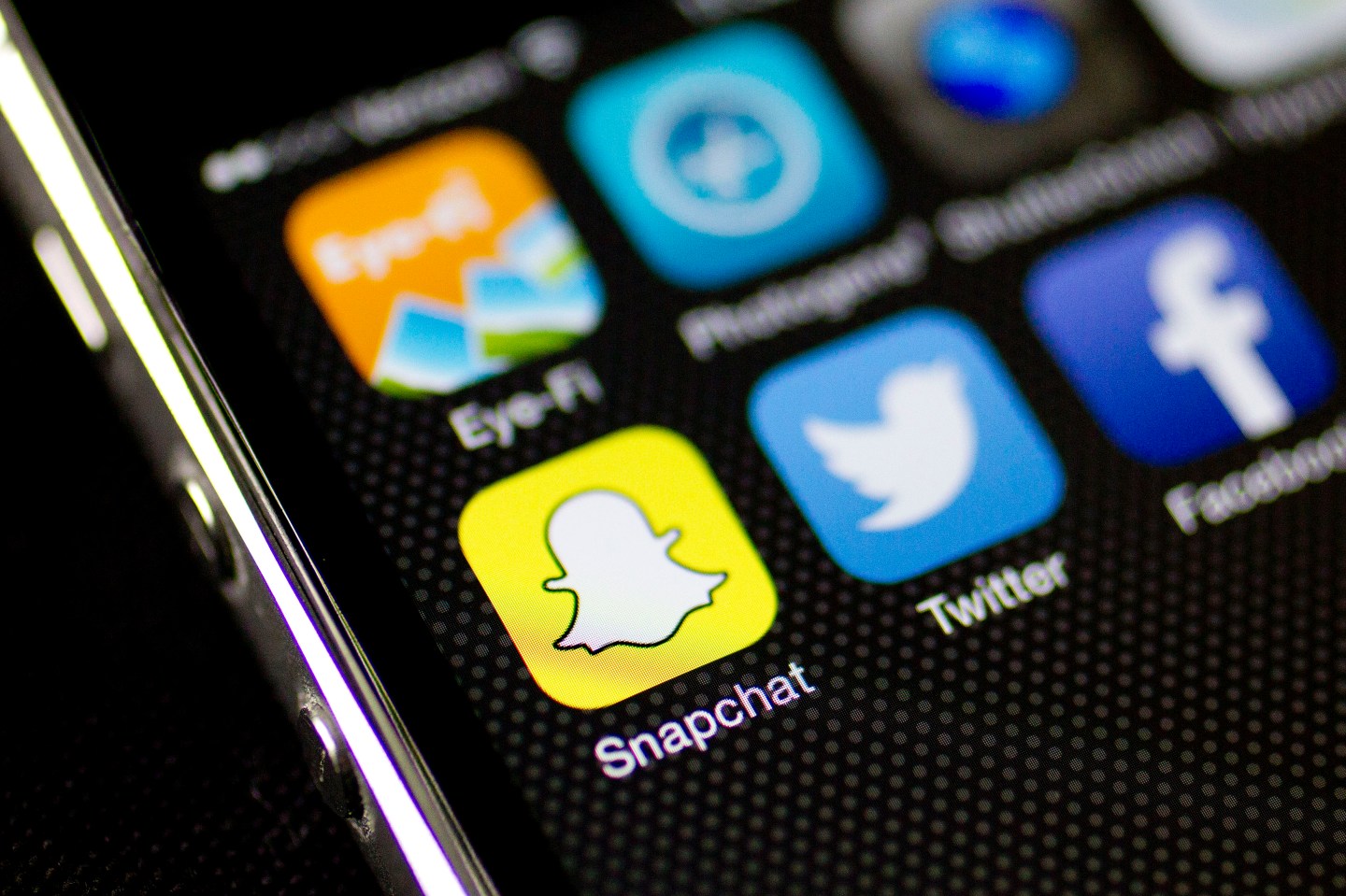
There’s no question that Snapchat is no longer seen as a toy, or an app designed to help teens get rid of their sex-related chats. It has become a major player in the media business, one that is worth an estimated $15 billion and has traditional publishers like The Wall Street Journal eager to be on its platform. But why is it so popular?
There are a number of reasons, including an early focus on short-form video and a user interface that seems designed specifically to keep old people out. But there’s more to it than that, according to Justin Kan, who founded Justin.tv and Twitch, the streaming video service that Amazon (AMZN) acquired in 2014 for almost $1 billion.
In a blog post on the Svbtle network, Kan says he—like many others—saw Snapchat as a toy designed for “sexting” in the early days, and eventually gave up trying to figure out its confusing interface. But he tried the app again recently, and says it has grown on him.
In particular, Kan likes the fact that Snapchat has no “time-sorted feed” or stream of updates, the way that other social apps and networks such as Facebook, Twitter, and Instagram do. You have to click on each person to get their content.
“There’s no combined feed. If someone wants to look at your s***, they have to click on you. There’s no public view count, follower count, likes count, or any other social dick-measuring contest. You can just put whatever you’re doing on Snapchat; if people don’t like it, who gives a f***, you’ll never know.”
What this means, Kan says, is that people who post things to Snapchat don’t have to think about how many people they are reaching, or how many “likes” or hearts their content is getting. This lack of social pressure was cited by many users in the early days of Snapchat as a big reason why they liked the fact that their messages automatically disappeared.
WATCH: Can Instagram stay ahead of Snapchat?
That kind of pressure turns traditional social-network feeds into streams of status-seeking posts, Kan argues, with everyone pretending that their life is an endless series of happy photos with their loving family, or shots of them hanging out with celebrities at fantastic parties.
“This has created a perverse environment where users are thrust into a social-proof arms race: they want to share cooler and more awesome stuff than their peers. Facebook turns into posts about job promotions, exotic vacations, kids’ accomplishments. Twitter is a competition to write the most retweeted witticisms.”
Removing that kind of social pressure and focusing on a much smaller group of followers and friends makes it much easier to share video of life events without having to worry about whether it’s compelling or not.
In a sense, Kan says that what Snapchat has done with Snapchat Stories—which allows users to upload multiple video clips about a specific event—makes it a much more successful version of what he and his co-founders were trying to create with Justin.tv, the company that eventually gave birth to Twitch.
SIGN UP: Get Data Sheet, Fortune’s daily newsletter about the business of technology.
Justin.tv, which Kan helped create in 2007, was an attempt to launch a “lifecasting” service, one that originally consisted of Kan walking around wearing a head-mounted camera all day and streaming the resulting video.
The Justin.tv team also created an Instagram-like side project called Socialcam, which was a little like Snapchat but involved streams that anyone could see. It failed to take off. “Most people aren’t good at creating generally interesting video,” Kan writes. “Consequently, the vast majority of users never created any video.”
But on Snapchat, he says, the emotional and psychological costs of making and sharing video are low. The content doesn’t have to be that good, because “it’s going to disappear anyways, and everyone else’s content isn’t that great either.”
In that sense, it’s a little like Twitch, Kan says. While you may not be interested in following the guy who plays Call of Duty all day, there are plenty of people out there who are. The audience self-selects by following who they want, and there’s no linear feed the way there is with Twitter or Facebook or Instagram to skew the results. It’s like everyone has a personalized TV channel.