• Home
  • Latest
  • Fortune 500
  • Finance
  • Tech
  • Leadership
  • Lifestyle
  • Rankings
  • Multimedia

Trendingnow

1

'Dr. Doom' Nouriel Roubini says we're headed for universal basic income or 'some form of socialism' as AI revolutionizes work—He calls that optimistic

2

Power companies are using eminent domain to seize land for data centers as 70% of Americans say not in my backyard

3

Indeed chief economist: Aging Baby Boomers are America's real labor problem, not AI

1

'Dr. Doom' Nouriel Roubini says we're headed for universal basic income or 'some form of socialism' as AI revolutionizes work—He calls that optimistic

2

Power companies are using eminent domain to seize land for data centers as 70% of Americans say not in my backyard

3

Indeed chief economist: Aging Baby Boomers are America's real labor problem, not AI
Commentaryclimate change

The Climate Risk No One Is Talking About

By
Peter Zaffino
Peter Zaffino
Down Arrow Button Icon
By
Peter Zaffino
Peter Zaffino
Down Arrow Button Icon
December 15, 2015, 6:00 AM ET
A Changing World 2012 Best Photos Bloomberg
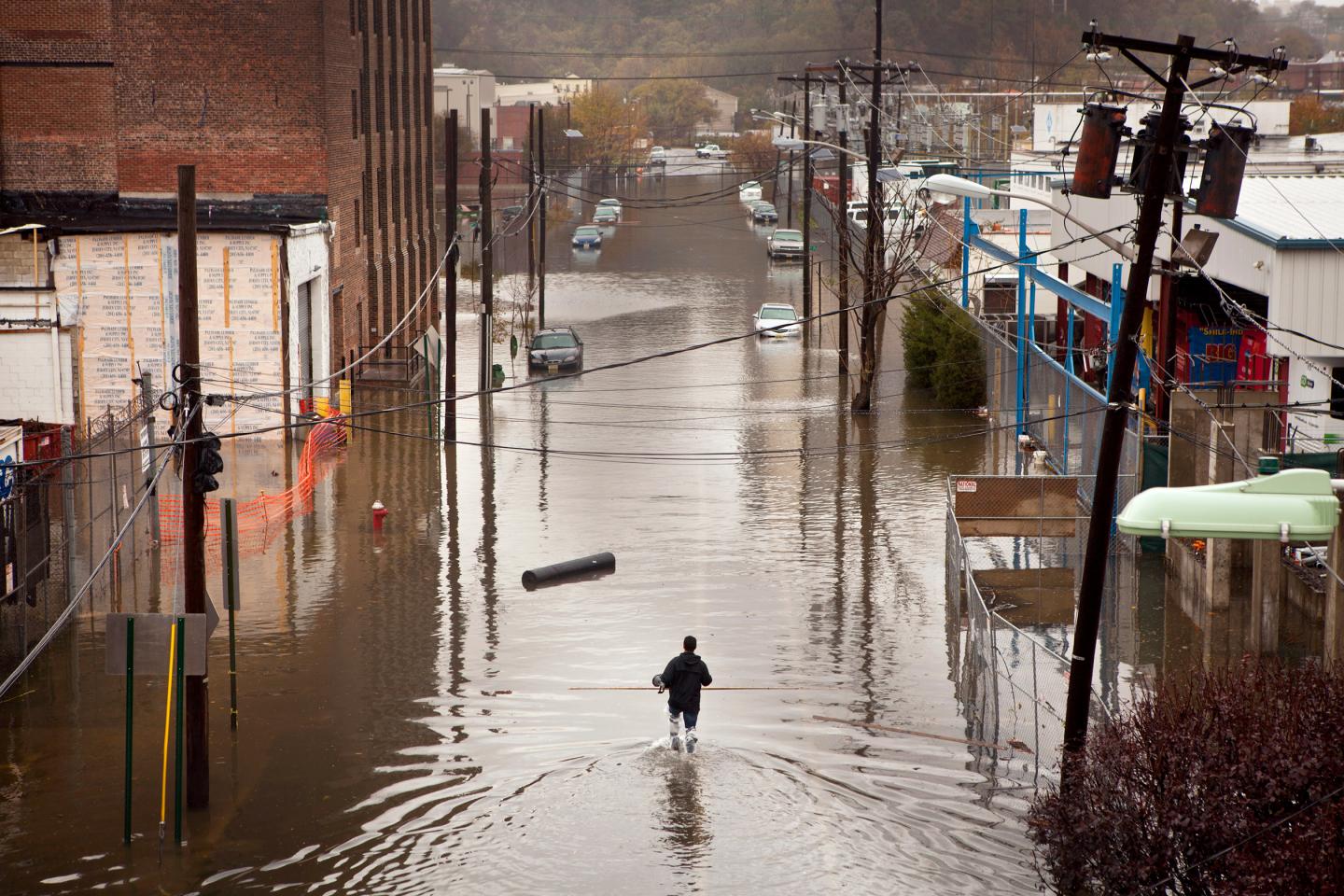
Bloomberg's Best Photos 2012: A Changing World As another year of tumultuous events unfolded across the globe, we witnessed Greece's battle with austerity cuts, the European Union near a breaking point, devastation and destruction as Hurricane Sandy swept along the U.S. East Coast and the bleak landscapes of Japan's Fukushima province a year after the tsunami. As the stories unfolded, there to record it all was Bloomberg's team of award-winning photographers, capturing poignant and compelling imagery, see their work here in a Changing World. FILE PHOTO: "BEST PHOTOS OF 2012" (***BESTOF2012***): A man walks through flood waters in Hoboken, New Jersey, U.S., on Tuesday, Oct. 30, 2012. The Atlantic storm Sandy left a landscape of devastation across much of New Jersey, tearing apart seaside resort towns, ripping houses from foundations and littering the turnpike with rail cars and debris. Photographer: Emile Wamsteker/Bloomberg via Getty ImagesGetty Images
Add Fortune on Google for similar content.

Ministers from across the world gathered in Paris over the weekend to hammer out the details of a sweeping climate accord to limit carbon emissions and slow the pace of global warming.

While many are applauding the landmark deal, it will do little to address the financial threat millions of Americans face from increasingly severe flooding. To do so, U.S. policymakers must act to reauthorize the National Flood Insurance Program (“NFIP”) before its expiration in September of 2017.

The NFIP helps to reduce the socio-economic impact of flood disasters by providing homeowners and businesses with up to $250,000 of insurance coverage. In order to ensure that NFIP remains financially viable over time and able to withstand the heightened, climate-induced costs of the modern era, U.S. policymakers should act now to reform it.

Failure to act will leave millions of Americans exposed to financial damages they can ill-afford, potentially creating another obstacle to America’s long-term economic growth. Reform to the NFIP would expand the size of the risk community it covers by increasing the number of residential and commercial policyholders as well as homeowners and businesses at risk of flood. NFIP reform would also share risk with the private sector, and bring modern technology to enhance the program’s administration.

Since its inception in 1968, the National Flood Insurance Program has served as the bedrock of flood insurance coverage in the United States. Today, more than 22,000 communities in all of the 50 states and U.S. territories participate in the NFIP. The program draws on the knowledge of a wide range of experts to structure, price, and administer flood insurance policies, and has historically subsidized a significant portion of its coverage to promote widespread access.

It is difficult to overstate the NFIP’s importance. Floods are the number one natural disaster in the United States affecting thousands of businesses, homeowners, and ordinary citizens every year. A major flood can result in billions of dollars in property damage and business interruption losses. Between 1980 and 2013, floods caused more than $260 billion in damages, according to the U.S. Treasury.

Despite these costs, from 1968 until September 2005, the NFIP was primarily self-funded, covering most of its costs from revenue generated through normal business operations. Since that time, the NFIP’s finances have become increasingly challenged.

Currently, the NFIP does not have the ability to fund catastrophic events through policy premiums. However, such events have become increasingly commonplace. According to the National Hurricane Center, the Atlantic hurricane season in 2005 was one of the most active on record, including hurricanes Katrina, Rita, and Wilma. These three storms caused billions of dollars in losses along the Gulf Coast and the Eastern seaboard, sending the NFIP approximately $19 billion into debt, only $2 billion of which has been repaid.

Excluding the debt from the 2005 storms, the NFIP was self-funded again from 2006 until October 2012. However, Superstorm Sandy in 2012 created an additional $7 billion in debt from insured damages, primarily in New Jersey and New York, resulting in a current $23 billion debt to the US Treasury.

While large financial losses from hurricanes are nothing new, the frequency and intensity of these losses have grown in recent years. What’s equally clear is the NFIP, as currently structured, will not remain financially solvent going forward. Congressional debate on the reauthorization of the NFIP, in the lead-up to its expiration on September 30, 2017, presents an important opportunity to ensure the program’s long-term sustainability and the viability of the U.S. flood insurance market, more generally.

So, what must be done?

First, legislators must increase the size of the NFIP’s risk community. As with any insurance market, having a diverse and large number of policyholders is essential to spreading and balancing risk. The NFIP can help achieve this by better enforcing existing mandatory flood insurance purchase requirements. Lawmakers should encourage mortgage financiers to make certain that homeowners who should have the protection of

NFIP flood coverage actually purchase a policy, which should spread risk in a more balanced way and improve the NFIP’s financial position. Second, Congress must find a way to share NFIP risk with the private sector. Under the current system, the federal government assumes the vast majority of flood risk, including through underwriting this risk, overseeing risk mitigation initiatives, and providing emergency funding to communities in the aftermath of a flood disaster, as it did in the case of Hurricane Katrina.

Greater private participation in flood insurance markets could take many forms, including direct coverage, reinsurance, or jointly underwriting flood risk with the government and other private insurers. But any model that reduces the financial burden the government faces in its near-exclusive underwriting of flood insurance risk would allow it to invest in mitigation activities that could save billions of dollars in damages over time.

Finally, policymakers must bring the NFIP itself into the modern area. The program still uses technologies and business techniques that are outdated and perhaps obsolete. Policy holders often have to pay hundreds of dollars for repeated certification inspections that use outdated capabilities.

Modernizing reforms should replace physical inspections by using data sources like GPS and remote sensing technology, and employ data analytic tools to predict and model floods before they occur. Capitalizing on modern technology and business practices would both reduce the NFIP’s administrative costs and increase revenue by incentivizing more people to participate in the program.

Global leaders are to be applauded for their efforts to identify global solutions. At the same time, policymakers here in the United States must also do their part to provide solutions to protect Americans from the financial damages of severe flooding. Acting now, to jumpstart the process of reforming the NFIP to meet the new risks of our changing world would be a terrific place to start.

Peter Zaffino is president and chief executive officer of Marsh, and chairman of Marsh & McLennan Companies’ Risk & Insurance Services segment.

About the Author
By Peter Zaffino
See full bioRight Arrow Button Icon
Add Fortune on Google for similar content.

Latest in Commentary

Finance
Lorem ipsum dolor sit amet, consectetur adipiscing elit, sed do eiusmod tempor incididunt ut labore et dolore magna aliqua. Ut enim ad minim veniam
By Fortune Editors
October 20, 2025
Finance
Lorem ipsum dolor sit amet, consectetur adipiscing elit, sed do eiusmod tempor incididunt ut labore et dolore magna aliqua. Ut enim ad minim veniam
By Fortune Editors
October 20, 2025
Finance
Lorem ipsum dolor sit amet, consectetur adipiscing elit, sed do eiusmod tempor incididunt ut labore et dolore magna aliqua. Ut enim ad minim veniam
By Fortune Editors
October 20, 2025
Finance
Lorem ipsum dolor sit amet, consectetur adipiscing elit, sed do eiusmod tempor incididunt ut labore et dolore magna aliqua. Ut enim ad minim veniam
By Fortune Editors
October 20, 2025
Finance
Lorem ipsum dolor sit amet, consectetur adipiscing elit, sed do eiusmod tempor incididunt ut labore et dolore magna aliqua. Ut enim ad minim veniam
By Fortune Editors
October 20, 2025
Finance
Lorem ipsum dolor sit amet, consectetur adipiscing elit, sed do eiusmod tempor incididunt ut labore et dolore magna aliqua. Ut enim ad minim veniam
By Fortune Editors
October 20, 2025

Most Popular

Finance
Lorem ipsum dolor sit amet, consectetur adipiscing elit, sed do eiusmod tempor incididunt ut labore et dolore magna aliqua. Ut enim ad minim veniam
By Fortune Editors
October 20, 2025
Finance
Lorem ipsum dolor sit amet, consectetur adipiscing elit, sed do eiusmod tempor incididunt ut labore et dolore magna aliqua. Ut enim ad minim veniam
By Fortune Editors
October 20, 2025
Finance
Lorem ipsum dolor sit amet, consectetur adipiscing elit, sed do eiusmod tempor incididunt ut labore et dolore magna aliqua. Ut enim ad minim veniam
By Fortune Editors
October 20, 2025
Finance
Lorem ipsum dolor sit amet, consectetur adipiscing elit, sed do eiusmod tempor incididunt ut labore et dolore magna aliqua. Ut enim ad minim veniam
By Fortune Editors
October 20, 2025
Finance
Lorem ipsum dolor sit amet, consectetur adipiscing elit, sed do eiusmod tempor incididunt ut labore et dolore magna aliqua. Ut enim ad minim veniam
By Fortune Editors
October 20, 2025
Finance
Lorem ipsum dolor sit amet, consectetur adipiscing elit, sed do eiusmod tempor incididunt ut labore et dolore magna aliqua. Ut enim ad minim veniam
By Fortune Editors
October 20, 2025
Fortune Secondary Logo
Rankings
  • 100 Best Companies
  • Fortune 500
  • Global 500
  • Fortune 500 Europe
  • Most Powerful Women
  • World's Most Admired Companies
  • See All Rankings
  • Lists Calendar
Sections
  • Finance
  • Fortune Crypto
  • Features
  • Leadership
  • Health
  • Commentary
  • Success
  • Retail
  • Mpw
  • Tech
  • Lifestyle
  • CEO Initiative
  • Asia
  • Politics
  • Conferences
  • Europe
  • Newsletters
  • Personal Finance
  • Environment
  • Magazine
  • Education
Customer Support
  • Frequently Asked Questions
  • Customer Service Portal
  • Privacy Policy
  • Terms Of Use
  • Single Issues For Purchase
  • International Print
Commercial Services
  • Advertising
  • Fortune Brand Studio
  • Fortune Analytics
  • Fortune Conferences
  • Business Development
  • Group Subscriptions
About Us
  • About Us
  • Press Center
  • Work At Fortune
  • Terms And Conditions
  • Site Map
  • About Us
  • Press Center
  • Work At Fortune
  • Terms And Conditions
  • Site Map
  • Facebook icon
  • Twitter icon
  • LinkedIn icon
  • Instagram icon
  • Pinterest icon

Latest in Commentary

ranch
CommentaryWorld Cup
Ranch dressing is quietly doing America’s diplomacy for it
By David BohigianJuly 19, 2026
16 hours ago
jt
CommentaryRetirement
Gen X built their whole identity on never needing help. Retirement is the one door they can’t unlock alone
By Jeanne ThompsonJuly 19, 2026
19 hours ago
biden
CommentaryLeadership
Ginsburg and Biden’s blind spot: when leaders don’t know when to leave
By Michael SonnenfeldtJuly 19, 2026
19 hours ago
time
CommentaryDaylight Saving Time
It’s time to dump time zones
By Steve H. HankeJuly 18, 2026
2 days ago
Svenja Gudell, Chief Economist, Indeed
Commentaryaging
Indeed chief economist: Aging Baby Boomers are America’s real labor problem, not AI
By Svenja GudellJuly 18, 2026
2 days ago
shelton
Commentarydisruption
Former Obama official on AI anxiety and the depression nobody remembers — and the training model that gives him hope
By Jim SheltonJuly 17, 2026
3 days ago

Most Popular

'Dr. Doom' Nouriel Roubini says we're headed for universal basic income or 'some form of socialism' as AI revolutionizes work—He calls that optimistic
AI
'Dr. Doom' Nouriel Roubini says we're headed for universal basic income or 'some form of socialism' as AI revolutionizes work—He calls that optimistic
By Jason MaJuly 18, 2026
1 day ago
Power companies are using eminent domain to seize land for data centers as 70% of Americans say not in my backyard
AI
Power companies are using eminent domain to seize land for data centers as 70% of Americans say not in my backyard
By Aaron Walayat and The ConversationJuly 19, 2026
20 hours ago
Indeed chief economist: Aging Baby Boomers are America's real labor problem, not AI
Commentary
Indeed chief economist: Aging Baby Boomers are America's real labor problem, not AI
By Svenja GudellJuly 18, 2026
2 days ago
Iran just crossed Trump's red line for resuming all-out war as fighting continues to escalate with no end in sight
Middle East
Iran just crossed Trump's red line for resuming all-out war as fighting continues to escalate with no end in sight
By Jason MaJuly 18, 2026
1 day ago
Red Lobster’s 37-year-old CEO waited tables before joining the C-suite—he says it was a crash course in managing ‘difficult people and situations’
Success
Red Lobster’s 37-year-old CEO waited tables before joining the C-suite—he says it was a crash course in managing ‘difficult people and situations’
By Preston ForeJuly 19, 2026
21 hours ago
U.S. companies have finally gotten $71 billion in tariff refunds, but they’re using it to offset inflation caused by the Iran war
Economy
U.S. companies have finally gotten $71 billion in tariff refunds, but they’re using it to offset inflation caused by the Iran war
By Sasha RogelbergJuly 17, 2026
3 days ago

© 2026 Fortune Media IP Limited. All Rights Reserved. Use of this site constitutes acceptance of our Terms of Use and Privacy Policy | CA Notice at Collection and Privacy Notice | Do Not Sell/Share My Personal Information
FORTUNE is a trademark of Fortune Media IP Limited, registered in the U.S. and other countries. FORTUNE may receive compensation for some links to products and services on this website. Offers may be subject to change without notice.