• Home
  • Latest
  • Fortune 500
  • Finance
  • Tech
  • Leadership
  • Lifestyle
  • Rankings
  • Multimedia
CommentaryIBM

Why IBM’s #HackAHairDryer Campaign Failed

By
Jennifer Sand
Jennifer Sand
Down Arrow Button Icon
By
Jennifer Sand
Jennifer Sand
Down Arrow Button Icon
December 10, 2015, 3:00 PM ET
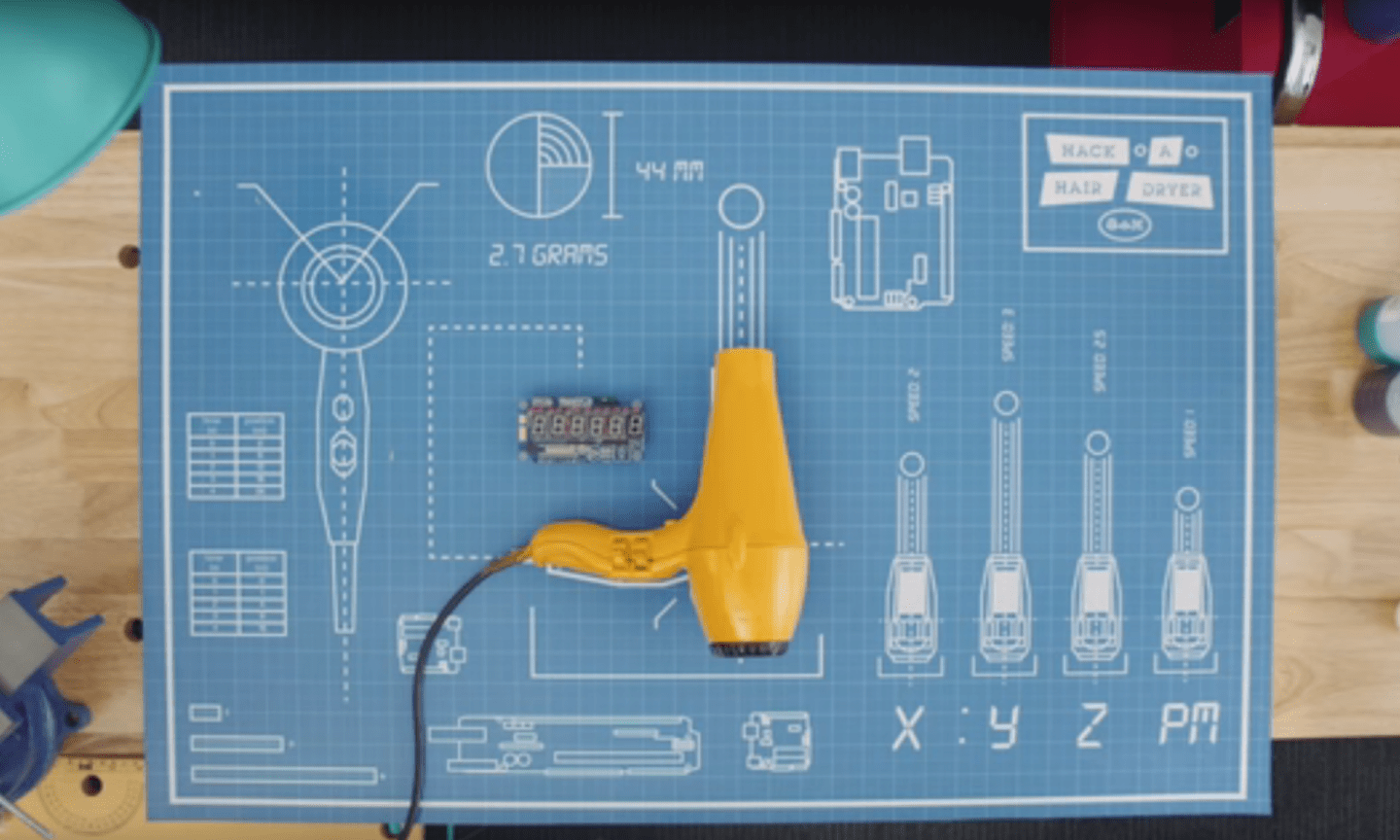
Screenshot taken from IBM's video.

This week, the Internet uproared over IBM’s #HackAHairDryer campaign. IBM’s (IBM) project asked women to get involved in STEM careers by asking them to “give a hairdryer a fresh new use”. On the heels of yet another misguided effort to promote girls in technology — Preemadonna, a company that focuses on using technology to provide lifestyle products for women and girls recently launched NailBot, a nail-printing device — companies need to rethink their strategy when it comes to closing the gender gap in technology. Initiatives like IBM’s #HackAHairDryer and Nailbot are well-intentioned. That said, “feminizing” science and technology in order to attract female talent propagates the myth that math, science, and technology are somehow inherently “un-feminine,” directly conflicting with the good intentions of these initiatives.

I own (and use) a hairdryer. I regularly get manicures. I also like skirts, ruffles, and high heels. None of these things has much to do with current technology, at least for me. That sort of ‘forced feminism’ to make technology more relatable to women backfires because it’s heavily reliant on stereotypes. I work with other women in technology who wouldn’t be caught dead wearing pink; would prefer to let their hair air-dry; and skip the polish in favor of natural nails. They are no less feminine than me.

Not only that, but for girls and women who do pursue education and careers in STEM, the last thing they want is to be good at something “for a girl.” These types of initiatives feel like they’re setting a different bar for women as if they somehow can’t be expected to be held to the same standard as their male counterparts. Take the recent commentary by Sequoia Capital Chairman Sir Michael Moritz. When asked why his venture capital firm does not employ more female partners, he said, “We look very hard,” but they’re “not prepared to … lower [their] standards”. This underlying notion that women cannot meet or exceed the same high standards is so pervasive in our culture that these types of unintended comments just slip out naturally. I have no doubt that Moritz does not feel overtly misogynistic, but I also cannot ignore the undertones of his statements.

The intent behind the IBM campaign was to promote women currently in technology careers by inviting them to “re-engineer what matters in science.” Apparently what matters in science to women is equivalent to hairdryers. Unfortunately, most of us are too busy solving actual world problems to spend time rethinking the use of a common hairdryer in order to participate in a gimmicky campaign. The exact thing that IBM did wrong points out the precise thing that the technology world needs to do right in order to promote women in technology and retain women in technology fields, namely demonstrating that a career in STEM is an opportunity to make a positive impact. Those of us who do work in technology fields, myself included, do so because we want to make a difference, a trait and an aspiration that is neither masculine nor feminine. Overtly feminizing technology simply for the sake of it ignores the fact that most of us (women included) want to make a positive impact on the world.

See also: Hack a Hair Dryer Was Sexist, But It Also Might Have Worked

The notion of appealing to girls through “femininity” starts at a very young age for many — well before the pursuit of higher education. For example, Target (TGT) recently vowed to provide gender-neutral displays for toys in their stores. Various studies provide insight into how gender labels can impact what toys children choose to play with, and this bias carries through into the rest of their lives when building and constructing things is perceived as a “boy” activity, and beauty and decorating is a “girl” activity.

When I grew up, I played with my brother’s Masters of the Universe, and he had his own Cabbage Patch Kids. We both built things with Legos. When my brother and I became teenagers, he was better than me at video games, but I was more skilled with computers. He tutored me in physics, and I tutored him in computer science. I’ve watched him carry through this style of parenting when his son requested (and received) a dollhouse one year for Christmas, along with the countless Lego sets, dolls, puppets, and Teenage Mutant Ninja Turtles.

What’s most interesting about gender categorization and toys, however, is that overtly “masculine” toys are no better at teaching cognitive and artistic skills than overtly “feminine” toys. The National Association for the Education of Young Children (NAEYC) conducted interviews with two researchers in this area, who both indicated that toys that are perceived as gender-neutral are actually more beneficial for helping children develop cognitive abilities. Additionally, gender-specific toys can in fact reinforce qualities unrelated to cognitive abilities that we may not want our children to adopt, like aggression and violence in boys and a focus on attractiveness and appearance in girls.

So how do we get more girls interested in technology? The same way we get boys interested: We leverage their interests and help them solve problems using technology. Google’s (GOOG) Made With Code initiative strikes the right balance. Some of the projects are traditionally feminine, but some are gender-neutral, and those that would be considered “feminine” projects are based on creativity and artistry more than they are on appearance and beauty.

It’s no surprise that plenty of people (both women and men) spoke out against the #HackAHairDryer project, and IBM ultimately pulled the plug on it. What should IBM be doing instead to attract more women to technology jobs? IBM is already doing a lot of things right by focusing on the gender-neutral accomplishments that female technologists and engineers are achieving and promoting their positive impact in the world. But perhaps IBM and other companies looking to attract women could also ask the women they work with about what they define as a more “women-friendly” workplace, and hopefully by doing so, can avoid more missteps.

Jennifer Sand is the vice president of product management at CloudLock.

About the Author
By Jennifer Sand
See full bioRight Arrow Button Icon

Latest in Commentary

Finance
Lorem ipsum dolor sit amet, consectetur adipiscing elit, sed do eiusmod tempor incididunt ut labore et dolore magna aliqua. Ut enim ad minim veniam
By Fortune Editors
October 20, 2025
Finance
Lorem ipsum dolor sit amet, consectetur adipiscing elit, sed do eiusmod tempor incididunt ut labore et dolore magna aliqua. Ut enim ad minim veniam
By Fortune Editors
October 20, 2025
Finance
Lorem ipsum dolor sit amet, consectetur adipiscing elit, sed do eiusmod tempor incididunt ut labore et dolore magna aliqua. Ut enim ad minim veniam
By Fortune Editors
October 20, 2025
Finance
Lorem ipsum dolor sit amet, consectetur adipiscing elit, sed do eiusmod tempor incididunt ut labore et dolore magna aliqua. Ut enim ad minim veniam
By Fortune Editors
October 20, 2025
Finance
Lorem ipsum dolor sit amet, consectetur adipiscing elit, sed do eiusmod tempor incididunt ut labore et dolore magna aliqua. Ut enim ad minim veniam
By Fortune Editors
October 20, 2025
Finance
Lorem ipsum dolor sit amet, consectetur adipiscing elit, sed do eiusmod tempor incididunt ut labore et dolore magna aliqua. Ut enim ad minim veniam
By Fortune Editors
October 20, 2025

Most Popular

Finance
Lorem ipsum dolor sit amet, consectetur adipiscing elit, sed do eiusmod tempor incididunt ut labore et dolore magna aliqua. Ut enim ad minim veniam
By Fortune Editors
October 20, 2025
Finance
Lorem ipsum dolor sit amet, consectetur adipiscing elit, sed do eiusmod tempor incididunt ut labore et dolore magna aliqua. Ut enim ad minim veniam
By Fortune Editors
October 20, 2025
Finance
Lorem ipsum dolor sit amet, consectetur adipiscing elit, sed do eiusmod tempor incididunt ut labore et dolore magna aliqua. Ut enim ad minim veniam
By Fortune Editors
October 20, 2025
Finance
Lorem ipsum dolor sit amet, consectetur adipiscing elit, sed do eiusmod tempor incididunt ut labore et dolore magna aliqua. Ut enim ad minim veniam
By Fortune Editors
October 20, 2025
Finance
Lorem ipsum dolor sit amet, consectetur adipiscing elit, sed do eiusmod tempor incididunt ut labore et dolore magna aliqua. Ut enim ad minim veniam
By Fortune Editors
October 20, 2025
Finance
Lorem ipsum dolor sit amet, consectetur adipiscing elit, sed do eiusmod tempor incididunt ut labore et dolore magna aliqua. Ut enim ad minim veniam
By Fortune Editors
October 20, 2025
Fortune Secondary Logo
Rankings
  • 100 Best Companies
  • Fortune 500
  • Global 500
  • Fortune 500 Europe
  • Most Powerful Women
  • Future 50
  • World’s Most Admired Companies
  • See All Rankings
Sections
  • Finance
  • Fortune Crypto
  • Features
  • Leadership
  • Health
  • Commentary
  • Success
  • Retail
  • Mpw
  • Tech
  • Lifestyle
  • CEO Initiative
  • Asia
  • Politics
  • Conferences
  • Europe
  • Newsletters
  • Personal Finance
  • Environment
  • Magazine
  • Education
Customer Support
  • Frequently Asked Questions
  • Customer Service Portal
  • Privacy Policy
  • Terms Of Use
  • Single Issues For Purchase
  • International Print
Commercial Services
  • Advertising
  • Fortune Brand Studio
  • Fortune Analytics
  • Fortune Conferences
  • Business Development
  • Group Subscriptions
About Us
  • About Us
  • Editorial Calendar
  • Press Center
  • Work At Fortune
  • Diversity And Inclusion
  • Terms And Conditions
  • Site Map
Fortune Secondary Logo
  • About Us
  • Editorial Calendar
  • Press Center
  • Work At Fortune
  • Diversity And Inclusion
  • Terms And Conditions
  • Site Map
  • Facebook icon
  • Twitter icon
  • LinkedIn icon
  • Instagram icon
  • Pinterest icon

Latest in Commentary

shlomo
CommentaryMarkets
Tech billionaire Shlomo Kramer: the cyber selloff proved that Wall Street can’t price tech anymore
By Shlomo KramerMarch 5, 2026
10 hours ago
dell
Commentaryactivist investing
Time on his side: Michael Dell the real business icon as Icahn the activist recedes from view
By Jeffrey Sonnenfeld and Steven TianMarch 5, 2026
13 hours ago
trump
CommentaryHousing
The housing paradox: why banning institutional investors could make affordability worse
By Sean DobsonMarch 5, 2026
17 hours ago
vradenburg
CommentaryBrain
Poor brain health costs the world economy $5 trillion a year. The world is waking up to the crisis
By George VradenburgMarch 5, 2026
19 hours ago
mossadegh
CommentaryMiddle East
One key difference on America and Iran, then and now: the CIA had a plan for what would happen in 1953
By Gregory F. Treverton and The ConversationMarch 4, 2026
1 day ago
altman
Commentarydisruption
Sam Altman, Jensen Huang and the other AI kingpins only have themselves to blame for the scare rippling through the economy right now
By Kevin ManeyMarch 4, 2026
2 days ago

Most Popular

placeholder alt text
Health
Palantir and other tech companies are stocking offices with nicotine products to increase worker productivity
By Catherina GioinoMarch 4, 2026
2 days ago
placeholder alt text
Success
Uber CEO says his ‘really demanding’ work culture includes expecting employees to answer his emails over the weekend: ‘Don’t come here if you want to coast’
By Emma BurleighMarch 4, 2026
1 day ago
placeholder alt text
Newsletters
The Iran war is giving rise to a centuries-old economic theory—and laying waste to the WTO-based world order
By Diane BradyMarch 5, 2026
17 hours ago
placeholder alt text
Economy
Trump's loss of $1.7 trillion in tariff revenue will send the national debt to $58 trillion by 2036, think tank projects
By Nick LichtenbergMarch 5, 2026
11 hours ago
placeholder alt text
Success
Tech investor Bill Gurley says workers who went through the ‘college conveyor belt’ and chased safe jobs are at high risk of AI automation
By Emma BurleighMarch 3, 2026
2 days ago
placeholder alt text
Real Estate
Meet a burned out 28-year-old who pays $168 a month in China's faux Venice to retire early from her Shanghai finance gig
By Albee Zhang and The Associated PressMarch 2, 2026
4 days ago

© 2026 Fortune Media IP Limited. All Rights Reserved. Use of this site constitutes acceptance of our Terms of Use and Privacy Policy | CA Notice at Collection and Privacy Notice | Do Not Sell/Share My Personal Information
FORTUNE is a trademark of Fortune Media IP Limited, registered in the U.S. and other countries. FORTUNE may receive compensation for some links to products and services on this website. Offers may be subject to change without notice.