• Home
  • Latest
  • Fortune 500
  • Finance
  • Tech
  • Leadership
  • Lifestyle
  • Rankings
  • Multimedia
LeadershipFuture of Work

How ‘Culture Fit’ Can Be a Shield for Hiring Discrimination

By
Katherine Reynolds Lewis
Down Arrow Button Icon
By
Katherine Reynolds Lewis
Down Arrow Button Icon
December 7, 2015, 11:19 AM ET
job interview
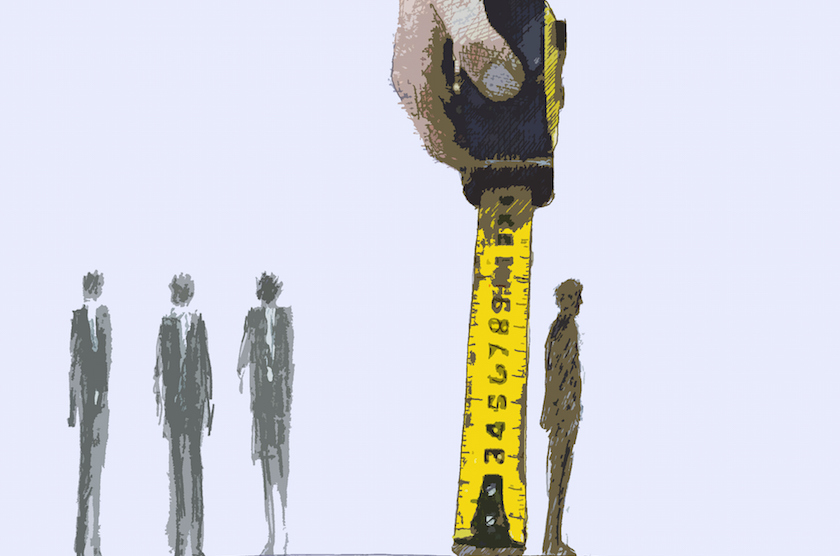
Business people being measured by large hand holding tape measurePhotograph by Gary Waters—Getty Images/Ikon Images

Companies like Zappos, Virgin Group, and Southwest Airlines have made a point to publicly brag about their distinct culture. And they claim they seek job candidates whose personality and values fit their corporate ethos.

Across the board, hiring managers routinely cite culture fit as the most important element in evaluating potential hires, ahead of relevant experience and education.

It makes sense. A company with a laid-back and cooperative corporate culture shouldn’t hire a hard driving, competitive executive who’s used to berating subordinates to get results. Nor should a firm that expects 24-7 availability and long workweeks bring on a professional who prefers to set clear boundaries between work and home.

But a focus on culture fit can easily create a shield for discrimination. When hiring managers and top executives feel that a potential hire “doesn’t fit in,” that may simply mean the individual in question is different from them in race, gender, class, sexual orientation, or education.

Not only is this unfair and potentially illegal, it costs these employers the productivity and innovation benefits that research has shown result from diverse work teams. While it may be comfortable to work with people like you, it’s bad for the bottom line.

In a study of top investment banks, management consultancies, and law firms, Professor Lauren Rivera at Northwestern University’s Kellogg School of Management found that job offers were strongly influenced by interviewers’ perception of fit, as they hired candidates they’d most enjoy having a beer with or being stuck with in an airport. By seeking “playmates,” they overlooked more skilled professionals with greater long-term potential at the company, Rivera concluded.

Our brains are hard-wired to separate friends from foes, to quickly identify members of our group versus outsiders. Unfortunately, these mental shortcuts can be a liability in the workplace. Need proof of this hidden bias? When systems prevent us from using factors like race or gender in a hiring or promotion decision, gender and racial disparities narrow.

What’s the solution? No need to throw culture fit out the window. Rather, employers should take a few steps to lessen the influence of personal fit—the similarities between an interviewer and the candidate—and to better articulate the company’s cultural values. An individual’s perception of fit may only indicate how well their personalities mesh or whether they both root for the Yankees, whereas a company’s values will be general enough to include a diverse range of employees.

Define the culture. Make sure to communicate to managers and potential employees alike the distinct elements of your corporate culture and how each is aligned with business goals. Then, use data and checklists to evaluate how well each candidate truly fits, rather than relying on subjective judgments of a hiring manager. Give candidates’ surveys and structured interviews to test traits and behaviors you have shown to correlate with better on-the-job success and retention.

Measure your results. If you’re aware of a potential discrimination problem, you can set up systems to interrupt it—what University of California Professor Joan C. Williams calls bias interrupters. Use internal research to identify areas of concern, design an intervention, measure the results, and then adjust your hiring process as needed until the bias is eliminated. This can be as simple as rewriting job ads to remove traditionally masculine words or a more involved change such as when Google redesigned its promotion process.

Challenge the ‘fit excuse.’ Above all, limit how much fit can sway hiring decisions. If a candidate is eliminated for fit reasons, hiring managers should be able to explain and quantify this decision. Stop accepting vague explanations of “a bad culture fit,” especially when they remove diverse candidates from consideration.

Decades of research have documented that when left to our own devices, we all gravitate toward individuals who share our race, gender, orientation, and backgrounds. By structuring the hiring process and giving interviewers tools to assess candidates objectively, employers can hire for culture without letting it become a free pass for discrimination.


About the Author
By Katherine Reynolds Lewis
See full bioRight Arrow Button Icon

Latest in Leadership

Finance
Lorem ipsum dolor sit amet, consectetur adipiscing elit, sed do eiusmod tempor incididunt ut labore et dolore magna aliqua. Ut enim ad minim veniam
By Fortune Editors
October 20, 2025
Finance
Lorem ipsum dolor sit amet, consectetur adipiscing elit, sed do eiusmod tempor incididunt ut labore et dolore magna aliqua. Ut enim ad minim veniam
By Fortune Editors
October 20, 2025
Finance
Lorem ipsum dolor sit amet, consectetur adipiscing elit, sed do eiusmod tempor incididunt ut labore et dolore magna aliqua. Ut enim ad minim veniam
By Fortune Editors
October 20, 2025
Finance
Lorem ipsum dolor sit amet, consectetur adipiscing elit, sed do eiusmod tempor incididunt ut labore et dolore magna aliqua. Ut enim ad minim veniam
By Fortune Editors
October 20, 2025
Finance
Lorem ipsum dolor sit amet, consectetur adipiscing elit, sed do eiusmod tempor incididunt ut labore et dolore magna aliqua. Ut enim ad minim veniam
By Fortune Editors
October 20, 2025
Finance
Lorem ipsum dolor sit amet, consectetur adipiscing elit, sed do eiusmod tempor incididunt ut labore et dolore magna aliqua. Ut enim ad minim veniam
By Fortune Editors
October 20, 2025

Most Popular

Finance
Lorem ipsum dolor sit amet, consectetur adipiscing elit, sed do eiusmod tempor incididunt ut labore et dolore magna aliqua. Ut enim ad minim veniam
By Fortune Editors
October 20, 2025
Finance
Lorem ipsum dolor sit amet, consectetur adipiscing elit, sed do eiusmod tempor incididunt ut labore et dolore magna aliqua. Ut enim ad minim veniam
By Fortune Editors
October 20, 2025
Finance
Lorem ipsum dolor sit amet, consectetur adipiscing elit, sed do eiusmod tempor incididunt ut labore et dolore magna aliqua. Ut enim ad minim veniam
By Fortune Editors
October 20, 2025
Finance
Lorem ipsum dolor sit amet, consectetur adipiscing elit, sed do eiusmod tempor incididunt ut labore et dolore magna aliqua. Ut enim ad minim veniam
By Fortune Editors
October 20, 2025
Finance
Lorem ipsum dolor sit amet, consectetur adipiscing elit, sed do eiusmod tempor incididunt ut labore et dolore magna aliqua. Ut enim ad minim veniam
By Fortune Editors
October 20, 2025
Finance
Lorem ipsum dolor sit amet, consectetur adipiscing elit, sed do eiusmod tempor incididunt ut labore et dolore magna aliqua. Ut enim ad minim veniam
By Fortune Editors
October 20, 2025
Fortune Secondary Logo
Rankings
  • 100 Best Companies
  • Fortune 500
  • Global 500
  • Fortune 500 Europe
  • Most Powerful Women
  • Future 50
  • World’s Most Admired Companies
  • See All Rankings
Sections
  • Finance
  • Fortune Crypto
  • Features
  • Leadership
  • Health
  • Commentary
  • Success
  • Retail
  • Mpw
  • Tech
  • Lifestyle
  • CEO Initiative
  • Asia
  • Politics
  • Conferences
  • Europe
  • Newsletters
  • Personal Finance
  • Environment
  • Magazine
  • Education
Customer Support
  • Frequently Asked Questions
  • Customer Service Portal
  • Privacy Policy
  • Terms Of Use
  • Single Issues For Purchase
  • International Print
Commercial Services
  • Advertising
  • Fortune Brand Studio
  • Fortune Analytics
  • Fortune Conferences
  • Business Development
  • Group Subscriptions
About Us
  • About Us
  • Editorial Calendar
  • Press Center
  • Work At Fortune
  • Diversity And Inclusion
  • Terms And Conditions
  • Site Map
  • About Us
  • Editorial Calendar
  • Press Center
  • Work At Fortune
  • Diversity And Inclusion
  • Terms And Conditions
  • Site Map
  • Facebook icon
  • Twitter icon
  • LinkedIn icon
  • Instagram icon
  • Pinterest icon

Latest in Leadership

AIAI agents
OpenAI cofounder says he hasn’t written a line of code in months and is in a ‘state of psychosis’ trying to figure out what’s possible
By Jason MaMarch 21, 2026
3 hours ago
david
CommentaryScience
The one skill that separates people who get smarter with AI from everyone else
By David Rock and Chris WellerMarch 21, 2026
9 hours ago
Former Berkshire Hathaway CEO Warren Buffett
SuccessCareers
Dairy Queen CEO says he learned from Warren Buffett being the ‘smartest person in the world’ isn’t the most important attribute for success
By Emma BurleighMarch 21, 2026
10 hours ago
SuccessFour day work week
Covid gave us hybrid work. The Iran War might give us a four-day week—and this time, experts say it could stick
By Orianna Rosa RoyleMarch 21, 2026
12 hours ago
gen z
CommentaryCareers
The entry-level job market is the worst it’s been in 37 years. Stop blaming Gen Z
By Janelle Jones and Nia LawMarch 21, 2026
12 hours ago
A woman looks frustrated a computer
AIWomen
Women are avoiding the very technology that threatens them most, as expert warns of a ‘two-tiered AI economy’ approaching
By Jacqueline MunisMarch 21, 2026
13 hours ago

© 2026 Fortune Media IP Limited. All Rights Reserved. Use of this site constitutes acceptance of our Terms of Use and Privacy Policy | CA Notice at Collection and Privacy Notice | Do Not Sell/Share My Personal Information
FORTUNE is a trademark of Fortune Media IP Limited, registered in the U.S. and other countries. FORTUNE may receive compensation for some links to products and services on this website. Offers may be subject to change without notice.