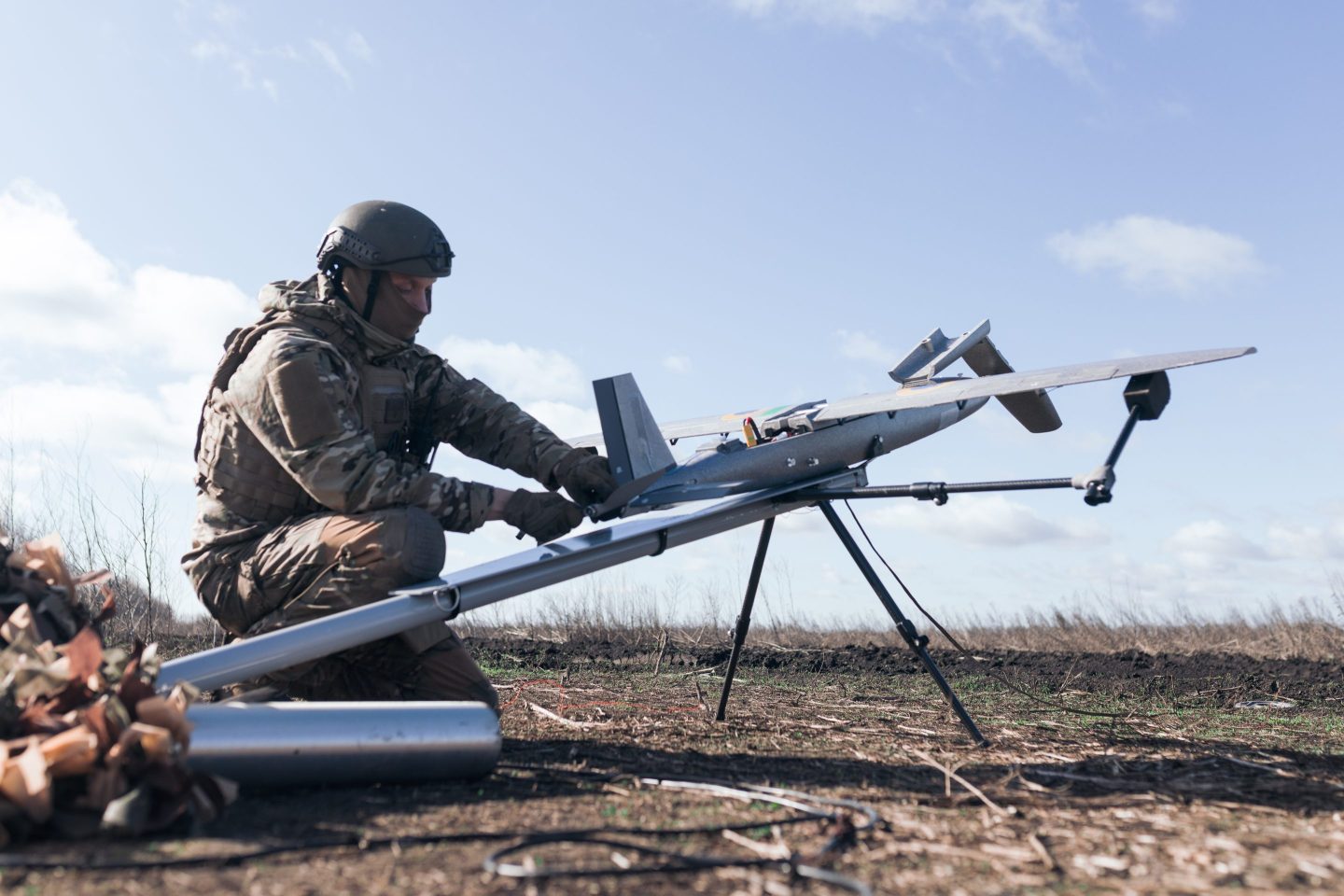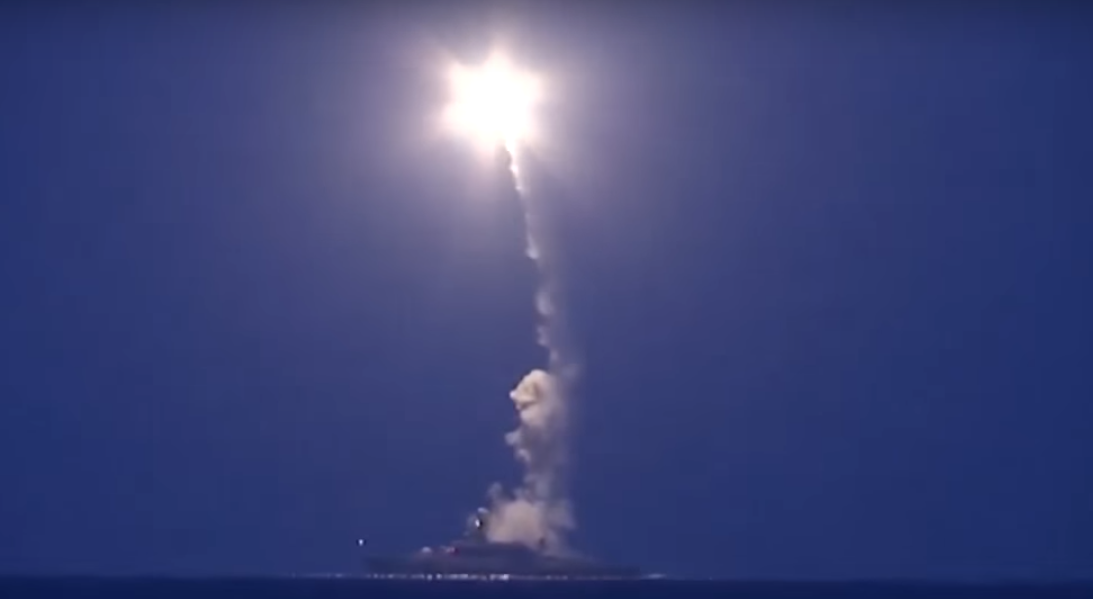
In the first week of October, Russian naval vessels in the Caspian Sea launched a salvo of ship-based cruise missiles at targets in Syria up to 1,000 miles away. Never mind Pentagon reports that some of the missiles reportedly crashed in Iran along the way. The strikes marked the first time Russia’s navy has launched a sea-based, surface-to-surface cruise missile in anger, and the first real-world test of its Kalibr land attack cruise missile.
In the weeks since, Russia has continued to push the envelope in Syria in terms of both military technology and doctrine, launching more cruise missiles and deploying all three of its heavy bombers in concert for the first time. The conflict has grown into a fertile testing ground for a Russian military that hasn’t carried out military operations at this scale in three decades.
In its use of sea-launched cruise missiles in particular, Russia also is putting the West on notice, analysts say. In Syria, Russia is demonstrating both to itself and to the rest of the world that the capability gap separating its military from those of the U.S. and its NATO allies is shrinking.
“Russia is in the midst of a relatively big military modernization program,” says retired U.S. Army Col. David Johnson, a senior historian at RAND Corp. “This is is a way to test these things out in combat conditions.”
Cruise missiles like those Russia is launching from the Caspian Sea require no small degree of technical prowess. After a booster rocket launches it a few hundred feet skyward from a surface ship or submarine, a Kalibr cruise missile tips over horizontally and fires up a solid fuel turbojet engine that sends it screaming toward its target at many hundreds of miles per hour.
More unmanned aircraft than conventional rocket, cruise missiles don’t have to fly in a straight line or along a preordained trajectory. Using GPS (or Russian-equivalent GLONASS) navigation, Russia’s latest missiles can weave their way to predetermined waypoints to avoid obstacles or air defenses. They hug the topography of the Earth, flying as low as 170 feet above ground level to stay well below enemy radar. (Preprogrammed geographical data and onboard sensors help the missile avoid collisions with terrain features or buildings.)
During its terminal phase, the missile locates its target through a mix of coordinates and onboard image recognition, essentially matching an uploaded image of the target to what the missile sees in front of it. If all goes to plan, the missile’s 1,000-pound payload of high-explosive is then guided straight to the target for a violent impact.
The above description could just as well describe the U.S.-made Tomahawk cruise missile in use by the U.S. and U.K. navies since the early 1980s. From guidance to targeting to characteristics like range, size, and speed, Russia’s latest cruise missiles mirror the capability of their Western counterparts. “We’ve always considered it the Russian version of a Tomahawk,” says Bryan Clark, a naval expert and senior fellow at the Center for Strategic and Budgetary Assessments. “They’ve had this latent capability that was developed maybe 20 years after the Tomahawk emerged, but they’ve just never been able to use it.”
In Syria, that’s changed. Though the presence of Russian bomber aircraft in Syria renders cruise missile strikes nonessential, Russia is taking the opportunity to pull its cruise missiles out of the toolbox and put them through their paces. Along with its new ship-based cruise missiles, Russia has also reportedly fitted its Tu-95MS heavy bombers with the latest Raduga Kh-101 air-launched cruise missile, marking the first operational use of that particular weapon as well.
It’s by no means clear that Russia is ready to deploy these cruise missile technologies in a more heavily defended airspace, says Dr. Richard Weitz, a senior fellow at the Hudson Institute. But there are some interesting nuances associated with Russia’s cruise missile operations thus far, particularly the fact that Russia has launched its strikes from small naval vessels, some just one-tenth the size of the average U.S. Navy guided missile destroyer.
That means the U.S. and other nations now have to think about the possibility of other nations—not just Russia, but nations equipped by Russia—outfitting their much smaller naval fleets with long-range cruise missile capabilities that could threaten both larger naval vessels and inland targets. In a larger, strategic sense, it also means the capability gap between Russia’s navy and its Western counterparts is shrinking.
“I don’t see anything alarming from the fact that they’ve done this—I’d be surprised if they hadn’t done it, quite frankly,” RAND’s Johnson says. “The big message to the U.S. and NATO is that the period where we were completely dominant following the Cold War is coming to a close. The things we would have to confront in NATO just became very visible in a combat situation.”
For more on the threats emerging Syria and Russia, and beyond, watch this Fortune video:
Subscribe to Data Sheet, Fortune’s daily newsletter on the business of technology.