• Home
  • Latest
  • Fortune 500
  • Finance
  • Tech
  • Leadership
  • Lifestyle
  • Rankings
  • Multimedia
Commentarytrans-pacific partnership

This Dangerous Flaw in the TPP Should Be a Lesson to the U.S. and EU

By
Luke McDonagh
Luke McDonagh
,
The Conversation
The Conversation
, and
Bethany Cianciolo
Bethany Cianciolo
Down Arrow Button Icon
By
Luke McDonagh
Luke McDonagh
,
The Conversation
The Conversation
, and
Bethany Cianciolo
Bethany Cianciolo
Down Arrow Button Icon
November 13, 2015, 9:22 AM ET
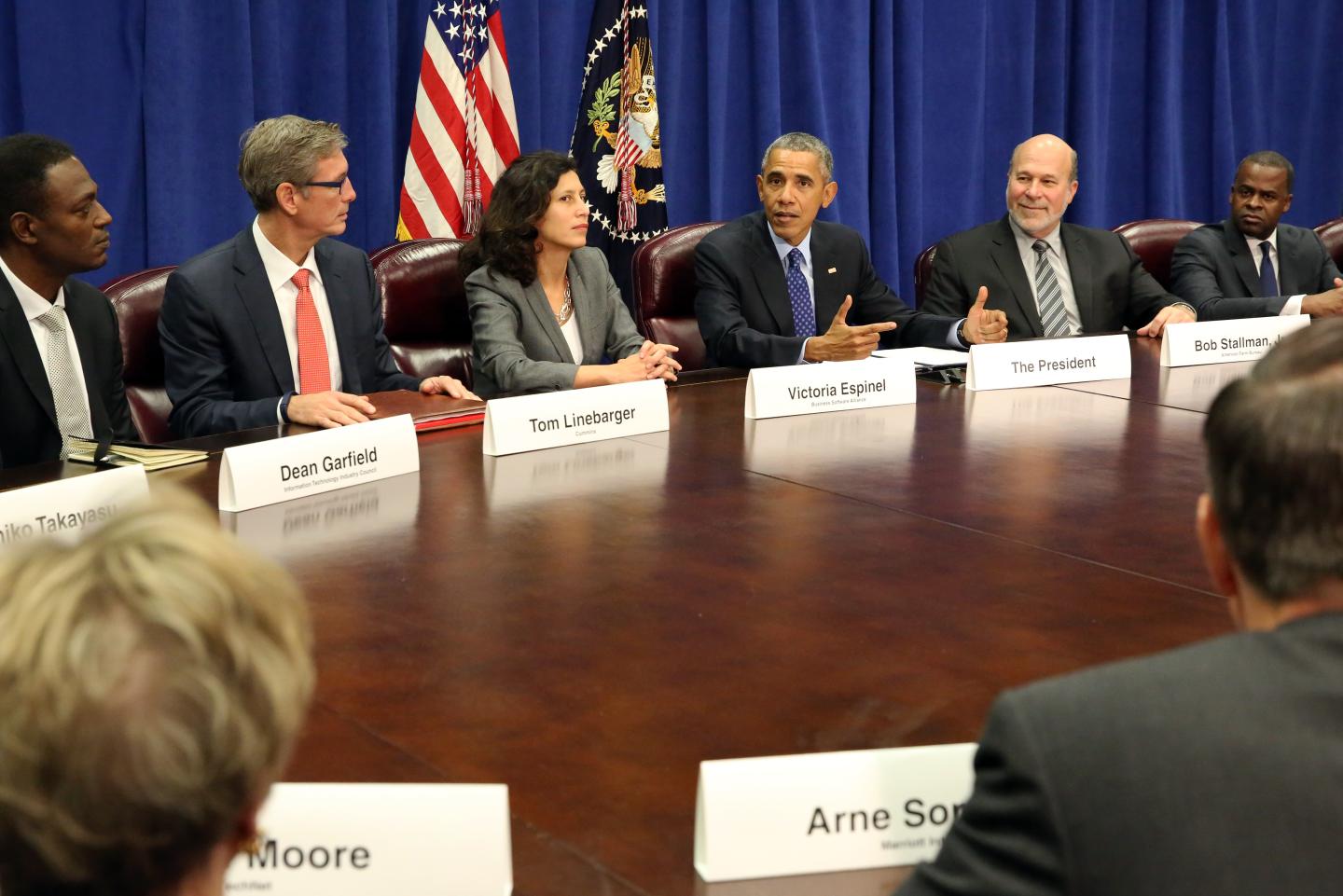
President Barack Obama meets with agriculture and business leaders on the benefits of the Trans-Pacific Partnership for American business and workers, at the Department of Agriculture in Washington, Tuesday, Oct. 6, 2015. Flanking the president are Victoria Espinel, CEO, The Software Alliance (left); and Bob Stallman, Jr., President, American Farm Bureau.
President Barack Obama meets with agriculture and business leaders on the benefits of the Trans-Pacific Partnership for American business and workers, at the Department of Agriculture in Washington, Tuesday, Oct. 6, 2015. Flanking the president are Victoria Espinel, CEO, The Software Alliance (left); and Bob Stallman, Jr., President, American Farm Bureau.Photograph by Martin H. Simon — Getty Images

The ink is dry and the full text of the major trade deal between the U.S. and 11 Pacific Rim countries, the Trans-Pacific Partnership or TPP, has been released to the public. And it contains plenty of lessons that can be applied to the ongoing negotiations between the U.S. and European Union over the Transatlantic Trade and Investment Partnership, or TTIP, geared toward removing trade barriers between the two.

One of the most controversial elements of TPP is the “investor-state dispute settlement” clause (or ISDS)—and the inclusion of intellectual property under its remit. Should a similar clause be included in the TTIP, companies could use it within the EU to usurp the will of both national and EU courts. And this could be very costly indeed.

ISDS provisions are common in trade agreements. Their original purpose was to provide a level of security for foreign investors who were planning to invest in developing countries with a record of government instability and, in some cases, a history of expropriation of foreign-owned national resources. The ISDS legal mechanism enabled investors to obtain compensation under such circumstances.

Now ISDS clauses are a standard part of most major trade agreements, even those agreed between developed countries, which have well-established property protections under their national constitutions. Both the 1994 North American Free Trade Agreement (NAFTA) between the U.S., Canada and Mexico and the 1993 Hong Kong-Australia Investment Protection Agreement include them. So, while the ongoing EU-U.S. negotiations are not public, it seems likely that if such as clause appeared in the TTP, it will also be included in the TTIP.

IP intrusion

Especially worrying from a legal perspective is that the TTP’s investment chapter classifies intellectual property as a type of investment. If a similar clause appeared in the TTIP, investors would be able to take EU governments to court in the event of their intellectual property being “expropriated.” This is despite the fact that, as all IP lawyers know, intellectual property is not a type of investment.

Intellectual property is a system of exclusive rights—for authors (copyright), inventors (patents), and traders (trade marks). It is granted by a state or supra-state actor, such as the EU, in order to recognize and encourage further creativity, research and development, and trade.


But intellectual property law does not protect a person’s investment, as such. It is designed to protect what results from that investment. So creative works of art, literature, music and film are covered by copyright; new inventions are protected by patents; and logos and brand names are viewed as trade marks. Yet, if a person’s investment does not result in a new original work or a new invention, then there is no IP protection. There is, in effect, nothing to protect.

By viewing IP as an investment, the TPP and, potentially, the TTIP run the risk of undermining the right of the EU and individual countries to make legal and judicial decisions regarding the limits of IP protection. If an ISDS clause is included in the TTIP, it would mean that if the EU, or one of its member states, decides to pass more flexible IP laws—be it to enable free speech or restrict branding in the interests of public health—those governments could run the risk of being sued by companies.

The precedent is set

We know this is a danger because the intrusion of ISDS into the field of IP law has already begun. In 2013, the American pharmaceutical company Eli Lilly (LLY) filed a legal action against Canada at a NAFTA court. Eli Lilly argued that the Canadian courts’ invalidation of two of their patents – due to insufficient evidence of the drugs’ stated benefits – was a violation of the treaty’s expropriation rules.

The use of ISDS to challenge the invalidation of patents is a clear attack on the principle that national courts have the right to determine matters of patent validity falling under national legislation. It is accepted within the international patent system that a court invalidating a patent cannot be an example of expropriation, as the court has decided that the patent should never have been granted in the first place. Eli Lilly made an investment, but they did not produce something patentable under Canadian law. Despite this, the ISDS dispute continues, and will prove costly for Canada to defend.

A similar challenge has been brought against Australia in the field of trademarks by Phillip Morris Tobacco. Since 2012, Australia has had a system of plain packaging for cigarettes. It has led to plummeting smoking rates, illustrating the impact of removing branding from cigarettes.

Tobacco companies objected to this move, however, and challenged it under Australian trademark law. The High Court of Australia found that the state had acted legally in restricting the use of tobacco company trade marks in this way. Under substantive trade mark law, that ought to have been the end of the story. Yet, under the ISDS provisions of the Hong Kong-Australia Investment Protection Agreement, Australia now faces a massive claim for compensation for this alleged expropriation of investment.

There are therefore inherent dangers in ISDS provisions. And while we do not know what is taking place behind the closed-door TTIP negotiations, we should warn against the inclusion of intellectual property within any potential ISDS provisions.

Luke McDonagh is a lecturer in law at City University London. This piece was originally published on The Conversation.
The Conversation

About the Authors
By Luke McDonagh
See full bioRight Arrow Button Icon
By The Conversation
See full bioRight Arrow Button Icon
By Bethany Cianciolo
See full bioRight Arrow Button Icon

Latest in Commentary

Finance
Lorem ipsum dolor sit amet, consectetur adipiscing elit, sed do eiusmod tempor incididunt ut labore et dolore magna aliqua. Ut enim ad minim veniam
By Fortune Editors
October 20, 2025
Finance
Lorem ipsum dolor sit amet, consectetur adipiscing elit, sed do eiusmod tempor incididunt ut labore et dolore magna aliqua. Ut enim ad minim veniam
By Fortune Editors
October 20, 2025
Finance
Lorem ipsum dolor sit amet, consectetur adipiscing elit, sed do eiusmod tempor incididunt ut labore et dolore magna aliqua. Ut enim ad minim veniam
By Fortune Editors
October 20, 2025
Finance
Lorem ipsum dolor sit amet, consectetur adipiscing elit, sed do eiusmod tempor incididunt ut labore et dolore magna aliqua. Ut enim ad minim veniam
By Fortune Editors
October 20, 2025
Finance
Lorem ipsum dolor sit amet, consectetur adipiscing elit, sed do eiusmod tempor incididunt ut labore et dolore magna aliqua. Ut enim ad minim veniam
By Fortune Editors
October 20, 2025
Finance
Lorem ipsum dolor sit amet, consectetur adipiscing elit, sed do eiusmod tempor incididunt ut labore et dolore magna aliqua. Ut enim ad minim veniam
By Fortune Editors
October 20, 2025

Most Popular

Finance
Lorem ipsum dolor sit amet, consectetur adipiscing elit, sed do eiusmod tempor incididunt ut labore et dolore magna aliqua. Ut enim ad minim veniam
By Fortune Editors
October 20, 2025
Finance
Lorem ipsum dolor sit amet, consectetur adipiscing elit, sed do eiusmod tempor incididunt ut labore et dolore magna aliqua. Ut enim ad minim veniam
By Fortune Editors
October 20, 2025
Finance
Lorem ipsum dolor sit amet, consectetur adipiscing elit, sed do eiusmod tempor incididunt ut labore et dolore magna aliqua. Ut enim ad minim veniam
By Fortune Editors
October 20, 2025
Finance
Lorem ipsum dolor sit amet, consectetur adipiscing elit, sed do eiusmod tempor incididunt ut labore et dolore magna aliqua. Ut enim ad minim veniam
By Fortune Editors
October 20, 2025
Finance
Lorem ipsum dolor sit amet, consectetur adipiscing elit, sed do eiusmod tempor incididunt ut labore et dolore magna aliqua. Ut enim ad minim veniam
By Fortune Editors
October 20, 2025
Finance
Lorem ipsum dolor sit amet, consectetur adipiscing elit, sed do eiusmod tempor incididunt ut labore et dolore magna aliqua. Ut enim ad minim veniam
By Fortune Editors
October 20, 2025
Fortune Secondary Logo
Rankings
  • 100 Best Companies
  • Fortune 500
  • Global 500
  • Fortune 500 Europe
  • Most Powerful Women
  • World's Most Admired Companies
  • See All Rankings
  • Lists Calendar
Sections
  • Finance
  • Fortune Crypto
  • Features
  • Leadership
  • Health
  • Commentary
  • Success
  • Retail
  • Mpw
  • Tech
  • Lifestyle
  • CEO Initiative
  • Asia
  • Politics
  • Conferences
  • Europe
  • Newsletters
  • Personal Finance
  • Environment
  • Magazine
  • Education
Customer Support
  • Frequently Asked Questions
  • Customer Service Portal
  • Privacy Policy
  • Terms Of Use
  • Single Issues For Purchase
  • International Print
Commercial Services
  • Advertising
  • Fortune Brand Studio
  • Fortune Analytics
  • Fortune Conferences
  • Business Development
  • Group Subscriptions
About Us
  • About Us
  • Press Center
  • Work At Fortune
  • Terms And Conditions
  • Site Map
  • About Us
  • Press Center
  • Work At Fortune
  • Terms And Conditions
  • Site Map
  • Facebook icon
  • Twitter icon
  • LinkedIn icon
  • Instagram icon
  • Pinterest icon

Latest in Commentary

francis
CommentaryFlorida
Former Miami Mayor Francis Suarez: Why I’m joining Stephen Ross and Ken Griffin in betting big on ambitious business leaders
By Francis SuarezMay 1, 2026
14 hours ago
valerie
CommentaryLayoffs
Tesla’s former HR chief: the AI layoff panic Is built on a false premise—here’s what most workers need to know
By Valerie Capers WorkmanMay 1, 2026
16 hours ago
tamas
CommentaryPolymarket
SEON CEO: Prediction markets can forecast the future. Can they survive their own manipulation problem?
By Tamas KadarMay 1, 2026
19 hours ago
sundar
Commentary250 Years of Innovation
America at 250: immigration and the making of an innovative nation
By Nasser KazeminyMay 1, 2026
20 hours ago
Derek Kilmer
CommentaryEconomics
The U.S. economy is booming — just not where 50 million Americans live
By Derek KilmerMay 1, 2026
20 hours ago
hegseth
CommentaryMilitary
America shot its arsenal empty in 2 wars. Now it needs Beijing’s permission to reload
By Steve H. Hanke and Jeffrey WengApril 30, 2026
1 day ago

Most Popular

Scott Bessent on financial literacy: 'it drives me crazy' to see young men in blue-collar construction jobs playing the lottery
Personal Finance
Scott Bessent on financial literacy: 'it drives me crazy' to see young men in blue-collar construction jobs playing the lottery
By Fatima Hussein and The Associated PressMay 1, 2026
16 hours ago
China dominates the world's lithium supply. The U.S. just found 328 years' worth in its own backyard
North America
China dominates the world's lithium supply. The U.S. just found 328 years' worth in its own backyard
By Jake AngeloApril 30, 2026
1 day ago
The U.S. economy is booming — just not where 50 million Americans live
Commentary
The U.S. economy is booming — just not where 50 million Americans live
By Derek KilmerMay 1, 2026
20 hours ago
Accenture's Julie Sweet blew up 50 years of company history. She says the hardest part is still ahead
Conferences
Accenture's Julie Sweet blew up 50 years of company history. She says the hardest part is still ahead
By Nick LichtenbergApril 29, 2026
3 days ago
Apple cofounder Ronald Wayne—whose stake would be worth up to $400 billion had he not sold it in 1976—says that at 91, he has no regrets
Success
Apple cofounder Ronald Wayne—whose stake would be worth up to $400 billion had he not sold it in 1976—says that at 91, he has no regrets
By Preston ForeApril 27, 2026
5 days ago
A Chick-fil-A worker got fired and then showed up behind the register to allegedly refund himself over $80,000 in mac and cheese
Law
A Chick-fil-A worker got fired and then showed up behind the register to allegedly refund himself over $80,000 in mac and cheese
By Catherina GioinoMay 1, 2026
12 hours ago

© 2026 Fortune Media IP Limited. All Rights Reserved. Use of this site constitutes acceptance of our Terms of Use and Privacy Policy | CA Notice at Collection and Privacy Notice | Do Not Sell/Share My Personal Information
FORTUNE is a trademark of Fortune Media IP Limited, registered in the U.S. and other countries. FORTUNE may receive compensation for some links to products and services on this website. Offers may be subject to change without notice.