• Home
  • Latest
  • Fortune 500
  • Finance
  • Tech
  • Leadership
  • Lifestyle
  • Rankings
  • Multimedia
CommentaryTrans-Pacific Parternship

How China’s exclusion from the TPP could hurt its economic growth

By
Peter K Yu
Peter K Yu
Down Arrow Button Icon
By
Peter K Yu
Peter K Yu
Down Arrow Button Icon
October 19, 2015, 11:25 AM ET
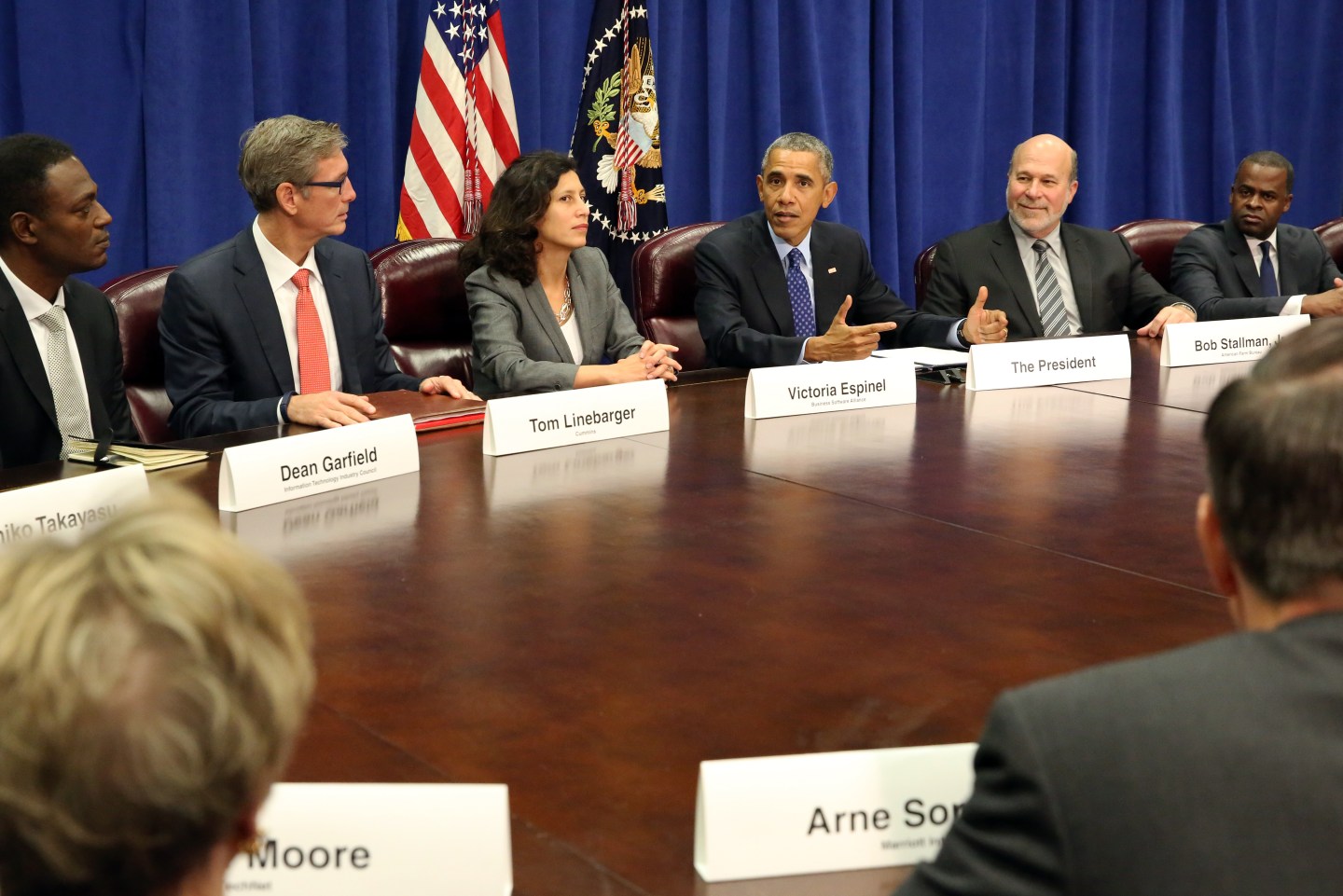
President Barack Obama meets with agriculture and business leaders on the benefits of the Trans-Pacific Partnership for American business and workers, at the Department of Agriculture in Washington, Tuesday, Oct. 6, 2015. Flanking the president are Victoria Espinel, CEO, The Software Alliance (left); and Bob Stallman, Jr., President, American Farm Bureau.
President Barack Obama meets with agriculture and business leaders on the benefits of the Trans-Pacific Partnership for American business and workers, at the Department of Agriculture in Washington, Tuesday, Oct. 6, 2015. Flanking the president are Victoria Espinel, CEO, The Software Alliance (left); and Bob Stallman, Jr., President, American Farm Bureau.Pool 2015, Martin H. Simon

Earlier this month, the U.S. Trade Representative announced the completion of negotiations on the Trans-Pacific Partnership (TPP). Despite the agreement’s far-reaching scope, some commentators have heavily criticized its exclusion of China.

The disappointment is understandable. China is now the world’s second largest or largest economy – depending on whom you ask. Although President Barack Obama rightly notes that the global economy is too important for China to write its rules, the exclusion of this important market will certainly make the regional pact less attractive.

One question that has not been explored much within the U.S. is whether China actually cares about its being excluded from the TPP. It is also worth asking what followup actions China will take in response to the adoption of this regional pact.

Why China might care about being left out of TPP
From its inception, the TPP has been considered by many as a strategic instrument to isolate or contain China. Given the country’s ambitions, its leaders are understandably concerned about the concerted effort by the U.S. and other Asia-Pacific countries to curtail its economic growth and geopolitical influence.

China’s outsider status could also be seen as an indictment of its inadequacies, such as limited intellectual property protection and a lack of government procurement standards. The exclusion of China not only has caused the country to lose face, but has also provided a painful reminder of its continued struggle to gain an equal status in the international community. Finally, the lack of TPP membership will prevent China from enjoying new tariff reduction and preferential market access. If this regional pact is to operate according to design, it will divert trade and manufacturing from China to TPP members.

Why China could care less
Nevertheless, four reasons exist to explain why China may not care much about its being left out of the TPP. First, China continues to actively engage its neighbors and trading partners. Indeed, many Asian countries – including those involved in the N – fear that they will have to pick between China and the U.S. As policymakers from Australia and New Zealand have reportedly told their U.S. counterparts in the early stages of the negotiations, their countries would withdraw if the TPP were designed to contain China. Without containment, however, countries can still negotiate other bilateral or regional trade agreements with China.


Second, that the U.S. and other like-minded countries have gone outside the World Trade Organization (WTO) and other multilateral fora to negotiate new rules has set an important precedent for China to undertake similar maneuvers. From China’s perspective, such maneuvers could come in handy when the country needs to avoid multilateral intervention in sensitive matters such as those involving Taiwan, Tibet and the South China Sea.

Third, China continues to face myriad challenges within its own economy, which include massive urban migration, widespread unemployment and an enormous gap between the rich and the poor. Although China has worked hard in the past two decades to ensure compliance with WTO rules, the country may not be ready for new and higher trade standards. These standards can be particularly burdensome in view of the recent downturn of the Chinese economy.

Finally, China is unlikely to be able to join the TPP unless some of its standards are substantially revised. For example, the agreement’s government procurement standards would drastically alter the structure and operation of Chinese state-owned enterprises. The TPP electronic commerce standards could also deeply affect the country’s censorship and information control policy.

China’s wait-and-see approach
Given its ambivalence about the TPP, China may initially take a wait-and-see approach – or what its Ministry of Commerce has called an “open-minded attitude.” After all, the TPP negotiations have only been recently concluded, and it will take some time before the final agreement is adopted. At this point, it remains difficult to predict whether the U.S. and other negotiating parties will quickly ratify the pact.

An instructive point of comparison is the Anti-Counterfeiting Trade Agreement (ACTA), which was negotiated by the E.U., the U.S. and other developed and like-minded countries. Although this controversial agreement was adopted in April 2011, it has yet to enter into force. Thus far, only Japan has ratified the agreement. Many commentators have therefore wondered whether ACTA will ever take effect.

Three additional lines of response
Apart from the wait-and-see approach, China could accelerate efforts in three areas. First, China has been actively negotiating bilateral and regional trade agreements since the early 2000s. Already established were agreements with Chile, Pakistan, New Zealand, Singapore, Peru, Costa Rica, Iceland, Switzerland, South Korea and Australia. With the Association of Southeast Asian Nations (ASEAN) members, China has also developed the ASEAN-China Free Trade Area. If the TPP begins to pose a threat, China will certainly become more aggressive in seeking new trade deals through bilateral and regional negotiations.

Second, China may become more active in the negotiation of the Regional Comprehensive Economic Partnership (RCEP) within the ASEAN+6 framework, which includes ASEAN, Australia, China, India, Japan, New Zealand and South Korea. Thus far, commentators have been skeptical of this initiative – due in large part to the slow pace of development within ASEAN. Nevertheless, if China considers the RCEP an important instrument to counterbalance the TPP, it may exert greater pressure on its neighbors, or even offer attractive concessions, to ensure the completion of the RCEP negotiations.

Third, in view of the TPP, China may reassess its cooperation with the U.S. For those embracing a growing G-2 partnership between the two countries, the TPP could provide a major setback to U.S.-China cooperation in areas such as climate change, nuclear nonproliferation and cybersecurity. China may also develop a closer relationship with the E.U., considering that the latter was equally left out of the regional pact.

In sum, the TPP could elicit responses from China that would dramatically alter the trade and power dynamics within the Asia-Pacific region. Yet enough evidence suggests that China may initially take a wait-and-see approach – at least before the TPP enters into force.

Peter K Yu is a professor of law and co-director of the Center for Law and Intellectual Property at Texas A&M University. This article originally appeared on The Conversation. The Conversation

About the Author
By Peter K Yu
See full bioRight Arrow Button Icon

Latest in Commentary

Finance
Lorem ipsum dolor sit amet, consectetur adipiscing elit, sed do eiusmod tempor incididunt ut labore et dolore magna aliqua. Ut enim ad minim veniam
By Fortune Editors
October 20, 2025
Finance
Lorem ipsum dolor sit amet, consectetur adipiscing elit, sed do eiusmod tempor incididunt ut labore et dolore magna aliqua. Ut enim ad minim veniam
By Fortune Editors
October 20, 2025
Finance
Lorem ipsum dolor sit amet, consectetur adipiscing elit, sed do eiusmod tempor incididunt ut labore et dolore magna aliqua. Ut enim ad minim veniam
By Fortune Editors
October 20, 2025
Finance
Lorem ipsum dolor sit amet, consectetur adipiscing elit, sed do eiusmod tempor incididunt ut labore et dolore magna aliqua. Ut enim ad minim veniam
By Fortune Editors
October 20, 2025
Finance
Lorem ipsum dolor sit amet, consectetur adipiscing elit, sed do eiusmod tempor incididunt ut labore et dolore magna aliqua. Ut enim ad minim veniam
By Fortune Editors
October 20, 2025
Finance
Lorem ipsum dolor sit amet, consectetur adipiscing elit, sed do eiusmod tempor incididunt ut labore et dolore magna aliqua. Ut enim ad minim veniam
By Fortune Editors
October 20, 2025

Most Popular

Finance
Lorem ipsum dolor sit amet, consectetur adipiscing elit, sed do eiusmod tempor incididunt ut labore et dolore magna aliqua. Ut enim ad minim veniam
By Fortune Editors
October 20, 2025
Finance
Lorem ipsum dolor sit amet, consectetur adipiscing elit, sed do eiusmod tempor incididunt ut labore et dolore magna aliqua. Ut enim ad minim veniam
By Fortune Editors
October 20, 2025
Finance
Lorem ipsum dolor sit amet, consectetur adipiscing elit, sed do eiusmod tempor incididunt ut labore et dolore magna aliqua. Ut enim ad minim veniam
By Fortune Editors
October 20, 2025
Finance
Lorem ipsum dolor sit amet, consectetur adipiscing elit, sed do eiusmod tempor incididunt ut labore et dolore magna aliqua. Ut enim ad minim veniam
By Fortune Editors
October 20, 2025
Finance
Lorem ipsum dolor sit amet, consectetur adipiscing elit, sed do eiusmod tempor incididunt ut labore et dolore magna aliqua. Ut enim ad minim veniam
By Fortune Editors
October 20, 2025
Finance
Lorem ipsum dolor sit amet, consectetur adipiscing elit, sed do eiusmod tempor incididunt ut labore et dolore magna aliqua. Ut enim ad minim veniam
By Fortune Editors
October 20, 2025
Fortune Secondary Logo
Rankings
  • 100 Best Companies
  • Fortune 500
  • Global 500
  • Fortune 500 Europe
  • Most Powerful Women
  • World's Most Admired Companies
  • See All Rankings
  • Lists Calendar
Sections
  • Finance
  • Fortune Crypto
  • Features
  • Leadership
  • Health
  • Commentary
  • Success
  • Retail
  • Mpw
  • Tech
  • Lifestyle
  • CEO Initiative
  • Asia
  • Politics
  • Conferences
  • Europe
  • Newsletters
  • Personal Finance
  • Environment
  • Magazine
  • Education
Customer Support
  • Frequently Asked Questions
  • Customer Service Portal
  • Privacy Policy
  • Terms Of Use
  • Single Issues For Purchase
  • International Print
Commercial Services
  • Advertising
  • Fortune Brand Studio
  • Fortune Analytics
  • Fortune Conferences
  • Business Development
  • Group Subscriptions
About Us
  • About Us
  • Lists Calendar
  • Press Center
  • Work At Fortune
  • Terms And Conditions
  • Site Map
  • About Us
  • Lists Calendar
  • Press Center
  • Work At Fortune
  • Terms And Conditions
  • Site Map
  • Facebook icon
  • Twitter icon
  • LinkedIn icon
  • Instagram icon
  • Pinterest icon

Latest in Commentary

ken
Commentary250 Years of Innovation
The longevity revolution is here. Our systems still think we die at 65
By Ken DychtwaldApril 23, 2026
9 hours ago
tenzin
Commentaryclean energy
The Iran War just made the clean energy transition non-negotiable
By Tenzin SeldonApril 23, 2026
17 hours ago
Software developers discussing programming code and planning how to create innovative software at co-working office. Two software developers checking programming code on computer screen. working through a coding problem together.
Commentaryregulation
Inflated AI claims are under fire—and the regulatory reckoning is coming
By Perrie M. WeinerApril 23, 2026
18 hours ago
Kemba Walden served as Acting National Cyber Director of the United States and is President of the Paladin Global Institute.
CommentaryHacking
Former national cyber director: Anthropic’s ‘Mythos’ AI can hack nearly anything and we aren’t ready
By Kemba WaldenApril 23, 2026
20 hours ago
frank
CommentaryVisa
Visa CMO: AI agents are your new customers — here’s how to sell to them
By Frank Cooper IIIApril 22, 2026
1 day ago
shlomit
Commentarycyber
The Mythos meeting focused on the wrong AI risk to banks. Here’s the one nobody is talking about
By Shlomit WagmanApril 22, 2026
2 days ago

Most Popular

When interest on national debt overtook military spending, it triggered a limit where the U.S. may ‘cease to be a great power,’ warns Hoover historian
Economy
When interest on national debt overtook military spending, it triggered a limit where the U.S. may ‘cease to be a great power,’ warns Hoover historian
By Eleanor PringleApril 23, 2026
18 hours ago
Despite nearing their 60s, nearly four in 10 Americans heading towards the end of their careers don’t even have a retirement account
Success
Despite nearing their 60s, nearly four in 10 Americans heading towards the end of their careers don’t even have a retirement account
By Emma BurleighApril 23, 2026
14 hours ago
Officials will flush 50,000 toilets to flood a Utah lake in order to generate electricity
Environment
Officials will flush 50,000 toilets to flood a Utah lake in order to generate electricity
By Mead Gruver, Dorany Pineda and The Associated PressApril 22, 2026
1 day ago
Cursor’s 25-year-old CEO is a former Google intern who just inked a $60 billion deal with SpaceX
AI
Cursor’s 25-year-old CEO is a former Google intern who just inked a $60 billion deal with SpaceX
By Marco Quiroz-GutierrezApril 22, 2026
1 day ago
Craving work-life balance is a huge red flag, says Fortune 500 Europe CEO—and like Barack Obama, he happily works through weekends
Success
Craving work-life balance is a huge red flag, says Fortune 500 Europe CEO—and like Barack Obama, he happily works through weekends
By Orianna Rosa RoyleApril 22, 2026
2 days ago
The Iran war is pushing Southeast Asia to debate the once unthinkable: Whether ships will need to pay to transit the Strait of Malacca
Economy
The Iran war is pushing Southeast Asia to debate the once unthinkable: Whether ships will need to pay to transit the Strait of Malacca
By Angelica AngApril 23, 2026
18 hours ago

© 2026 Fortune Media IP Limited. All Rights Reserved. Use of this site constitutes acceptance of our Terms of Use and Privacy Policy | CA Notice at Collection and Privacy Notice | Do Not Sell/Share My Personal Information
FORTUNE is a trademark of Fortune Media IP Limited, registered in the U.S. and other countries. FORTUNE may receive compensation for some links to products and services on this website. Offers may be subject to change without notice.