
• Home
  • Latest
  • Fortune 500
  • Finance
  • Tech
  • Leadership
  • Lifestyle
  • Rankings
  • Multimedia
RetailRe-Tooled

Re-Tooled: How Timberland got back on its feet

Phil Wahba
By
Phil Wahba
Phil Wahba
Senior Writer
Down Arrow Button Icon
Phil Wahba
By
Phil Wahba
Phil Wahba
Senior Writer
Down Arrow Button Icon
October 13, 2015, 8:00 AM ET
Courtesy Timberland

This is the first post for Re-Tooled, a regular series by Fortune Senior Writer Phil Wahba that looks at how once-struggling brands have rejuvenated themselves.

Case: Timberland

A brand never succeeds by trying to be all things to all people. Just ask the people who run Timberland.

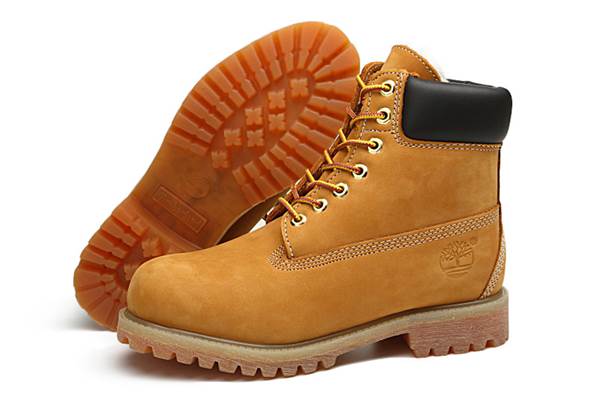
The brand of high-performance outdoor footwear and apparel is booming again. The company, owned by VF Corp (VFC), saw revenue rise more than 15% to $1.8 billion last year, and its operating profit rate climbed for the fourth year in a row, to 13%. And Timberland has ambitious plans to reach $3.1 billion in revenues and 18% margins in 2019, fueled by a bigger emphasis on higher-income city dwellers around the globe who love the outdoors, and perhaps more importantly, the outdoors look.

Not that long ago, the brand was in a rut: When VF bought New Hampshire-based Timberland for $2 billion in 2011, the brand’s sales were stuck at the same levels as in 2006, and its operating margin at about 8%. What’s more, Timberland didn’t seem to know what it stood for. Enter VF, which also owns brands like The North Face and Vans. VF, the world’s largest apparel maker, gave Timberland tools it didn’t have before, and prompted it to zero in on what it did best and aim to reach a more targeted set of customers.

Timberland’s brand president, Stewart Whitney, recently hosted Fortune at its store in New York’s SoHo district. Whitney, a 15-year Timberland veteran who became its head last year after overseeing its Asia expansion for six years, explained how Timberland got back on track, and how it plans to achieve its ambitious 2019 goals.

timberland-rev-projection


Fix:

Step 1- Tackle a confused brand identity

Timberland had fallen into the trap that ensnares countless brands: trying to cater to practically everyone. The company, which started life in 1955 as the Abington Shoe Company before becoming Timberland in 1978, sent signals to consumers that by turns indicated it was a boot brand, or a casual apparel brand, or an outdoor outerwear brand for hardcore adventurers. The marketing identity crisis ultimately confused consumers, failing to make clear enough what set Timberland apart.

“The fact that we didn’t stand for anything distinctly meant we didn’t really resonate,” says Whitney.

Just compare these three ads from a few years ago, before VF came in: they splinter the message, not making it clear whether Timberland is about technical and outdoor performance, green virtues, or outdoor fashion.


Unknown

In contrast, look at this ad from its current campaign, focusing on stylish urbanites:


Timberland Ad
Courtesy of Timberland

VF, a $13 billion apparel behemoth, gave Timberland the resources the small New Hamphire-based company didn’t have: firepower to conduct well-funded, deep dive market research. Armed with that muscle, Timberland undertook a three-year study, conducting long interviews with 18,000 consumers in eight countries.

Its conclusion: Timberland’s target customers should be what it calls “outdoor lifestylers,” or city dwellers who like the outdoors but want footwear and clothes that have more style than purely outdoor brands. (This also helps Timberland avoid competing too directly with sister-brand The North Face.)

Step 2 – Cater to a newly defined customer base

Timberland customers made it clear they wanted shoes, boots and clothes that were more versatile–in other words, attire that they could wear in town without looking like they were about to climb Mount Everest.

That led the company to build up its men’s casual wear assortment, to add more style so Timberland wares could be worn in cities and suburbs as well as out in the country, and to start to build a women’s casual footwear business. All that was through the lens of that “outdoor lifestyle” enthusiast, which Whitney says makes up about 20% of people in any market.

“When you go after lots of consumers, with lots of messages, the odds are higher for a misfire,” he says.

By repositioning itself at a higher end and being more focused, Timberland was able to shift away from promotions, meaning fewer items ending up in a clearance bin or in an outlet mall; the strategy also won the brand more pricing power.

Step 3 – Take over apparel production

Timberland in 2013 relaunched its North American apparel business, armed with VF’s enormous production, distribution and sourcing firepower. Prior to that, Timberland had been outsourcing clothing production to VF rival PVH (PVH), owner of the Izod, Tommy Hilfiger and Calvin Klein brands, among others.

Timberland still gets about 80% of its sales from footwear. But with its push to add more style to its clothing, as evidenced by its Black Forest line (featured in the ad above), it needs more control over production–something it now has–so it can add or remove products from its assortment more quickly.

Step 4 – Focus on key markets and streamline assortment

Even as Timberland plans a big push abroad, it won’t try to pepper target markets with stores everywhere. (Most of its sales are via wholesale to other stores rather than through its own stores.) Rather, the focus is on what Whitney calls “fortress markets,” or larger urban markets across key regions. What’s more, Timberland has eliminated many products in its assortment to focus on the specific items that sell well.

“That helps you elevate the brand, and when you elevate the brand, you elevate your selling prices, your margins and your profile,” Whitney says.


About the Author
Phil Wahba
By Phil WahbaSenior Writer
LinkedIn iconTwitter icon

Phil Wahba is a senior writer at Fortune primarily focused on leadership coverage, with a prior focus on retail.

See full bioRight Arrow Button Icon

Latest in Retail

Finance
Lorem ipsum dolor sit amet, consectetur adipiscing elit, sed do eiusmod tempor incididunt ut labore et dolore magna aliqua. Ut enim ad minim veniam
By Fortune Editors
October 20, 2025
Finance
Lorem ipsum dolor sit amet, consectetur adipiscing elit, sed do eiusmod tempor incididunt ut labore et dolore magna aliqua. Ut enim ad minim veniam
By Fortune Editors
October 20, 2025
Finance
Lorem ipsum dolor sit amet, consectetur adipiscing elit, sed do eiusmod tempor incididunt ut labore et dolore magna aliqua. Ut enim ad minim veniam
By Fortune Editors
October 20, 2025
Finance
Lorem ipsum dolor sit amet, consectetur adipiscing elit, sed do eiusmod tempor incididunt ut labore et dolore magna aliqua. Ut enim ad minim veniam
By Fortune Editors
October 20, 2025
Finance
Lorem ipsum dolor sit amet, consectetur adipiscing elit, sed do eiusmod tempor incididunt ut labore et dolore magna aliqua. Ut enim ad minim veniam
By Fortune Editors
October 20, 2025
Finance
Lorem ipsum dolor sit amet, consectetur adipiscing elit, sed do eiusmod tempor incididunt ut labore et dolore magna aliqua. Ut enim ad minim veniam
By Fortune Editors
October 20, 2025

Most Popular

Finance
Lorem ipsum dolor sit amet, consectetur adipiscing elit, sed do eiusmod tempor incididunt ut labore et dolore magna aliqua. Ut enim ad minim veniam
By Fortune Editors
October 20, 2025
Finance
Lorem ipsum dolor sit amet, consectetur adipiscing elit, sed do eiusmod tempor incididunt ut labore et dolore magna aliqua. Ut enim ad minim veniam
By Fortune Editors
October 20, 2025
Finance
Lorem ipsum dolor sit amet, consectetur adipiscing elit, sed do eiusmod tempor incididunt ut labore et dolore magna aliqua. Ut enim ad minim veniam
By Fortune Editors
October 20, 2025
Finance
Lorem ipsum dolor sit amet, consectetur adipiscing elit, sed do eiusmod tempor incididunt ut labore et dolore magna aliqua. Ut enim ad minim veniam
By Fortune Editors
October 20, 2025
Finance
Lorem ipsum dolor sit amet, consectetur adipiscing elit, sed do eiusmod tempor incididunt ut labore et dolore magna aliqua. Ut enim ad minim veniam
By Fortune Editors
October 20, 2025
Finance
Lorem ipsum dolor sit amet, consectetur adipiscing elit, sed do eiusmod tempor incididunt ut labore et dolore magna aliqua. Ut enim ad minim veniam
By Fortune Editors
October 20, 2025
Rankings
  • 100 Best Companies
  • Fortune 500
  • Global 500
  • Fortune 500 Europe
  • Most Powerful Women
  • Future 50
  • World’s Most Admired Companies
  • See All Rankings
Sections
  • Finance
  • Leadership
  • Success
  • Tech
  • Asia
  • Europe
  • Environment
  • Fortune Crypto
  • Health
  • Retail
  • Lifestyle
  • Politics
  • Newsletters
  • Magazine
  • Features
  • Commentary
  • Mpw
  • CEO Initiative
  • Conferences
  • Personal Finance
  • Education
Customer Support
  • Frequently Asked Questions
  • Customer Service Portal
  • Privacy Policy
  • Terms Of Use
  • Single Issues For Purchase
  • International Print
Commercial Services
  • Advertising
  • Fortune Brand Studio
  • Fortune Analytics
  • Fortune Conferences
  • Business Development
About Us
  • About Us
  • Editorial Calendar
  • Press Center
  • Work At Fortune
  • Diversity And Inclusion
  • Terms And Conditions
  • Site Map
  • Facebook icon
  • Twitter icon
  • LinkedIn icon
  • Instagram icon
  • Pinterest icon

Most Popular

placeholder alt text
North America
'I meant what I said in Davos': Carney says he really is planning a Canada split with the U.S. along with 12 new trade deals
By Rob Gillies and The Associated PressJanuary 28, 2026
1 day ago
placeholder alt text
C-Suite
Fortune 500 CEOs are no longer giving employees an A for effort. Now they want proof of impact
By Claire ZillmanJanuary 28, 2026
2 days ago
placeholder alt text
Success
Every U.S. Olympian is going home with $200,000, whether they medal or not, thanks to a billionaire's $100 million gift
By Jacqueline MunisJanuary 28, 2026
1 day ago
placeholder alt text
Politics
The American taxpayer spent nearly half a billion dollars deploying federal troops to U.S. cities in 2025, CBO finds
By Nick LichtenbergJanuary 28, 2026
1 day ago
placeholder alt text
Real Estate
Ryan Serhant thinks the American Dream was just a 'slogan created by banks,' but it was really about FDR, the Great Depression, and an economic crisis
By Sydney Lake and Nick LichtenbergJanuary 26, 2026
3 days ago
placeholder alt text
C-Suite
Jeff Bezos capped his Amazon salary at $80,000: ‘How could I possibly need more incentive?’
By Sydney LakeJanuary 28, 2026
1 day ago

© 2026 Fortune Media IP Limited. All Rights Reserved. Use of this site constitutes acceptance of our Terms of Use and Privacy Policy | CA Notice at Collection and Privacy Notice | Do Not Sell/Share My Personal Information
FORTUNE is a trademark of Fortune Media IP Limited, registered in the U.S. and other countries. FORTUNE may receive compensation for some links to products and services on this website. Offers may be subject to change without notice.


Latest in Retail

Workplace CultureWalmart
Walmart doubles down on health, giving 3,000 pharmacy workers a promotion and a raise up to 86%—with no college degree required
By Sydney LakeJanuary 29, 2026
3 hours ago
RetailFortune 500
How stroopwafels and saffron tiramisu fit into Starbucks’ plan to get to 40,000 stores around the world
By Phil WahbaJanuary 29, 2026
6 hours ago
Big TechRetail
Amazon is closing its futuristic Go and Fresh stores—showing logistics and tech aren’t enough to make old-school retail work
By Phil WahbaJanuary 29, 2026
14 hours ago
southwest
North AmericaAirline industry
50-year tradition of Southwest Airlines letting you choose your own seat comes to an end
By Rio Yamat and The Associated PressJanuary 28, 2026
1 day ago
hanrahan
CommentarySocial Media
How social media upended the 75-year-old playbook of big CPG
By Oisín HanrahanJanuary 28, 2026
1 day ago
RetailEurope CEO
The British retailer riding the wave of America’s always booming sneaker market
By Phil WahbaJanuary 27, 2026
3 days ago