Back when the Soviet Union was still a communist empire, its flagship official newspaper was called Pravda, or “Truth.” But everybody knew that it was a purveyor of lies. The credibility of Pravda was so low that those who bothered to read it at all would believe exactly the opposite of what it tried to get across.
China is supposed to have learned many lessons from the collapse of the Soviet Union. One of them is that only a thriving economy can save the rule of a communist party. But it seems that the Chinese Communist Party’s (CCP) own Publicity Department (formerly known as the Propaganda Department), which controls the country’s media, has learned nothing about the futility of lying about economic performance. A recently leaked official document issued by the Publicity Department ordered official Chinese media outlets that their priority for September was to be “promoting the discourse on China’s bright economic future and the superiority of China’s system.”
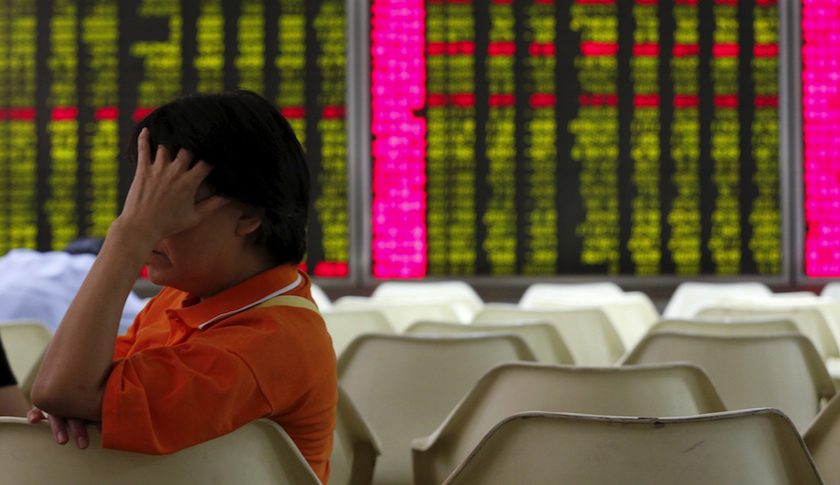
Judging from the content of the directive, it is clear that China’s propaganda authorities are trying to use their control over the Chinese media to stifle honest reporting on the state of the economy and manufacture a more optimistic message. At one level, Beijing’s desire to counter the pessimism about China is understandable. In the last two months, the economic news coming out of China was both depressing and worrying: a spectacular stock market crash, a sudden currency devaluation, and anemic economic activities suggesting that the economy will miss the official target of 7% annual growth for 2015.
But is the CCP’s Publicity Department actually going to restore investor confidence by hyping “China’s bright economic future and the superiority of China’s system” and intensifying press censorship?
The answer is almost definitely not.
What Beijing seems not to understand is that current pessimism about the Chinese economy has less to do with the recent spate of bad news than with the lack of reliable data on the Chinese economy and the opacity of Beijing’s process of economic policymaking and its intentions.
Although it is doubtful whether Beijing’s propagandists know it, the most precious commodity in the marketplace is credibility. Sadly, what Beijing has done in recent months is to engage in acts that systematically undermine its own credibility. Exhibit A is Beijing’s Pravda-like version of its growth data. Despite indicators showing that the economy can in no way be growing at an annual rate of 7% (for example, in the first seven months of this year, power consumption grew barely 1% while rail freight fell 10%), Chinese officials continue to insist, with a straight face, that growth is meeting the 7% target.
Another example is the sudden devaluation of the renminbi in mid-August. After portraying the move as a technical step to make the currency more flexible, Beijing retreated almost immediately and began to defend its new—and less credible—peg to the dollar, spending more than $100 billion in less than a month doing so.
The last example is China’s ill-advised attempt to prop up a crashing stock market bubble. After declaring, not too long ago, that the government would allow market forces to play a “decisive role” in the economy and promising further financial liberalization, Beijing reacted to the implosion of China’s stock markets with a slew of draconian administrative measures. It pumped in more than $200 billion dollars to support stock prices, suspended all initial public offerings, and arrested more than a dozen executives in the financial industry on charges of “malicious manipulation of the market.”
These actions have seriously undermined the credibility of the Chinese government and shaken the confidence of investors and business executives.
[fortune-brightcove videoid=4449759182001]
The only way for Beijing to restore its credibility and revive investor confidence is to be forthcoming about its economic difficulties and policy solutions. Regrettably, instead of following the advice that “honesty is the best policy,” Beijing is apparently trying to hoodwink the market, as shown by its Publicity Department’s recent order. Such a step will almost certainly backfire. Painting a rosy picture of the Chinese economy with falsehood and censorship will only convince the international business community that things are actually much worse. Consequently, companies or other nations will apply what might be called a “dishonesty risk premium” to China, and become even more reluctant to do business or invest in the country.
It is not too late for Beijing to do the right thing. Obviously, besides immediately abandoning its propaganda campaign, the Chinese government should reassure the global business community with concrete, honest, realistic, and market-based solutions that address the underlying pathologies of China’s poor economic performance: massive debt, endemic overcapacity, and an economic system that channels low-cost capital into inefficient state-owned enterprises at the expense of private entrepreneurs and consumers.
Minxin Pei is the Tom and Margot Pritzker ’72 Professor of Government at Claremont McKenna College and a non-resident senior fellow of the German Marshall Fund of the United States.