• Home
  • Latest
  • Fortune 500
  • Finance
  • Tech
  • Leadership
  • Lifestyle
  • Rankings
  • Multimedia

Trendingnow

1

CEO of $20 billion AI firm Perplexity says the secret to success is ‘sleeping with that fear’ that your competitor will steal your idea

2

Social Security's 2032 deadline puts a 22% cut on the table — but Washington has way less room to negotiate than 1983

3

Boomers actually do hold most of the wealth and power. So why do they call it 'whiny' to point that out?

1

CEO of $20 billion AI firm Perplexity says the secret to success is ‘sleeping with that fear’ that your competitor will steal your idea

2

Social Security's 2032 deadline puts a 22% cut on the table — but Washington has way less room to negotiate than 1983

3

Boomers actually do hold most of the wealth and power. So why do they call it 'whiny' to point that out?
LeadershipFuture of Work

Here’s why tech companies rule when it comes to leading change

By
Bill Pasmore
Bill Pasmore
Down Arrow Button Icon
By
Bill Pasmore
Bill Pasmore
Down Arrow Button Icon
September 11, 2015, 10:26 AM ET
US-IT-INTERNET-FACEBOOK-MESSENGER
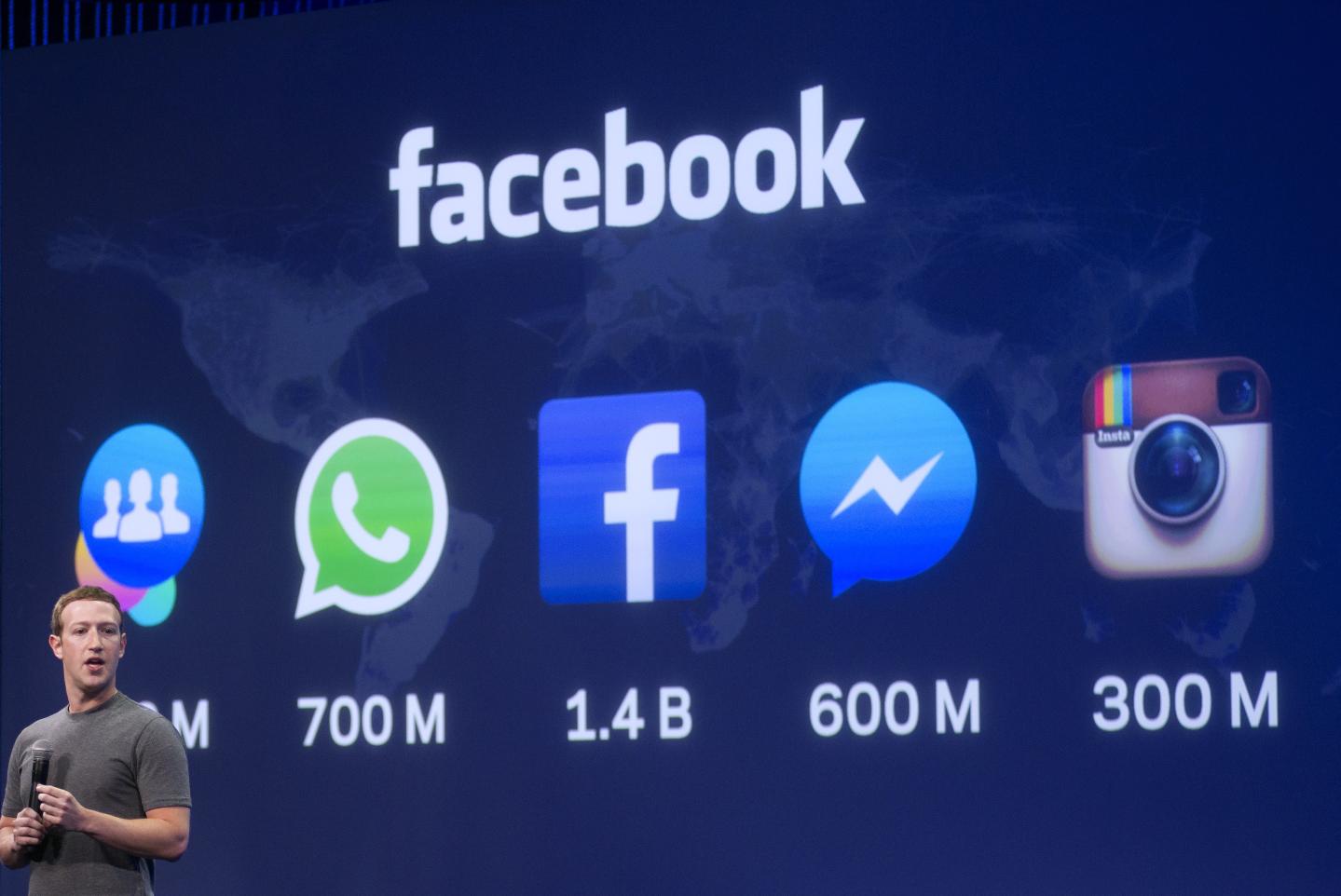
Facebook CEO Mark Zuckerberg speaks at the F8 summit in San Francisco, California, on March 25, 2015. Zuckerberg introduced a new messenger platform at the event. AFP PHOTO/JOSH EDELSON (Photo credit should read Josh Edelson/AFP/Getty Images)Photograph by Josh Edelson — AFP/Getty Images
Add Fortune on Google for similar content.

Change may be the only constant, but it’s also complex, difficult, and often overwhelming. In this excerpt from his new book, Leading Continuous Change, Bill Pasmore looks at why tech’s leading players are so good at getting it right.

Improving our individual skills to lead change can be challenging. Helping our organizations benefit from what we have learned can be even tougher. What does it take to apply new ways of leading complex, continuous change to help our organizations navigate churn in the real world?

There’s an old Indian saying that it is easier to help an elephant get up if it’s already in the process of getting up rather than in the process of sitting down. If your organization is concerned about this issue, and has already designed some flexibility into how people approach their work, you’ll be ahead of the curve.

Let’s contrast a couple of examples. Some years ago colleagues and I decided to see if we could keep a manufacturing plant in Cleveland from closing, by engaging employees in transforming the operation. Executives of the corporation that owned the plant agreed that if we could improve productivity and reduce costs, they would reopen their decision to relocate production offshore.


The plant was very old, with outdated equipment and a traditional hierarchical culture. People were slotted into narrow jobs, most of which allowed little opportunity for creativity. Despite this the plant manager was a student of change and was interested in supporting our experiment.

We worked diligently for several weeks with the help of a number of employee task forces to come up with a prioritized list of changes to pursue. To our surprise, when it came time to implement the changes, we asked for volunteers to help with the implementation—and no one signed on! When we investigated further, we found that employees, having heard months earlier that the plant would close, had already made other plans for their futures. No one was excited about extending their time in a setting that they experienced as old, dirty, and unpleasant. They had little energy for trying to change an organization that had not engaged them in change before. They knew how difficult it would be to shift their culture, change the organization’s approach to management, redefine their jobs, introduce new technology, and win the confidence of senior leadership. It was easier to simply exit and move on. The plant closed.

Contrast this example with Google (GOOG), Facebook (FB), or Silicon Valley startups. Their cultures are entrepreneurial, change is constant, roles are loosely defined, and people are dedicated to learning. Strategies shift as new ideas are explored or competitors make moves. Structures and processes are introduced but are designed to allow continuous innovation. People are expected to contribute their ideas. Leadership is top-down, bottom-up, and sideways, all at the same time.

Which of these examples (the plant in Cleveland or a Silicon Valley startup) would be more receptive to adopting new approaches to leading complex, continuous change? The answer is obvious. When rigid organizations face complex change challenges, they want to control how they respond. They want to divide their response into a series of independent projects, each with its own plans, schedules, and leaders. They want elaborate plans and regular progress metrics so that leaders can intervene when issues arise. They want to keep things under control, as if complex change can actually be controlled.

[fortune-brightcove videoid=4411540788001]


Entrepreneurial organizations expect change to happen and design for it. They leave room for people to react without central guidance, although they expect people to engage one another as they do so. Big decisions about major new projects, acquisitions, or company strategies are made centrally with a lot of input, but there is little or no micromanagement. People know what they bring to the table, but they don’t know what work they will be doing in the future because priorities will change. Boundaries are permeable across units, teams, and levels in the organization. People are more concerned about the well-being and continued existence of the organization than accumulating power and influence.

When faced with change, these entrepreneurial companies do not try to formulate projects with precise budgets, deadlines, and metrics. They start working on things and see what happens. Projects shrink or grow with the promise they show and the excitement they generate. Priorities shift but not people’s commitment to the ultimate success of the company. No one feels like he or she is working on a production line under tight constraints.

Everyone is free to comment and to try to contribute in the best way he or she knows how.

It is not that entrepreneurial organizations are better than more tightly structured companies. Each is designed to be fit for a purpose. Yet when it comes to being ready for complex, continuous change, the entrepreneurial organization has the clear advantage. If you are in a tightly structured company, is the situation hopeless? No. Michael Tushman and Charles O’Reilly have written extensively on the topic of ambidextrous organizations, by which they mean that organizations should develop the capability of operating in a tightly structured manner when they need to and in a looser fashion when that is called for. Although learning to become ambidextrous isn’t easy, there’s no law against it. It just requires intention and effort. What keeps organizations from becoming more ambidextrous? Not laws of nature but rather leaders who say “we can’t” or “we won’t.”

To achieve breakthroughs in organizational agility, leaders need to help their organizations learn by engaging in Discovering, Deciding, Doing, and Discerning. Just like individuals, organizations learn from practice, provided the learning is well directed and well supported.

Leaders need to support greater ambidexterity because no one else has permission to change the rules. At first the rules don’t need to be changed permanently; they just have to be suspended for a period of time as people are invited to experiment with different approaches to continuous change. Once an organization gains greater insights into what works and what doesn’t, more-permanent rule changes can be considered. Only then will true breakthroughs in responding to complex, continuous change occur.

Excerpted from Leading Continuous Change: Navigating Churn in the Real World. Reprinted by arrangement with Berrett-Koehler Publishers. Copyright © Bill Pasmore, 2015.

About the Author
By Bill Pasmore
See full bioRight Arrow Button Icon
Add Fortune on Google for similar content.

Latest in Leadership

Finance
Lorem ipsum dolor sit amet, consectetur adipiscing elit, sed do eiusmod tempor incididunt ut labore et dolore magna aliqua. Ut enim ad minim veniam
By Fortune Editors
October 20, 2025
Finance
Lorem ipsum dolor sit amet, consectetur adipiscing elit, sed do eiusmod tempor incididunt ut labore et dolore magna aliqua. Ut enim ad minim veniam
By Fortune Editors
October 20, 2025
Finance
Lorem ipsum dolor sit amet, consectetur adipiscing elit, sed do eiusmod tempor incididunt ut labore et dolore magna aliqua. Ut enim ad minim veniam
By Fortune Editors
October 20, 2025
Finance
Lorem ipsum dolor sit amet, consectetur adipiscing elit, sed do eiusmod tempor incididunt ut labore et dolore magna aliqua. Ut enim ad minim veniam
By Fortune Editors
October 20, 2025
Finance
Lorem ipsum dolor sit amet, consectetur adipiscing elit, sed do eiusmod tempor incididunt ut labore et dolore magna aliqua. Ut enim ad minim veniam
By Fortune Editors
October 20, 2025
Finance
Lorem ipsum dolor sit amet, consectetur adipiscing elit, sed do eiusmod tempor incididunt ut labore et dolore magna aliqua. Ut enim ad minim veniam
By Fortune Editors
October 20, 2025

Most Popular

Finance
Lorem ipsum dolor sit amet, consectetur adipiscing elit, sed do eiusmod tempor incididunt ut labore et dolore magna aliqua. Ut enim ad minim veniam
By Fortune Editors
October 20, 2025
Finance
Lorem ipsum dolor sit amet, consectetur adipiscing elit, sed do eiusmod tempor incididunt ut labore et dolore magna aliqua. Ut enim ad minim veniam
By Fortune Editors
October 20, 2025
Finance
Lorem ipsum dolor sit amet, consectetur adipiscing elit, sed do eiusmod tempor incididunt ut labore et dolore magna aliqua. Ut enim ad minim veniam
By Fortune Editors
October 20, 2025
Finance
Lorem ipsum dolor sit amet, consectetur adipiscing elit, sed do eiusmod tempor incididunt ut labore et dolore magna aliqua. Ut enim ad minim veniam
By Fortune Editors
October 20, 2025
Finance
Lorem ipsum dolor sit amet, consectetur adipiscing elit, sed do eiusmod tempor incididunt ut labore et dolore magna aliqua. Ut enim ad minim veniam
By Fortune Editors
October 20, 2025
Finance
Lorem ipsum dolor sit amet, consectetur adipiscing elit, sed do eiusmod tempor incididunt ut labore et dolore magna aliqua. Ut enim ad minim veniam
By Fortune Editors
October 20, 2025
Fortune Secondary Logo
Rankings
  • 100 Best Companies
  • Fortune 500
  • Global 500
  • Fortune 500 Europe
  • Most Powerful Women
  • World's Most Admired Companies
  • See All Rankings
  • Lists Calendar
Sections
  • Finance
  • Fortune Crypto
  • Features
  • Leadership
  • Health
  • Commentary
  • Success
  • Retail
  • Mpw
  • Tech
  • Lifestyle
  • CEO Initiative
  • Asia
  • Politics
  • Conferences
  • Europe
  • Newsletters
  • Personal Finance
  • Environment
  • Magazine
  • Education
Customer Support
  • Frequently Asked Questions
  • Customer Service Portal
  • Privacy Policy
  • Terms Of Use
  • Single Issues For Purchase
  • International Print
Commercial Services
  • Advertising
  • Fortune Brand Studio
  • Fortune Analytics
  • Fortune Conferences
  • Business Development
  • Group Subscriptions
About Us
  • About Us
  • Press Center
  • Work At Fortune
  • Terms And Conditions
  • Site Map
  • About Us
  • Press Center
  • Work At Fortune
  • Terms And Conditions
  • Site Map
  • Facebook icon
  • Twitter icon
  • LinkedIn icon
  • Instagram icon
  • Pinterest icon

Latest in Leadership

Agentic AI systems are doing more and more work. Now humans need to figure out how to verify it all
AIBrainstorm Tech
Agentic AI systems are doing more and more work. Now humans need to figure out how to verify it all
By Alexei OreskovicJune 15, 2026
2 hours ago
‘We’ll never do this again’: UFC CEO Dana White says White House fight night was too expensive to do it again
North AmericaDonald Trump
‘We’ll never do this again’: UFC CEO Dana White says White House fight night was too expensive to do it again
By The Associated Press and Dan GelstonJune 15, 2026
7 hours ago
The billionaire founder and CEO of Vista Equity Partners makes plea to businesses adopting AI: ‘Don’t destroy your intern program’
AIBrainstorm Tech
The billionaire founder and CEO of Vista Equity Partners makes plea to businesses adopting AI: ‘Don’t destroy your intern program’
By Jeff John RobertsJune 15, 2026
10 hours ago
Ricardo Pepi
SuccessCareers
Team USA star Ricardo Pepi grew up in a trailer in El Paso—and his parents pawned their car title to fuel his soccer dream. Now, he’s in the World Cup
By Preston ForeJune 15, 2026
11 hours ago
NBA Finals MVP Jalen Brunson
SuccessCareers
Jalen Brunson just led the Knicks to an NBA title—and credits his famous dad’s work ethic for preparing him for the job
By Emma BurleighJune 15, 2026
11 hours ago
vinod
C-SuiteGoogle
Silicon Valley legend Vinod Khosla tears into ‘idiotic, shortsighted, and very selfish’ Gen Z Stanford protests of Google CEO: ‘The stupidity’
By Nick LichtenbergJune 15, 2026
11 hours ago

Most Popular

CEO of $20 billion AI firm Perplexity says the secret to success is ‘sleeping with that fear’ that your competitor will steal your idea
Success
CEO of $20 billion AI firm Perplexity says the secret to success is ‘sleeping with that fear’ that your competitor will steal your idea
By Preston ForeJune 13, 2026
3 days ago
Social Security's 2032 deadline puts a 22% cut on the table — but Washington has way less room to negotiate than 1983
Personal Finance
Social Security's 2032 deadline puts a 22% cut on the table — but Washington has way less room to negotiate than 1983
By John W. Diamond and The ConversationJune 12, 2026
3 days ago
Boomers actually do hold most of the wealth and power. So why do they call it 'whiny' to point that out?
Economy
Boomers actually do hold most of the wealth and power. So why do they call it 'whiny' to point that out?
By Nick LichtenbergJune 14, 2026
2 days ago
Current price of oil as of June 15, 2026
Personal Finance
Current price of oil as of June 15, 2026
By Joseph HostetlerJune 15, 2026
13 hours ago
SpaceX surge further boosts Saudi billionaire prince’s fortune
Investing
SpaceX surge further boosts Saudi billionaire prince’s fortune
By Adveith Nair and BloombergJune 14, 2026
1 day ago
Iran proved it can close the Strait of Hormuz, but the U.S. is advertising very loudly that the world's top superpower can at least punch open a hole
Energy
Iran proved it can close the Strait of Hormuz, but the U.S. is advertising very loudly that the world's top superpower can at least punch open a hole
By Jason MaJune 14, 2026
1 day ago

© 2026 Fortune Media IP Limited. All Rights Reserved. Use of this site constitutes acceptance of our Terms of Use and Privacy Policy | CA Notice at Collection and Privacy Notice | Do Not Sell/Share My Personal Information
FORTUNE is a trademark of Fortune Media IP Limited, registered in the U.S. and other countries. FORTUNE may receive compensation for some links to products and services on this website. Offers may be subject to change without notice.