• Home
  • Latest
  • Fortune 500
  • Finance
  • Tech
  • Leadership
  • Lifestyle
  • Rankings
  • Multimedia
CommentaryFinance

How to avoid another market crash

By
Douglas Cliggott
Douglas Cliggott
Down Arrow Button Icon
By
Douglas Cliggott
Douglas Cliggott
Down Arrow Button Icon
September 2, 2015, 1:19 PM ET
Markets React To Federal Reserve Policy Announcement
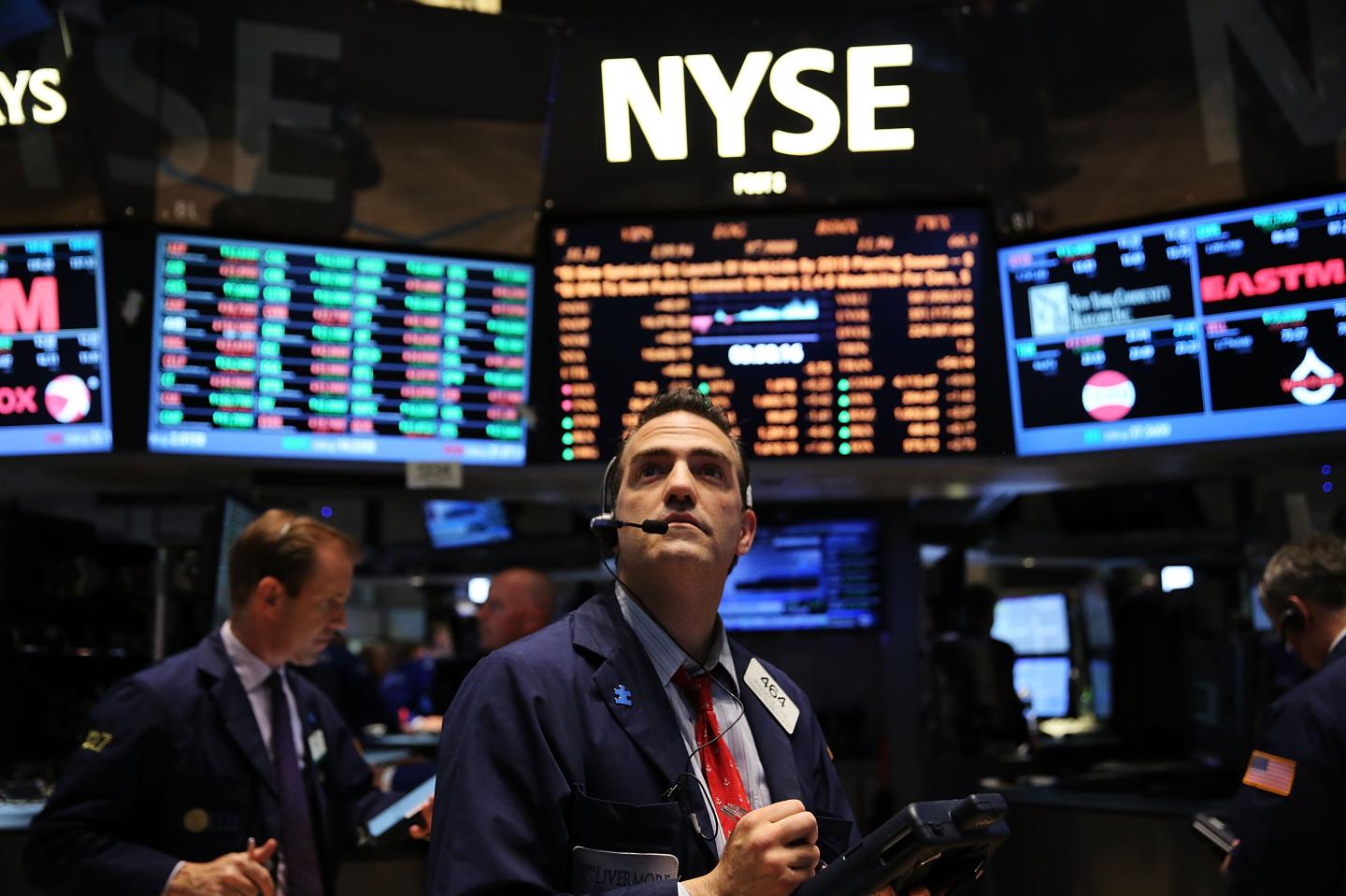
NEW YORK, NY - APRIL 30: Traders work on the floor of the New York Stock Exchange on April 30, 2014 in New York City. The Dow Jones industrial average closed at a new record high Wednesday after the Federal Reserve said it would reduce its bond-buying program. According to preliminary calculations, the Dow Jones industrial average rose 45.47 points, to 16,580.84. (Photo by Spencer Platt/Getty Images)Photograph by Spencer Platt — Getty Images

Until now, Wall Street lobby groups have been able to largely ignore any calls for taxing the financial services industry.

Eleven European governments say they’re going to implement a coordinated tax on stock market transactions, but progress has been slow and U.S. policymakers have been much more cautious.

Now, with Bernie Sanders, a major proponent of such taxes, surging in the polls and market volatility rattling investors, the momentum behind this idea is likely to build—as will the backlash.

What we’re talking about here is a small tax, at a fraction of 1%, on each trade of stocks, bonds and derivatives. Opponents argue this would reduce “market liquidity.” Our ability to buy or sell securities at their so-called “equilibrium value” would be limited. And this, in turn, would translate into poorer resource allocation in the economy, and weaker economic growth.

These fears are misplaced.

In a “bull market” there is plenty of liquidity – it is easy to buy and sell a lot of stock when folks are optimistic and prices are rising. But in a “crisis,” it becomes very difficult to trade. The observed changes in “liquidity conditions” in these two types of market environments have nothing to do with transactions costs and everything to do with the fear of losing money when prices are falling.

The sad reality is markets misprice assets all the time. Just take a look at the market this past week. What was the “equilibrium level” of the S&P 500? Was it the low on Tuesday of 1867, or was it the high on Friday of 1990? Was it somewhere in between?

The truth is we don’t know. Stock prices are simply far more volatile than the earnings and cash flows of the companies they represent. And this mispricing of securities often persists for long periods of time, and results in “sub-optimal” resource allocation for our economy.

A tax on stock trades isn’t a magic elixir. It won’t prevent stock prices from moving far away from their “equilibrium values” any more than high transactions costs prevented house prices from moving far away from their equilibrium values. But nor will a transactions tax make our financial markets any less “liquid” of any less “efficient” than they already are.

So why then would a tax on stock transactions be a perfect tax? There are three reasons why.

First, billions of dollars of stock market transactions are already being “taxed.” For more than a decade, so-called high-frequency traders have used so-called “latency arbitrage” to take a little bite from hundreds of millions of transactions in U.S. equity markets. While a purchase order is slowly making its way to an exchange (the “latency” part), a trader with higher-speed access to that exchange intercepts the order and pre-emptively buys and marks up the price of the shares, and then sells them back at a higher price to the slower-moving buyer (the “arbitrage”).

This activity plays out in milliseconds over and over again, and the victim is unaware of the bite. This transactions “tax” does not do the public a whit of good, but it definitely enriches a handful of traders whose low-percentage, high-volume skimming went, until recently, unnoticed.

An explicit transaction tax could transparently and legitimately capture revenue for public purposes and put the high-volume skimmers out of business.

For believers in efficient markets, low-priced, easy-access trading — so-called “frictionless markets” — has been the great dream. But the reality uncovered by psychologists and behavioral economists is that low-priced trading actually harms the vast majority of Americans that embrace it.

Humans overreact to new stimuli, as do the machines they construct, to trade on their behalf. In financial markets, people and their machines move in herds, watching others and emulating them, buying as prices rise and selling as they fall.

At the supermarket, we respond to higher prices by cutting back purchases and we respond to lower prices by loading up the shopping cart. But in the stock market, buyers flock to stocks that have rallied and shy away from stocks that have slumped.

Low-priced easy-access trading makes stock flipping as easy as Tweeting. It enables our primal urges to follow the crowd and to chase the market. Turning the most straightforward market dictum on its head, low-priced trading – by both humans and by machines — leads us to “buy high and sell low.” We hurt ourselves by frequently flipping stocks and we hurt others by amplifying the volatility of stock price movements.

To quote Jack Bogle, founder of the fund management company Vanguard: “When it comes to trading, the greater the activity, the worse the returns.”

Taxing stock market transactions – intentionally adding meaningful friction to the market – can reduce wasteful trading and improve our financial well-being.

Finally, the proceeds from a tax on financial transactions could do a lot of social good. It could support cash-starved financial regulators desperately seeking funds to fulfill their policy mandates. It could help to fund more generous social security benefits to the millions of Americans with nowhere near enough 401K or IRA savings to support a decent standard of living in their retirement years. It could do many positive things.

The social costs of a financial transactions tax appear to be close to zero, and the potential benefits to society loom large. The perfect tax.

Douglas Cliggott is lecturer in economics at the University of Massachusetts Amherst and former managing director and U.S. equity strategist at JP Morgan Chase.

About the Author
By Douglas Cliggott
See full bioRight Arrow Button Icon

Latest in Commentary

Finance
Lorem ipsum dolor sit amet, consectetur adipiscing elit, sed do eiusmod tempor incididunt ut labore et dolore magna aliqua. Ut enim ad minim veniam
By Fortune Editors
October 20, 2025
Finance
Lorem ipsum dolor sit amet, consectetur adipiscing elit, sed do eiusmod tempor incididunt ut labore et dolore magna aliqua. Ut enim ad minim veniam
By Fortune Editors
October 20, 2025
Finance
Lorem ipsum dolor sit amet, consectetur adipiscing elit, sed do eiusmod tempor incididunt ut labore et dolore magna aliqua. Ut enim ad minim veniam
By Fortune Editors
October 20, 2025
Finance
Lorem ipsum dolor sit amet, consectetur adipiscing elit, sed do eiusmod tempor incididunt ut labore et dolore magna aliqua. Ut enim ad minim veniam
By Fortune Editors
October 20, 2025
Finance
Lorem ipsum dolor sit amet, consectetur adipiscing elit, sed do eiusmod tempor incididunt ut labore et dolore magna aliqua. Ut enim ad minim veniam
By Fortune Editors
October 20, 2025
Finance
Lorem ipsum dolor sit amet, consectetur adipiscing elit, sed do eiusmod tempor incididunt ut labore et dolore magna aliqua. Ut enim ad minim veniam
By Fortune Editors
October 20, 2025

Most Popular

Finance
Lorem ipsum dolor sit amet, consectetur adipiscing elit, sed do eiusmod tempor incididunt ut labore et dolore magna aliqua. Ut enim ad minim veniam
By Fortune Editors
October 20, 2025
Finance
Lorem ipsum dolor sit amet, consectetur adipiscing elit, sed do eiusmod tempor incididunt ut labore et dolore magna aliqua. Ut enim ad minim veniam
By Fortune Editors
October 20, 2025
Finance
Lorem ipsum dolor sit amet, consectetur adipiscing elit, sed do eiusmod tempor incididunt ut labore et dolore magna aliqua. Ut enim ad minim veniam
By Fortune Editors
October 20, 2025
Finance
Lorem ipsum dolor sit amet, consectetur adipiscing elit, sed do eiusmod tempor incididunt ut labore et dolore magna aliqua. Ut enim ad minim veniam
By Fortune Editors
October 20, 2025
Finance
Lorem ipsum dolor sit amet, consectetur adipiscing elit, sed do eiusmod tempor incididunt ut labore et dolore magna aliqua. Ut enim ad minim veniam
By Fortune Editors
October 20, 2025
Finance
Lorem ipsum dolor sit amet, consectetur adipiscing elit, sed do eiusmod tempor incididunt ut labore et dolore magna aliqua. Ut enim ad minim veniam
By Fortune Editors
October 20, 2025
Fortune Secondary Logo
Rankings
  • 100 Best Companies
  • Fortune 500
  • Global 500
  • Fortune 500 Europe
  • Most Powerful Women
  • World's Most Admired Companies
  • See All Rankings
  • Lists Calendar
Sections
  • Finance
  • Fortune Crypto
  • Features
  • Leadership
  • Health
  • Commentary
  • Success
  • Retail
  • Mpw
  • Tech
  • Lifestyle
  • CEO Initiative
  • Asia
  • Politics
  • Conferences
  • Europe
  • Newsletters
  • Personal Finance
  • Environment
  • Magazine
  • Education
Customer Support
  • Frequently Asked Questions
  • Customer Service Portal
  • Privacy Policy
  • Terms Of Use
  • Single Issues For Purchase
  • International Print
Commercial Services
  • Advertising
  • Fortune Brand Studio
  • Fortune Analytics
  • Fortune Conferences
  • Business Development
  • Group Subscriptions
About Us
  • About Us
  • Press Center
  • Work At Fortune
  • Terms And Conditions
  • Site Map
  • About Us
  • Press Center
  • Work At Fortune
  • Terms And Conditions
  • Site Map
  • Facebook icon
  • Twitter icon
  • LinkedIn icon
  • Instagram icon
  • Pinterest icon

Latest in Commentary

valerie
CommentaryLayoffs
Tesla’s former HR chief: the AI layoff panic Is built on a false premise—here’s what most workers need to know
By Valerie Capers WorkmanMay 1, 2026
5 minutes ago
tamas
CommentaryPolymarket
SEON CEO: Prediction markets can forecast the future. Can they survive their own manipulation problem?
By Tamas KadarMay 1, 2026
3 hours ago
sundar
Commentary250 Years of Innovation
America at 250: immigration and the making of an innovative nation
By Nasser KazeminyMay 1, 2026
5 hours ago
Derek Kilmer
CommentaryEconomics
The U.S. economy is booming — just not where 50 million Americans live
By Derek KilmerMay 1, 2026
5 hours ago
hegseth
CommentaryMilitary
America shot its arsenal empty in 2 wars. Now it needs Beijing’s permission to reload
By Steve H. Hanke and Jeffrey WengApril 30, 2026
20 hours ago
Duncan Tait, CEO of Inchcape
Europecar manufacturing
“Competition is good for the industry”. Inchcape CEO’s case for optimism in automotive’s next chapter
By Duncan TaitApril 30, 2026
23 hours ago

Most Popular

China dominates the world's lithium supply. The U.S. just found 328 years' worth in its own backyard
North America
China dominates the world's lithium supply. The U.S. just found 328 years' worth in its own backyard
By Jake AngeloApril 30, 2026
19 hours ago
Apple cofounder Ronald Wayne—whose stake would be worth up to $400 billion had he not sold it in 1976—says that at 91, he has no regrets
Success
Apple cofounder Ronald Wayne—whose stake would be worth up to $400 billion had he not sold it in 1976—says that at 91, he has no regrets
By Preston ForeApril 27, 2026
4 days ago
Accenture's Julie Sweet blew up 50 years of company history. She says the hardest part is still ahead
Conferences
Accenture's Julie Sweet blew up 50 years of company history. She says the hardest part is still ahead
By Nick LichtenbergApril 29, 2026
2 days ago
America shot its arsenal empty in 2 wars. Now it needs Beijing's permission to reload
Commentary
America shot its arsenal empty in 2 wars. Now it needs Beijing's permission to reload
By Steve H. Hanke and Jeffrey WengApril 30, 2026
20 hours ago
Google Cloud revenue is now 18% of Alphabet's business. Is this the beginning of the end of Google's search identity?
Big Tech
Google Cloud revenue is now 18% of Alphabet's business. Is this the beginning of the end of Google's search identity?
By Alexei OreskovicApril 29, 2026
1 day ago
Exclusive: America's largest Black-owned bank launches podcast with mission to unlock hidden shame holding back generational wealth
Banking
Exclusive: America's largest Black-owned bank launches podcast with mission to unlock hidden shame holding back generational wealth
By Nick LichtenbergApril 29, 2026
2 days ago

© 2026 Fortune Media IP Limited. All Rights Reserved. Use of this site constitutes acceptance of our Terms of Use and Privacy Policy | CA Notice at Collection and Privacy Notice | Do Not Sell/Share My Personal Information
FORTUNE is a trademark of Fortune Media IP Limited, registered in the U.S. and other countries. FORTUNE may receive compensation for some links to products and services on this website. Offers may be subject to change without notice.