• Home
  • Latest
  • Fortune 500
  • Finance
  • Tech
  • Leadership
  • Lifestyle
  • Rankings
  • Multimedia
TechDenali

This new high tech network is recording climate data across Alaska

By
Katie Fehrenbacher
Katie Fehrenbacher
Down Arrow Button Icon
By
Katie Fehrenbacher
Katie Fehrenbacher
Down Arrow Button Icon
August 31, 2015, 2:55 PM ET
Photo courtesy of USCRN

This week, President Obama is bringing some rare attention to how climate change is impacting Alaska, with a visit to the state and an official name change for the nation’s highest mountain. But much more quietly, an important sensor network is slowly being built across the state that collects crucial information about how the warming temperatures are transforming Alaska.

The project, the U.S. Climate Reference Network, or USCRN, currently involves a network of 18 environmental data collection stations across Alaska, as well as two in Hawaii and 114 across the lower 48 states. The network is managed by the National Centers for Environmental Information (NCEI), in partnership with the Atmospheric Turbulence and Diffusion Division (ATDD), both divisions of the National Oceanic and Atmospheric Association (NOAA).

Over the last few years the engineers have been expanding the network across Alaska in an attempt to get the most accurate data about the state’s rapidly changing air temperatures, precipitation levels (rain and snow), soil moisture and ground temperature. The team, which adds around two stations annually, hopes to have 29 stations by 2022. The idea to expand the network into Alaska was first funded in 2010.

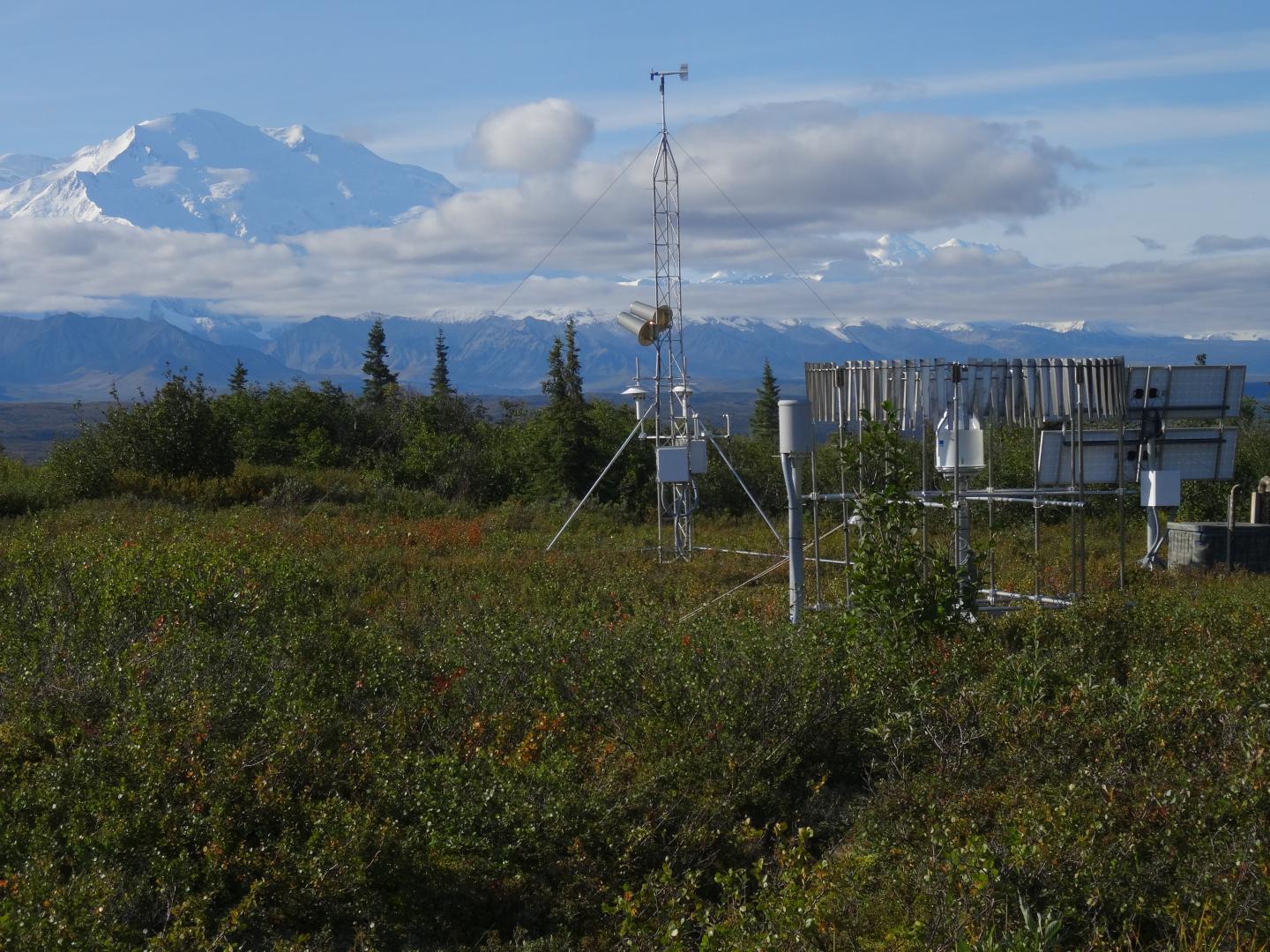
In recent weeks, the engineers have installed two new stations in Alaska, including one 27 miles north of the newly-renamed mountain, Denali, called the Denali Station. That station is situated near the Wonder Lake Campground at the end of the Denali Park Road at an elevation of 2,225 feet.

The other new Alaskan station is Selawik Station, about 28 miles east of the village of Selawik, near the state’s north-west coast. That station is next to the Selawik River and a lake, which makes it accessible to float planes that deliver equipment.

The engineers only have a handful of weeks during Alaska’s summer to visit all of the sites in the state, fix equipment, and install the new stations. Nearly all materials must be shipped in on barges and seaplanes while engineers must fly into set up the sites. That’s why progress in adding new sites is so slow.

The network’s expansion is at the mercy of the state’s weather and harsh, remote conditions. Last year, the team installed three stations, but the year before that they only had time to install one before storms suspended work.

The new Selawik Station in Alaska, built by the USCRN team. Image courtesy of USCRN.
Image courtesy of USCRN.

In an interview with Fortune, USCRN Program Manager Howard Diamond explained that building a sensor network across Alaska “presents challenges” because of the remote locations of the stations and the lack of steady power sources. The stations must be able to operate for months at a time without any connection to the power and in extremely icy and dark conditions.

The two new Alaskan stations, like most in the state, use a variety of off grid power sources. Those include solar panels, a wind generator (only for the Selawki station), and a fuel cell that generates electricity using methanol. The electricity generated on site is stored in batteries that power the equipment that records and stores the data, heating systems and transmitters.

The stations need multiple power sources because solar panels don’t work well during the dark days of the Alaskan winter. Diamond says the methanol fuel cells, however, work quite well.

Each station has sensors that measure air temperature, humidity, precipitation and wetness (the presence of precipitation), surface infrared temperature, solar radiation, and wind speed at ground level. The Selawik station also has a 20-foot wind vane that tracks wind speed and direction.

When completed, the USCRN will have sensing stations spread out across Alaska. Future sites are planned in Bethel, on the west coast, at Toolik Lake, in the north, and near Cordova, Yakutat and Red Lake, in the southern region. The USCRN builds stations in remote locations, outside of developed areas, because they don’t want the stations to be affected by human development, or as Diamond put it: “not somewhere where a mini mall will likely get built.”

The two new sites installed in 2015 in Alaska by the USCRN. Image courtesy of USCRN.
Image courtesy of USCRN.

All data collected by Alaskan stations, and in the lower 48 states, collectively create one of the most detailed and accurate records of the changing surface temperatures, precipitation levels and soil temperature conditions in the U.S. Before this network was built, much of this data came from weather stations, which aren’t optimized to collect climate data over time.

The USCRN stations deliver the climate information in real time, every hour, making the data useful for decision making and action by climate scientists, policy makers and the energy and insurance industry. The data can also be accessed by anyone remotely and for free.

On a broader level, the network’s data is meant to create a definitive record of the surface changes happening across the U.S. over decades. The data shows that surface level temperatures are rising, particularly in Alaska.

The surface environmental conditions recorded by the USCRN network are just a small part of the information that can show the effects of climate change. As Diamond describes it, it’s just “one piece of the puzzle.”

The government is also collecting crucial data through other networks including information about retreating glaciers, rising sea levels, rising carbon emissions levels in the atmosphere, increasing rate of wild fires, and intensity of extreme weather events. On the local level, networks and research projects that focus on one community, or one region, are also important to highlight how the changing climate is effecting individuals.

And of course, climate change is a global problem, and the USCRN is focused only on the U.S. International governments and organizations are also collecting and analyzing environmental data on a planetary level.

Updated at 7:30AM PST to include participation by the Atmospheric Turbulence and Diffusion Division (ATDD).

For more about climate change, watch this Fortune video:

About the Author
By Katie Fehrenbacher
See full bioRight Arrow Button Icon

Latest in Tech

Finance
Lorem ipsum dolor sit amet, consectetur adipiscing elit, sed do eiusmod tempor incididunt ut labore et dolore magna aliqua. Ut enim ad minim veniam
By Fortune Editors
October 20, 2025
Finance
Lorem ipsum dolor sit amet, consectetur adipiscing elit, sed do eiusmod tempor incididunt ut labore et dolore magna aliqua. Ut enim ad minim veniam
By Fortune Editors
October 20, 2025
Finance
Lorem ipsum dolor sit amet, consectetur adipiscing elit, sed do eiusmod tempor incididunt ut labore et dolore magna aliqua. Ut enim ad minim veniam
By Fortune Editors
October 20, 2025
Finance
Lorem ipsum dolor sit amet, consectetur adipiscing elit, sed do eiusmod tempor incididunt ut labore et dolore magna aliqua. Ut enim ad minim veniam
By Fortune Editors
October 20, 2025
Finance
Lorem ipsum dolor sit amet, consectetur adipiscing elit, sed do eiusmod tempor incididunt ut labore et dolore magna aliqua. Ut enim ad minim veniam
By Fortune Editors
October 20, 2025
Finance
Lorem ipsum dolor sit amet, consectetur adipiscing elit, sed do eiusmod tempor incididunt ut labore et dolore magna aliqua. Ut enim ad minim veniam
By Fortune Editors
October 20, 2025

Most Popular

Finance
Lorem ipsum dolor sit amet, consectetur adipiscing elit, sed do eiusmod tempor incididunt ut labore et dolore magna aliqua. Ut enim ad minim veniam
By Fortune Editors
October 20, 2025
Finance
Lorem ipsum dolor sit amet, consectetur adipiscing elit, sed do eiusmod tempor incididunt ut labore et dolore magna aliqua. Ut enim ad minim veniam
By Fortune Editors
October 20, 2025
Finance
Lorem ipsum dolor sit amet, consectetur adipiscing elit, sed do eiusmod tempor incididunt ut labore et dolore magna aliqua. Ut enim ad minim veniam
By Fortune Editors
October 20, 2025
Finance
Lorem ipsum dolor sit amet, consectetur adipiscing elit, sed do eiusmod tempor incididunt ut labore et dolore magna aliqua. Ut enim ad minim veniam
By Fortune Editors
October 20, 2025
Finance
Lorem ipsum dolor sit amet, consectetur adipiscing elit, sed do eiusmod tempor incididunt ut labore et dolore magna aliqua. Ut enim ad minim veniam
By Fortune Editors
October 20, 2025
Finance
Lorem ipsum dolor sit amet, consectetur adipiscing elit, sed do eiusmod tempor incididunt ut labore et dolore magna aliqua. Ut enim ad minim veniam
By Fortune Editors
October 20, 2025
Fortune Secondary Logo
Rankings
  • 100 Best Companies
  • Fortune 500
  • Global 500
  • Fortune 500 Europe
  • Most Powerful Women
  • Future 50
  • World’s Most Admired Companies
  • See All Rankings
Sections
  • Finance
  • Fortune Crypto
  • Features
  • Leadership
  • Health
  • Commentary
  • Success
  • Retail
  • Mpw
  • Tech
  • Lifestyle
  • CEO Initiative
  • Asia
  • Politics
  • Conferences
  • Europe
  • Newsletters
  • Personal Finance
  • Environment
  • Magazine
  • Education
Customer Support
  • Frequently Asked Questions
  • Customer Service Portal
  • Privacy Policy
  • Terms Of Use
  • Single Issues For Purchase
  • International Print
Commercial Services
  • Advertising
  • Fortune Brand Studio
  • Fortune Analytics
  • Fortune Conferences
  • Business Development
  • Group Subscriptions
About Us
  • About Us
  • Editorial Calendar
  • Press Center
  • Work At Fortune
  • Diversity And Inclusion
  • Terms And Conditions
  • Site Map
  • About Us
  • Editorial Calendar
  • Press Center
  • Work At Fortune
  • Diversity And Inclusion
  • Terms And Conditions
  • Site Map
  • Facebook icon
  • Twitter icon
  • LinkedIn icon
  • Instagram icon
  • Pinterest icon

Latest in Tech

Even Nvidia’s own research teams can’t get enough GPUs amid the race for AI computing power
NewslettersEye on AI
Even Nvidia’s own research teams can’t get enough GPUs amid the race for AI computing power
By Sharon GoldmanApril 9, 2026
2 hours ago
You’re looking at the AI revolution all wrong, top economist says: 40% unemployment and a 3-day work week are the same thing
AIdisruption
You’re looking at the AI revolution all wrong, top economist says: 40% unemployment and a 3-day work week are the same thing
By Nick LichtenbergApril 9, 2026
3 hours ago
Zoom CEO Eric Yuan
Successthe future of work
‘I hate working 5 days’: Zoom CEO says traditional work schedules are becoming obsolete—and predicts a 3-day workweek by 2031
By Preston ForeApril 9, 2026
4 hours ago
Nutella seen aboard the Orion spacecraft Integrity.
RetailFood and drink
Nutella jumps on the best product placement money can’t buy: a trip to the far side of the moon
By Catherina GioinoApril 9, 2026
5 hours ago
kash
Cybersecuritycyber
Trump’s ‘cease-fire’ won’t stop Iranian hackers for long, cyber experts say
By David Klepper and The Associated PressApril 9, 2026
5 hours ago
lego
PoliticsIran
AI-savvy pro-Iran groups troll America with Lego Movie-style propaganda videos mocking American failure
By Sam McNeil and The Associated PressApril 9, 2026
6 hours ago

Most Popular

The U.S. had a national debt ‘home run’ in its grasp, says Jamie Dimon. But the government did nothing, and now its best option is crisis management
Economy
The U.S. had a national debt ‘home run’ in its grasp, says Jamie Dimon. But the government did nothing, and now its best option is crisis management
By Fortune EditorsApril 8, 2026
1 day ago
U.S. government is spending $88 billion a month in interest on national debt—equal to spending on defense and education combined
Economy
U.S. government is spending $88 billion a month in interest on national debt—equal to spending on defense and education combined
By Fortune EditorsApril 9, 2026
7 hours ago
Self-made billionaire MrBeast says his work-life balance is nonexistent and calls it a ‘miracle’ if he works less than 15-hour days: ‘I live to work’
Success
Self-made billionaire MrBeast says his work-life balance is nonexistent and calls it a ‘miracle’ if he works less than 15-hour days: ‘I live to work’
By Fortune EditorsApril 8, 2026
1 day ago
2 years ago, Saudi Arabia quietly canceled the ‘petrodollar’ deal with America that wired the world economy for 50 years. Then war broke out in Iran
Energy
2 years ago, Saudi Arabia quietly canceled the ‘petrodollar’ deal with America that wired the world economy for 50 years. Then war broke out in Iran
By Fortune EditorsApril 7, 2026
2 days ago
MacKenzie Scott's latest donation takes her HBCU giving to well over $1 billion
Success
MacKenzie Scott's latest donation takes her HBCU giving to well over $1 billion
By Fortune EditorsApril 7, 2026
2 days ago
Artemis II’s astronauts are on their way home—a six-figure salary but no overtime or hazard pay awaits them back on Earth
Success
Artemis II’s astronauts are on their way home—a six-figure salary but no overtime or hazard pay awaits them back on Earth
By Fortune EditorsApril 7, 2026
2 days ago

© 2026 Fortune Media IP Limited. All Rights Reserved. Use of this site constitutes acceptance of our Terms of Use and Privacy Policy | CA Notice at Collection and Privacy Notice | Do Not Sell/Share My Personal Information
FORTUNE is a trademark of Fortune Media IP Limited, registered in the U.S. and other countries. FORTUNE may receive compensation for some links to products and services on this website. Offers may be subject to change without notice.