• Home
  • Latest
  • Fortune 500
  • Finance
  • Tech
  • Leadership
  • Lifestyle
  • Rankings
  • Multimedia

Trendingnow

1

As Big Tech showers employees with perks to win the talent war, Nvidia built a nearly $5 trillion company by making people pay for their own lunch

2

MacKenzie Scott alone accounted for one-third of America's $19.2 billion in megagifts last year

3

Current price of oil as of July 1, 2026

1

As Big Tech showers employees with perks to win the talent war, Nvidia built a nearly $5 trillion company by making people pay for their own lunch

2

MacKenzie Scott alone accounted for one-third of America's $19.2 billion in megagifts last year

3

Current price of oil as of July 1, 2026
TechQualcomm

Here’s what’s next for Qualcomm as it completes its $2.4 billion CSR buy

By
Stacey Higginbotham
Stacey Higginbotham
Down Arrow Button Icon
By
Stacey Higginbotham
Stacey Higginbotham
Down Arrow Button Icon
August 13, 2015, 9:17 AM ET
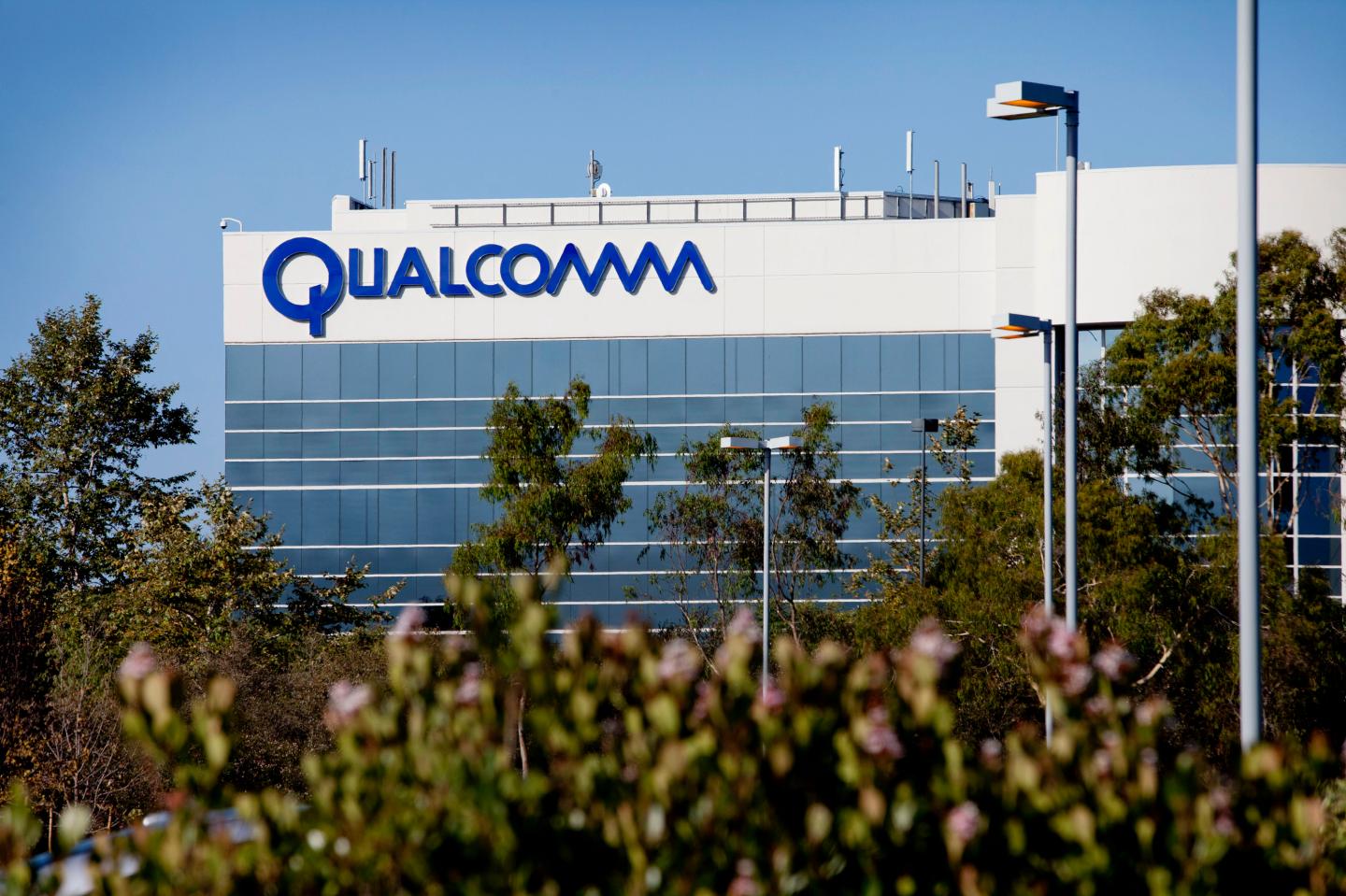
General Views of Qualcomm
Photograph by Konrad Fiedler — Bloomberg/Getty Images
Add Fortune on Google for similar content.

Qualcomm’s $2.4 billion purchase of fellow chip company CSR closed Thursday, and while it wasn’t the biggest chip deal the industry has seen since Qualcomm said it would purchase the UK firm in October last year, this is a deal that has high stakes for Qualcomm—a company that is struggling to remake itself completely as its core cellular radio business becomes an ever smaller portion of its portfolio and activist investors pressure management.

Back in October, when Qualcomm (QCOM) said it would purchase CSR, the company that was an initial champion of the now-popular Bluetooth technology found inside headsets, speakers and phones, it was seen as an obvious technology bolt-on acquisition. The addition of CSR would pair with Qualcomm’s interest in the internet of things and its $3.1 billion purchase of Wi-Fi chipmaker Atheros back in 2011. That’s still true today, but since the deal has been announced Jana Capital has taken a significant stake in Qualcomm and pressured the company to make changes. Last month it said it planned to lay off 15% of its workforce and said it would only focus on five businesses: mobile phones, the internet of things, data centers, small cells, and automotive.

Qualcomm also has the unenviable task of becoming a chip firm that has to adapt from having a relatively small and captive customer base to one serving a huge number of customers across many verticals. It also doesn’t have a radio technology or a limited number of competitors to lock customers in when it’s selling its Wi-Fi products, and soon its Bluetooth chips. In interviews with Fortune, Qualcomm and CSR executives explained how this deal will help Qualcomm handle some of these challenges both technically and strategically.

With CSR Qualcomm isn’t simply buying a radio chip firm as it did with Atheros. It’s also buying a company that makes an entire package of chips and software that fits into cars, headsets, and Bluetooth speakers, which dovetails nicely with Qualcomm’s own design philosophy of squeezing the brains of a smartphone into the same package with the radios and the graphics core. This integrated single-package approach lowers the cost of materials, saves on space, and tends to save on battery life. That’s essential for cell phones and the chips powering your Bluetooth headset.

CSR is also the keeper of some fancy software that turns Bluetooth radios, which are usually point-to-point radios, into a mesh network designed for the smart home or office. This CSRMesh technology is part of several big lighting products expected out in the fall, and parts of it will undoubtedly make it into the next generation of the Bluetooth standard.

Anthony Murray, formerly a senior vice president with CSR and now the senior vice president and general manager of IoE (Internet of Everything) at Qualcomm, explained that not only could we see the CSRMesh technology in Bluetooth, but one day we may even see Qualcomm supporting the Thread protocol created by Samsung, Nest and other big names in home automation on top of the Bluetooth radio.

“So far the Thread protocol has chosen to support one radio [ZigBee], but there are many of radios out there that it could support and there are advantages in using the Bluetooth radio in some use cases,” Murray said. “We can’t not support Thread given the strength of the supporters behind it.”

Qualcomm will also get a few esoteric technology holdings, such as a document imaging software business that may eventually be spun out, but for the most part CSR’s silicon and software will boost Qualcomm’s internet of things and automotive businesses easily. It also helps bring Qualcomm another set of managers who are used to selling to a wide range of customers and a more traditional customer base. Qualcomm historically sold radios based on technology it developed, which meant that once it convinced a network operator, such as Verizon, to buy into a technology, any company that wanted to sell a handset to that network operator had to license that radio technology from Qualcomm.

In many cases they bought the radio from Qualcomm too. As Qualcomm grew it developed the brains behind smartphones as well and integrated that tech with radios, which meant its customers were still the handset makers. Qualcomm grew along with the smartphone market, providing some of the most powerful application processors inside handsets. For the most part, it was the Intel of smartphones, with the exception of the iPhone once Apple decided to build its own chip.

However, competition from China’s Mediatek was looming, and Qualcomm stumbled last year with one of its designs. It lost Samsung, which is still affecting its earnings. With these challenges in mind, diversifying its customer base isn’t a bad idea. Raj Talluri, senior vice president of product management, said Qualcomm brought in $1 billion from the internet of things in 2014 and expects to bring in 1.6 billion in 2015.

He said much of that comes from adding connectivity to existing devices, especially as a way to future proof them even if the manufacturer isn’t sure how they want to use it. “China is the most advanced and we see a lot of white goods with connectivity,” he said. “There are so many rice cookers that are shipping with connectivity in them.”

As for structuring Qualcomm to sell chips for thousands of different devices, from rice cookers to drones, as opposed to making a few different lines of chips for mobile phones, Talluri is optimistic that the San Diego-based company will rise to the challenge.

“That’s how most semiconductor companies are,” he said. “It’s a model that we know how to set up and CSR is one such company. The idea is you have multiple people each responsible for a segment and pick the technologies that they need … and you build the distribution channels and let the machine start rolling.”

He admits it may not be as “exciting” as winning or losing a chip inside a handset, but it is a far more stable business and as a veteran of Texas Instruments he’s been there before. First with Atheros and now with CSR, Qualcomm is adapting to what may be a far less exciting path, but one that could provide greater diversity and stability.

Subscribe to Data Sheet, Fortune’s daily newsletter on the business of technology.

Update: This article was corrected Aug. 14 to reflect that CSR did not invent Bluetooth.

About the Author
By Stacey Higginbotham
See full bioRight Arrow Button Icon
Add Fortune on Google for similar content.

Latest in Tech

Finance
Lorem ipsum dolor sit amet, consectetur adipiscing elit, sed do eiusmod tempor incididunt ut labore et dolore magna aliqua. Ut enim ad minim veniam
By Fortune Editors
October 20, 2025
Finance
Lorem ipsum dolor sit amet, consectetur adipiscing elit, sed do eiusmod tempor incididunt ut labore et dolore magna aliqua. Ut enim ad minim veniam
By Fortune Editors
October 20, 2025
Finance
Lorem ipsum dolor sit amet, consectetur adipiscing elit, sed do eiusmod tempor incididunt ut labore et dolore magna aliqua. Ut enim ad minim veniam
By Fortune Editors
October 20, 2025
Finance
Lorem ipsum dolor sit amet, consectetur adipiscing elit, sed do eiusmod tempor incididunt ut labore et dolore magna aliqua. Ut enim ad minim veniam
By Fortune Editors
October 20, 2025
Finance
Lorem ipsum dolor sit amet, consectetur adipiscing elit, sed do eiusmod tempor incididunt ut labore et dolore magna aliqua. Ut enim ad minim veniam
By Fortune Editors
October 20, 2025
Finance
Lorem ipsum dolor sit amet, consectetur adipiscing elit, sed do eiusmod tempor incididunt ut labore et dolore magna aliqua. Ut enim ad minim veniam
By Fortune Editors
October 20, 2025

Most Popular

Finance
Lorem ipsum dolor sit amet, consectetur adipiscing elit, sed do eiusmod tempor incididunt ut labore et dolore magna aliqua. Ut enim ad minim veniam
By Fortune Editors
October 20, 2025
Finance
Lorem ipsum dolor sit amet, consectetur adipiscing elit, sed do eiusmod tempor incididunt ut labore et dolore magna aliqua. Ut enim ad minim veniam
By Fortune Editors
October 20, 2025
Finance
Lorem ipsum dolor sit amet, consectetur adipiscing elit, sed do eiusmod tempor incididunt ut labore et dolore magna aliqua. Ut enim ad minim veniam
By Fortune Editors
October 20, 2025
Finance
Lorem ipsum dolor sit amet, consectetur adipiscing elit, sed do eiusmod tempor incididunt ut labore et dolore magna aliqua. Ut enim ad minim veniam
By Fortune Editors
October 20, 2025
Finance
Lorem ipsum dolor sit amet, consectetur adipiscing elit, sed do eiusmod tempor incididunt ut labore et dolore magna aliqua. Ut enim ad minim veniam
By Fortune Editors
October 20, 2025
Finance
Lorem ipsum dolor sit amet, consectetur adipiscing elit, sed do eiusmod tempor incididunt ut labore et dolore magna aliqua. Ut enim ad minim veniam
By Fortune Editors
October 20, 2025
Fortune Secondary Logo
Rankings
  • 100 Best Companies
  • Fortune 500
  • Global 500
  • Fortune 500 Europe
  • Most Powerful Women
  • World's Most Admired Companies
  • See All Rankings
  • Lists Calendar
Sections
  • Finance
  • Fortune Crypto
  • Features
  • Leadership
  • Health
  • Commentary
  • Success
  • Retail
  • Mpw
  • Tech
  • Lifestyle
  • CEO Initiative
  • Asia
  • Politics
  • Conferences
  • Europe
  • Newsletters
  • Personal Finance
  • Environment
  • Magazine
  • Education
Customer Support
  • Frequently Asked Questions
  • Customer Service Portal
  • Privacy Policy
  • Terms Of Use
  • Single Issues For Purchase
  • International Print
Commercial Services
  • Advertising
  • Fortune Brand Studio
  • Fortune Analytics
  • Fortune Conferences
  • Business Development
  • Group Subscriptions
About Us
  • About Us
  • Press Center
  • Work At Fortune
  • Terms And Conditions
  • Site Map
  • About Us
  • Press Center
  • Work At Fortune
  • Terms And Conditions
  • Site Map
  • Facebook icon
  • Twitter icon
  • LinkedIn icon
  • Instagram icon
  • Pinterest icon

Latest in Tech

Michael Burry just shorted Caterpillar’s 172% AI rally. One analyst says his bet won’t even matter
Investingstock prices
Michael Burry just shorted Caterpillar’s 172% AI rally. One analyst says his bet won’t even matter
By Marco Quiroz-GutierrezJuly 2, 2026
2 hours ago
U.S. Treasury Secretary Scott Bessent
EconomyDebt
AI’s $2.2 trillion deficit fix is already half fake, economists say
By Tristan BoveJuly 2, 2026
3 hours ago
Anthropic CEO Dario Amodei
AIEye on AI
Anthropic’s Fable model is back. But U.S. AI policy is still a mess
By Jeremy KahnJuly 2, 2026
4 hours ago
ai
North AmericaImmigration
Trump’s $46 billion ‘smart wall’ with Mexico bets on AI and scale
By Rebecca Santana and The Associated PressJuly 2, 2026
5 hours ago
sk
AISouth Korea
AI “grief videos” turn mourning into a $390 service in South Korea
By Hyung-Jin Kim and The Associated PressJuly 2, 2026
5 hours ago
Securitize CEO Carlos Domingo looks to the far right during a conference.
CryptoBlockchain
Securitize is latest crypto company to go public as BlackRock-backed firm sees stock jump 3% on debut
By Camila Grigera NaónJuly 2, 2026
5 hours ago

Most Popular

As Big Tech showers employees with perks to win the talent war, Nvidia built a nearly $5 trillion company by making people pay for their own lunch
Big Tech
As Big Tech showers employees with perks to win the talent war, Nvidia built a nearly $5 trillion company by making people pay for their own lunch
By Marco Quiroz-GutierrezJuly 1, 2026
2 days ago
MacKenzie Scott alone accounted for one-third of America's $19.2 billion in megagifts last year
Success
MacKenzie Scott alone accounted for one-third of America's $19.2 billion in megagifts last year
By Sydney LakeJune 25, 2026
8 days ago
Current price of oil as of July 1, 2026
Personal Finance
Current price of oil as of July 1, 2026
By Joseph HostetlerJuly 1, 2026
1 day ago
Trump got a $78K pension from the Screen Actors Guild in 2025 because he appeared in Home Alone 2 in 1992
Politics
Trump got a $78K pension from the Screen Actors Guild in 2025 because he appeared in Home Alone 2 in 1992
By Sasha RogelbergJuly 1, 2026
1 day ago
Today, Emily Blunt is worth $80 million thanks to her Hollywood career—but she actually wanted to be a UN Spanish translator on $80K
Success
Today, Emily Blunt is worth $80 million thanks to her Hollywood career—but she actually wanted to be a UN Spanish translator on $80K
By Orianna Rosa RoyleJuly 2, 2026
15 hours ago
CEO of $248 billion cybersecurity company says workers are about to face a ‘Darwinian moment’ thanks to AI: Evolve or get cut
Success
CEO of $248 billion cybersecurity company says workers are about to face a ‘Darwinian moment’ thanks to AI: Evolve or get cut
By Emma BurleighJuly 1, 2026
1 day ago

© 2026 Fortune Media IP Limited. All Rights Reserved. Use of this site constitutes acceptance of our Terms of Use and Privacy Policy | CA Notice at Collection and Privacy Notice | Do Not Sell/Share My Personal Information
FORTUNE is a trademark of Fortune Media IP Limited, registered in the U.S. and other countries. FORTUNE may receive compensation for some links to products and services on this website. Offers may be subject to change without notice.