• Home
  • Latest
  • Fortune 500
  • Finance
  • Tech
  • Leadership
  • Lifestyle
  • Rankings
  • Multimedia
TechCloud Computing

Former NASA tech chief takes startups under his wing

Barb Darrow
By
Barb Darrow
Barb Darrow
Down Arrow Button Icon
Barb Darrow
By
Barb Darrow
Barb Darrow
Down Arrow Button Icon
July 6, 2015, 6:00 AM ET
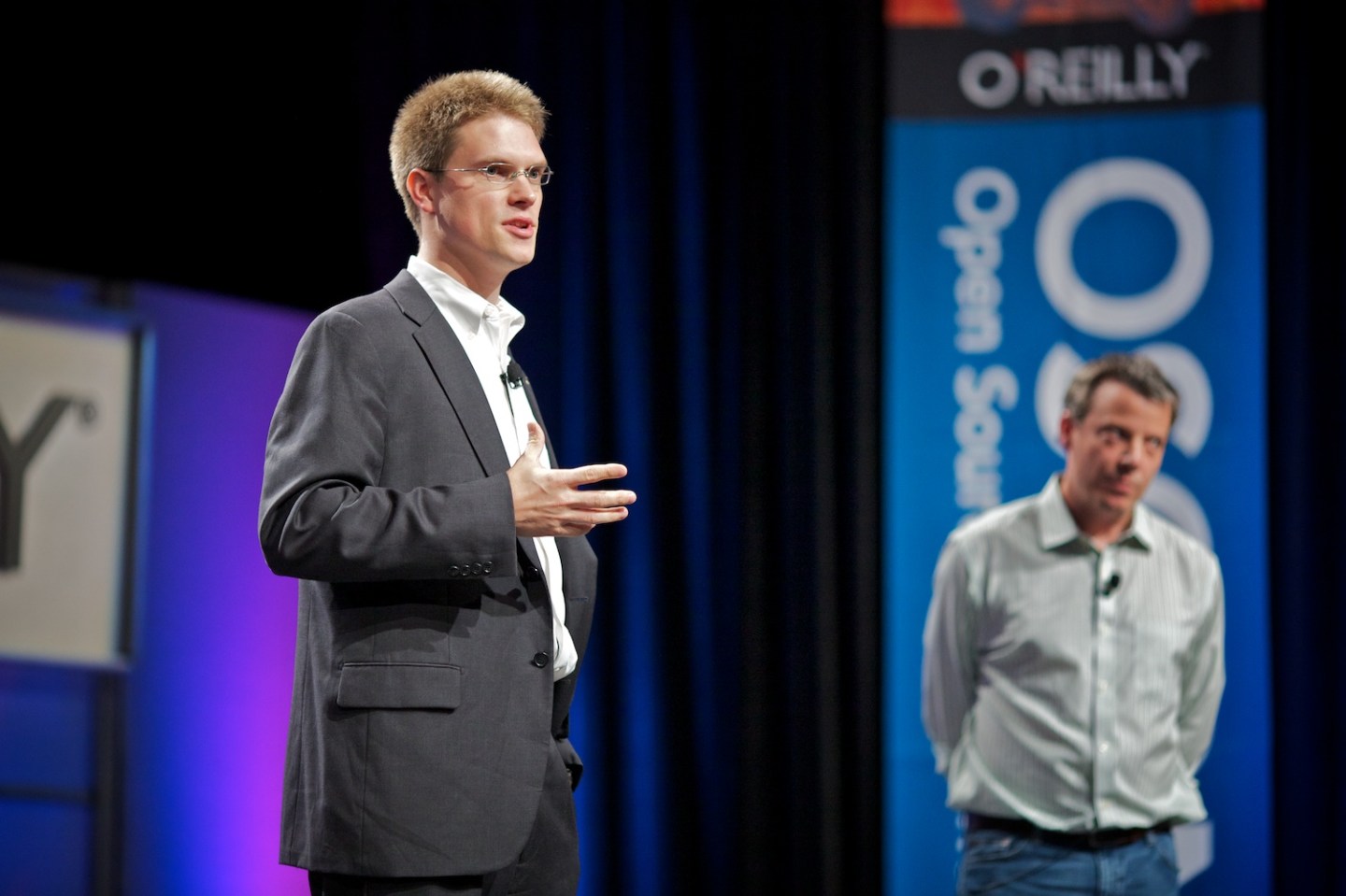
Photograph by Elizabeth LePage

What does the former CTO of NASA, who helped the U.S. government define cloud computing, and launched the OpenStack cloud project do for an encore? As it turns out, Chris Kemp is advising a couple of startups, hoping to share the lessons he’s learned from success. And from failure.

Kemp also co-founded Nebula, a company that brought OpenStack technology to business customers and which closed its doors in March.

He acknowledged recently to Fortune that he’d learned a lot from Nebula and wanted to share that knowledge. “I’m trying to find some great entrepreneurs and companies that need to exist and help them in the early stages avoid some of the problems we faced,” Kemp told Fortune.

What problems? One was getting the right people at an organization to sign off on cloud projects. The move touches a lot of constituencies at a company—the people who run operations, networking, storage, and security. Those are all fiefdoms with their own agendas, Kemp said, so getting them all aboard was like herding cats.

Perhaps more challenging was the divide between people running legacy applications and those creating brand new “cloud native” applications.

“The biggest problem was that application or workload owners that had cloud native applications were building them on public clouds and did not see their IT departments as credible suppliers of alternatives to Amazon(AMZN) Web Services, even if they had infrastructure-as-a-service offerings—or had already purchased a Nebula, for example.” Kemp said via email.

Last month, Kemp joined the board of Scalr, a cloud management company; he was already advising Nixie, a company building a wearable device that converts to a camera-toting drone; and Planet Labs, a satellite startup by other NASA veterans.

So why Scalr? Kemp said it provides a bridge to cloud adoption. “It brings together a cohesive policy engine to tell you what runs where based on your financial and compliance issues,” Kemp said.

Making sure the right jobs run on the right resources is a concern for companies weighing a cloud move. Tools like Scalr “can make sure the CFO, the security team, everyone is on the same page as to what runs where. That’s important as companies realize they don’t deploy one OpenStack cluster and say that’s it. They’ll have VMware (VMW) stuff and Google (GOOG) stuff.”

Scalr CEO Sebastian Stadil said Kemp brings his company valuable perspective. “Today’s CIO is in a really tough spot where she’s responsible for all information security and compliance, but has no control over it with developers going to cloud and doing their own thing / rogue IT. She ends up with all of the responsibility but none of the power, visibility, or control.”

Kemp has experienced that sort of issue from his days at NASA where he wanted to enable the organization to move fast but was constrained by International Traffic in Arms Regulations (ITAR) and other regulations. And, like any other CIO, he had to get rogue IT groups under control. The idea of his new gig as advisor is to help his proteges take advantage of that experience.

Subscribe to Data Sheet, Fortune’s daily newsletter on the business of technology.

About the Author
Barb Darrow
By Barb Darrow
See full bioRight Arrow Button Icon

Latest in Tech

Sarandos
Arts & EntertainmentM&A
It’s a sequel, it’s a remake, it’s a reboot: Lawyers grow wistful for old corporate rumbles as Paramount, Netflix fight for Warner
By Nick LichtenbergDecember 13, 2025
3 hours ago
Oracle chairman of the board and chief technology officer Larry Ellison delivers a keynote address during the 2019 Oracle OpenWorld on September 16, 2019 in San Francisco, California.
AIOracle
Oracle’s collapsing stock shows the AI boom is running into two hard limits: physics and debt markets
By Eva RoytburgDecember 13, 2025
4 hours ago
robots
InnovationRobots
‘The question is really just how long it will take’: Over 2,000 gather at Humanoids Summit to meet the robots who may take their jobs someday
By Matt O'Brien and The Associated PressDecember 12, 2025
17 hours ago
Man about to go into police vehicle
CryptoCryptocurrency
Judge tells notorious crypto scammer ‘you have been bitten by the crypto bug’ in handing down 15 year sentence 
By Carlos GarciaDecember 12, 2025
18 hours ago
three men in suits, one gesturing
AIBrainstorm AI
The fastest athletes in the world can botch a baton pass if trust isn’t there—and the same is true of AI, Blackbaud exec says
By Amanda GerutDecember 12, 2025
19 hours ago
Brainstorm AI panel
AIBrainstorm AI
Creative workers won’t be replaced by AI—but their roles will change to become ‘directors’ managing AI agents, executives say
By Beatrice NolanDecember 12, 2025
19 hours ago

Most Popular

placeholder alt text
Economy
Tariffs are taxes and they were used to finance the federal government until the 1913 income tax. A top economist breaks it down
By Kent JonesDecember 12, 2025
1 day ago
placeholder alt text
Success
Apple cofounder Ronald Wayne sold his 10% stake for $800 in 1976—today it’d be worth up to $400 billion
By Preston ForeDecember 12, 2025
23 hours ago
placeholder alt text
Success
40% of Stanford undergrads receive disability accommodations—but it’s become a college-wide phenomenon as Gen Z try to succeed in the current climate
By Preston ForeDecember 12, 2025
22 hours ago
placeholder alt text
Economy
For the first time since Trump’s tariff rollout, import tax revenue has fallen, threatening his lofty plans to slash the $38 trillion national debt
By Sasha RogelbergDecember 12, 2025
18 hours ago
placeholder alt text
Economy
The Fed just ‘Trump-proofed’ itself with a unanimous move to preempt a potential leadership shake-up
By Jason MaDecember 12, 2025
17 hours ago
placeholder alt text
Success
At 18, doctors gave him three hours to live. He played video games from his hospital bed—and now, he’s built a $10 million-a-year video game studio
By Preston ForeDecember 10, 2025
3 days ago
Rankings
  • 100 Best Companies
  • Fortune 500
  • Global 500
  • Fortune 500 Europe
  • Most Powerful Women
  • Future 50
  • World’s Most Admired Companies
  • See All Rankings
Sections
  • Finance
  • Leadership
  • Success
  • Tech
  • Asia
  • Europe
  • Environment
  • Fortune Crypto
  • Health
  • Retail
  • Lifestyle
  • Politics
  • Newsletters
  • Magazine
  • Features
  • Commentary
  • Mpw
  • CEO Initiative
  • Conferences
  • Personal Finance
  • Education
Customer Support
  • Frequently Asked Questions
  • Customer Service Portal
  • Privacy Policy
  • Terms Of Use
  • Single Issues For Purchase
  • International Print
Commercial Services
  • Advertising
  • Fortune Brand Studio
  • Fortune Analytics
  • Fortune Conferences
  • Business Development
About Us
  • About Us
  • Editorial Calendar
  • Press Center
  • Work At Fortune
  • Diversity And Inclusion
  • Terms And Conditions
  • Site Map

© 2025 Fortune Media IP Limited. All Rights Reserved. Use of this site constitutes acceptance of our Terms of Use and Privacy Policy | CA Notice at Collection and Privacy Notice | Do Not Sell/Share My Personal Information
FORTUNE is a trademark of Fortune Media IP Limited, registered in the U.S. and other countries. FORTUNE may receive compensation for some links to products and services on this website. Offers may be subject to change without notice.